A hardware firewall is a dedicated physical appliance that inspects and controls traffic between networks or security zones.
It commonly protects an office, data center, branch, or operational environment at a network boundary. The appliance centralizes enforcement, but security still depends on architecture, rule quality, software maintenance, monitoring, and resilient deployment.
Key Takeaways
A hardware firewall is a dedicated physical appliance that inspects and controls traffic between networks or security zones.
It commonly protects an office, data center, branch, or operational environment at a network boundary. The appliance centralizes enforcement, but security still depends on architecture, rule quality, software maintenance, monitoring, and resilient deployment.
Unpatched appliance vulnerabilities is a primary concern.
Effective security combines prevention, continuous visibility, ownership, and tested response.
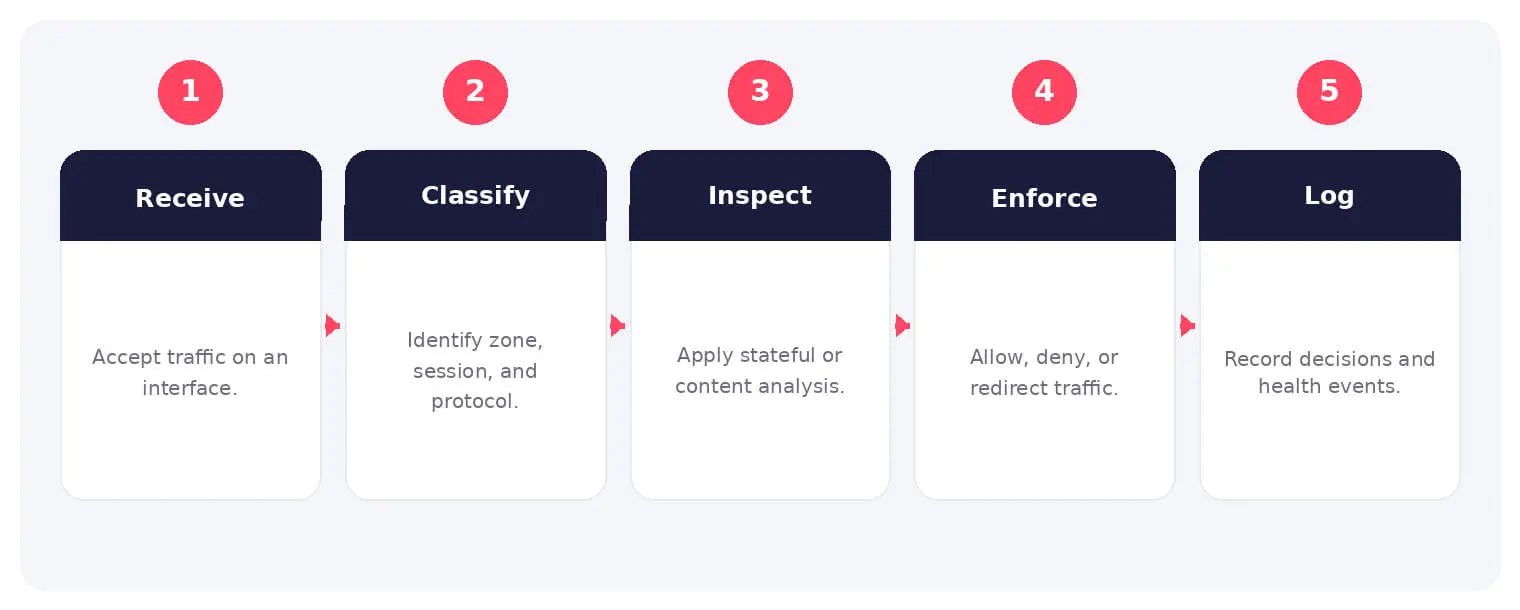
The main stages and decision points associated with hardware firewall.
How It Works
The operating flow above turns the concept into observable steps. Exact implementations vary, but each stage needs accountable ownership, trusted inputs, documented policy, and evidence that analysts can use during investigation and review.
It commonly protects an office, data center, branch, or operational environment at a network boundary. The appliance centralizes enforcement, but security still depends on architecture, rule quality, software maintenance, monitoring, and resilient deployment.
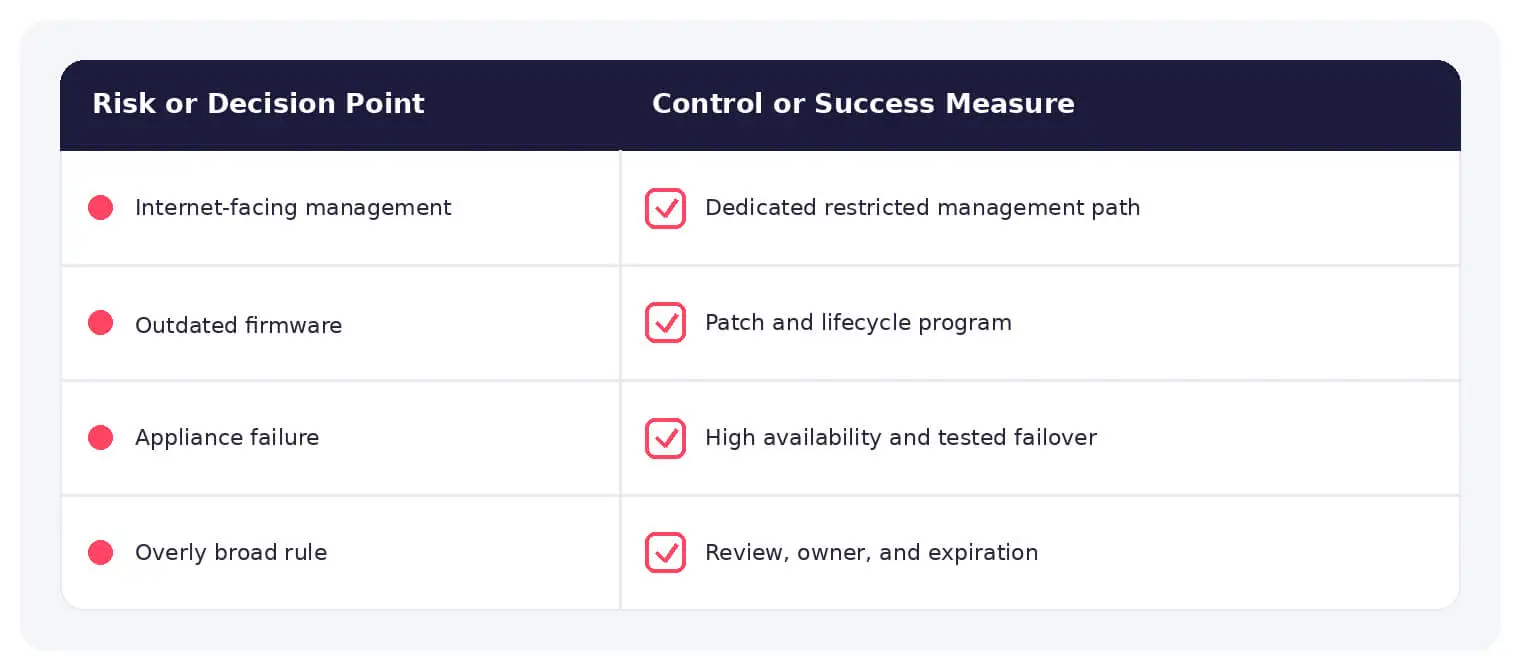
Patch promptly, isolate management, require MFA, deploy high availability, back up configuration, restrict rules, inspect outbound traffic, monitor capacity, and test failover and restoration.
How SOCRadar Can Help
SOCRadar adds external visibility, threat intelligence, exposure context, and continuous monitoring to help teams validate and prioritize risks related to hardware firewall. This context complements internal endpoint, identity, and network controls.
Explore SOCRadar Vulnerability Intelligence or request a demo to strengthen threat-informed prevention and response.
Frequently Asked Questions
What is the main purpose of hardware firewall?
A hardware firewall is a dedicated physical appliance that inspects and controls traffic between networks or security zones.
Patch promptly, isolate management, require MFA, deploy high availability, back up configuration, restrict rules, inspect outbound traffic, monitor capacity, and test failover and restoration.