

Mar 10, 2026

May 15, 2026
5 Mins Read
Sep 13, 2026
Table Of Content
Related Articles

SMS Bombing

Threat Actors
Jan 08, 2026

Dark Web Monitoring
Feb 19, 2026

Ransomware
Jan 31, 2026

OSINT Framework
Apr 17, 2026

What Is an Incident Response Plan?
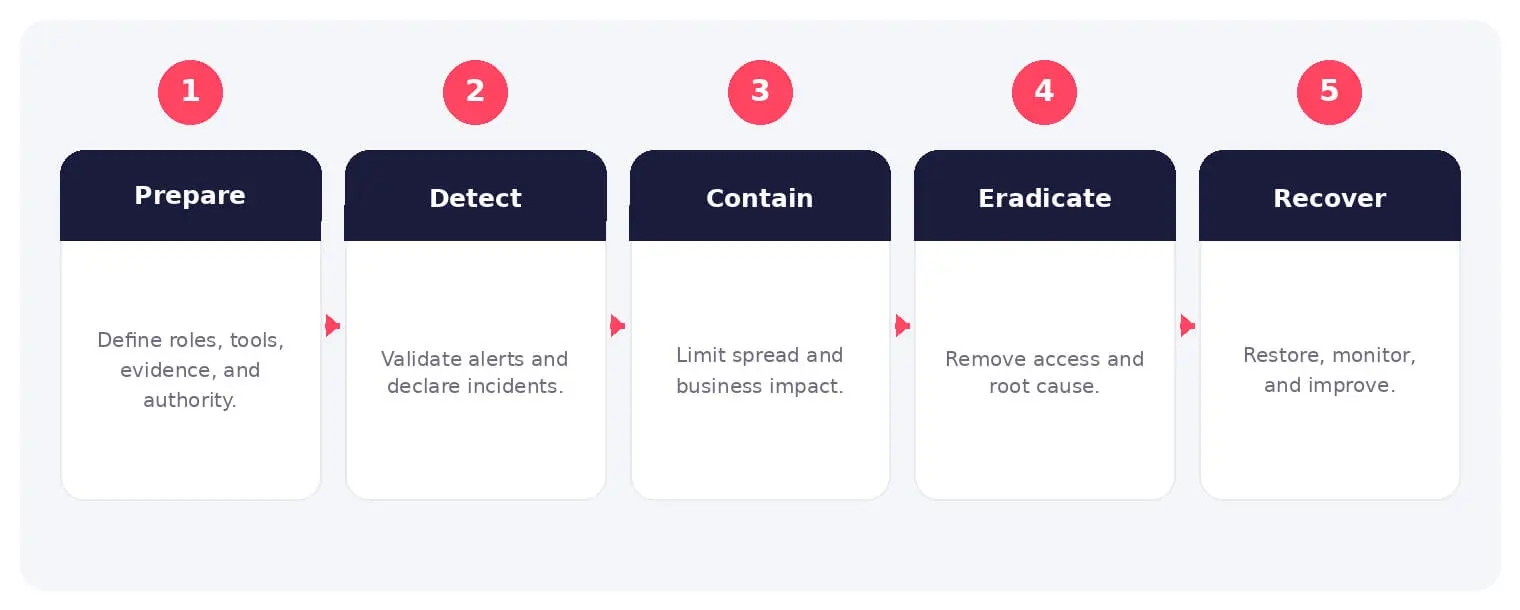
An incident response plan defines how an organization prepares for, detects, assesses, contains, eradicates, and recovers from cybersecurity incidents.
The plan establishes authority, roles, communications, evidence handling, decision criteria, and escalation before pressure makes coordination difficult. It should be supported by scenario-specific playbooks rather than treated as a static compliance document.
Key Takeaways
- An incident response plan defines how an organization prepares for, detects, assesses, contains, eradicates, and recovers from cybersecurity incidents.
- The plan establishes authority, roles, communications, evidence handling, decision criteria, and escalation before pressure makes coordination difficult. It should be supported by scenario-specific playbooks rather than treated as a static compliance document.
- Delayed decisions and unclear ownership is a primary concern.
- Effective programs combine prevention, continuous visibility, accountable ownership, and tested response.
How It Works
The operating flow above turns the concept into observable steps. Exact implementations vary, but each stage needs accountable ownership, trusted inputs, documented policy, and evidence that analysts can use during investigation and review.
The plan establishes authority, roles, communications, evidence handling, decision criteria, and escalation before pressure makes coordination difficult. It should be supported by scenario-specific playbooks rather than treated as a static compliance document.
Common Types and Capabilities
- Enterprise incident response plans
- Ransomware and extortion playbooks
- Cloud and identity response playbooks
- Data-breach and third-party procedures
Security and Business Risks
- Delayed decisions and unclear ownership
- Evidence loss and uncontrolled containment
- Inconsistent legal or customer communication
- Recovery that leaves attacker access intact
Warning Signs and Detection
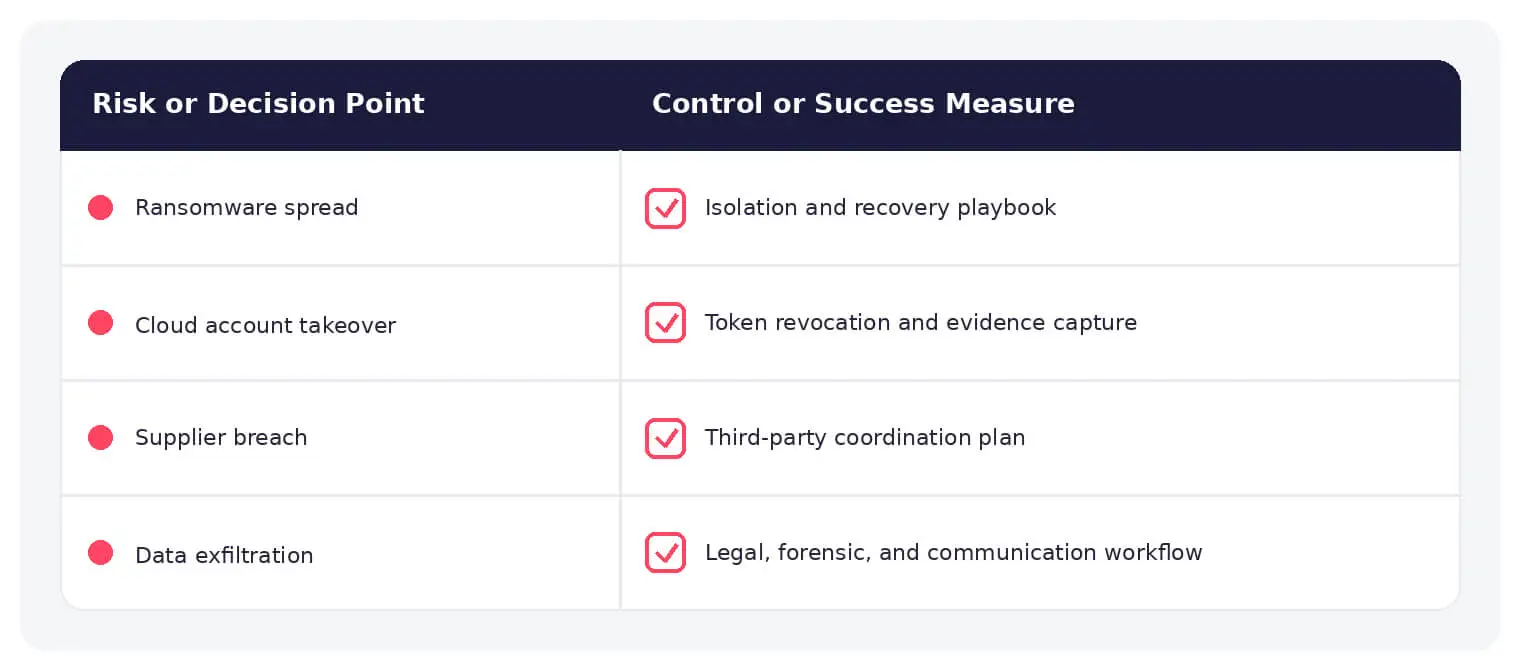
Monitor escalation delays, missing contacts, failed log collection, unavailable forensic tools, untested backups, expired access, inconsistent severity decisions, containment actions without approval, and recurring lessons that never become controls.
Best Practices
Define authority and severity, maintain current contacts, protect logs, pre-stage tools, map legal obligations, create concise playbooks, exercise realistic scenarios, test backups, preserve evidence, and track every lesson to an owner and deadline.
How SOCRadar Can Help
SOCRadar adds external visibility, threat intelligence, exposure context, and continuous monitoring to help teams validate and prioritize risks related to incident response plan. This context complements internal security operations, identity, response, and governance controls.
Explore SOCRadar Extended Threat Intelligence or request a demo to strengthen threat-informed prevention and response.
Frequently Asked Questions
What Is an Incident Response Plan?
An incident response plan is the documented framework an organization uses to prepare for, detect, assess, contain, eradicate, and recover from cybersecurity incidents. It establishes authority, roles, communication paths, evidence handling, and escalation criteria before an incident creates pressure that makes coordination difficult.
Why Do Incident Response Plans Fail During Real Incidents?
Failures often trace back to delayed decisions and unclear ownership. When no one is pre-authorized to approve containment, contact lists are out of date, or severity criteria are ambiguous, teams improvise under pressure and lose time that attackers can use to expand their access.
How Does an Incident Response Plan Differ From a Playbook?
The plan is the governing document that defines roles, decision authority, severity levels, and escalation. Playbooks are scenario-specific procedures, such as ransomware handling or cloud identity compromise, that operate within the framework the plan establishes.
What Stages Should an Incident Response Plan Cover?
A complete plan addresses the full lifecycle of an incident, including:
- Preparation, with pre-staged tools and current contacts
- Detection and assessment, guided by defined severity criteria
- Containment and eradication, with clear approval thresholds
- Recovery, including verified backup restoration
- Post-incident review that assigns each lesson to an owner and deadline
Each stage needs a named owner and documented decision criteria so analysts can act without waiting for ad hoc approvals.
Should Ransomware Have a Dedicated Playbook?
Extortion incidents combine encryption, possible data theft, backup restoration, negotiation decisions, and regulatory notification, so a scenario-specific playbook keeps those steps consistent. The general plan provides authority and escalation, while the ransomware playbook carries the operational detail and timing.
What Warning Signs Indicate an Incident Response Plan Is No Longer Effective?
Escalation delays, missing contacts, failed log collection, unavailable forensic tools, and untested backups are common indicators. Inconsistent severity decisions, containment actions taken without approval, and recurring lessons that never become controls suggest the plan exists on paper only.
How Often Should an Incident Response Plan Be Tested and Updated?
Exercise the plan through realistic tabletop or simulated scenarios at least annually, and revise it after every significant incident, personnel change, or infrastructure shift. Contacts, tool availability, and backup restoration should be verified on a shorter cycle than the full plan is exercised.
Who Should Own the Incident Response Plan?
Security teams typically lead day-to-day execution, but effective plans assign explicit decision rights to legal, communications, IT, and executive stakeholders. The document should name who can authorize containment, who approves external notifications, and who coordinates recovery.
How Should Legal and Customer Notification Requirements Be Handled?
Map disclosure deadlines, regulator expectations, and customer communication rules before an incident occurs, then pre-assign the legal and communications roles responsible for executing them. This reduces the risk of inconsistent messaging and missed reporting windows when time is limited.
Does a Written Plan Guarantee Effective Incident Response?
No. An untested plan is closer to a compliance document than an operational capability. Effectiveness depends on realistic exercises, preserved evidence, verified backups, and a process that turns every lesson into a tracked control with an owner and a deadline.