Magecart is an umbrella label for threat groups and campaigns that steal payment and identity data from online checkout pages. Operators compromise merchant sites or trusted third-party scripts, inject web-skimming code, and copy information entered by customers before or during payment.
Magecart is not one malware family or one organization. Campaigns differ in access method, script design, infrastructure, victim selection, and monetization. The common feature is browser-side theft from an e-commerce or payment workflow.
Key Takeaways
Magecart describes multiple web-skimming actors and campaigns, not one fixed group.
Attackers may compromise the merchant, a plugin, tag manager, administrator account, or third-party supplier.
Skimmers can activate conditionally, making occasional visual checks unreliable.
Response must establish the exposure window, affected fields, access path, and notification duties.
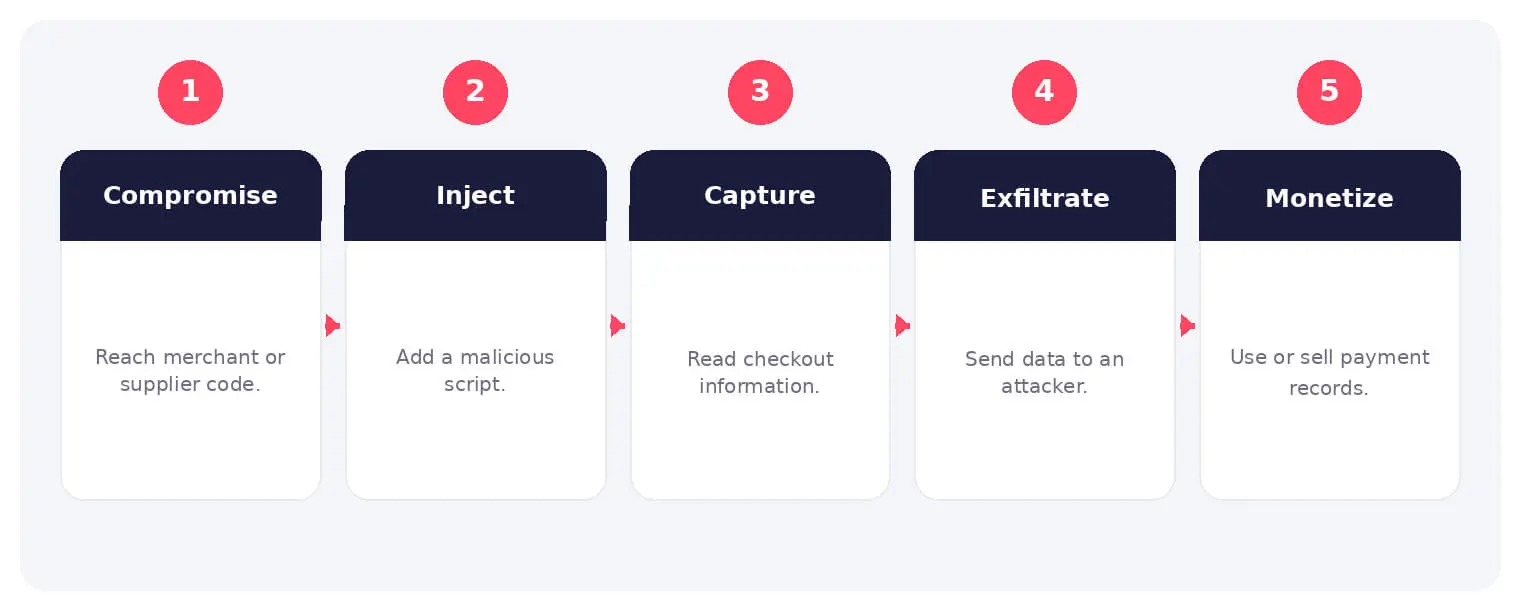
The main stages and decision points associated with Magecart.
How Magecart Works
An attacker gains access to checkout code or a component trusted by the page. Malicious JavaScript reads payment fields, intercepts form submission, or overlays a false payment form.
Captured information is sent to attacker infrastructure, sometimes through a look-alike domain or disguised request. The legitimate purchase may still complete, leaving customers and merchants unaware of the theft.
Common Types and Techniques
Direct compromise of merchant code
Third-party JavaScript and supply-chain injection
Tag manager or administrator account abuse
Checkout overlays and form interception
Security and Business Risks
Payment-card fraud and identity theft
Breach notification and payment-industry obligations
Chargebacks, forensic cost, and disrupted sales
Loss of customer trust and brand damage
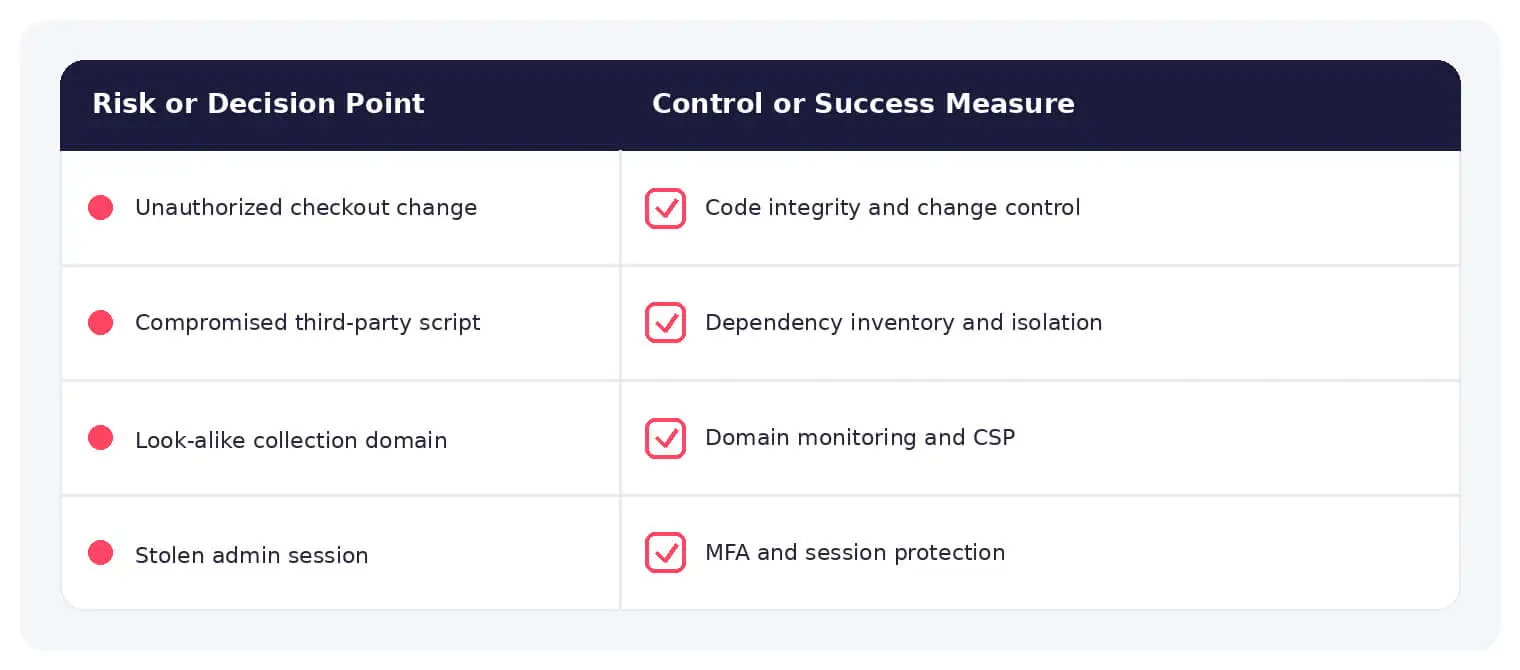
Common Magecart risks paired with practical defensive controls.
Warning Signs and Detection
Monitor code and script integrity, new tags, obfuscated JavaScript, checkout network requests, Content Security Policy reports, domain registrations, and unauthorized administrative changes. Test the real browser experience from several conditions.
Prevention and Response
Reduce third-party code on payment pages, isolate hosted payment fields, secure administration with phishing-resistant MFA, control deployments, inventory client-side dependencies, and use Content Security Policy and Subresource Integrity where technically suitable.
Magecart is an umbrella label for multiple threat groups and campaigns that carry out web skimming, not a single organization or malware family. Campaigns differ in access methods, script design, infrastructure, victim selection, and monetization, but they share one feature: browser-side theft from an online payment workflow.
What Data Do Magecart Skimmers Capture?
Skimmers typically read card numbers, expiration dates, CVV codes, names, and billing or shipping addresses as customers type them into checkout forms. Some variants also collect login credentials or overlay a false payment form to capture everything a victim enters.
How Do Attackers Inject Skimming Code Into Checkout Pages?
Common access paths include direct compromise of merchant code, malicious updates or injections into trusted third-party JavaScript, and abuse of tag managers or administrator accounts. Once the script sits inside a component the page trusts, it reads payment fields, intercepts form submissions, or presents a fake overlay.
Can Shoppers or Merchants Tell a Skimmer Is Running?
Usually not, because the legitimate purchase still completes and nothing visible changes on the page. Skimmers can also run conditionally, activating only on checkout pages, for selected users, at certain times, or outside automated test environments, which makes occasional visual checks unreliable.
What Warning Signs Suggest a Possible Web-Skimming Infection?
Watch for new or modified tags on payment pages, obfuscated JavaScript, unexpected checkout requests to unfamiliar or look-alike domains, Content Security Policy violation reports, suspicious domain registrations, and unauthorized administrative changes. Testing the real browser experience from several conditions can reveal scripts that standard scans miss.
What Should Responders Establish After a Magecart Incident?
Response should define the exposure window, the payment or identity fields captured, the access path used, and the notification duties that apply. Preserve site files, deployment history, administrator and identity logs, tag-manager changes, dependency versions, browser captures, and network indicators needed to scope the incident.
Does a Magecart Infection Trigger Customer Notification Duties?
Often yes, because captured payment-card data can trigger breach notification laws and payment-industry obligations such as PCI DSS forensic procedures. Exact duties depend on jurisdiction, card brand rules, and which fields were exposed, which is why establishing the exposure window and affected fields early matters.
Which Controls Reduce Magecart Risk on Payment Pages?
Practical measures include removing unnecessary third-party code from payment pages, isolating hosted payment fields, protecting administrative access with phishing-resistant MFA, controlling deployment changes, and keeping an inventory of client-side dependencies. Content Security Policy and Subresource Integrity add protection where technically suitable.
Does a Secure Payment Processor Prevent Magecart Attacks?
Not by itself. A processor protects card data after receipt, but a browser-side skimmer can copy values before the form is ever submitted. Properly isolated hosted payment fields reduce what page-level scripts can reach, which is why they are widely recommended for checkout flows.
How Is Magecart Different From Point-of-Sale Malware?
Point-of-sale malware reads card data from in-person payment terminals, while Magecart operates in the customer’s browser against online checkout pages. As a result, a single compromised script can target shoppers worldwide without any access to merchant hardware.