

Mar 10, 2026
Feb 19, 2026
5 Mins Read
Sep 13, 2026
Table Of Content
Related Articles
SMS Bombing
Threat Actors
Jan 08, 2026
Dark Web Monitoring
Feb 19, 2026
Ransomware
Jan 31, 2026
Dark Web
Jan 31, 2026

What Is Shadow AI?
Shadow AI is the use of artificial-intelligence tools, models, agents, or integrations without organizational approval, visibility, or governance.
Employees may paste sensitive data into public assistants, connect unreviewed applications through OAuth, deploy models in personal cloud accounts, or embed AI-generated code and dependencies without security review. The problem is unmanaged use, not AI itself.
Key Takeaways
- Shadow AI is the use of artificial-intelligence tools, models, agents, or integrations without organizational approval, visibility, or governance.
- Employees may paste sensitive data into public assistants, connect unreviewed applications through OAuth, deploy models in personal cloud accounts, or embed AI-generated code and dependencies without security review. The problem is unmanaged use, not AI itself.
- Sensitive-data disclosure is a primary concern.
- Effective programs combine prevention, continuous visibility, accountable ownership, and tested response.
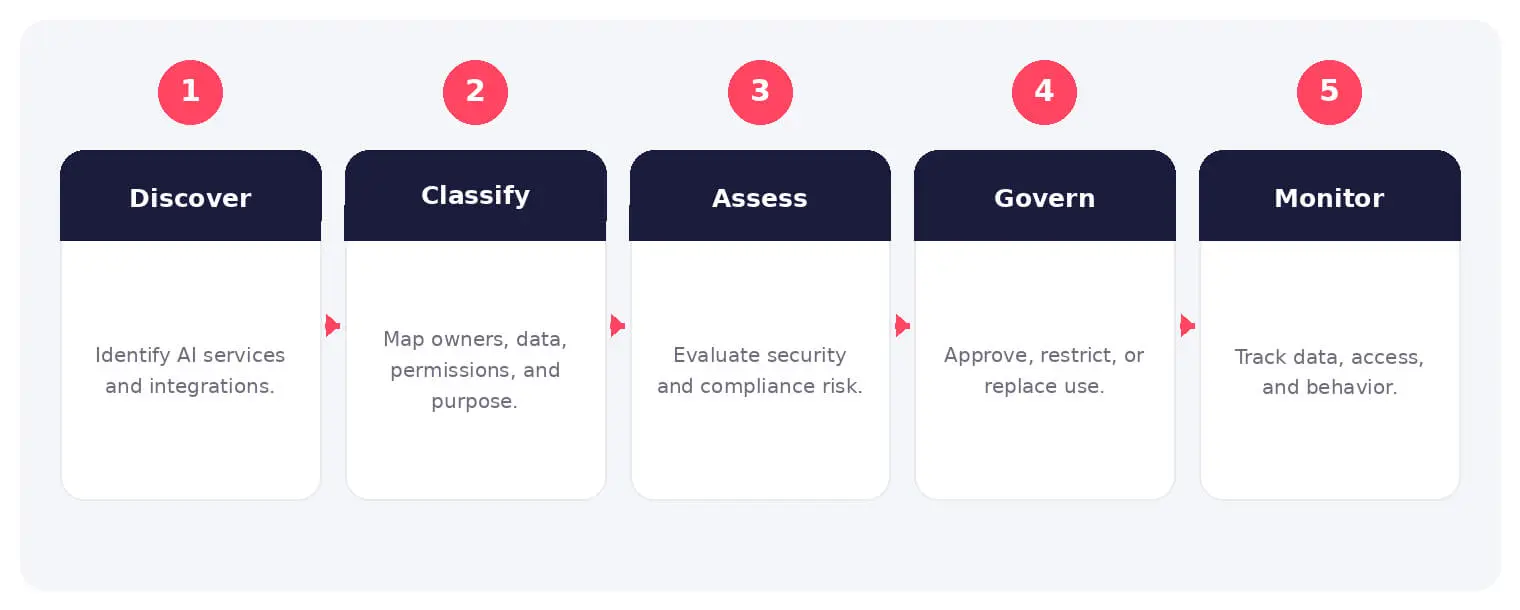
How It Works
The operating flow above turns the concept into observable steps. Exact implementations vary, but each stage needs accountable ownership, trusted inputs, documented policy, and evidence that analysts can use during investigation and review.
Employees may paste sensitive data into public assistants, connect unreviewed applications through OAuth, deploy models in personal cloud accounts, or embed AI-generated code and dependencies without security review. The problem is unmanaged use, not AI itself.
Common Types and Capabilities
- Unapproved generative-AI services
- Personal or departmental AI accounts
- Shadow AI agents and OAuth applications
- Unreviewed AI-generated code and models
Security and Business Risks
- Sensitive-data disclosure
- Persistent third-party access
- Untracked regulatory and retention exposure
- Vulnerable code and supply-chain dependencies
Warning Signs and Detection
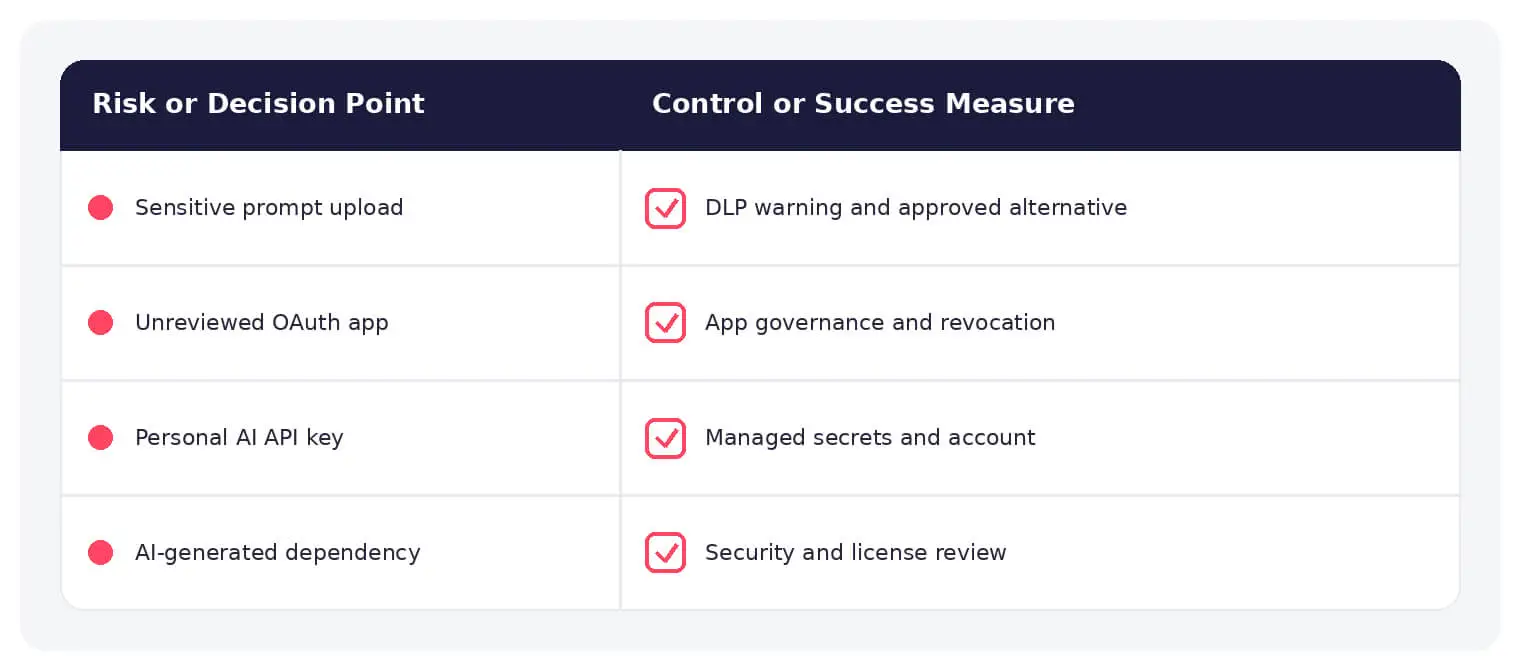
Monitor access to AI domains, large prompt uploads, browser extensions, new OAuth grants, API keys, unsanctioned cloud resources, AI-related expenses, code dependencies, unusual data movement, and public repositories containing prompts, models, or secrets.
Best Practices
Publish an approved-service catalog, provide usable alternatives, classify data, control OAuth and API keys, apply DLP carefully, discover before blocking, review vendors, require secure development, train users with realistic examples, and maintain exception workflows.
How SOCRadar Can Help
SOCRadar adds external visibility, threat intelligence, exposure context, and continuous monitoring to help teams validate and prioritize risks related to shadow AI. This context complements internal security operations, identity, response, and governance controls.
Explore SOCRadar Attack Surface Management or request a demo to strengthen threat-informed prevention and response.
Frequently Asked Questions
What Counts as Shadow AI?
Shadow AI is any artificial-intelligence tool, model, agent, or integration used without organizational approval, visibility, or governance. It includes pasting sensitive data into public assistants, connecting unreviewed applications through OAuth, deploying models in personal cloud accounts, and embedding AI-generated code without security review. The defining trait is that the use exists outside what security and governance teams can see or manage.
Why Is Shadow AI a Security Risk?
The primary concern is sensitive-data disclosure, since prompts, uploads, and connected files can expose confidential information to third-party services with unknown retention practices. Shadow AI also creates persistent third-party access through OAuth grants, untracked regulatory and retention obligations, and vulnerable code or supply-chain dependencies from unreviewed AI-generated output.
How Do Shadow AI Tools Enter an Organization?
It usually enters through routine employee actions rather than deliberate evasion: a personal account used for work tasks, a browser extension, an OAuth connection granted to a productivity tool, or AI-assisted code pasted into a project. Departments may also adopt tools on separate budgets, leaving procurement and security out of the decision.
What Are Common Examples of Shadow AI?
Common forms include unapproved generative-AI services, personal or departmental AI accounts, shadow AI agents and OAuth applications, and unreviewed AI-generated code or models. What they share is the absence of procurement review and security oversight, not any single technology.
How Does OAuth Contribute to Shadow AI Risks?
OAuth grants allow AI applications to read email, files, or calendars, and that access often persists after the original use case ends. Because the consent screens look familiar, users approve them quickly, and connections can remain active until someone audits the grant list and revokes what is no longer needed.
What Warning Signs Suggest Shadow AI Is in Use?
Look for access to AI service domains, unusually large prompt uploads, new browser extensions, fresh OAuth grants, unfamiliar API keys, unsanctioned cloud resources, and AI-related expense entries. Code dependencies and public repositories containing prompts, models, or secrets, along with unusual data movement, provide additional confirmation.
What Should Teams Do When They Find Shadow AI?
First identify what data and systems the tool reached, then revoke access that is no longer justified, including OAuth grants and API keys. Assess whether the disclosure creates regulatory or contractual obligations, and route any legitimate business need into an approved service or exception workflow instead of driving use further underground.
How Can Organizations Reduce Shadow AI Without Blocking Productivity?
Make the approved path easier than the workaround: publish an approved-service catalog, provide usable alternatives, and classify data so employees know what they can share. Control OAuth grants and API keys, apply DLP carefully, discover usage before blocking it, require secure development for AI-generated code, and train users with realistic examples.
Is Shadow AI the Same as Shadow IT?
Shadow AI is a subset of shadow IT, since both involve technology adopted outside approval processes. The AI focus adds specific risks, such as prompt-based data leakage, agent permissions, and unreviewed models or code dependencies, that conventional shadow IT programs may not account for.
Is Banning AI Tools an Effective Response?
Blanket bans tend to push use out of sight without removing the underlying demand. The problem is unmanaged use, not AI itself, so effective programs pair practical approved options with continuous visibility, clear ownership, and tested response procedures.