Email address spoofing makes a message appear to come from a sender other than its true source.
Attackers manipulate visible From fields, display names, reply-to addresses, or look-alike domains. Direct domain spoofing differs from mailbox compromise, where a message is sent from a real trusted account.
Key Takeaways
Display-name impersonation is a central category or capability.
Reliable assessment requires identity, timing, source, and operational context.
Detection should correlate external, identity, device, network, and cloud evidence.
Response should preserve evidence and remove every reusable access path.
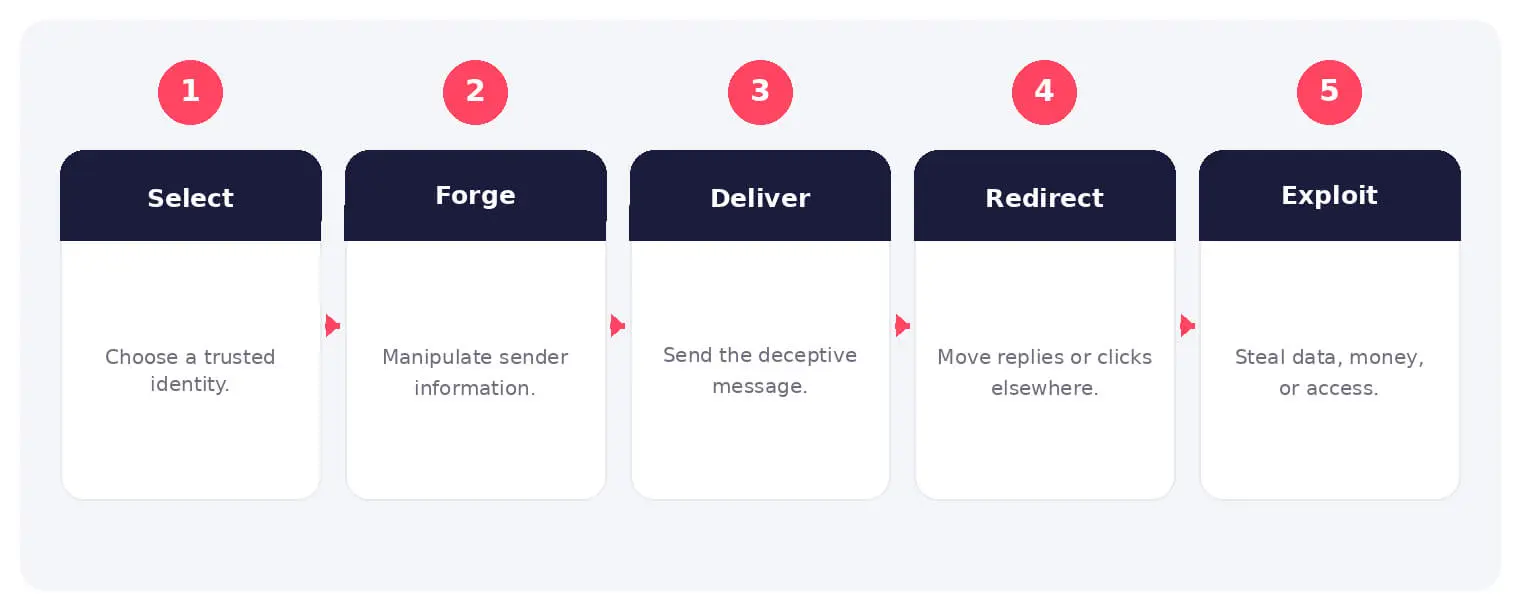
The main stages and decision points associated with email address spoofing.
How Email Address Spoofing Works
The sequence above provides a practical operating model. Individual stages may overlap, repeat, or involve different people and services, so analysts should validate each step against the available evidence.
Attackers manipulate visible From fields, display names, reply-to addresses, or look-alike domains. Direct domain spoofing differs from mailbox compromise, where a message is sent from a real trusted account.
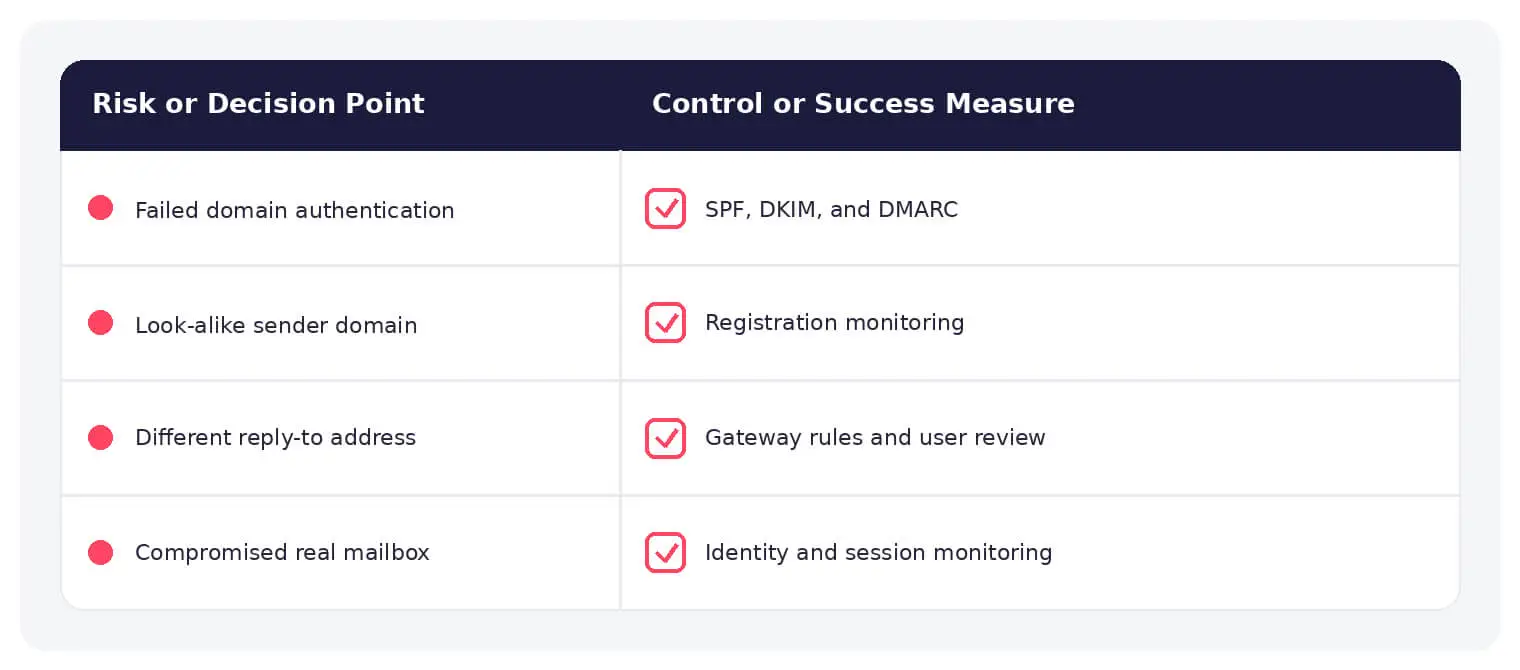
Deploy SPF and DKIM with an enforced DMARC policy, protect domains, monitor look-alikes, secure mailboxes with MFA, and verify sensitive requests separately.
A spoofed email address is a forged sender identity that makes a message appear to come from a trusted person or domain rather than its true source. Attackers manipulate the visible From field, display name, reply-to address, or use look-alike domains to create this false impression. The recipient sees a familiar sender while the actual origin is completely different.
How Does Email Address Spoofing Differ From a Compromised Mailbox?
In direct spoofing, the attacker never accesses a real account; they simply forge sender details so the message only appears to come from the trusted domain. In a mailbox compromise, a genuine account is actually used to send the message, which makes it far harder to catch with authentication checks alone. The distinction matters because each scenario requires different detection and response steps.
What Techniques Do Attackers Use to Spoof an Email Address?
Common techniques include display-name impersonation, direct domain spoofing, look-alike domain registration, and reply-to or return-path manipulation. Attackers often layer several methods, such as pairing a familiar display name with a slightly misspelled domain. This combination is designed to fool both busy employees and basic email filters.
Why Is Email Address Spoofing Dangerous for Businesses?
Spoofed emails are a primary delivery vehicle for credential theft, malware, payment diversion, and business email compromise (BEC). Because messages appear to come from an executive, vendor, or colleague, recipients are more likely to trust them and act quickly. A single successful spoof can lead to financial loss, data exposure, and lasting damage to customer trust.
How Can I Tell if an Email Address Has Been Spoofed?
Inspect the full message headers, focusing on SPF, DKIM, and DMARC authentication results, the return-path, and any mismatch between the display name and the actual sending domain. Watch for look-alike domains with subtle misspellings and reply-to values that differ from the From address. Unexpected urgency, unusual payment requests, or slightly off phrasing are also reliable warning signs.
Do SPF, DKIM, and DMARC Prevent Email Address Spoofing?
Together, these protocols make spoofing your domain much harder: SPF validates sending servers, DKIM cryptographically signs messages, and DMARC instructs receiving servers on how to handle failures. They do not stop look-alike domains or display-name impersonation, however, because those techniques never touch your actual domain. Deploy all three with an enforced DMARC policy and monitor look-alike registrations to close the remaining gaps.
What Should I Do if My Domain or Brand Is Being Spoofed?
Preserve the fraudulent messages and headers as evidence, notify employees and affected partners, and verify that SPF, DKIM, and an enforced DMARC policy are in place for your domain. Report abuse to the hosting provider or registrar behind the spoofing infrastructure, secure mailboxes with MFA, and confirm sensitive requests through a separate channel. Keep monitoring for new look-alike domains and repeat campaigns.
What Business Impact Can Email Spoofing Cause Beyond Stolen Credentials?
Spoofing erodes trust in business email itself: customers may hesitate to open legitimate messages, partners may question invoices, and finance teams may delay payments to verify authenticity. Payment diversion fraud and BEC losses can be substantial and are often difficult to recover. Reputational harm can persist long after the spoofing campaign ends.