

Mar 10, 2026
Jul 10, 2026
5 Mins Read
Sep 13, 2026
Table Of Content
Related Articles
SMS Bombing
Threat Actors
Jan 08, 2026
Dark Web Monitoring
Feb 19, 2026

Ransomware
Jan 31, 2026
OSINT Framework
Apr 17, 2026

What Is Threat Modeling?
Threat modeling is a structured process for identifying what must be protected, how a system could be attacked, and which design changes reduce the most important risks.
It is most effective early in design and whenever architecture, trust boundaries, data flows, dependencies, or abuse cases change. The output should guide engineering decisions, not become a diagram created only for compliance.
Key Takeaways
- Threat modeling is a structured process for identifying what must be protected, how a system could be attacked, and which design changes reduce the most important risks.
- It is most effective early in design and whenever architecture, trust boundaries, data flows, dependencies, or abuse cases change. The output should guide engineering decisions, not become a diagram created only for compliance.
- Missing trust boundaries and dependencies is a primary concern.
- Effective programs combine clear scope, evidence, accountable ownership, and continuous review.
How It Works
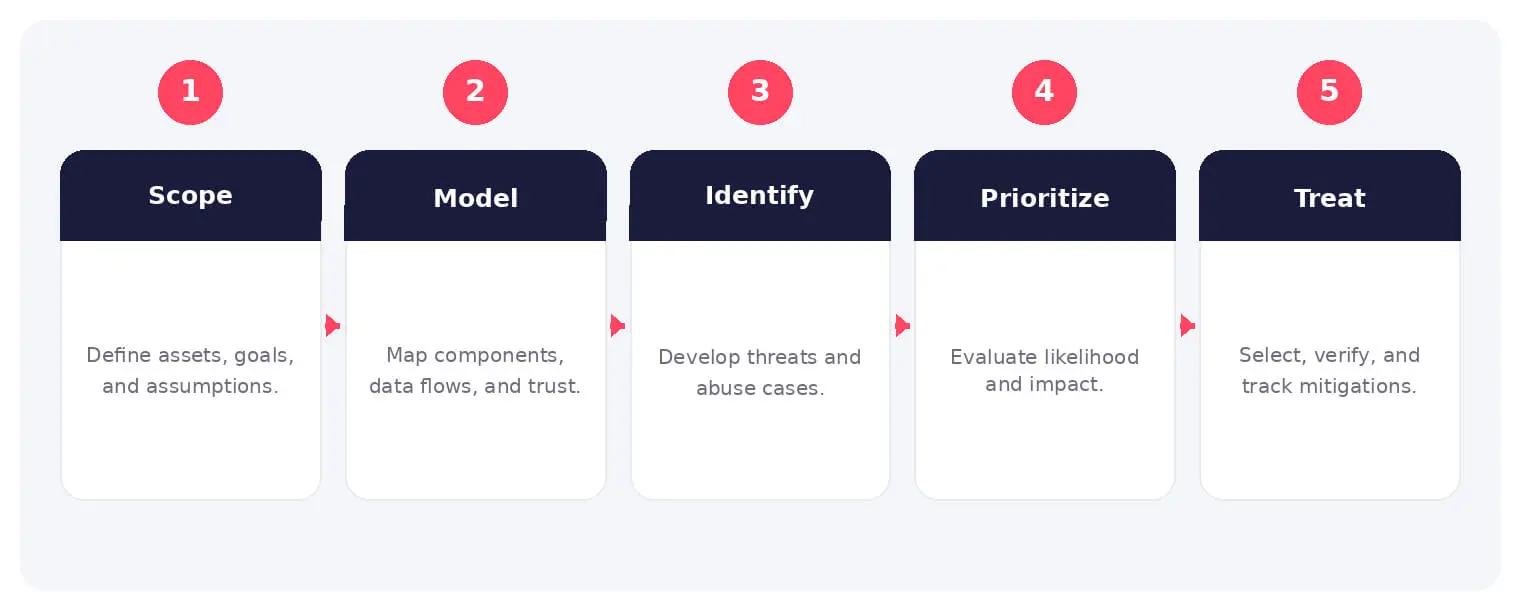
The operating flow above turns the concept into observable steps. Exact implementations vary, but each stage needs accountable ownership, trusted inputs, documented policy, and evidence that practitioners can use during review and decision-making.
It is most effective early in design and whenever architecture, trust boundaries, data flows, dependencies, or abuse cases change. The output should guide engineering decisions, not become a diagram created only for compliance.
Common Types and Capabilities
- STRIDE and data-flow analysis
- Attack trees and misuse cases
- PASTA and risk-centered modeling
- Cloud, application, and AI threat modeling
Security and Business Risks
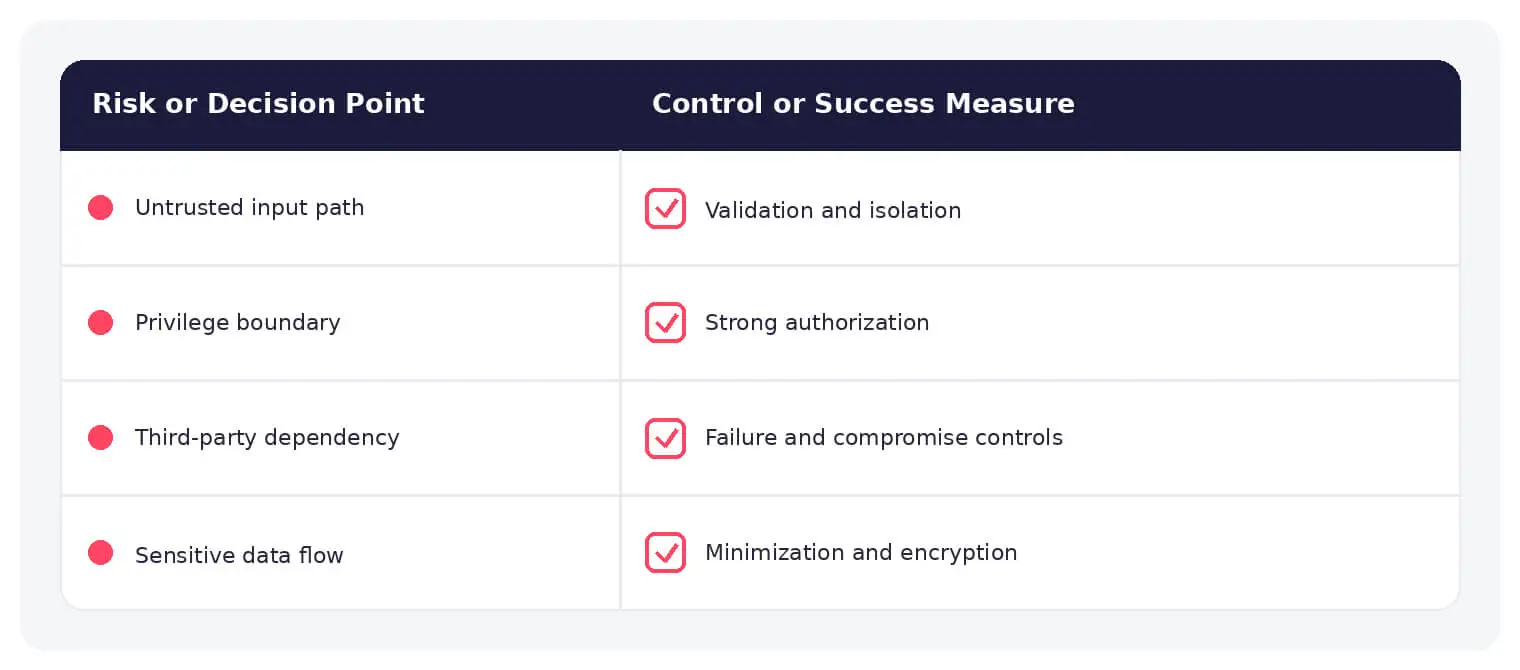
- Missing trust boundaries and dependencies
- Generic checklists detached from architecture
- Threats identified after costly design choices
- Mitigations that are never verified
Warning Signs and Detection
Review new internet exposure, privileged paths, data stores, trust-boundary crossings, third-party services, authentication and authorization flows, secrets, administrative functions, unsafe defaults, model or prompt inputs, and assumptions that changed after deployment.
Best Practices
Use current architecture, include engineering and security, focus on realistic abuse, record assumptions, prioritize design fixes, assign owners, link mitigations to tests, revisit models after material changes, and feed incident lessons into future designs.
How SOCRadar Can Help
SOCRadar adds external visibility, threat intelligence, exposure context, and continuous monitoring to help teams validate and prioritize risks related to threat modeling. This context complements internal engineering, governance, vulnerability, and security operations controls.
Explore SOCRadar Attack Surface Management or request a demo to strengthen threat-informed prevention and response.
Frequently Asked Questions
What Is Threat Modeling in Software Security?
Threat modeling is a structured process for identifying what a system must protect, how an attacker could abuse it, and which design changes reduce the most significant risks. It examines data flows, trust boundaries, and dependencies to uncover weaknesses before code is written or deployed.
Which Frameworks Are Commonly Used for Threat Modeling?
Common approaches include STRIDE, which categorizes threats as spoofing, tampering, repudiation, information disclosure, denial of service, and elevation of privilege; PASTA, which centers analysis on risk; and attack trees or misuse cases, which map specific abuse paths. Teams often combine these methods with data-flow diagrams rather than relying on one framework alone.
What Are the Main Steps in a Threat Modeling Process?
A typical process defines the scope, diagrams the architecture and data flows, identifies trust boundaries and critical assets, enumerates threats against each element, ranks risks by impact and likelihood, and assigns mitigations with owners. Each stage should produce evidence engineers can act on during design review.
When Should Threat Modeling Be Performed?
Teams gain the clearest benefit when modeling happens early in design, before costly architectural choices are locked in. It should also be revisited whenever trust boundaries, data flows, dependencies, authentication flows, or abuse cases change, and after incidents or deployments reveal that earlier assumptions no longer hold.
Why Are Missing Trust Boundaries a Serious Threat Modeling Risk?
Trust boundaries mark where data or control crosses between components with different privilege levels, so overlooking them hides entire classes of attacks such as privilege escalation or cross-service injection. Unmapped third-party dependencies create similar blind spots because their risks are never analyzed in the model.
What Warning Signs Suggest a Threat Model Is Outdated?
Common indicators include models that no longer match the deployed architecture, mitigations that were recorded but never verified, new internet exposure or privileged paths absent from the diagram, and threats raised only after implementation is complete. Generic checklists detached from the actual design are another red flag.
How Should Teams Respond to Risks Identified During Threat Modeling?
Address the most important risks with design-level fixes first, assign an accountable owner to each mitigation, and link mitigations to tests or code reviews so they can be verified rather than assumed. Record the assumptions behind each decision and revisit them after material changes to the system.
How Does Threat Modeling Differ From Penetration Testing?
Threat modeling is a proactive design-time analysis that identifies where a system is likely to be attacked, while penetration testing empirically exploits weaknesses in a running system. They complement each other: models guide testers toward high-risk paths, and test results feed lessons back into future models.
Is Threat Modeling Only Needed for Compliance?
Treating it as a checkbox artifact is a common misconception that produces diagrams nobody uses. A useful model changes engineering decisions, including which designs are rejected, which controls are added, and which tests are written, and it is maintained over time rather than produced once for an audit.
How Can Threat Modeling Fit Into Agile and DevOps Workflows?
Teams can run lightweight modeling sessions during design reviews, keep data-flow diagrams in version control alongside code, and trigger re-modeling when changes cross trust boundaries or add dependencies. Automating checks against model assumptions helps keep the practice sustainable without heavy documentation overhead.