


Jun 15, 2026
Table Of Content
What Is a Dark Web Monitoring API?
Why Businesses Need Dark Web Monitoring APIs in 2025
Use Cases: How Organizations Leverage Dark Web Monitoring APIs
How a Dark Web Monitoring API Works Behind the Scenes
Integrating Dark Web Intelligence into Your Security Stack
Comparing Top Dark Web Monitoring APIs: What Sets Them Apart?
Best Practices for Using a Dark Web Monitoring API Effectively
Future of Dark Web Monitoring APIs: AI, Automation & Beyond
FAQ – People Also Ask
Related Articles
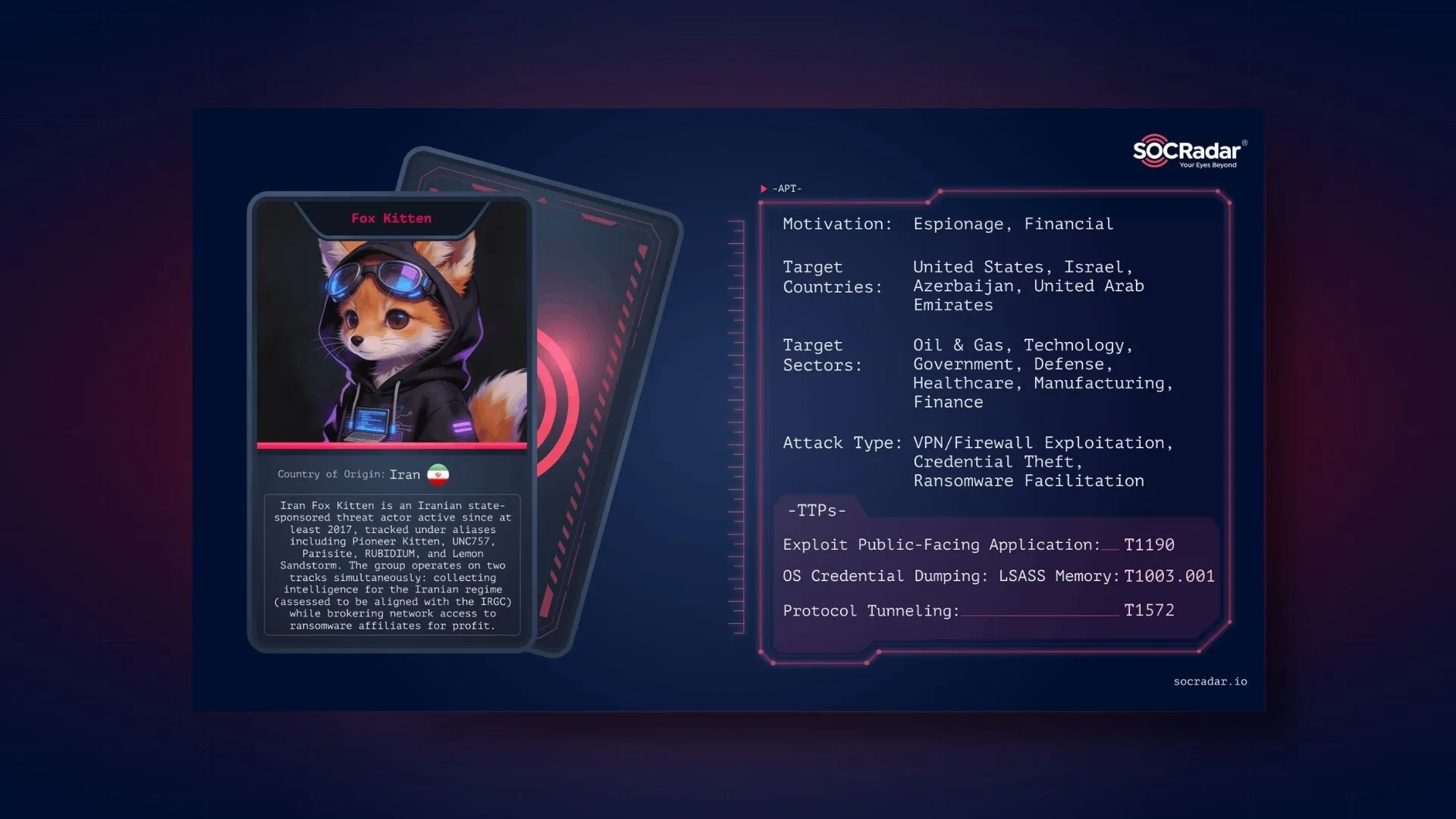
Dark Web Profile: Fox Kitten
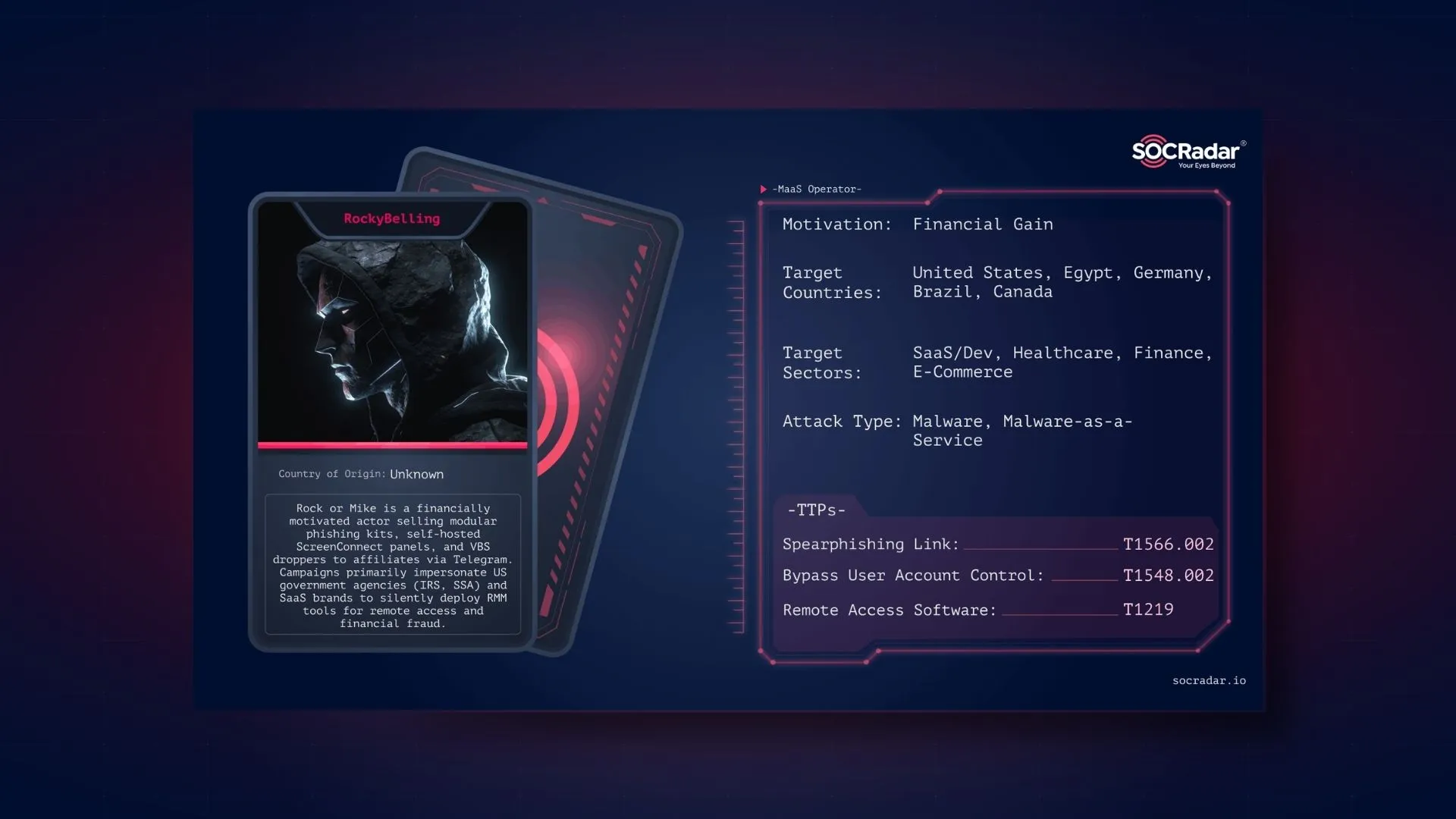
Dark Web Profile: Rock
Jun 12, 2026
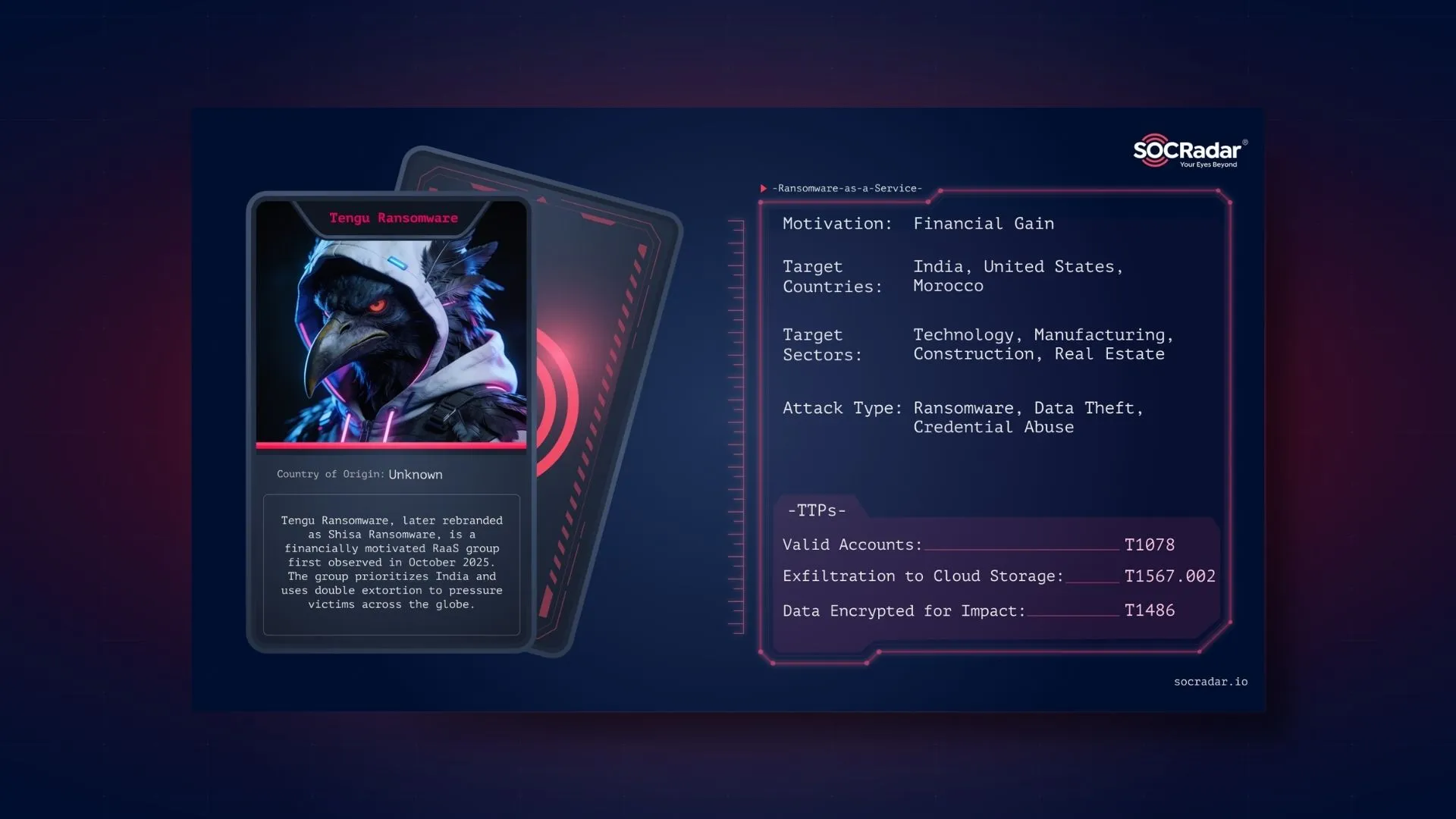
Dark Web Profile: Tengu Ransomware (Shisa)
Jun 11, 2026
Jul 10, 2025
6 Mins Read

What Is a Dark Web Monitoring API?
A Dark Web Monitoring API is a tool that enables organizations to automatically detect stolen credentials, leaked data, and other cyber threats hidden within dark web sources.
Dark web monitoring API helps security teams stay ahead by delivering real-time alerts from hacker forums, underground markets, and encrypted messaging channels. This integration allows businesses to act quickly and reduce risk.
Why Businesses Need Dark Web Monitoring APIs in 2025
As we move deeper into 2025, digital threats are growing more sophisticated — and so is the need to detect exposed data before it’s used maliciously.
Businesses today face everything from phishing kits to Ransomware-as-a-Service. Dark web APIs give organizations the edge by automating threat detection and offering insights that would otherwise be difficult to access. Rather than manually scouring hidden sources, security teams can rely on real-time alerts delivered straight into their tools.

Key reasons to adopt dark web APIs:
- Prevent credential-based attacks and fraud
- Monitor for exposed customer data and internal leaks
- Stay informed about new phishing kits and TTPs
- Meet regulatory requirements for breach detection
Key Features to Look for in a Dark Web Monitoring API
A strong API will offer timely insights, broad coverage, and seamless integration into your existing security systems.
| Feature | What It Offers |
| Real-time alerts | Immediate notifications when threats or data leaks are discovered |
| Deep source coverage | Access to forums, marketplaces, onion sites, Telegram channels, and more |
| Executive monitoring | Tracks exposure of high-profile individuals or company executives |
| Brand protection | Detects misuse of company names, domains, or visual branding |
| Integration-ready | RESTful design that connects with SIEMs, SOARs, and dashboards |
Use Cases: How Organizations Leverage Dark Web Monitoring APIs
Companies across different industries are using dark web monitoring APIs to improve response times and stay informed.
Some real-world examples include:
- Banks identifying exposed cardholder information to prevent fraud
- Retail brands monitoring customer data leaks tied to loyalty programs
- Healthcare providers catching PHI breaches before regulatory fines occur
- Tech companies flagging stolen source code or developer credentials
- Public sector teams tracking nation-state cyber campaigns or data leaks
How a Dark Web Monitoring API Works Behind the Scenes
These APIs operate through a mix of automated crawling and threat analysis.
Here’s how it typically works:
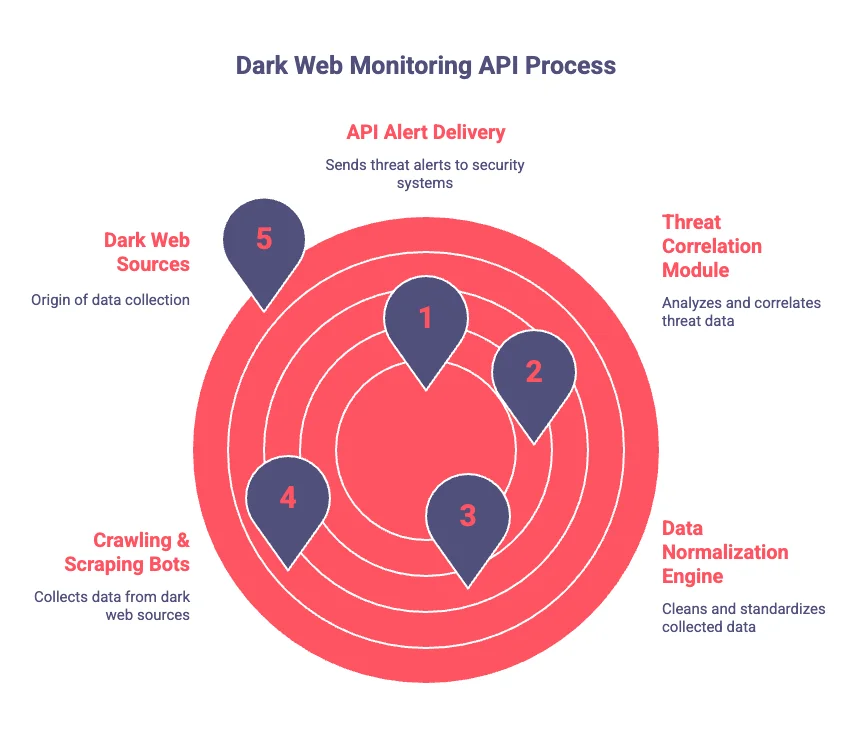
- Crawling & Collection: Bots gather data from marketplaces, hidden forums, and messaging apps.
- Processing: The raw data is structured, filtered, and tagged.
- Matching: Threat intelligence systems match this data against known assets like domains or credentials.
- Alerting: Relevant findings are sent through the API to your internal systems.
Integrating Dark Web Intelligence into Your Security Stack
With the right API, integrating dark web insights into your current setup is straightforward.
Dark Web Monitoring API works well with:
- Security Information and Event Management (SIEM) tools
- Security Orchestration and Automation (SOAR) platforms
- Cyber Threat Intelligence Platforms (TIPs)
- Custom-built security dashboards
This makes it easier to respond quickly and enrich alerts without switching between tools.
Comparing Top Dark Web Monitoring APIs: What Sets Them Apart?
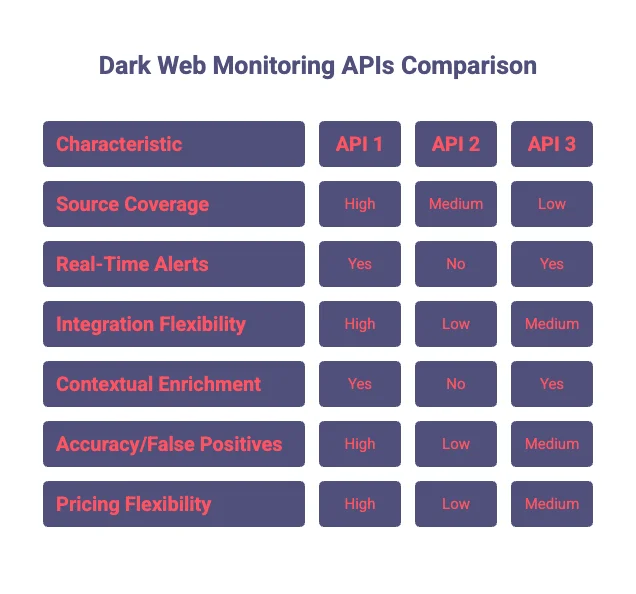
Not every solution offers the same level of coverage or insight. Some provide basic feeds, while others deliver enriched context.
Compared to older-generation feeds, top Dark Web Monitoring APIs stands out by offering:
- Broader source monitoring, including private and closed communities
- Contextual intelligence powered by AI
- Prioritized alerts based on severity and impact
- Easy-to-use APIs that fit into both large and small environments
Best Practices for Using a Dark Web Monitoring API Effectively
Getting the most out of your API means understanding your risk profile and configuring alerts appropriately.
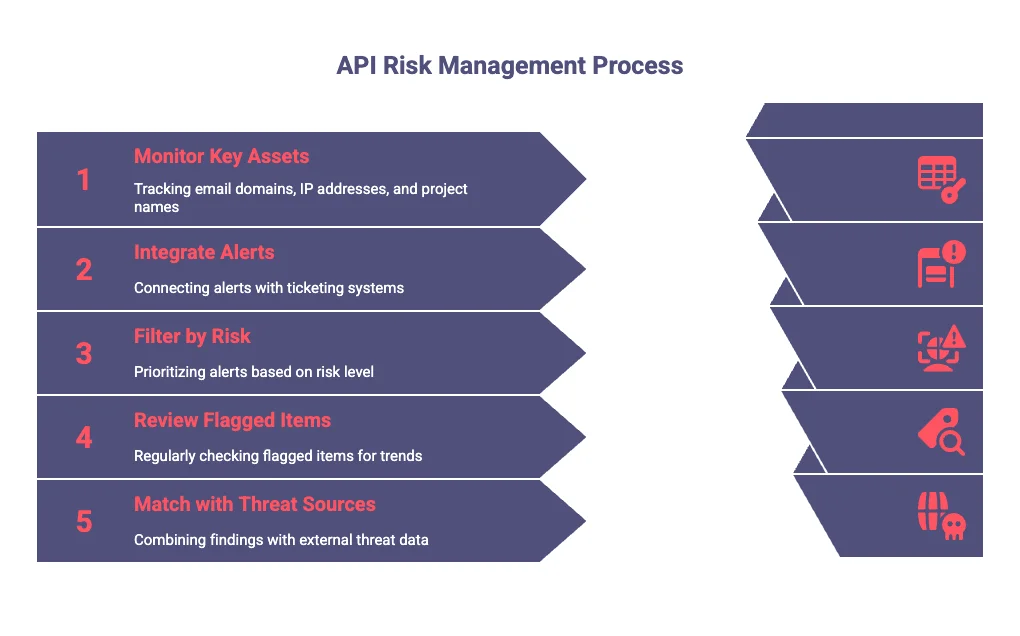
Some best practices include:
- Set up monitoring for key assets: email domains, IP addresses, and sensitive project names
- Integrate alerts with internal ticketing systems for automatic triage
- Filter alerts by risk level to avoid fatigue
- Review flagged items regularly to identify trends
- Match findings with other threat sources to build context
Compliance & Privacy Considerations in Dark Web Monitoring
Dark web monitoring often raises questions around legality and privacy, but most tools are designed to focus strictly on publicly available or openly shared content. Rather than engaging in unauthorized access, ethical monitoring platforms rely on passive data collection from sources like forums, marketplaces, and breach dumps.
In many jurisdictions, monitoring these sources is legal as long as data collection avoids active intrusion, surveillance, or deceptive techniques. To ensure compliance, organizations should align their use of monitoring tools with international standards such as GDPR, HIPAA, or ISO frameworks.
For industries with strict data handling requirements—such as finance, healthcare, or government—it’s best to involve legal and compliance teams when deploying dark web monitoring to ensure all activities remain within regulatory bounds.
Future of Dark Web Monitoring APIs: AI, Automation & Beyond
The future of dark web monitoring lies in predictive capabilities and broader integration with cybersecurity ecosystems.
What’s on the horizon:
- Better identification of synthetic threats and AI-generated phishing content
- Automated containment actions, such as password resets and brand takedown requests
- Integration with open-source and surface web intel for greater visibility
- Intelligent prioritization of alerts based on sector or asset value
FAQ – People Also Ask
What is a Dark Web Monitoring API?
It’s a system that scans and delivers threat data from dark web sources, such as hacker forums and marketplaces.
How does a dark web API work?
It crawls hidden online spaces, collects data, and sends alerts when matching sensitive information.
Why should I integrate a dark web monitoring API into my security stack?
To catch leaks and threats early — often before public disclosure or customer impact.
Can a dark web API detect stolen credentials and sensitive data leaks?
Yes. APIs are designed to flag leaked logins, PII, and company assets.
Is it legal to monitor the dark web using APIs?
Generally, yes — when the monitoring is passive and limited to publicly available content.
What kind of data sources do dark web monitoring APIs use?
They include forums, black markets, chat apps, paste sites, and breach dumps.
How does a dark web API differ from traditional threat intelligence feeds?
It focuses on dark web-specific threats and delivers more relevant, high-priority alerts.
What industries benefit most from dark web monitoring APIs?
Banking, healthcare, e-commerce, government, and tech firms are among the top beneficiaries.
Can I receive real-time alerts from a dark web monitoring API?
Yes, most tools offer real-time updates via webhook or API.
How do I choose the right dark web monitoring API for my organization?
Evaluate based on coverage, data quality, integration, and the context provided with alerts.