

Mar 10, 2026

May 14, 2026
5 Mins Read
Sep 13, 2026
Table Of Content
Related Articles

SMS Bombing

Threat Actors
Jan 08, 2026
Dark Web Monitoring
Feb 19, 2026

Ransomware
Jan 31, 2026
OSINT Framework
Apr 17, 2026

What Is Personally Identifiable Information (PII)?
Personally identifiable information (PII) is information that can identify a specific person directly or can be linked with other data to distinguish that person. Examples include names, government identifiers, addresses, biometrics, account details, device identifiers, and combinations of demographic or behavioral data.
PII definitions vary by law, jurisdiction, and context. Security teams should also account for personal data categories that may use different legal terminology. Information that seems nonidentifying alone can become identifying when combined with other records.
Key Takeaways
- Direct identifiers such as names and ID numbers is a central category or technique.
- Reliable assessment requires source, ownership, timing, and operational context.
- Detection should connect external evidence with identity, device, network, and business signals.
- Response should protect affected people and remove reusable access paths.
How Personally Identifiable Information (PII) Works
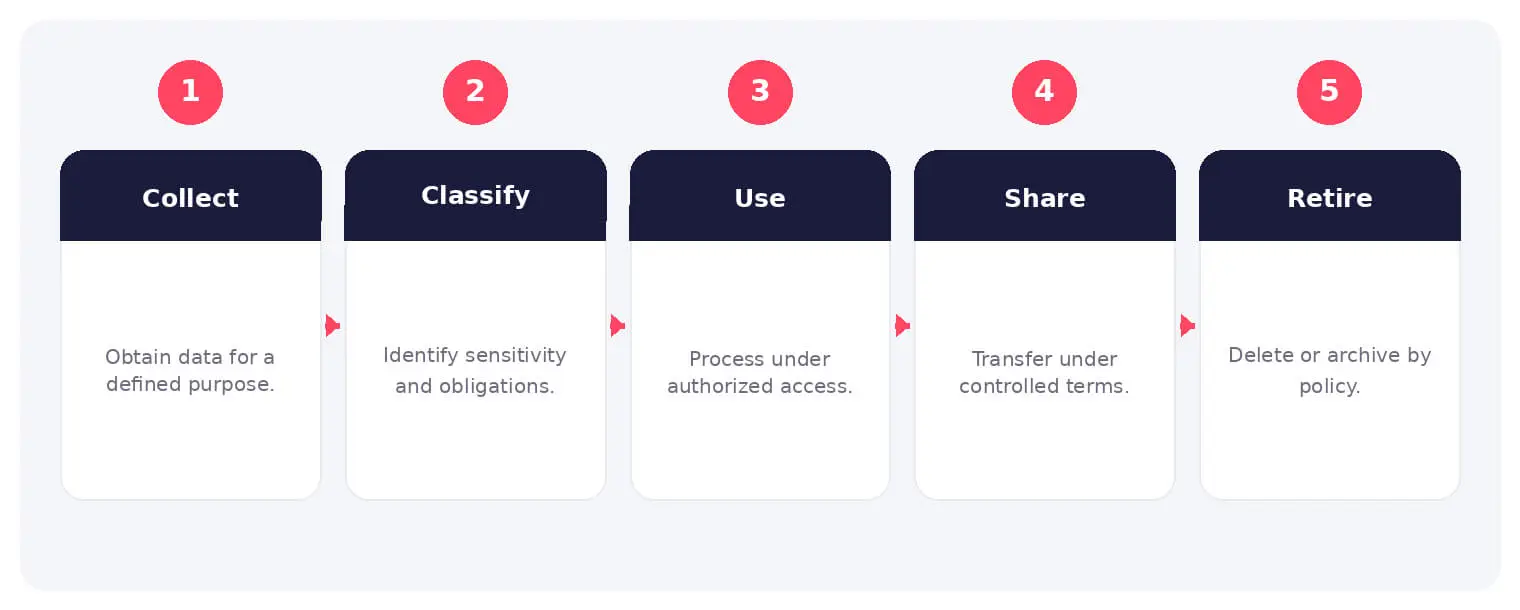
The sequence above provides a practical operating model. Individual steps can overlap, repeat, or involve different people and services, so each stage should be validated against available evidence.
PII definitions vary by law, jurisdiction, and context. Security teams should also account for personal data categories that may use different legal terminology. Information that seems nonidentifying alone can become identifying when combined with other records.
Common Types and Techniques
- Direct identifiers such as names and ID numbers
- Indirect and quasi-identifiers
- Financial, account, and contact information
- Biometric, location, device, and behavioral data
Security, Privacy, and Business Risks
- Identity theft, fraud, and account takeover
- Privacy harm, discrimination, and personal safety risk
- Regulatory, contractual, and notification duties
- Loss of customer and employee trust
Warning Signs and Validation
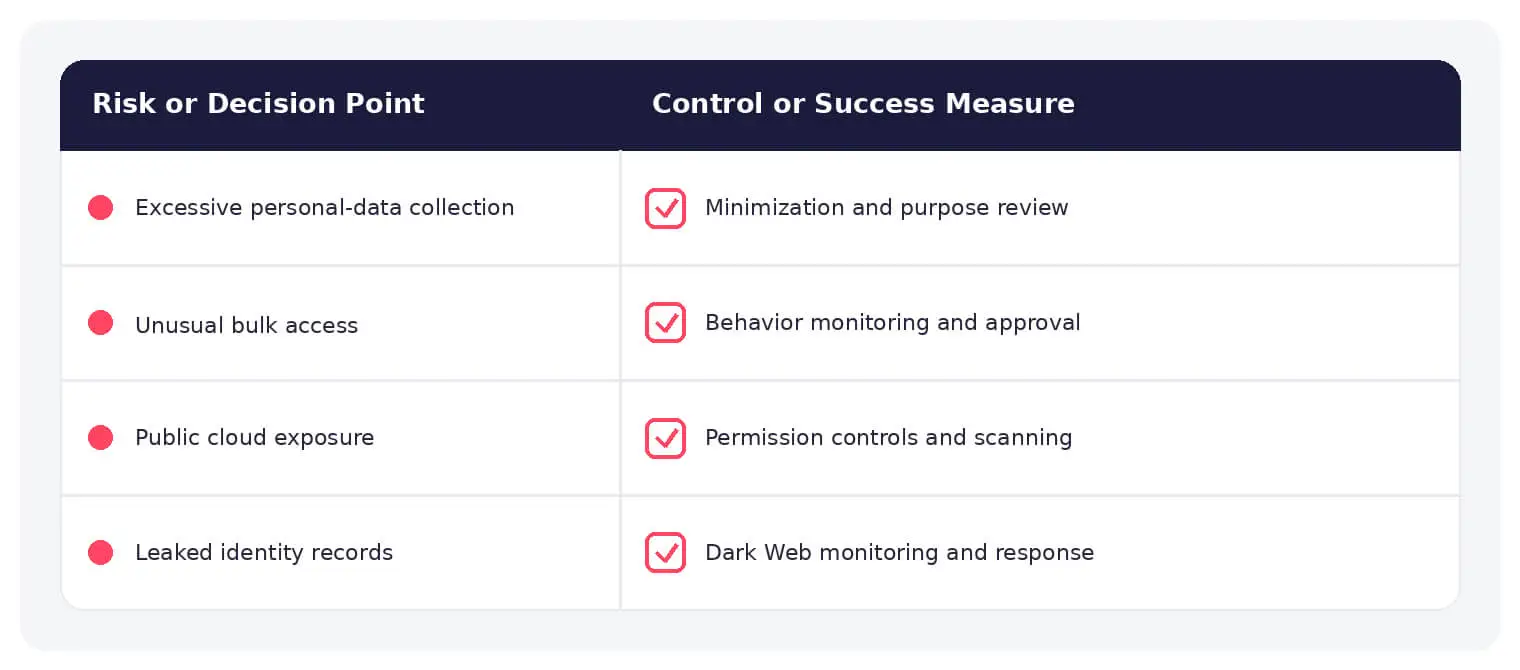
Inventory sensitive data, monitor unusual access and exports, review sharing links and cloud permissions, detect exposed records externally, and track data flows across suppliers and applications.
Prevention and Response
Minimize collection, define purpose and retention, classify data, use least privilege, encrypt information, mask test data, monitor access, assess suppliers, and securely delete records when no longer needed.
How SOCRadar Can Help
SOCRadar combines external intelligence, Dark Web visibility, brand monitoring, attack-surface discovery, and contextual enrichment to help teams identify exposure and investigate activity connected to personally identifiable information.
Explore SOCRadar Dark Web Monitoring or request a demo to strengthen external threat detection and response.
Frequently Asked Questions
What Counts as Personally Identifiable Information (PII)?
Any information that can identify a specific person on its own, or when combined with other records, can qualify as PII. This includes names, government identifiers, addresses, biometrics, account details, device IDs, and combinations of demographic or behavioral attributes. Exact definitions vary by law and jurisdiction, so classification should reflect the context in which the data is used.
What Is the Difference Between Direct and Indirect Identifiers?
Direct identifiers, such as a full name, passport number, or email address, can single out a person without additional information. Indirect or quasi-identifiers, such as ZIP code, birth date, job title, or device fingerprint, identify someone only when combined. Treating quasi-identifiers as low risk is a common mistake because linked datasets can re-identify individuals.
Do IP Addresses and Cookies Count as PII?
It depends on the law and context. Regulations such as the GDPR treat IP addresses and online identifiers as personal data when they can be linked to an individual, while other frameworks assess them case by case. If an IP address or cookie is tied to an account or behavioral profile, it should generally be handled as identifying information.
Why Is Data That Seems Anonymous Still a Risk?
Records that appear nonidentifying can become identifying when aggregated with other sources, a problem often called the mosaic effect. Studies have shown that combinations as simple as ZIP code, birth date, and gender can single out individuals. Effective anonymization removes or reduces re-identification pathways rather than simply stripping obvious names.
Which Types of PII Are Considered Sensitive?
Sensitive PII generally covers categories whose exposure can cause significant harm, such as:
- Government ID numbers and financial account data
- Login credentials and authentication details
- Biometric and health records
- Information about children
Many regulations impose stricter handling, encryption, and notification requirements for these categories.
What Are the Main Risks of Exposed PII?
Exposed PII fuels identity theft, account takeover, targeted phishing, financial fraud, and extortion. Adversaries frequently combine leaked records with credential stuffing and social engineering to reach accounts and systems. Organizations also face regulatory notification duties, contractual liabilities, and erosion of customer and employee trust.
How Can Organizations Detect Exposed PII?
Detection blends internal and external signals: inventorying sensitive data stores, watching for unusual access patterns and bulk exports, reviewing sharing links and cloud permissions, and scanning for leaked records circulating outside the network. Mapping data flows to suppliers and third-party applications also shows where PII travels and who can reach it.
What Should You Do After a PII Exposure Incident?
Contain the exposure, determine which individuals and data elements are affected, and remove reusable access paths such as leaked credentials and active sessions. Notify affected people and regulators where required by law, and offer practical protections such as account monitoring. If passwords were exposed, force resets and confirm that sessions are revoked, since resets alone do not always terminate stolen sessions.
How Should PII Retention and Deletion Be Managed?
Retain PII only as long as a documented business, legal, or contractual purpose exists, with retention periods defined per data category. Apply secure deletion once the purpose ends, including backups and copies held by suppliers. Minimizing collection at the outset reduces the volume of data that must be protected and eventually destroyed.
Does Encrypting or Hashing Data Remove Its PII Status?
Not necessarily. Encrypted data usually remains personal data because it can be decrypted with the key, and hashed values can still be identifying if the originals are guessable or the hashing is unsalted. Pseudonymized datasets often stay within the scope of privacy laws because re-identification may remain possible.