

Oct 07, 2026
Table Of Content
What Is Deep Web Threat Intelligence?
Common Misconceptions Explained
What Exactly Is Deep Web Intelligence & How It Strengthens Cybersecurity
How Does It Compare to Surface and Dark Web Threat Intelligence?
How Do Cybersecurity Teams Collect Intelligence from the Deep Web?
Who Needs Deep Web Threat Intelligence?
Conclusion
Related Articles
NetScaler C2: CVE-2026-88771 Exploitation Operation




Aug 08, 2025
8 Mins Read

Summarize with:
What Is Deep Web Threat Intelligence?
Threat intelligence is only as strong as the sources that feed it. While most organizations are familiar with surface web data and even dark web monitoring, there’s a lesser-known but highly valuable space in between: the deep web. This hidden layer of the internet, inaccessible to standard search engines, holds a wealth of information that can significantly improve an organization’s threat detection and response efforts.

An AI illustration about exploring the hidden layers of the internet.
Understanding what deep web threat intelligence entails begins with clearing up widespread confusion, especially the frequent conflation of the deep web with the dark web. Let’s explore what the deep web truly is, why it’s not inherently malicious, and why it’s becoming an essential component of modern cybersecurity strategies.
Common Misconceptions Explained
The terms deep web and dark web are frequently used interchangeably, leading to widespread confusion. This misunderstanding often paints the deep web as a hub for illicit activity, when in fact, that reputation largely belongs to the dark web. To clear things up, it’s helpful to look at each term separately.

What Is the Deep Web?
The deep web includes all parts of the internet that aren’t indexed by traditional search engines. This encompasses a wide range of everyday online content: private databases, subscription-based publications, internal corporate systems, online banking portals, academic journals, and webmail accounts. These pages require login credentials or special access, making them invisible to standard web crawlers.
In other words, the deep web is not some secretive underworld; it is just the portion of the internet that lives behind authentication barriers. Most of it is completely benign and even essential for businesses, researchers, and individuals.
How Is the Deep Web Different from the Dark Web?
The dark web, by contrast, is a much smaller and intentionally hidden segment of the deep web. Accessing it requires specialized software, like Tor, which anonymizes user activity and masks server locations. While not all dark web activity is illegal, it is often linked to cybercrime, black markets, and underground forums.
So why the mix-up? Both spaces are unindexed and not publicly searchable, but their purposes and accessibility are vastly different. The deep web protects privacy and restricts access for legitimate reasons, while the dark web is designed to provide anonymity – often for actors with malicious intent.
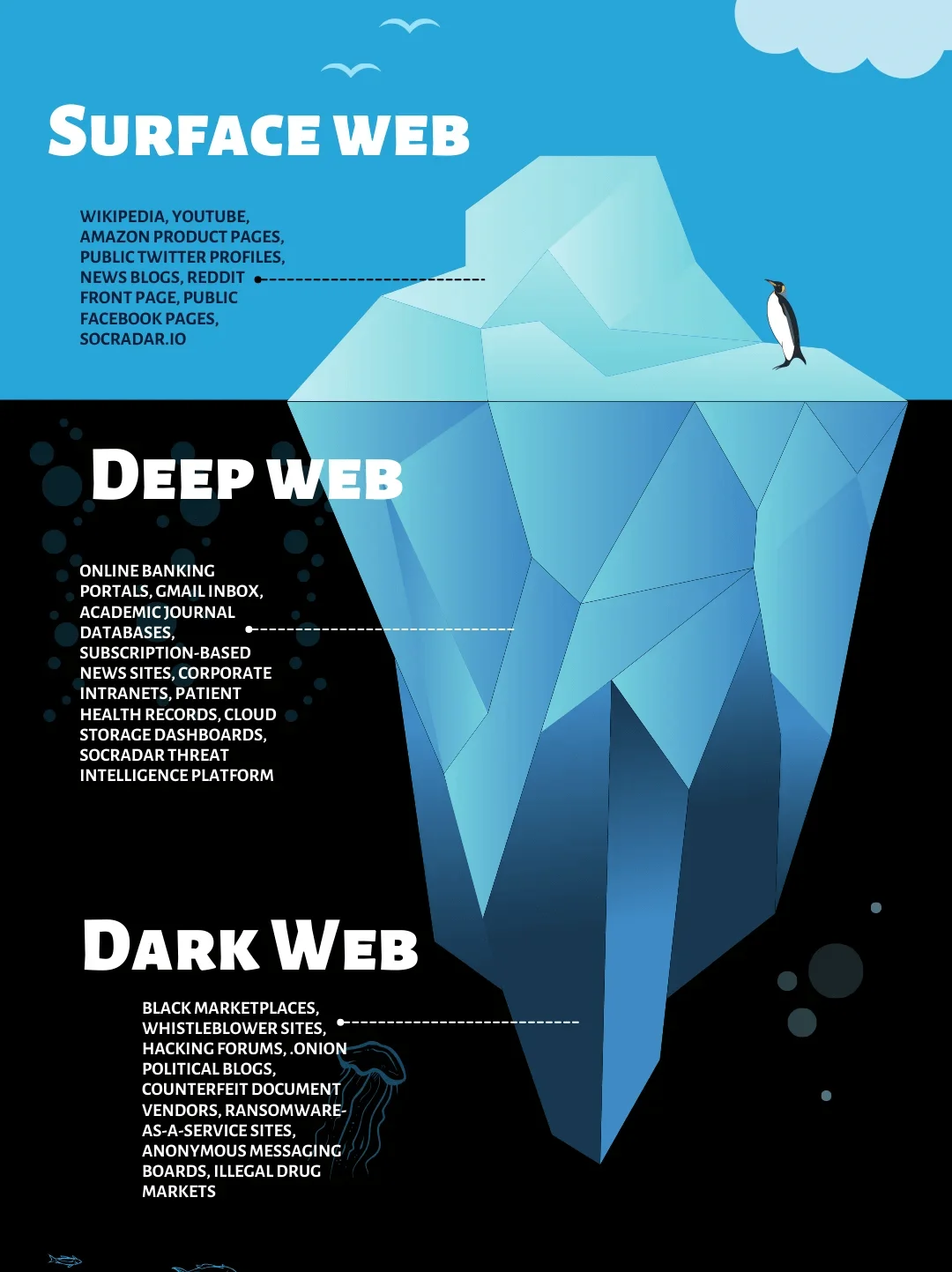
Surface Web vs Deep Web vs Dark Web
It’s important to understand that thedeep web is not inherently dangerous. While some areas may host sensitive discussions or be abused by threat actors, the vast majority of its content serves functional and secure purposes. That said, some of its overlooked corners (like unindexed message boards or password-protected hacker forums) can yield critical threat intelligence when monitored effectively.
What Exactly Is Deep Web Intelligence & How It Strengthens Cybersecurity
Deep web threat intelligence refers to the practice of gathering and analyzing relevant data from the deep web to detect, assess, and respond to emerging cyber threats. Key elements of deep web threat intelligence typically include:
- Credential leaks found in paste sites or forums
- Early mentions of vulnerabilities or exploit kits
- Discussions among cybercriminals in gated communities
- References to compromised systems or data
- Planning or coordination of attacks in niche groups
Because this intelligence is sourced from hidden areas, it often delivers more timely and targeted insights than conventional sources. It can flag Indicators of Compromise (IOCs), exposed infrastructure, or mentions of specific organizations well before these issues make it to surface-level discussions.
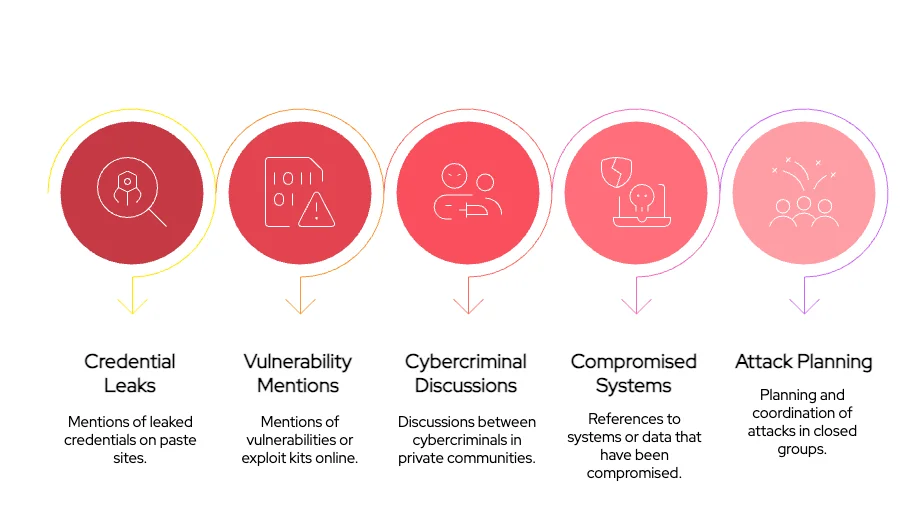
What type of intelligence can you find on the deep web?
For cybersecurity teams, deep web intelligence acts as an early warning system. By surfacing hidden conversations and emerging tactics, it helps organizations identify threats proactively rather than reacting after damage is done. It also supports better threat actor attribution, enabling defenders to connect digital activity to known adversaries, campaigns, or malware strains.
Ultimately, incorporating deep web intelligence into security operations enhances visibility and speeds up incident response. When combined with insights from the surface and dark web, it provides a more holistic view.
How Does It Compare to Surface and Dark Web Threat Intelligence?
Effective cyber threat intelligence comes from understanding multiple layers of the internet. The surface web, deep web, and dark web each contribute different types of data – some more visible, others more obscure.
| Web Layer | Type of Intelligence | Best Used For |
| Surface Web | Publicly visible information | News tracking, vulnerability disclosures, reputation monitoring |
| Deep Web | Restricted access, non-indexed content | Early detection, credential leaks, private threat discussions |
| Dark Web | Anonymized, often criminal environments | Post-breach insights, malware trade, ransomware tracking |
While all three layers provide value, deep web intelligence stands out for its early-warning potential. It uncovers emerging threats in closed or gated communities, before they’re exposed to the broader public or executed by attackers. That makes it a vital layer in any organization’s threat detection strategy.
How Do Cybersecurity Teams Collect Intelligence from the Deep Web?
Accessing the deep web for threat intelligence purposes is not as simple as typing a few keywords into a search engine. Because this content is hidden behind logins or designed for closed user groups, cybersecurity teams must use targeted techniques and specialized tools to uncover actionable insights.
What Are the Techniques and Tools Used?
Deep web intelligence gathering typically involves a combination of automated monitoring and human-led analysis. Teams rely on web crawlers, custom scripts, and APIs to scan forums, paste sites, file-sharing platforms, and other unindexed sources.
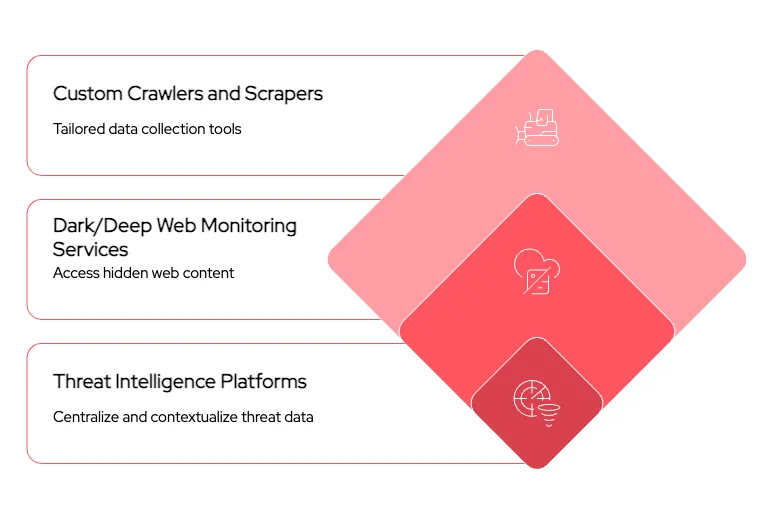
Common tools for threat deep web threat assessment
Commonly used tools include:
- Threat intelligence platforms (TIPs): These aggregate data from a variety of sources, including the deep web, and enrich it with context. Leading platforms offer filtering, tagging, and alerting features to make the data usable in real time.
- Dark/deep web monitoring services: These can provide access to deep web activity, indexing content from hidden forums, breach data repositories, and more.
- Custom crawlers and scrapers: Security teams sometimes build proprietary tools tailored to industry-specific forums or regional cybercrime communities.
These tools not only identify threats but also help track trends, correlate events, and monitor threat actor behavior over time.
SOCRadar’s Extended Threat Intelligence (XTI) platform also offers advanced monitoring capabilities across deep web and dark web spaces, delivering timely alerts on compromised credentials, exposed assets, and threat actor chatter. All within a centralized, analyst-friendly dashboard.
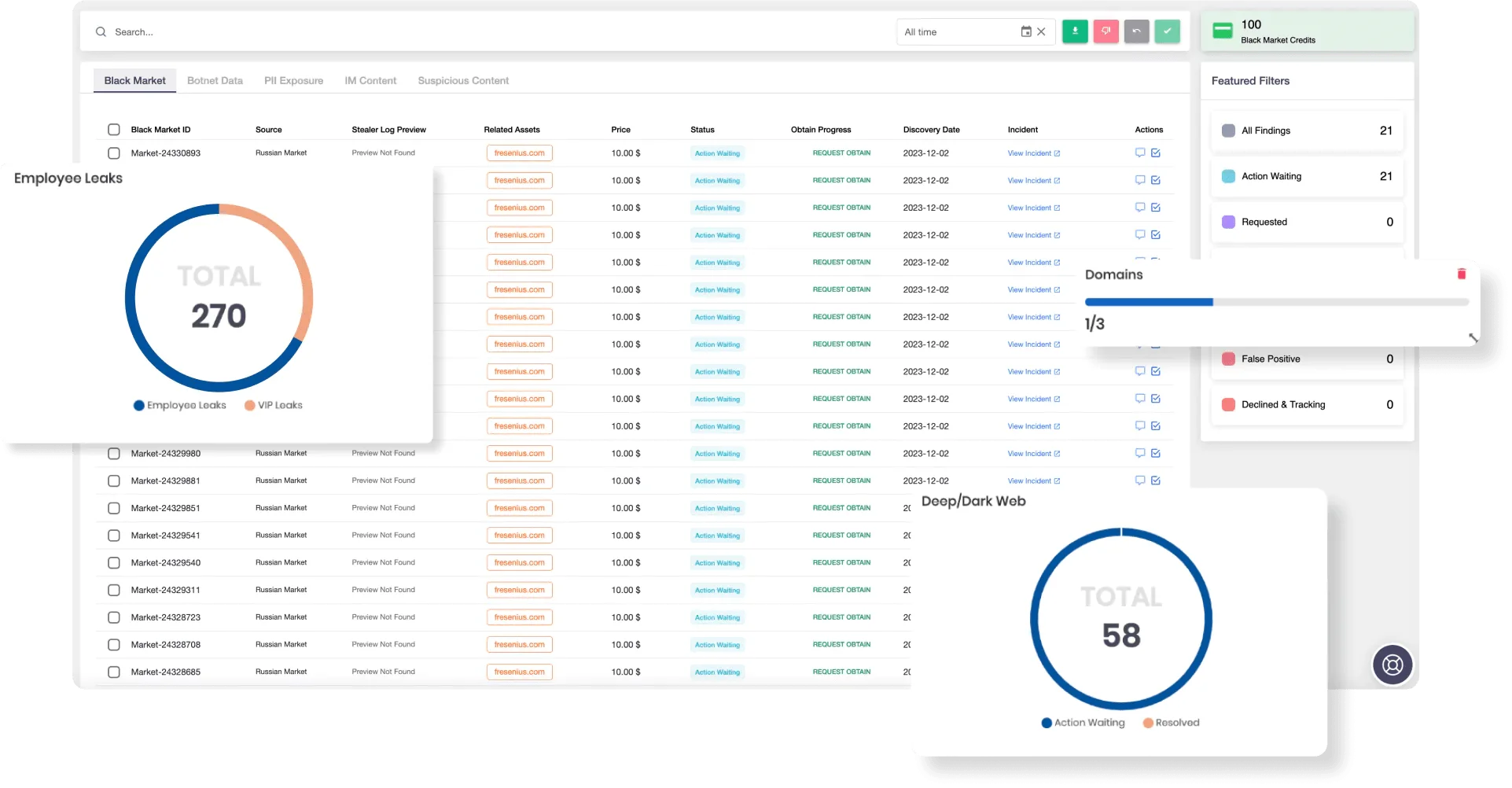
Discover cyber threats all over the deep web & dark web via SOCRadar’s Dark Web Monitoring
Who Needs Deep Web Threat Intelligence?
While all organizations face cyber risks today, some sectors are more vulnerable due to the sensitive nature of the data they manage or the scale of disruption an attack could cause. Here are the top sectors that can benefit from deep web threat intelligence:
| Sector | Key Reasons for Targeting |
| Financial Services | Valuable customer data, direct fraud potential, frequent phishing and credential abuse |
| Healthcare | Confidential medical records, ransomware susceptibility, limited IT resources |
| Government | National defense implications, critical data exposure, political motivations |
| Critical Infrastructure | Disruption potential across energy, telecom, transport, and water systems |
| Retail & E-Commerce | High transaction volumes, credit card data, frequent credential stuffing attempts |
| Technology Providers | Source code theft, supply chain risks, customer data exposure |
| Education & Research | PII, proprietary research, vulnerable endpoints |
| Legal & Consulting | Sensitive client documents, potential for reputational damage |
Even smaller organizations can benefit from deep web intelligence, as it helps detect targeted threats and prevent collateral damage from broader campaigns.
Conclusion
Cyber threats rarely appear out of nowhere. They often begin in hidden corners of the internet, within forgotten forums, credential dumps, or quiet discussions on restricted platforms. This is where deep web threat intelligence makes a difference. When integrated into a broader threat intelligence strategy, it allows organizations to respond faster and more precisely.
So, is deep web intelligence worth the investment?
For security-conscious organizations, the answer is yes. The value lies not just in the information itself, but in the timing and context it provides. When used alongside surface and dark web monitoring, it gives a more complete and proactive view of the threat landscape.
To explore the unique value of the deep web further, don’t miss our companion article: “What Makes the Deep Web a Valuable Threat Intelligence Source” – where we dig into the specific advantages it offers and how to maximize its impact in real-world security operations.