

Sep 07, 2026
Table Of Content
Holiday Shopping Cyber Threats 2025: Key Risks Every Organization Should Know
Why the Holiday Season Attracts Cybercriminals
Consumer Data as a Seasonal Commodity
How the Dark Web Adapts for the Holidays
Threat Actors and Regional Targeting
Holiday Phishing and Social Engineering at Scale
What to Expect for Holiday 2025
Conclusion
Related Articles

PEEP: A Browser RAT Posing as a Chrome Extension
Sep 04, 2026
Exposing AnonyMousKIT: AI-Powered PhaaS Supply Chain
Aug 24, 2026

Dec 22, 2025
10 Mins Read
Jul 08, 2026

Summarize with:
Holiday Shopping Cyber Threats 2025: Key Risks Every Organization Should Know
The end-of-year shopping season has become one of the most lucrative periods not only for retailers, travel providers, and digital platforms, but also for cybercriminals. As online transactions surge, new accounts are created, gift cards are exchanged, and travel and entertainment services see record demand, attackers align their operations to exploit the same seasonal behaviors.
This blog post summarizes the key highlights from our “Holiday Shopping Cyber Threats 2025” whitepaper, distilling its most important findings into a concise, executive-friendly format. Drawing exclusively from the research, data, and dark web intelligence presented in the whitepaper, it outlines how holiday consumer behavior reshapes the cyber threat landscape, what attack patterns security teams should expect, and which risks matter most heading into the 2025 holiday season.

Holiday Shopping Cyber Threats 2025: How Criminals Exploit Retailers & Year-End Consumer Behavior
Why the Holiday Season Attracts Cybercriminals
Holiday cyber activity is not evenly distributed across the season. Attackers concentrate efforts around predictable consumer and retail milestones:
- Black Friday week, when promotional emails and ads dominate inboxes and feeds.
- Cyber Monday, focused on online-only offers.
- The pre-Christmas rush, roughly December 15-23, when shipping deadlines increase urgency.
Consumer behavior during this period creates a dense concentration of fresh, high-value data and lightly secured accounts, making exploitation both scalable and profitable.
During the 2025 holiday season, several converging trends amplify risk:
- Online shopping volumes peak, with U.S. holiday sales forecast to exceed $1 trillion for the first time.
- Shoppers create new accounts quickly, often reusing passwords and saving payment details.
- Loyalty programs, BNPL services, and gift cards see heavy use.
- Travel bookings and entertainment subscriptions surge.
Threat actors track these cycles closely. Dark web marketplaces and encrypted channels fill with listings tied to holiday-themed phishing kits, stolen shopper accounts, gift card fraud tools, and access to compromised retail infrastructure. Rather than reacting to opportunities, attackers plan months in advance, stockpiling credentials and access to be monetized during peak shopping days.

Consumer Data as a Seasonal Commodity
During the November-December window, consumer data becomes significantly more valuable on underground markets. Shoppers generate large volumes of identifiers in a short time, including email addresses, phone numbers, shipping details, saved payment tokens, loyalty IDs, and session cookies.
Several seasonal dynamics drive this increase in value:
- Account sprawl: Shoppers register on multiple platforms to access discounts, free shipping, or limited-time offers.
- Trial-driven exposure: Streaming, delivery, and subscription services add millions of new credentials through holiday promotions.
- Travel-related data growth: Airline and hotel loyalty accounts accumulate bookings, points, and redemption opportunities.
- Time pressure: Rushed consumers are more likely to reuse weak passwords and overlook security prompts.
Threat actors respond by flooding dark web markets with stolen shopper profiles, BNPL accounts, loyalty credentials, and travel rewards. At the same time, AI-driven automated traffic to retail platforms is expected to rise by 520% in the ten days before Thanksgiving 2025, with bots and fake users estimated to represent 35.7% of Black Friday shoppers. This automation fuels credential stuffing, account takeovers, and fraud at unprecedented scale.
How the Dark Web Adapts for the Holidays
Holiday shopping behavior reshapes underground markets just as much as legitimate ones. Dark web forums and Telegram channels shift from technical discussion to commercialization as peak season approaches.
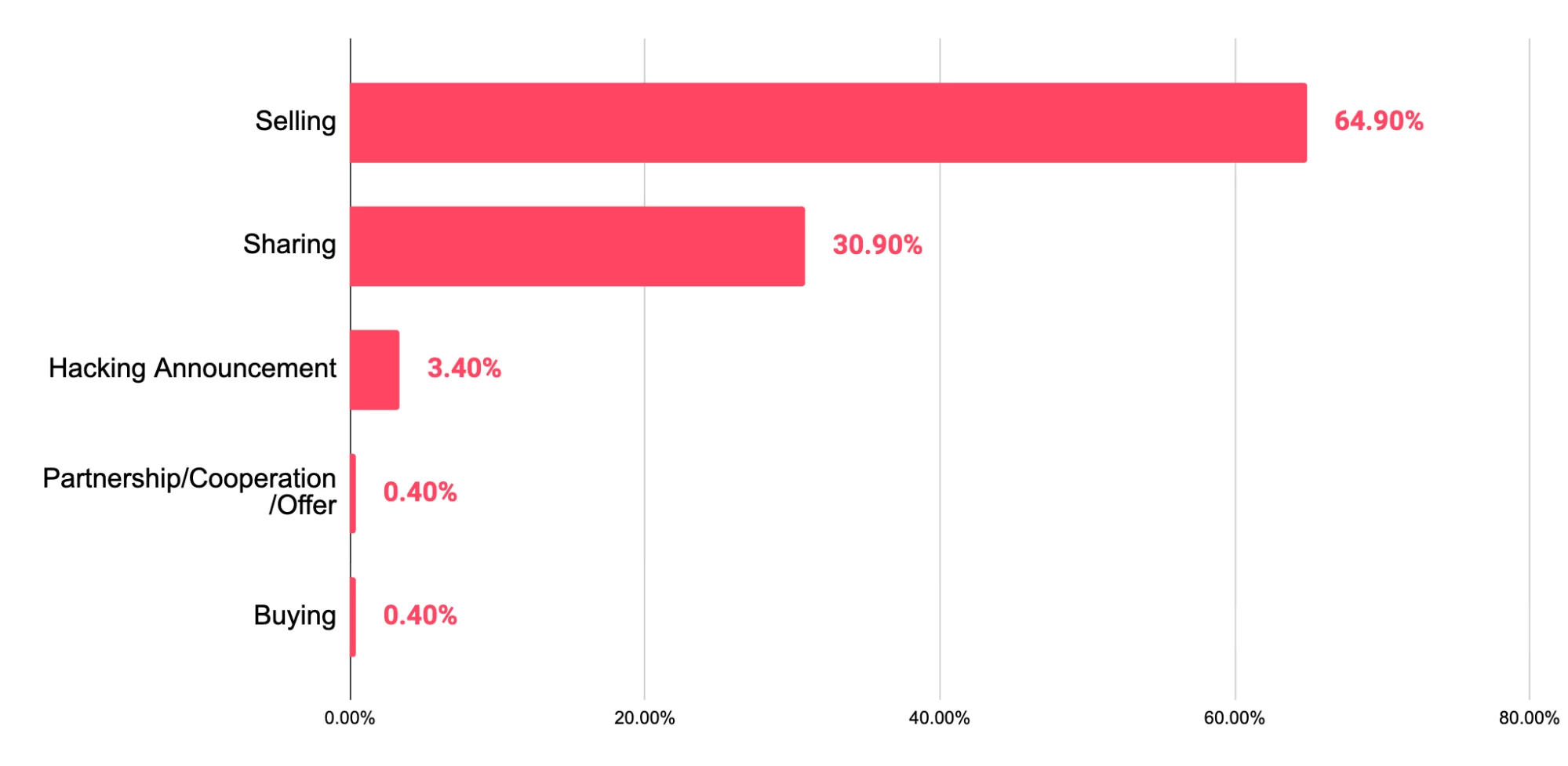
Types of dark web posts
Across 2024 and 2025, SOCRadar’s Dark Web Monitoring shows that nearly 65% of retail- and e-commerce-related dark web posts focus on selling data or access, while another 31% involve sharing compromised information. The most common content categories include:
- Data and database dumps, accounting for over half of observed posts.
- Direct access sales, including admin panels and backend systems.
- Operational access, such as WordPress admin logins or payment portals.
This activity reflects a mature underground economy where ready-to-use access and large data volumes are more valuable than raw vulnerabilities. Attackers increasingly sell outcomes rather than tools.
Stolen Shopper Profiles and Loyalty Accounts
Stolen shopper accounts form the backbone of many holiday fraud schemes. Typical profiles include login credentials, contact details, shipping addresses, and loyalty identifiers, often enriched with order history and spending patterns.
From January to October 2025, 311 million stolen accounts were observed on underground markets, with 63% tied to retail brands. This scale reflects industrialized harvesting driven by credential stuffing and infostealer malware.
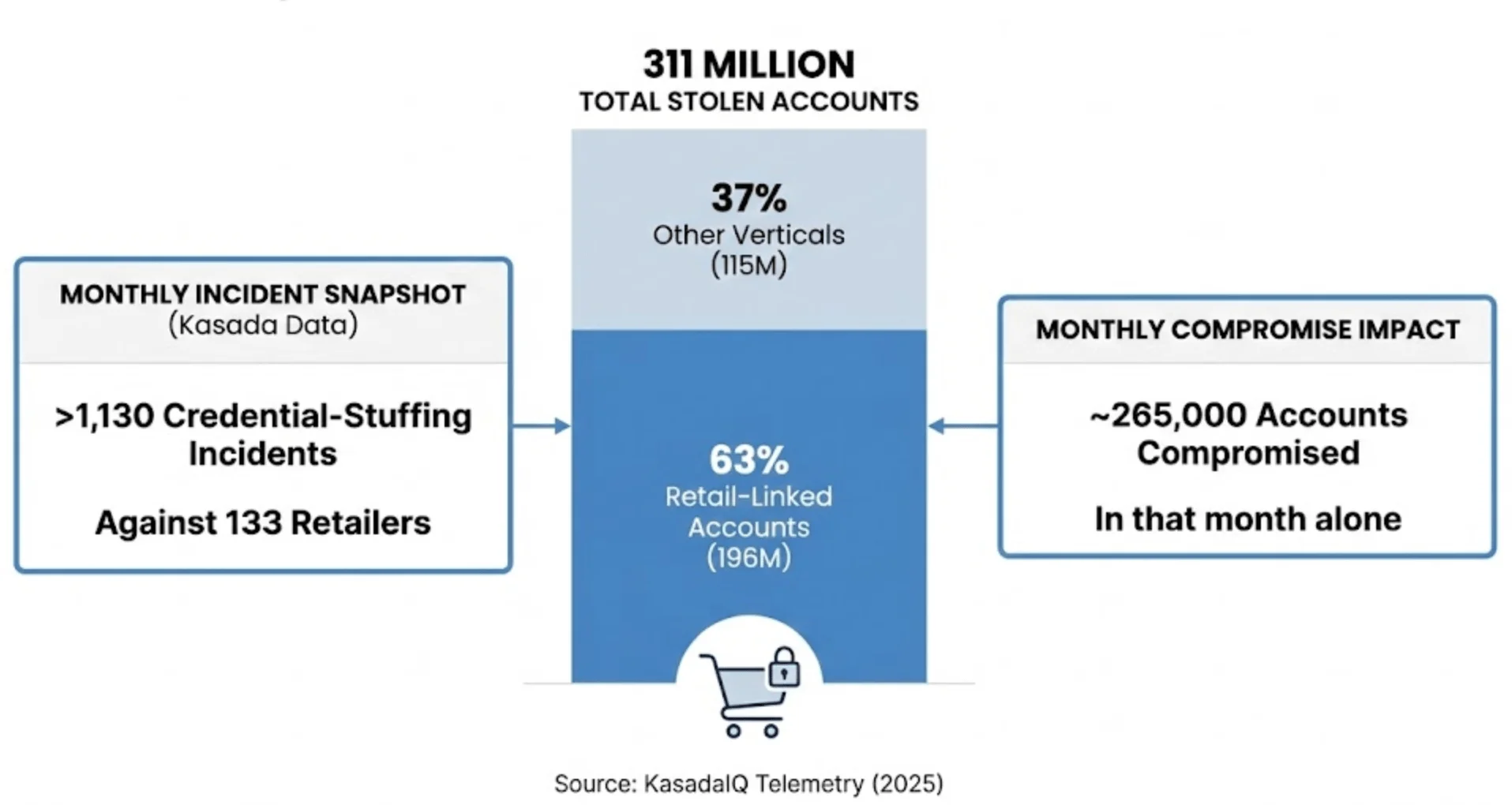
Stolen accounts & retail share, January-October 2025
Some listings go further, offering bulk customer databases tied to specific retailers. These datasets can fuel phishing campaigns and automated attacks for months. Loyalty and travel accounts add extra value because points can be converted into flights, hotel stays, or gift cards without triggering immediate card charges, and many customers do not regularly monitor balances.
During the holiday period, attackers prioritize silently draining points, converting them into benefits, and reselling them before detection.
Access Sales Against E-Commerce and Retail Platforms
Beyond consumer accounts, access to operational retail systems is actively traded. More than 31% of retail-related dark web posts involve selling access or admin privileges.
Common offerings include:
- WordPress admin credentials for e-commerce sites.
- Access to order management or payment systems.
- Shops advertised with guaranteed monthly order volumes.
These listings highlight key defensive challenges. Attackers value functioning stores because they enable card testing, skimming, and malware injection. Content management systems, particularly WordPress, remain frequent entry points due to unpatched plugins and weak admin security. Listings often specify geography, reflecting targeted fraud strategies tied to card issuers and shipping networks.
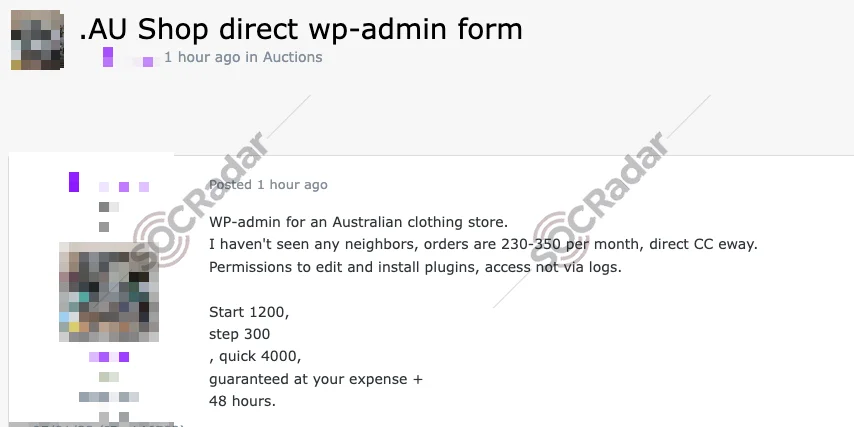
AU shop direct wp-admin form – with explicit permission to install plugins (SOCRadar Dark Web News)
Travel, BNPL, and Alternative Payment Fraud
Holiday travel and last-minute purchases increase the attractiveness of airline, hotel, and BNPL accounts. On underground markets, these assets are usually bundled into broader data or access listings, but the monetization pattern is consistent.
Compromised travel accounts allow attackers to convert points into flights, upgrades, or vouchers. Refund abuse targets booking platforms using stolen credentials or social engineering, while BNPL accounts enable rapid acquisition of high-value goods before chargebacks catch up.
The holiday rush amplifies these risks. Goods and bookings move quickly, dispute windows lag transactions, and fraud blends into heavy seasonal traffic.
Gift Card Fraud as an Industrial Operation
Gift cards are among the most liquid assets in the holiday cybercrime economy. In 2025, 8.9 million retail gift cards and 7.5 million quick-service restaurant gift cards were observed for sale on underground markets.
Some threat groups have scaled this model dramatically. Reporting on the group Storm-0539 shows theft of up to $100,000 per day from individual companies by targeting corporate gift card portals, with activity peaking around Black Friday and Christmas.
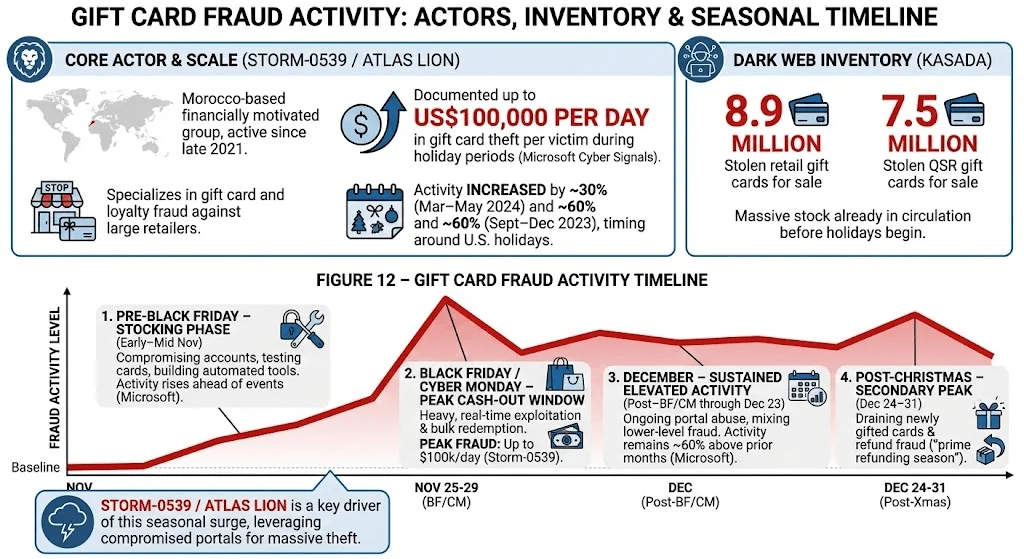
Storm-0539 gift card fraud activity: key details & seasonal timeline
More advanced campaigns involve long-term compromise of cloud productivity and order management systems. In some cases, attackers studied internal gift card workflows for months before executing large-scale theft during peak weeks.
The fraud life cycle follows a predictable seasonal pattern:
- Stockpiling access before Black Friday.
- Rapid cash-out during Black Friday and Cyber Monday.
- Sustained activity through December.
- A second spike after Christmas as newly gifted cards are drained.
Threat Actors and Regional Targeting
Holiday-related activity spans a wide range of actors, from well-known ransomware brands to smaller access brokers and carding crews. Dark web telemetry shows a long tail of participants, with no single group dominating.
Geographically, Europe and North America account for the largest share of targeted regions, followed by Asia. These regions align with mature e-commerce ecosystems and high card usage, making stolen data and access especially valuable.
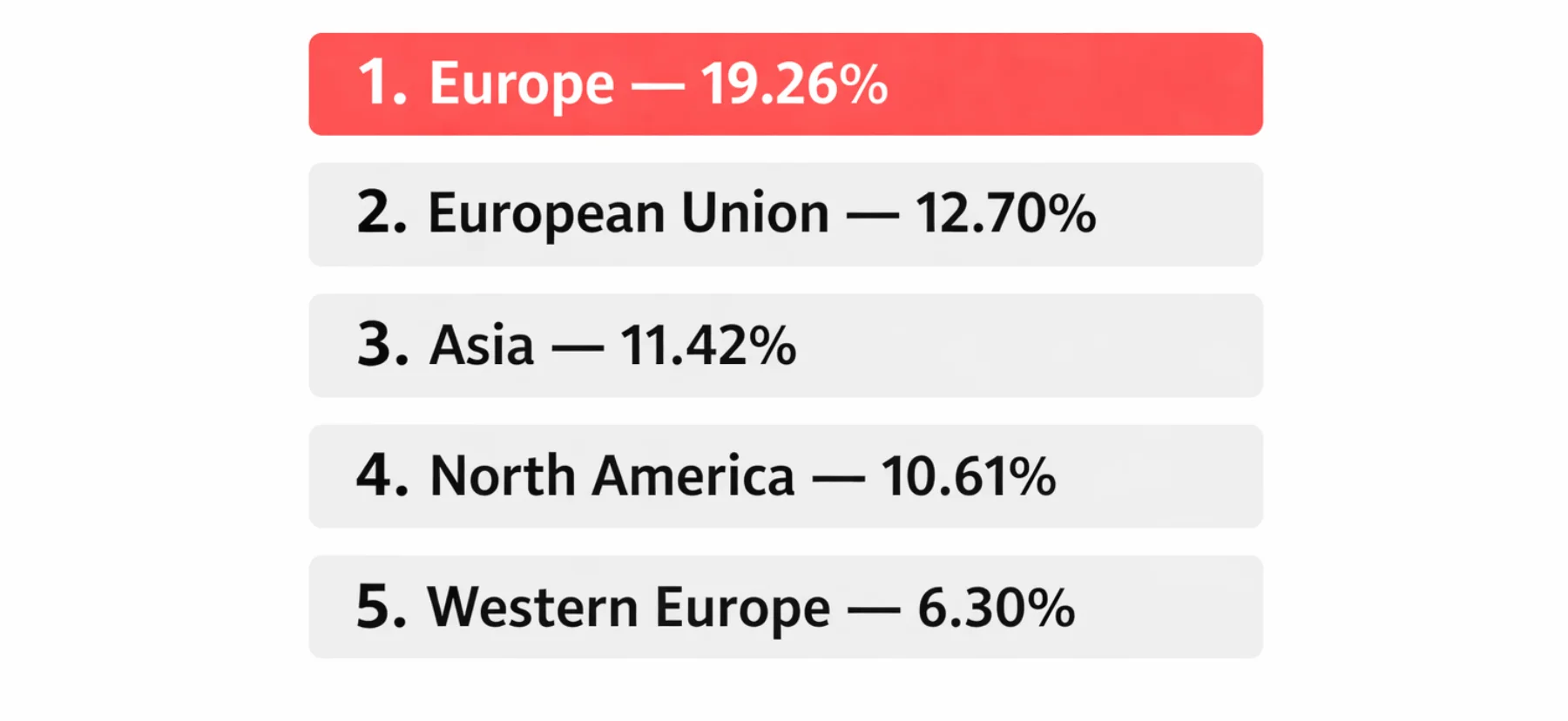
Top 5 targeted regions
How Threat Actor Behavior Shifts During the Holidays
Ransomware activity does not disappear during the holidays, but it often changes form. Some groups reduce visible encryption campaigns during peak shopping days, while intensifying initial access work behind the scenes.
Credential theft, lateral movement, and data collection continue while defenders are distracted or understaffed. Access harvested during Q4 is frequently sold or leveraged in ransomware and extortion campaigns launched in January.
At the same time, infostealer malware activity becomes more valuable, feeding fresh credential dumps into underground markets. Account sale volumes often dip during Black Friday itself, then surge again after Christmas as attackers monetize newly created holiday accounts.
Holiday Phishing and Social Engineering at Scale
Phishing remains one of the most effective holiday attack vectors. During Thanksgiving week 2024, Black Friday-themed phishing rose by 692%, while Christmas-themed phishing increased by 327%. Major retail brands were impersonated at scale, and similar patterns are expected in 2025.
Holiday phishing spans multiple channels:
- Promotional emails and fake coupon offers.
- SMS messages posing as delivery notifications.
- Fake order confirmations designed to trigger panic.
- Spoofed merchant websites and malvertising campaigns.
AI-generated content has further reduced quality gaps between legitimate and malicious communications, making scams harder to detect and more convincing.
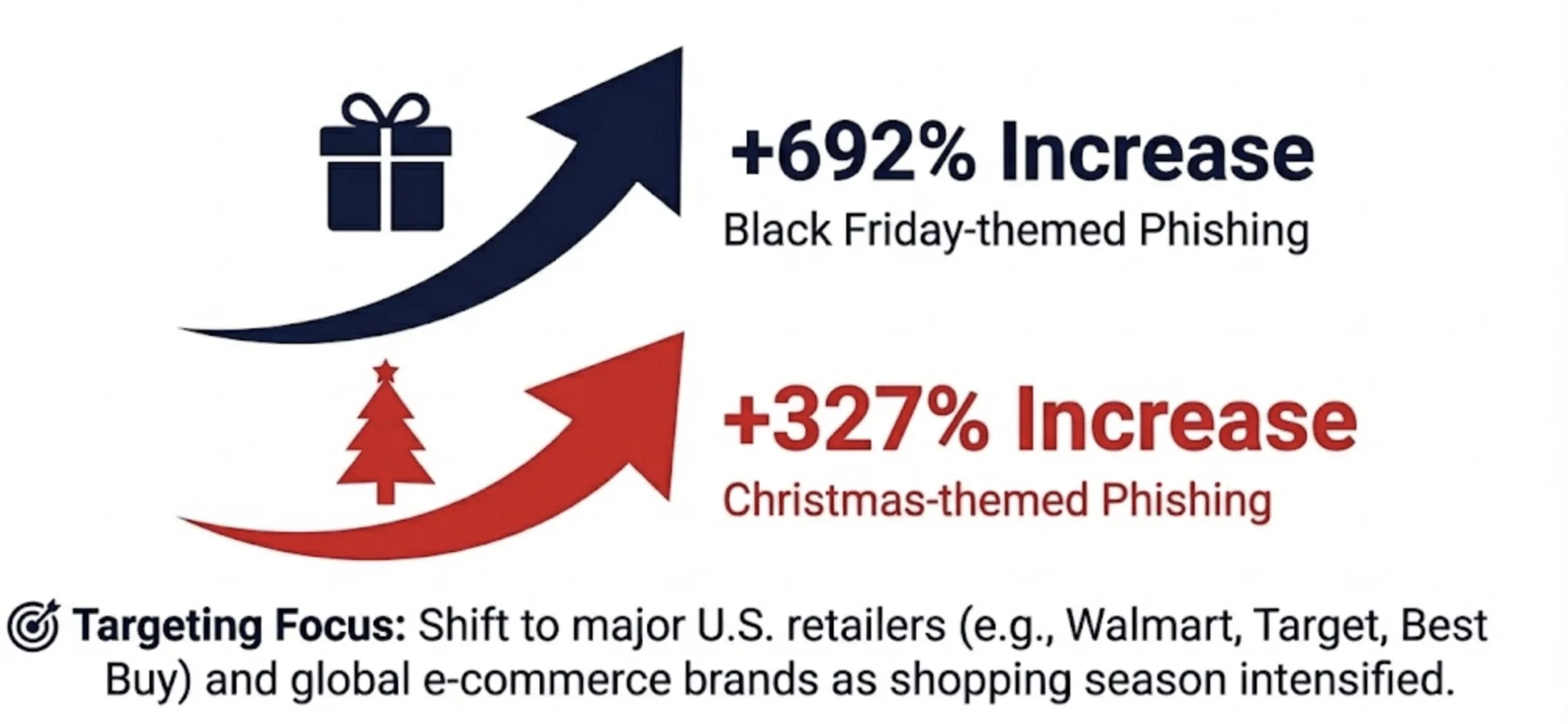
Black Friday and Christmas-themed phishing growth, according to 2024 data
What to Expect for Holiday 2025
Based on historical patterns and current intelligence, several risks are likely to intensify as the 2025 season progresses:
- Increased AI-driven bot abuse targeting logins, checkouts, and promotions.
- A surge in delivery-themed scams during the pre-Christmas rush.
- Elevated BNPL and alternative payment fraud tied to last-minute shopping.
- Continued industrial-scale gift card and loyalty exploitation.
- Access staging for ransomware campaigns launched in early 2026.
These threats form a single seasonal attack economy that spans November through January, rather than isolated incidents.
Conclusion
The holiday season concentrates opportunity and risk in equal measure. As shopping, travel, and entertainment activity peaks, attackers align their operations with the same calendar, turning consumer behavior into a predictable attack surface.
The data behind the 2025 holiday season shows clear patterns: hundreds of millions of stolen retail accounts, a mature market for access sales, industrialized gift card fraud, and phishing campaigns timed precisely to Black Friday, Cyber Monday, and Christmas. While the scale is daunting, the advantage for defenders lies in predictability.
Organizations that understand how seasonal behavior shapes threats can prepare accordingly. Strengthening authentication, monitoring for automated abuse, tightening gift card and loyalty controls, and integrating dark web intelligence into operations all reduce exposure during the most critical weeks of the year.
For a deeper, data-driven analysis – including detailed dark web observations, threat actor behavior, and actionable recommendations before, during, and after the season – explore the full SOCRadar “Holiday Shopping Cyber Threats 2025” whitepaper, where these insights are covered in greater depth.