


Sep 07, 2026
Table Of Content
Related Articles
PEEP: A Browser RAT Posing as a Chrome Extension
Sep 04, 2026
Exposing AnonyMousKIT: AI-Powered PhaaS Supply Chain
Aug 24, 2026

Jul 14, 2026
13 Mins Read

Summarize with:
Top 10 Cybersecurity Movies to Watch
Cybersecurity work is usually not very cinematic. Most days involve logs, tickets, access reviews, patch windows, alert triage, incident timelines, and careful conversations about risk. Movies, thankfully, move faster. They turn years of technical change and organizational chaos into two hours of drama, mistakes, pressure, and sometimes wildly unrealistic keyboard scenes.
That is exactly why cybersecurity movies can be useful. Even when the hacking looks questionable, the stories often make big security ideas easier to explain. A good cyber movie can help teams talk about cascading failure, identity compromise, surveillance, social engineering, cyber conflict, data misuse, and trust without opening a slide deck full of frameworks.
How We Selected These Entries
This is a curated selection, not a strict ranking. The order balances historical influence, topic variety, and how well each title supports useful cybersecurity conversations.
Selection signals:
- Security relevance: The main story connects to real security areas such as identity and access, social engineering, incident response, cybercrime, critical infrastructure, surveillance, privacy, intelligence, or state-linked operations.
- Practitioner value: Each entry gives teams something practical to discuss, whether in a team session, awareness training, tabletop-style conversation, or executive risk discussion.
- Realism and teachable mistakes: Some movies try to be realistic. Others are technically messy but still work because they show the right risks, incentives, or consequences.
- Impact and longevity: We favored titles that shaped public ideas about cybersecurity or still connect clearly to modern security problems.
- Topic diversity: This is not ten versions of the same hacker thriller. The list covers early computer culture, red-team deception, identity compromise, surveillance, geopolitics, hacktivism, data exploitation, and cryptography.
A few limits to keep in mind:
- Movies simplify tradecraft, timelines, and attribution
- Technology ages quickly, even when the core lesson still works
- Documentaries have perspectives, so they should be treated as useful starting points, not the whole story
Summary Table: Cybersecurity Movies Comparison
| Title | Year | Format | Main Themes | Best For (Security Lens) | Realism Notes |
|---|---|---|---|---|---|
| WarGames | 1983 | Fiction | Unauthorized access, systemic risk, escalation | Risk storytelling, cascading failure | Technically dated; conceptually durable |
| Sneakers | 1992 | Fiction | Social engineering, physical security, trust, cryptography | Red-team mindset, human factors | Strong conceptual realism; compressed plot |
| Blackhat | 2015 | Fiction | Targeted intrusion, infrastructure risk, cross-border response | Incident response discussion, realism critique | Better technical texture than many films; still cinematic |
| The Net | 1995 | Fiction | Identity manipulation, data integrity, reputational harm | Digital identity and recovery risk | Technical details are inaccurate; themes remain prescient |
| Zero Days | 2016 | Documentary | Cyber sabotage, offensive cyber operations, escalation | CTI framing, geopolitics, ethics | Evidence-led; attribution has been publicly debated |
| Citizenfour | 2014 | Documentary | Surveillance, encryption, operational security, trust | Privacy engineering, oversight, insider risk | Strong primary-source immediacy |
| The Great Hack | 2019 | Documentary | Data misuse, profiling, influence, governance | Data governance, privacy, third-party risk | Strong societal lens; simplifies some nuances |
| We Are Legion | 2012 | Documentary | Hacktivism, collective identity, disruption | Motivation analysis, communications impact | Movement-centric and time-bound |
| Track Down / Takedown | 2000 | Dramatized fiction | Media framing, social engineering, hacker mythology | Media literacy, ethics, incident narratives | Contested portrayal; era-specific |
| The Imitation Game | 2014 | Historical drama | Cryptanalysis, secrecy, intelligence trade-offs | Security history, confidentiality themes | Heavily dramatized; not focused on modern cybersecurity |
The Top 10 Cybersecurity Movies You Should Watch
The entries below are not here because every command, screen, or timeline is perfect. They are here because each one gives security teams a story they can use to talk about access, identity, trust, surveillance, cyber conflict, social engineering, privacy, data misuse, and the cost of bad decisions.
1. WarGames (1983)
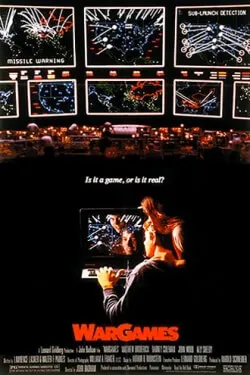
A teenager goes looking for computer games and accidentally connects to a military war simulation system. What starts as curiosity quickly turns into a crisis, as operators struggle to tell the difference between a test, a game, and a possible real-world escalation.
For security teams, WarGames is not just an old-school hacking movie. It is a warning about systemic risk. One small access mistake becomes dangerous because the surrounding system is sensitive, tightly connected, and hard to control once things start moving.
Security Takeaways
- A small access mistake can become a major risk when sensitive systems are connected to high-impact decisions
- The real issue is not only unauthorized access, but weak trust boundaries and limited human control
- The film is useful for discussing automation risk, especially when systems follow instructions without enough context or safeguards
Reality Check
- The dial-up access, interfaces, and technical details are clearly dated
- The response timeline is simplified compared to real incident response
- The lone-actor setup makes the story easier to follow, but real high-impact incidents usually involve several process, design, and governance failures
2. Sneakers (1992)

A group of security testers gets pulled into a job that quickly becomes bigger than a normal assessment. There are gadgets, deception, cryptography, physical access tricks, and enough trust issues to make any red teamer feel at home.
For security teams, Sneakers works because it understands that attackers do not always need to break the strongest control. Sometimes they walk around it, talk past it, or exploit the people and processes holding it together. That makes it one of the better movies for discussing social engineering and full-system security.
Security Takeaways
- Many successful compromises come from bypassing people and processes, not only breaking technology
- The film shows security as a full-system problem involving trust, physical access, procedures, and technical controls
- It is a useful example for red-team thinking because recon, planning, deception, and execution all matter
Reality Check
- The plot compresses engagement timelines and makes outcomes cleaner than real security testing
- Some cryptography themes are exaggerated for dramatic effect
- The technology and surveillance assumptions reflect the early 1990s, even though the human-factor lessons still hold up
3. Blackhat (2015)
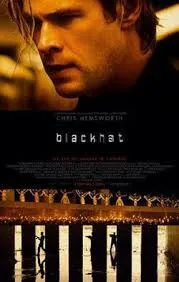
A cyberattack jumps from code to the real world, pulling investigators across borders and into a case where digital clues lead to physical consequences. The movie has its Hollywood moments, but it at least tries to make the investigation feel like more than someone typing very fast in a dark room.
For security teams, Blackhat is useful because it shows how cyber incidents can become messy fast. Once infrastructure, law enforcement, politics, and international coordination enter the picture, the problem is no longer just technical. It becomes a test of evidence, escalation, communication, and response speed.
Security Takeaways
- The film is useful for discussing how cyber incidents can cross technical, legal, and national boundaries
- It connects digital intrusion with physical-world consequences, especially around infrastructure and operational risk
- The investigation flow gives teams a good starting point for talking about evidence, artifacts, escalation, and coordination
Reality Check
- The investigation and response move much faster than they would in a real incident
- Attribution appears cleaner and more certain than it usually is in real cyber investigations
- Some OpSec and character decisions exist mainly to serve the plot, not to model best practice
4. The Net (1995)

A woman’s life starts falling apart after her identity and records are manipulated across different systems. The technology is very 1990s, but the core fear still works: what happens when the systems that prove who you are suddenly turn against you?
The Net makes identity risk easy to understand. It is not about flashy hacking as much as it is about trust in records, recovery processes, and how quickly life becomes difficult when data integrity fails.
Security Takeaways
- The film is strong for explaining identity risk and the danger of trusting corrupted records
- It highlights data integrity as a security issue, not just confidentiality
- It shows how identity compromise can spread across banking, employment, travel, law enforcement, and personal life
Reality Check
- The technical details are outdated and often unrealistic
- The conspiracy structure is exaggerated compared to most real identity-related incidents
- Real recovery from identity compromise is usually slower, more bureaucratic, and less cinematic
5. Zero Days (2016)
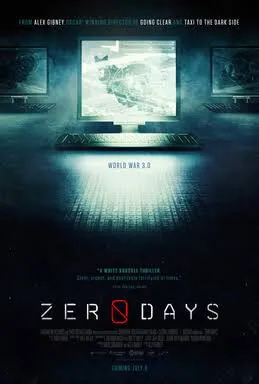
Zero Days takes cybersecurity out of the laptop and into the physical world. The documentary focuses on Stuxnet and shows what happens when malware is not just used to steal data, but to affect machines, infrastructure, and national security.
For security teams, the film is a reminder that some cyber incidents are bigger than “who clicked the link.” When critical systems are involved, the consequences can move into operations, safety, politics, and escalation. That makes Zero Days a strong pick for explaining why cyber sabotage is treated differently from ordinary malware.
Security Takeaways
- The documentary is useful for discussing cyber operations as part of geopolitics, not only malware analysis
- It helps explain why critical infrastructure threats require different risk thinking than common cybercrime
- It raises important questions around offensive cyber capability, escalation, oversight, and unintended consequences
Reality Check
- Public attribution around state-linked operations can be complex and contested
- The documentary format simplifies some technical and political details to keep the narrative clear
- It should be used to discuss concepts and implications, not as a technical guide
6. Citizenfour (2014)
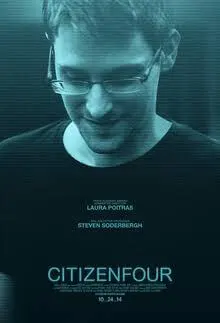
Citizenfour is not loud or flashy. It is tense in a quieter way, following Edward Snowden and the journalists involved in the early NSA surveillance disclosures as they handle sensitive information under intense pressure. Instead of chase scenes, the tension comes from encrypted communication, trust, surveillance, and the fear that every device might matter.
This documentary turns privacy and operational security into something immediate. It is a strong entry point for talking about monitoring, insider risk, data handling, encryption, and what happens when secrecy and public interest collide.
Security Takeaways
- The documentary gives a strong entry point for discussing surveillance, privacy, encryption, and operational security
- It shows how trust decisions become harder when sensitive information, sources, and journalists are involved
- It is useful for conversations about monitoring, data retention, insider risk, oversight, and accountability
Reality Check
- The topic can be politically sensitive, so it works best as a privacy and governance discussion
- It captures a specific moment in time, while laws, technologies, and public expectations have changed since then
- It is not a broad technical overview of surveillance or encryption systems
7. The Great Hack (2019)
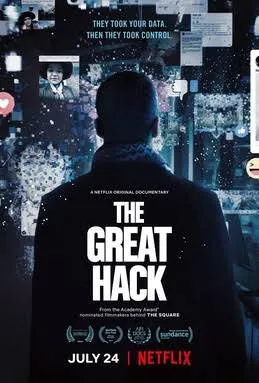
The Great Hack is not about someone breaking into a network. It is about something less cinematic but just as uncomfortable: personal data being collected, shared, analyzed, and used in ways people do not fully understand. The documentary centers heavily on Cambridge Analytica, Facebook, and the wider debate around profiling and political influence.
The film makes data governance feel real. It shows that risk does not always begin with malware or stolen credentials. Sometimes it begins with unclear consent, loose third-party access, weak oversight, and data being treated as harmless until the consequences arrive.
Security Takeaways
- The film is useful for explaining data misuse as a security and governance problem
- It shows how personal data, profiling, third-party access, and influence operations can create business and reputational risk
- It is a strong bridge between security, privacy, legal, marketing, product, and executive teams
Reality Check
- The documentary simplifies a complicated ecosystem involving platforms, users, regulators, partners, and data brokers
- Not every analytics or profiling practice is abusive, so the discussion should separate legitimate use from harmful misuse
- Many of the controls are not purely technical; contracts, consent, product design, and governance also matter
8. We Are Legion: The Story of the Hacktivists (2012)
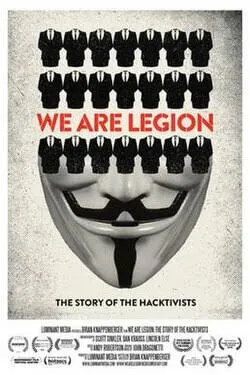
We Are Legion follows the world of hacktivism, online collectives, public campaigns, and internet-native movements that can appear chaotic from the outside. It focuses heavily on Anonymous, showing how attention, ideology, disruption, and digital tactics can come together quickly.
The documentary helps explain why hacktivism does not always behave like cybercrime. The goal may not be money or stealth. It may be visibility, embarrassment, pressure, or a message. That makes it a good starting point for discussing motivation, reputational risk, and public-facing incident response.
Security Takeaways
- The documentary is useful for understanding hacktivism as a motivation-driven threat category
- It shows how attention, disruption, ideology, and public messaging can matter as much as technical impact
- It helps teams think about loose affiliations, shifting narratives, and reputational risk during public-facing incidents
Reality Check
- The film focuses heavily on one movement and should not be treated as a universal model for all hacktivism
- Some parts feel dated because online platforms, activist tactics, and internet culture have changed
- The perspective can feel sympathetic or simplified, so it needs context in a professional security discussion
9. Track Down / Takedown (2000)
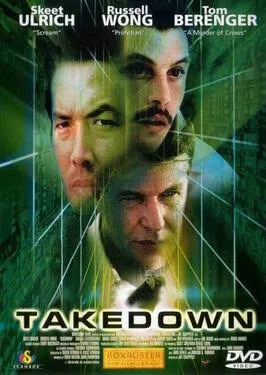
Track Down, also known as Takedown, dramatizes the pursuit of Kevin Mitnick and leans heavily into the hacker mythology of its era. It has law enforcement, social engineering, telecom systems, and the kind of cyber storytelling that shaped how many people imagined hackers at the time.
This one works best as a media literacy pick. It shows how cyber incidents can become simplified, dramatized, and shaped by public narratives. That matters because today’s incidents do not only happen in logs and tickets; they also happen in headlines, statements, and reputation.
Security Takeaways
- The film is useful for discussing how media narratives shape public understanding of cyber incidents
- It highlights social engineering, process abuse, telecom-era hacking themes, and hacker mythology
- It can help security teams think about language, accuracy, and public perception during incident communication
Reality Check
- The portrayal of real people and events has been contested, so it should be treated as dramatization
- It can reinforce outdated stereotypes about hackers if it is not properly framed
- The technical environment is era-specific and does not map cleanly to modern enterprise security
10. The Imitation Game (2014)

The Imitation Game is not a modern cyber movie, but it belongs in the conversation because it goes back to older security problems: secrets, codes, intelligence, trust, and what happens when information gives one side an advantage. It centers on Alan Turing, Bletchley Park, and the effort to break the Enigma cipher during World War II.
The biggest lesson is not about networks or malware. It is about knowing something valuable, protecting how you know it, and deciding when acting on that knowledge creates a new risk. That makes it a natural fit for connecting modern cybersecurity to cryptography and intelligence work.
Security Takeaways
- The film connects modern cybersecurity to older ideas in cryptography, intelligence, secrecy, and adversarial thinking
- It is useful for discussing confidentiality, sensitive sources, compartmentalization, and the cost of revealing what you know
- It shows that security decisions often involve trade-offs between action, secrecy, timing, and long-term advantage
Reality Check
- The film is heavily dramatized and should not be treated as a precise historical account
- It focuses on a hero-driven narrative, while real intelligence and cryptography work is much more collective
- It is not a modern cybersecurity movie, but it fits the list through cryptography, intelligence, and security history
FAQ
Which hacking movie feels most realistic?
Among mainstream fiction, Blackhat is one of the better-known examples of a cyber movie that tries to show technical investigation with more realism than usual. It still compresses timelines, simplifies attribution, and adds plenty of Hollywood drama, so it works better as a discussion starter than as training material.
What are the classic cybersecurity movies everyone references?
WarGames and Sneakers come up constantly. WarGames is the classic reference for unauthorized access and cascading systemic risk. Sneakers is the go-to for social engineering and the idea that security is about systems, not only computers.
Are cybersecurity movies useful for security awareness training?
Yes, if you structure them. A practical format is: pick two or three scenes, watch together, then run a 15-minute debrief on what’s wrong, what’s right, and what your organization’s real reporting paths and controls are.
Which entries cover real-world cyber events or real reporting?
The documentaries are the best fit. Citizenfour documents surveillance disclosures with firsthand footage. Zero Days covers cyber sabotage and state capability themes tied to widely discussed reporting, while noting that public attribution can remain debated.