

Mar 10, 2026
May 15, 2026
6 Mins Read
Sep 13, 2026
Table Of Content
Related Articles
SMS Bombing
Threat Actors
Jan 08, 2026
Dark Web Monitoring
Feb 19, 2026
Ransomware
Jan 31, 2026
OSINT Framework
Apr 17, 2026
What Is a Data Broker?
A data broker is a company or service that collects, combines, analyzes, licenses, or sells information about individuals, households, or organizations. Data may come from public records, purchases, applications, websites, advertising systems, loyalty programs, location providers, and other partners.
Data-broker activity can support fraud prevention, marketing, research, identity verification, and risk analysis, but it also creates privacy and security concerns. Combined datasets can reveal sensitive patterns even when individual source records appear ordinary or are described as deidentified.
Key Takeaways
- People-search and identity data brokers is a central category or use case.
- Reliable assessment depends on source, timing, ownership, and operational context.
- Detection should connect external findings with identity, device, network, and business signals.
- Response should protect affected people and remove every reusable access path.
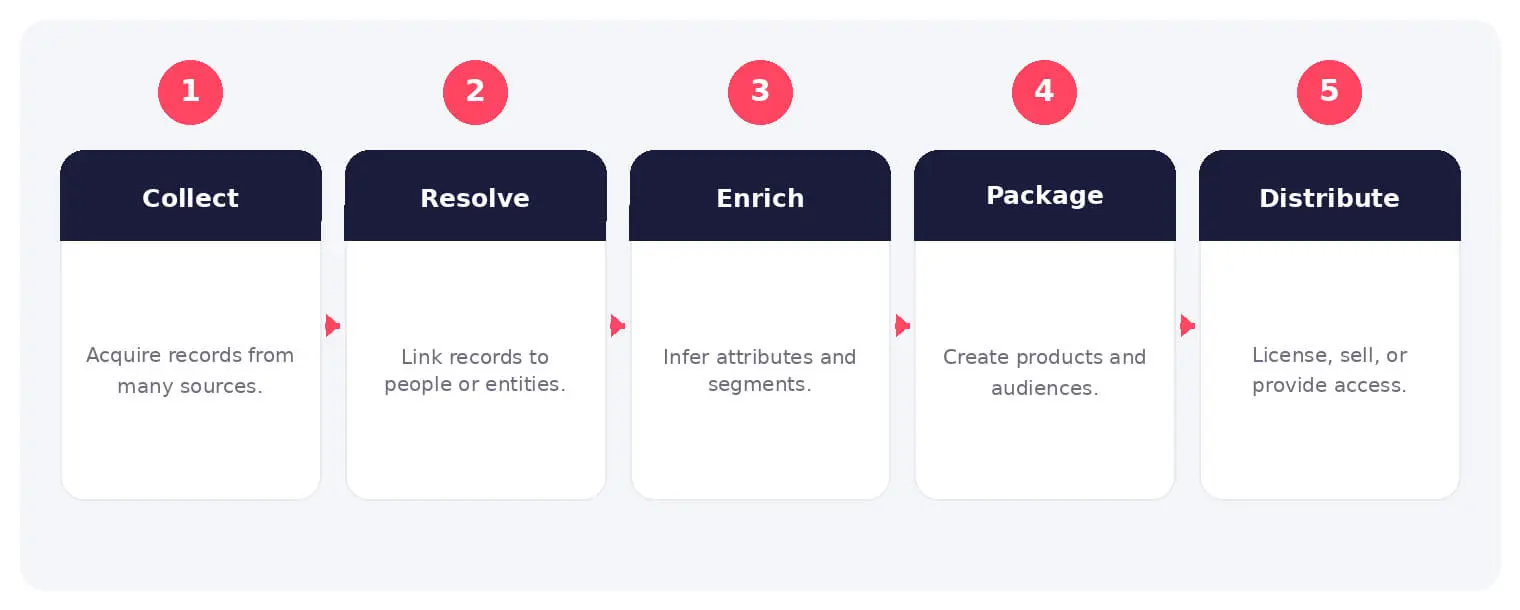
How a Data Broker Works
The sequence shown above provides a practical operating model. Individual steps may overlap, repeat, or involve different services and participants, so analysts should validate each stage against available evidence.
Data-broker activity can support fraud prevention, marketing, research, identity verification, and risk analysis, but it also creates privacy and security concerns. Combined datasets can reveal sensitive patterns even when individual source records appear ordinary or are described as deidentified.
Common Types and Use Cases
- People-search and identity data brokers
- Marketing and advertising data providers
- Risk, fraud, and identity-verification services
- Location, employment, financial, and business data
Security, Privacy, and Business Risks
- Identity theft, stalking, and targeted social engineering
- Inaccurate profiles affecting decisions
- Reidentification of supposedly anonymous records
- Large-scale exposure through broker compromise
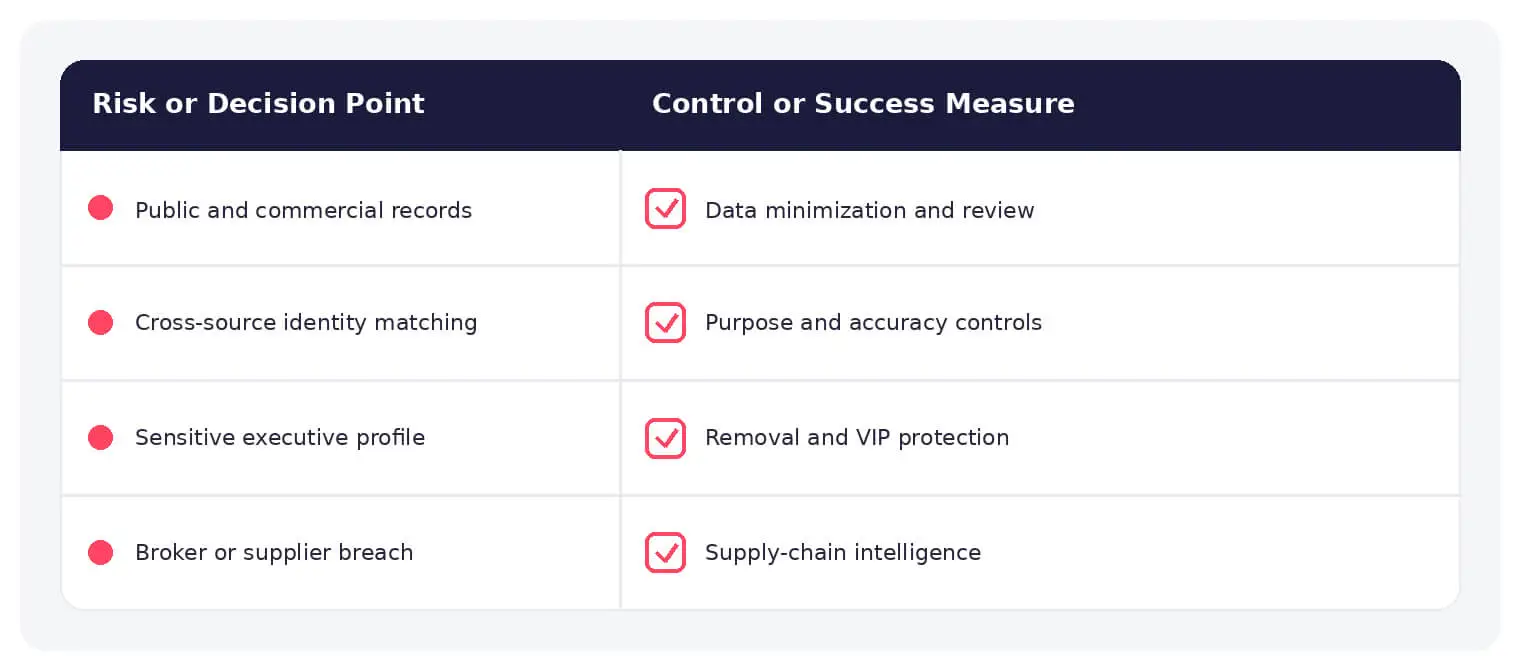
Warning Signs and Validation
Map what personal and business data brokers hold, monitor exposed records, review vendor access, detect impersonation and targeted fraud, and distinguish lawful published data from stolen datasets.
Prevention and Response
Minimize unnecessary collection and sharing, assess vendors, restrict sensitive access, honor applicable access or deletion rights, remove exposed executive data where possible, and use identity protection for high-risk personnel.
How SOCRadar Can Help
SOCRadar combines external intelligence, Dark Web visibility, brand monitoring, attack-surface discovery, and contextual enrichment to help teams identify exposure and investigate activity connected to data broker.
Explore SOCRadar Supply Chain Intelligence or request a demo to strengthen external threat detection and response.
Frequently Asked Questions
What Kinds of Companies Count as Data Brokers?
The category spans people-search sites, marketing and advertising data providers, risk and identity-verification services, and firms trading location, employment, financial, or business information. Credit bureaus sit inside this market as a specialized, more tightly regulated segment. What they share is collecting or licensing data they did not gather directly from the individual, then reselling it as profiles, lists, or lookup services.
Is Data Broker Activity Legal?
Much of it is, which is why the market persists: brokers rely on public records, licensed feeds, and contractual data sharing. Regulation is uneven but growing, with several U.S. states, including California, Vermont, Texas, and Oregon, requiring data brokers to register, while laws such as the CCPA and GDPR grant access, correction, and deletion rights. Lawful collection does not remove the security and privacy risks that aggregated profiles create.
How Do Data Brokers Combine Records From Different Sources?
Brokers match records on identifiers such as names, addresses, phone numbers, email addresses, birth dates, and device or advertising IDs, using deterministic rules and probabilistic scoring. Small overlaps can connect datasets that look unrelated, turning a fragmented trail into a single profile. This linking is why combined files can expose patterns that no individual source reveals on its own.
Is Deidentified Data Safe From Reidentification?
Not reliably. Researchers have repeatedly reidentified supposedly anonymous datasets by joining them with public records on quasi-identifiers such as ZIP code, birth date, and gender. Deidentification reduces risk in some settings, but large, linkable broker files can still point back to identifiable people.
How Do Attackers Use Data Broker Profiles?
Accurate details such as former addresses, relatives, employers, and phone numbers make phishing, vishing, and impersonation messages far more convincing, and they help attackers answer knowledge-based verification or account recovery questions. Executive profiles feed whaling attempts and can support doxxing or physical stalking. Because the details are real, recipients rarely treat the message as suspicious.
What Warning Signs Suggest Broker Data Is Being Abused?
Scam calls or phishing emails that quote your genuine employer, job history, family members, or previous addresses are a strong indicator. Other signs include unexpected account recovery attempts, verification codes you did not request, and executive impersonation built on accurate personal details. It also helps to separate lawfully published data from data that appears stolen, since that distinction shapes the response.
How Can You Find Out Which Brokers Hold Your Data?
Search your name, phone number, and address across major people-search sites, and review public state data broker registries where they exist. Privacy request and removal services can also report which brokers list your records. Coverage is never complete, so treat any list you build as a starting inventory rather than a full map.
How Do You Request Removal From a Data Broker?
Most brokers run an opt-out form that asks for identifying details and confirms the request through an email link or verification code, with processing times ranging from days to weeks. Privacy laws such as the CCPA and GDPR add formal access, correction, and deletion rights where they apply. Because hundreds of brokers operate in this market, plan to submit and track many requests rather than one.
Why Do Opted-Out Records Reappear on Broker Sites?
An opt-out removes your record from that broker’s current database, not from the upstream sources, partner feeds, or resellers that supplied it. New public filings, refreshed marketing lists, or a change of address can regenerate a profile from scratch. Removal therefore works as recurring monitoring, not a one-time fix.
What Should Organizations Do After a Data Broker Breach?
A broker breach can expose aggregated records about many people at once, including data individuals never knowingly shared. Identify affected employees or customers, review whether exposed details could answer security questions or recovery flows, brief staff on targeted phishing that uses those details, and monitor for impersonation of affected executives. Treat it with the same rigor as a direct compromise of your own systems.
How Can Organizations Reduce Their Data Broker Exposure?
Practical measures include:
- Publishing less about leadership and requesting removal of exposed executive data from people-search sites where possible.
- Assessing which vendors collect or resell employee and customer data, and restricting sensitive sharing in contracts.
- Honoring applicable access, correction, and deletion rights under laws such as the CCPA and GDPR.
- Providing identity protection and monitoring for high-risk personnel such as executives and public-facing staff.
These steps seldom remove every broker record, but each one reduces the raw material available for social engineering and targeted fraud.
Are Data Brokers the Same as Credit Bureaus?
No. Credit bureaus compile specific financial data under dedicated laws such as the U.S. Fair Credit Reporting Act (FCRA), with access and dispute rights tied to credit decisions. Data brokers as a broader group trade many other information products, and much of that activity sits outside equivalent oversight, which is why the risks and remedies differ.