

Mar 10, 2026
Jun 25, 2026
5 Mins Read
Sep 13, 2026
Table Of Content
Related Articles
SMS Bombing
Threat Actors
Jan 08, 2026
Dark Web Monitoring
Feb 19, 2026
Ransomware
Jan 31, 2026
OSINT Framework
Apr 17, 2026

What Are Deepfakes?
Deepfakes are synthetic or manipulated images, audio, or video created with machine learning or related editing techniques to make a person appear to say or do something that did not occur. Quality ranges from crude face swaps to convincing real-time voice and video impersonation.
Deepfakes are not always malicious and can support entertainment, accessibility, education, and authorized media production. Security risk arises when synthetic content is used for fraud, extortion, influence, identity abuse, or bypassing trust and verification processes.
Key Takeaways
- Voice cloning in executive and vendor fraud is a central category or use case.
- Reliable assessment depends on source, timing, ownership, and operational context.
- Detection should connect external findings with identity, device, network, and business signals.
- Response should protect affected people and remove every reusable access path.
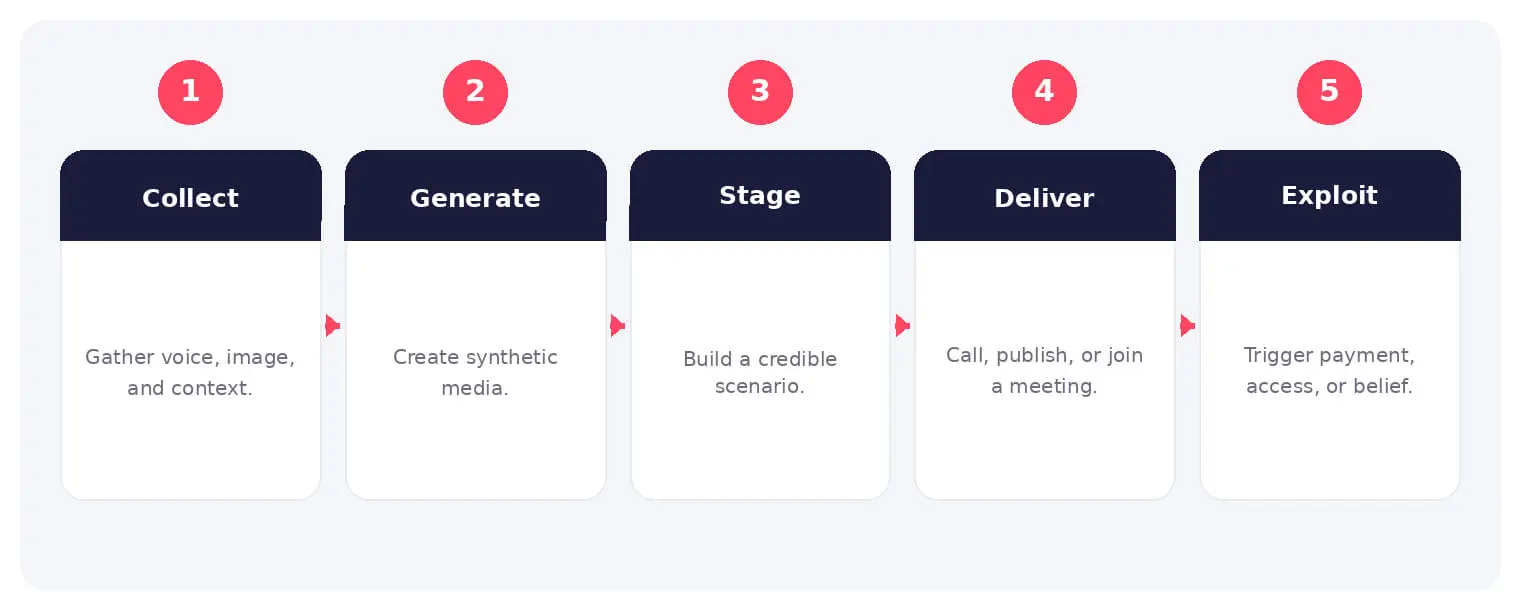
How Deepfakes Works
The sequence shown above provides a practical operating model. Individual steps may overlap, repeat, or involve different services and participants, so analysts should validate each stage against available evidence.
Deepfakes are not always malicious and can support entertainment, accessibility, education, and authorized media production. Security risk arises when synthetic content is used for fraud, extortion, influence, identity abuse, or bypassing trust and verification processes.
Common Types and Use Cases
- Voice cloning in executive and vendor fraud
- Synthetic video in meetings or identity checks
- Nonconsensual imagery and extortion
- Political influence and fabricated evidence
Security, Privacy, and Business Risks
- Fraudulent payments and business email compromise
- Damage to individual and organizational reputation
- Identity-verification and account-recovery abuse
- Confusion during incidents and public events
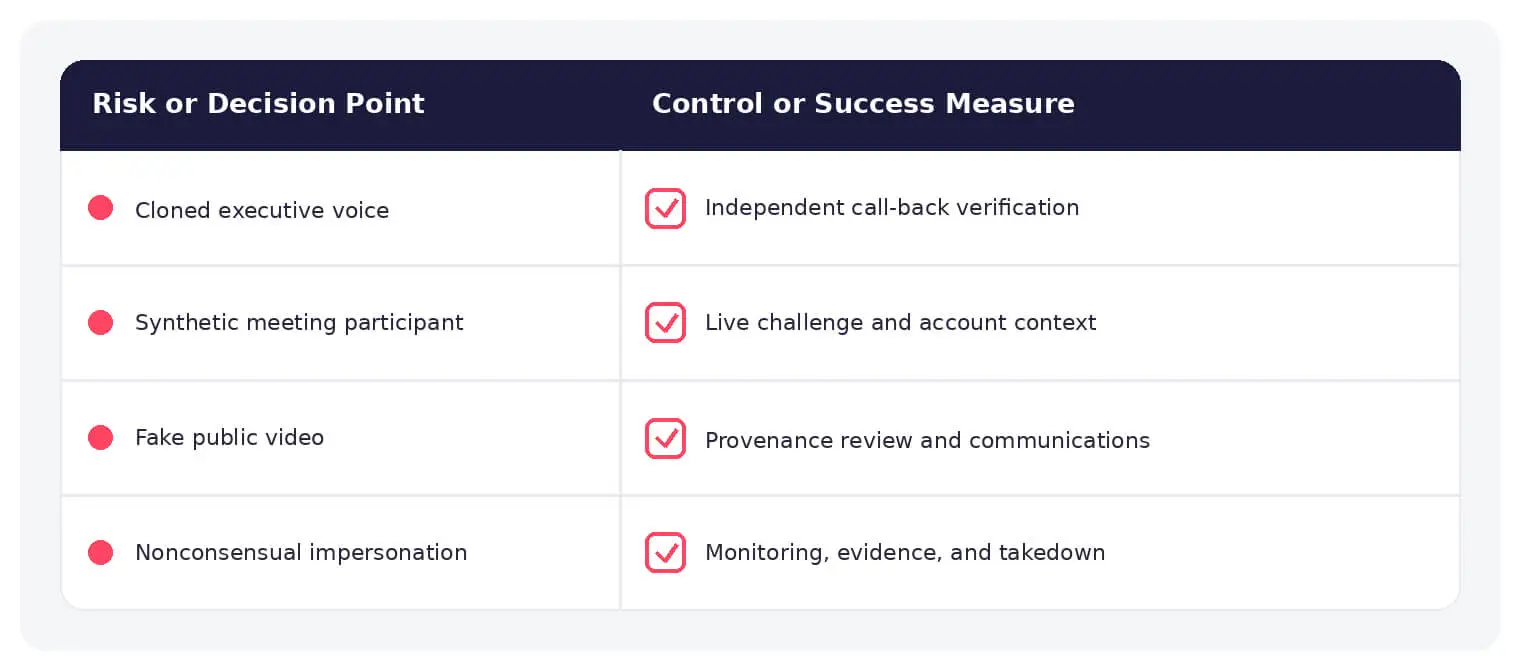
Warning Signs and Validation
Check source provenance, lip and audio consistency, timing, challenge responses, account history, request context, and independent confirmation. Detection models can assist but should not be treated as definitive proof.
Prevention and Response
Verify high-risk requests through a known separate channel, use approval separation, establish family or executive verification phrases carefully, protect public media, monitor impersonation, and prepare rapid communications and takedown procedures.
How SOCRadar Can Help
SOCRadar combines external intelligence, Dark Web visibility, brand monitoring, attack-surface discovery, and contextual enrichment to help teams identify exposure and investigate activity connected to deepfakes.
Explore SOCRadar Brand Protection or request a demo to strengthen external threat detection and response.
Frequently Asked Questions
What Are Deepfakes and When Do They Become a Security Risk?
Deepfakes are synthetic or manipulated images, audio, or video created with machine learning to make a person appear to say or do something that never happened. The technology itself is not inherently malicious and supports entertainment, accessibility, education, and authorized media production. Risk arises when synthetic content is used for fraud, extortion, influence operations, identity abuse, or bypassing trust and verification processes.
How Is Voice Cloning Used in Executive and Vendor Fraud?
Attackers can build a voice clone from short public audio samples, such as conference talks or earnings calls, then use it for urgent voicemails or calls impersonating an executive or vendor contact. Cloned audio is often paired with pressure tactics like confidentiality demands and tight deadlines to push through wire transfers or sensitive data requests. Confirming such requests through a known separate channel is the core safeguard.
Can Deepfakes Appear in Live Video Calls?
Yes. Real-time face swapping and voice conversion can run during video meetings, and synthetic participants have been reported in hiring interviews and approval calls. Unnatural lip movement, mismatched audio, lighting artifacts, or a refusal to turn to a profile angle can suggest manipulation, but independent verification of the person matters more than any single visual cue.
Can Deepfakes Bypass Identity Verification or Account Recovery?
They are used to attempt it. Synthetic video or audio may target selfie and liveness checks or support calls in which a caller claims an identity problem. Combining biometric checks with account history, device and network signals, and step-up verification is safer than relying on any single modality.
What Are Reliable Ways to Check Whether Media Is a Deepfake?
No single indicator is conclusive, so combine several checks:
- Source provenance and whether the timing matches known events
- Lip and audio consistency, including breathing and background sound
- Request context, such as urgency, secrecy, or unusual payment instructions
- Independent confirmation through a channel you already control
Challenge responses, meaning questions only the real person could answer, are often more dependable than visual analysis alone.
Do Deepfake Detection Tools Provide Definitive Proof?
No. Detection models can flag likely manipulation, but their accuracy drops with compression, cropping, and newer generation methods, and false results occur in both directions. Treat detector output as one signal alongside provenance and operational context rather than as proof.
What Should You Do When a High-Risk Request May Involve a Deepfake?
Pause the transaction and reconfirm the request using contact details already on file, never the details supplied in the message itself. Document what was received, alert the apparent impersonated party, and report the attempt internally. If money or credentials already moved, notify your bank and security team immediately to pursue recall and containment.
How Can Organizations Reduce Deepfake Payment Fraud Risk?
Require out-of-band verification for payment or bank-detail changes and enforce dual approval for high-value transfers. Train finance, HR, and help desk staff on voice-cloning scenarios, and limit the amount of executive audio and video that is publicly available. These measures reduce success rates but cannot guarantee prevention.
Do Verification Phrases Help Against Deepfake Fraud?
They can, when designed and handled carefully. A private family or executive phrase adds a challenge layer that a cloned voice cannot readily answer, but it should be kept confidential, changed periodically, and never confirmed over the same channel being verified. A phrase alone is weaker than combining it with separate-channel confirmation.
What Damage Can Deepfakes Cause Beyond Financial Loss?
Fabricated audio or video can harm personal and organizational reputations, spread confusion during incidents and public events, and undermine trust in authentic recordings used as evidence. Nonconsensual imagery is also a vector for extortion and harassment. Because fabricated clips can circulate before they are debunked, rapid communication and takedown readiness matter.
Are All AI-Generated Images Deepfakes?
No. The term generally refers to realistic manipulation or impersonation of an identifiable person. A fully synthetic scene that does not depict a real individual is usually described as AI-generated content rather than a deepfake.