


Mar 10, 2026

Jun 25, 2026
3 Mins Read
Sep 11, 2026
Table Of Content
Related Articles

SMS Bombing

Threat Actors
Jan 08, 2026

Dark Web Monitoring
Feb 19, 2026

Ransomware
Jan 31, 2026

OSINT Framework
Apr 17, 2026

What Is a Honeypot in Cybersecurity?
A honeypot is a decoy system, service, account, file, or resource designed to attract unauthorized activity and produce high-value detection and research signals.
Because legitimate users should have little reason to interact with a well-placed decoy, activity can be highly suspicious. Honeypots must be isolated and monitored so attackers cannot use them to reach production systems or harm others.
Key Takeaways
- A honeypot is a decoy system, service, account, file, or resource designed to attract unauthorized activity and produce high-value detection and research signals.
- Because legitimate users should have little reason to interact with a well-placed decoy, activity can be highly suspicious. Honeypots must be isolated and monitored so attackers cannot use them to reach production systems or harm others.
- Pivoting from the decoy is a primary concern.
- Effective security combines prevention, continuous visibility, ownership, and tested response.
How It Works
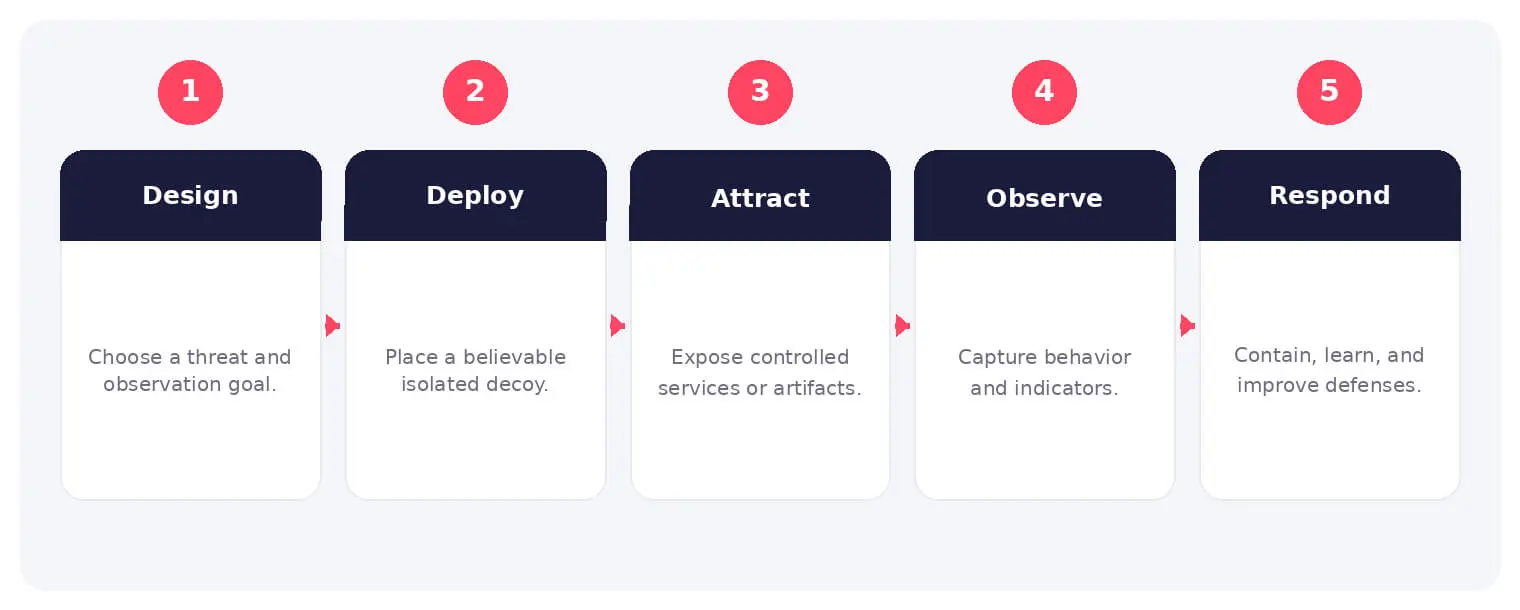
The operating flow above turns the concept into observable steps. Exact implementations vary, but each stage needs accountable ownership, trusted inputs, documented policy, and evidence that analysts can use during investigation and review.
Because legitimate users should have little reason to interact with a well-placed decoy, activity can be highly suspicious. Honeypots must be isolated and monitored so attackers cannot use them to reach production systems or harm others.
Common Types and Capabilities
- Low and high-interaction honeypots
- Network service and web honeypots
- Database, email, and credential decoys
- Honeynets and deception platforms
Security and Business Risks
- Pivoting from the decoy
- Collection of sensitive or unlawful data
- Easy fingerprinting and evasion
- False confidence from limited visibility
Warning Signs and Detection
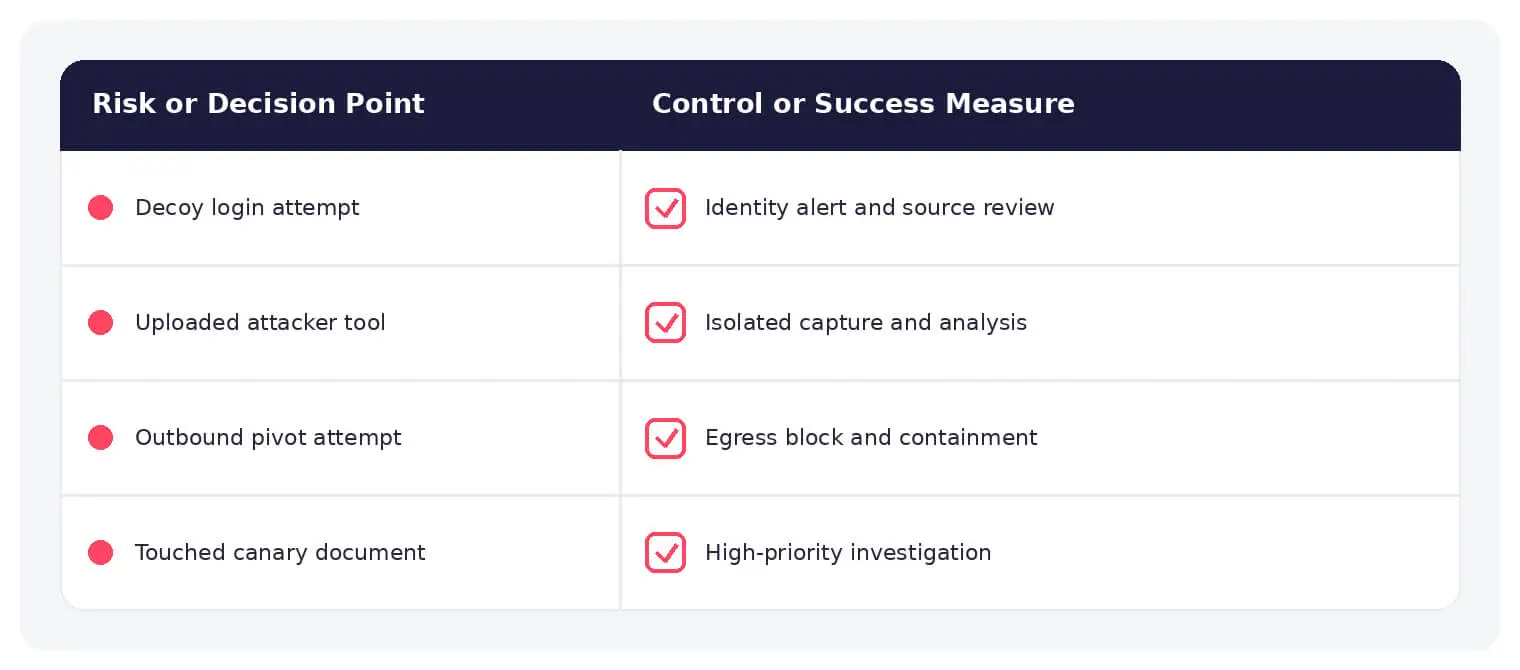
Investigate every credible interaction, including scans that progress to authentication, commands, file uploads, tool transfer, privilege attempts, outbound connections, credential use, and contact with planted tokens or documents.
Best Practices
Define legal and research boundaries, isolate egress, use synthetic data, patch the host platform, protect logs, monitor continuously, establish containment procedures, and rotate decoys when attackers identify them.
How SOCRadar Can Help
SOCRadar adds external visibility, threat intelligence, exposure context, and continuous monitoring to help teams validate and prioritize risks related to honeypot. This context complements internal endpoint, identity, and network controls.
Explore SOCRadar Cyber Threat Intelligence or request a demo to strengthen threat-informed prevention and response.
Frequently Asked Questions
What is the main purpose of honeypot?
A honeypot is a decoy system, service, account, file, or resource designed to attract unauthorized activity and produce high-value detection and research signals.
What is a common security risk?
Pivoting from the decoy.
What should security teams monitor?
Investigate every credible interaction, including scans that progress to authentication, commands, file uploads, tool transfer, privilege attempts, outbound connections, credential use, and contact with planted tokens or documents.
What is the first practical step?
Define legal and research boundaries, isolate egress, use synthetic data, patch the host platform, protect logs, monitor continuously, establish containment procedures, and rotate decoys when attackers identify them.