Takedown services are processes and tools that detect, validate, and remove malicious digital assets that misuse a brand, deceive its customers, or host content designed to facilitate attacks. These assets include phishing domains, fake social media profiles, rogue mobile applications, and AI-generated misinformation.
In 2026, the scale and speed at which malicious content appears online has made manual reporting workflows operationally unworkable for most organizations. Takedown services have shifted from reactive email filings to automated, intelligence-driven remediation pipelines integrated with brand protection and digital risk protection (DRP) platforms.
How Takedown Services Work: The Lifecycle
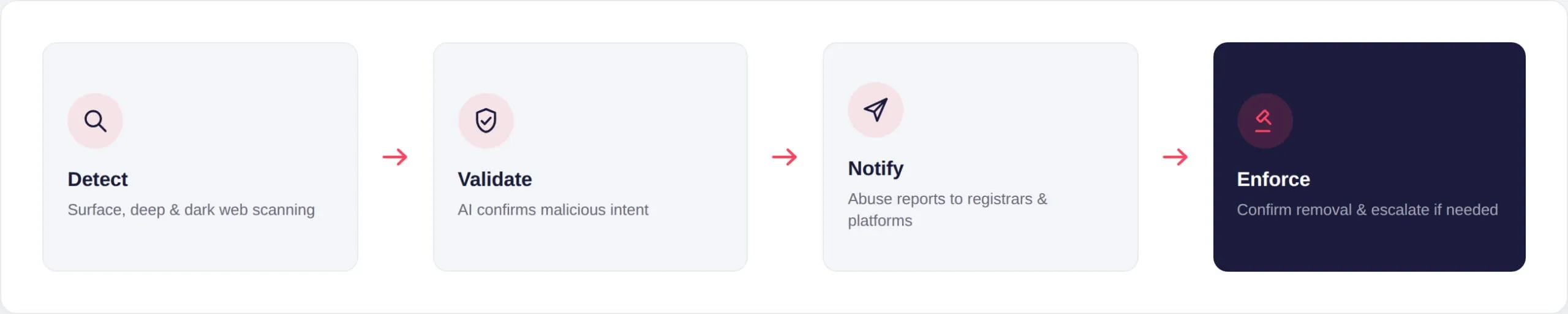
Effective takedown operations follow a four-stage process. Each stage builds on the previous one and determines how quickly a threat is neutralized.
Takedown stepsDetection is the first stage and the one most dependent on coverage. Scanning tools crawl the surface web, deep web, and Dark Web for assets that impersonate a brand or domain. This includes typosquatted domains, look-alike URLs, unauthorized use of logos and trademarks, and counterfeit storefronts.
Validation separates confirmed threats from false positives. AI-driven classifiers analyze the detected asset to confirm malicious intent before any action is taken. Automated remediation without this step generates noise and can result in unjustified complaints that damage relationships with registrars.
Notification sends formal abuse reports and takedown requests to the relevant parties: domain registrars, web hosting providers, social media platforms, and mobile app stores. The format and evidence package required varies by recipient.
Enforcement follows up to confirm that the asset was actually removed and does not reappear. Effective services track takedown outcomes and escalate through legal channels when initial requests are ignored.
The time between detection and removal, called Time to Takedown (TTT), is the primary performance metric. AI-driven automation is reducing TTT from days to hours or minutes in many cases.
Common Use Cases for Takedowns
Takedown services handle a wide range of malicious digital assets. The major categories in 2026 are the following:
Phishing and Domain Squatting
Phishing domains are the most common takedown target. Attackers register domains that closely resemble a legitimate brand’s URL, often with minor spelling variations or added words, and use them to harvest credentials or deliver malware. A phishing takedown requires fast action because phishing campaigns often complete their damage within the first 24 hours of going live.
Social Media Impersonation and Brand Impersonation
Fake executive profiles, unauthorized brand accounts, and impersonation pages deceive customers and damage organizational credibility. These assets spread disinformation, conduct social engineering, and reroute customer inquiries to attackers. Platform-specific takedown processes apply, and response times vary widely by network.
Rogue Mobile Applications
Unauthorized apps distributed through third-party stores and sometimes appearing in official marketplaces mimic legitimate applications to steal credentials or install malware. These require coordination with app store operators and often move more slowly than domain-based takedowns.
Deepfake and AI-Generated Content
A category that has grown significantly since 2024 is the removal of deepfake videos, AI-synthesized audio, and fabricated written content that falsely attributes statements to executives or brand representatives. Intellectual property infringement and reputational harm are the primary risks. Takedown procedures for this category are still maturing legally, but major content platforms now operate dedicated AI-generated content abuse reporting channels.
Why Manual Takedowns Are No Longer Sufficient
Traditional takedown workflows involve a security analyst identifying a threat, drafting an abuse report, submitting it through a registrar’s web form, and waiting. This process worked when malicious content appeared at a manageable rate. It does not work today.
Phishing kits are now deployed in minutes using automated infrastructure. Attackers can register and activate a look-alike domain, populate it with a convincing clone of a target site, and begin sending phishing messages faster than a manually-operated takedown request can be written.
API-driven remediation systems that connect directly to registrar abuse endpoints and platform reporting APIs have replaced this workflow for organizations operating at scale. These systems reduce TTT substantially and allow analysts to focus on validation and escalation rather than report submission.
The gap between organizations with automated cybersecurity automation in their takedown pipeline and those still operating manually is widening. An attacker who knows that a target’s average TTT is 72 hours will plan campaigns accordingly.
Legal Frameworks and Compliance
Takedown requests operate within legal structures that vary by jurisdiction and content type. Familiarity with these frameworks is necessary for submitting requests that registrars and platforms will act on.
DMCA (Digital Millennium Copyright Act) governs takedown requests for copyright-infringing content hosted in or targeting the United States. A properly formatted DMCA notice sent to a hosting provider creates a legal obligation to act.
GDPR creates mechanisms for requesting removal of personal data published without consent. Organizations in the EU or handling EU data can use GDPR right-to-erasure provisions as a basis for certain takedown requests.
International domain laws vary significantly. Some country-code TLDs (ccTLDs) have responsive abuse teams; others are known to be permissive toward malicious registrations. Effective external threat management accounts for these jurisdictional differences when prioritizing escalation paths.
Choosing the Right Takedown Service Provider
The criteria that distinguish capable providers from basic ones have changed as the threat landscape has evolved.
Global registrar and platform relationships determine how quickly a provider can reach the right abuse contact for a given asset. Providers with direct relationships move faster than those submitting through public forms.
24/7 SOC support matters for phishing campaigns that launch outside business hours, which is a common attacker pattern.
AI-driven false positive reduction is a requirement rather than a differentiator. Services that generate excessive false positives damage relationships with registrars and reduce the effectiveness of future legitimate requests.
Transparent reporting gives security teams clear data on takedown request outcomes, average TTT by asset type, and trends in impersonation attempts. This data feeds broader brand protection strategy.
How SOCRadar Automates the Takedown Process
SOCRadar’s Brand Protection module flags the impersonating domains, phishing pages, and rogue apps targeting your brand. Takedown Activity Management takes it from there: one click initiates the request, and SOCRadar’s Analysts reach out to domain registrars, DNS name server operators, local CERT teams, and browsers’ safe browsing teams by email, phone, or API, with the Takedown Analyst Team (STAT) available around the clock for cases that need specialized intervention. Track every request from submission to confirmed removal, all from one portal.
Explore SOCRadar’s Brand Protection.