




Oct 08, 2026
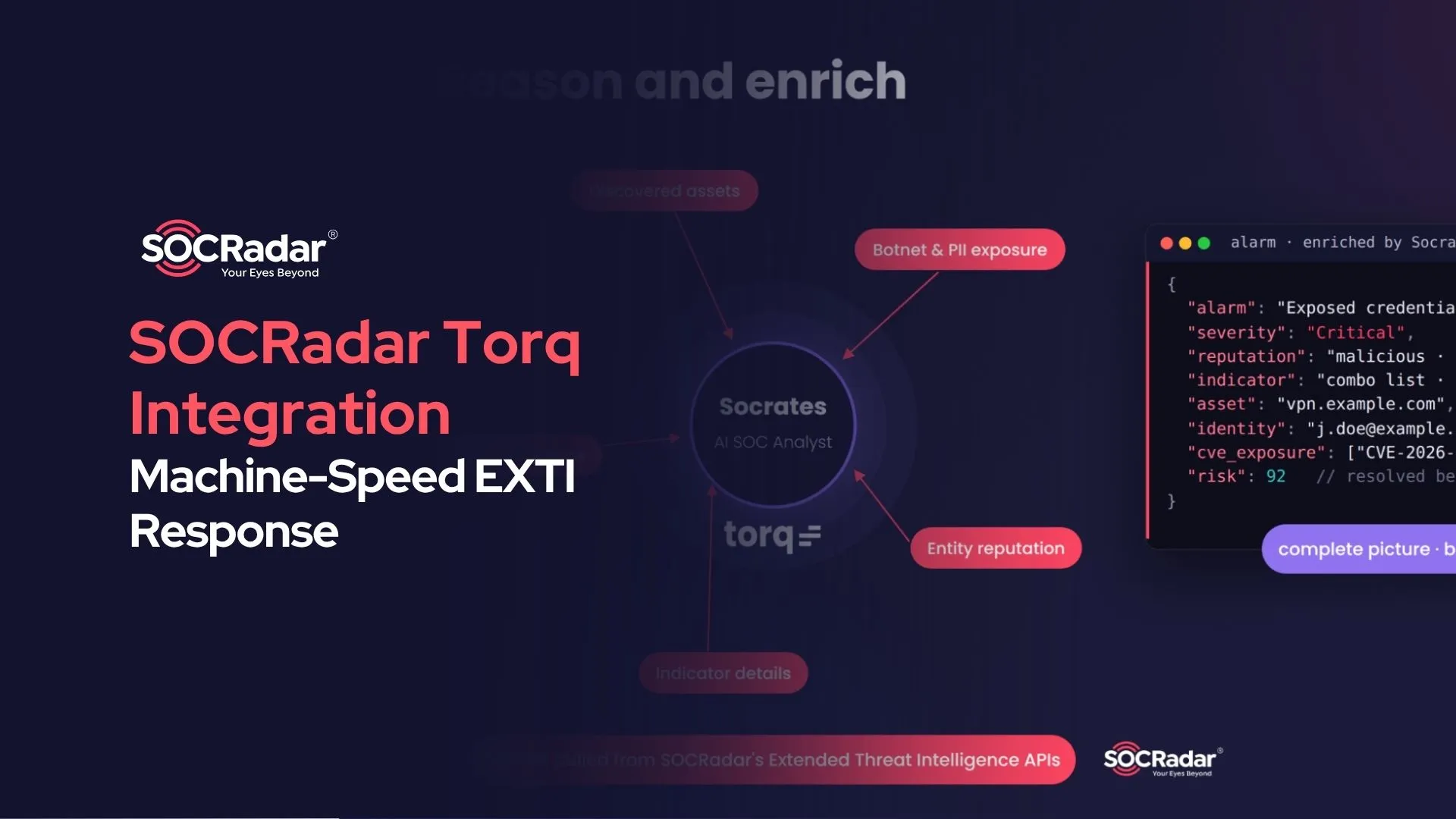
Table Of Content
Turn External Threat Intelligence into Machine-Speed Response with SOCRadar and Torq
External Threat Intelligence Has an Action Problem
Context Is Scattered Across the Stack
The SOCRadar Capability Behind This Integration
Integration with Torq
Key Use Cases
How It Works in Practice
Take the Next Step
Frequently Asked Questions
Learn More
Related Articles

Oct 12, 2026
6 Mins Read

Summarize with:
Turn External Threat Intelligence into Machine-Speed Response with SOCRadar and Torq
Your Dark Web monitoring just flagged a set of employee credentials for sale. The alarm is accurate, it is timely, and it is now sitting in a queue. Someone has to read it, confirm the accounts are real, check whether the sessions are active, open a ticket and chase the identity team to rotate the password. By the time that happens, the listing has had buyers for days. The intelligence was fast. Why wasn’t the response?
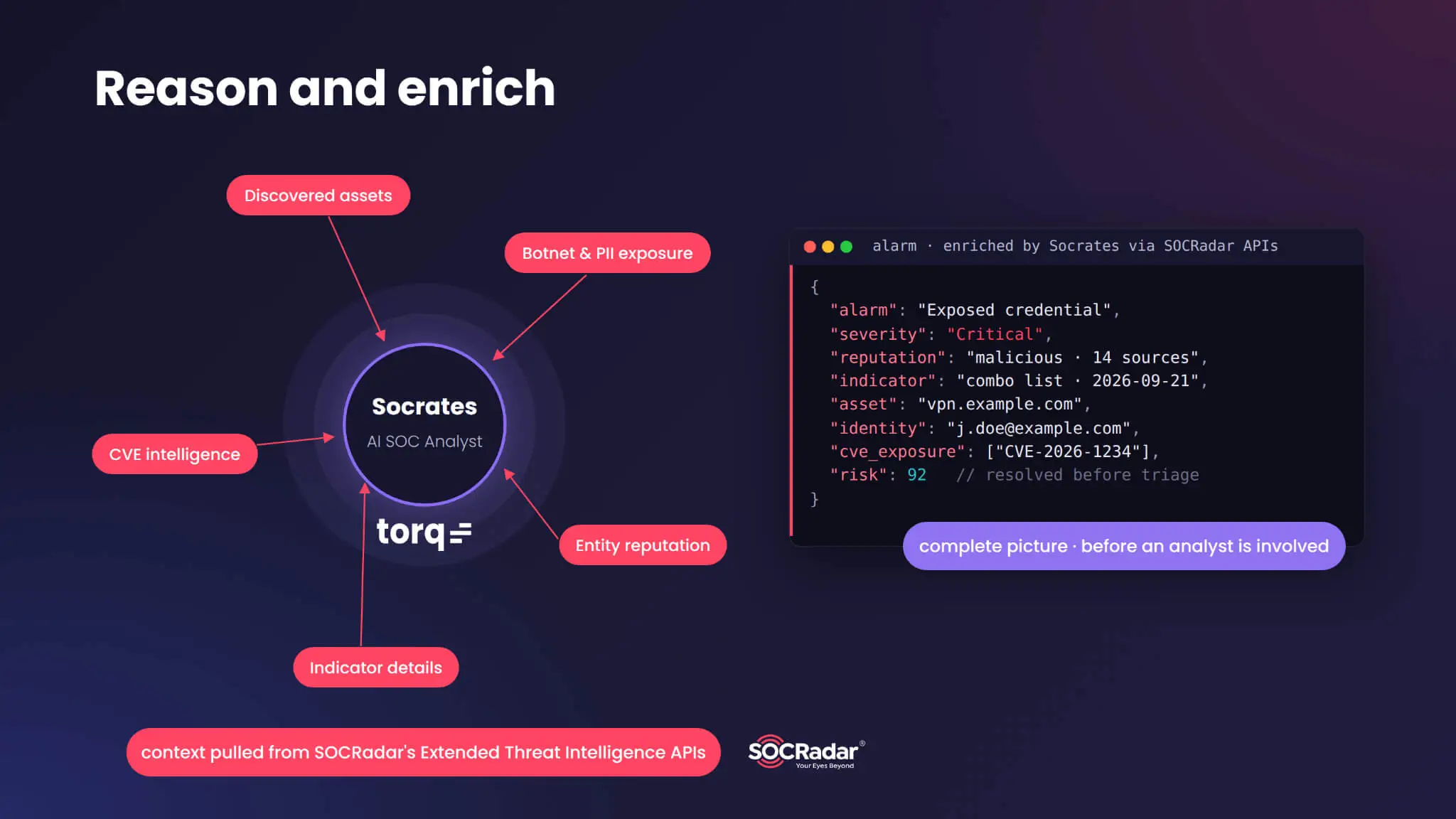
Socrates, Torq’s AI SOC Analyst, enriches every SOCRadar alarm with reputation, indicator, CVE and discovered-asset context before an analyst is involved.
External Threat Intelligence Has an Action Problem
Threat intelligence platforms are good at surfacing what is happening outside the perimeter: exposed credentials, impersonating domains, botnet infections and newly weaponized CVEs that touch real assets. What they hand over is a finding, and a finding still needs a human to decide what it means and what to do about it.
In practice that means an analyst reads the alarm, pivots into two or three other consoles to confirm it matters, and files a ticket for someone else to act on. A leaked credential stays unrotated while it is actively being sold. A phishing domain collects victims for a week before a takedown is requested. Each step is reasonable on its own; together they turn early warning into late response.
Context Is Scattered Across the Stack
The second problem is that the context needed to triage an external alarm rarely lives in one place. Reputation for the indicator is in one tool, the CVE details in another, the question of whether the affected host is actually yours in an asset inventory somewhere else. Your analysts spend their time assembling a picture before they can make a decision, and the picture is often still partial when they do.
The SOCRadar Capability Behind This Integration
SOCRadar Extended Threat Intelligence continuously monitors the Surface, Deep and Dark Web alongside your organization’s external attack surface, correlating findings into prioritized alarms and incidents. The modules feeding this integration include Cyber Threat Intelligence, Dark Web Monitoring, Brand Protection and External Attack Surface Management. Use cases covered include:
- Exposed credentials and PII discovered on Dark Web markets and leak sites
- Impersonating domains and brand abuse campaigns
- Botnet-infected accounts and devices tied to your organization
- Newly disclosed CVEs matched against your discovered external assets
- Suspicious indicators that need reputation and context before enforcement
Integration with Torq
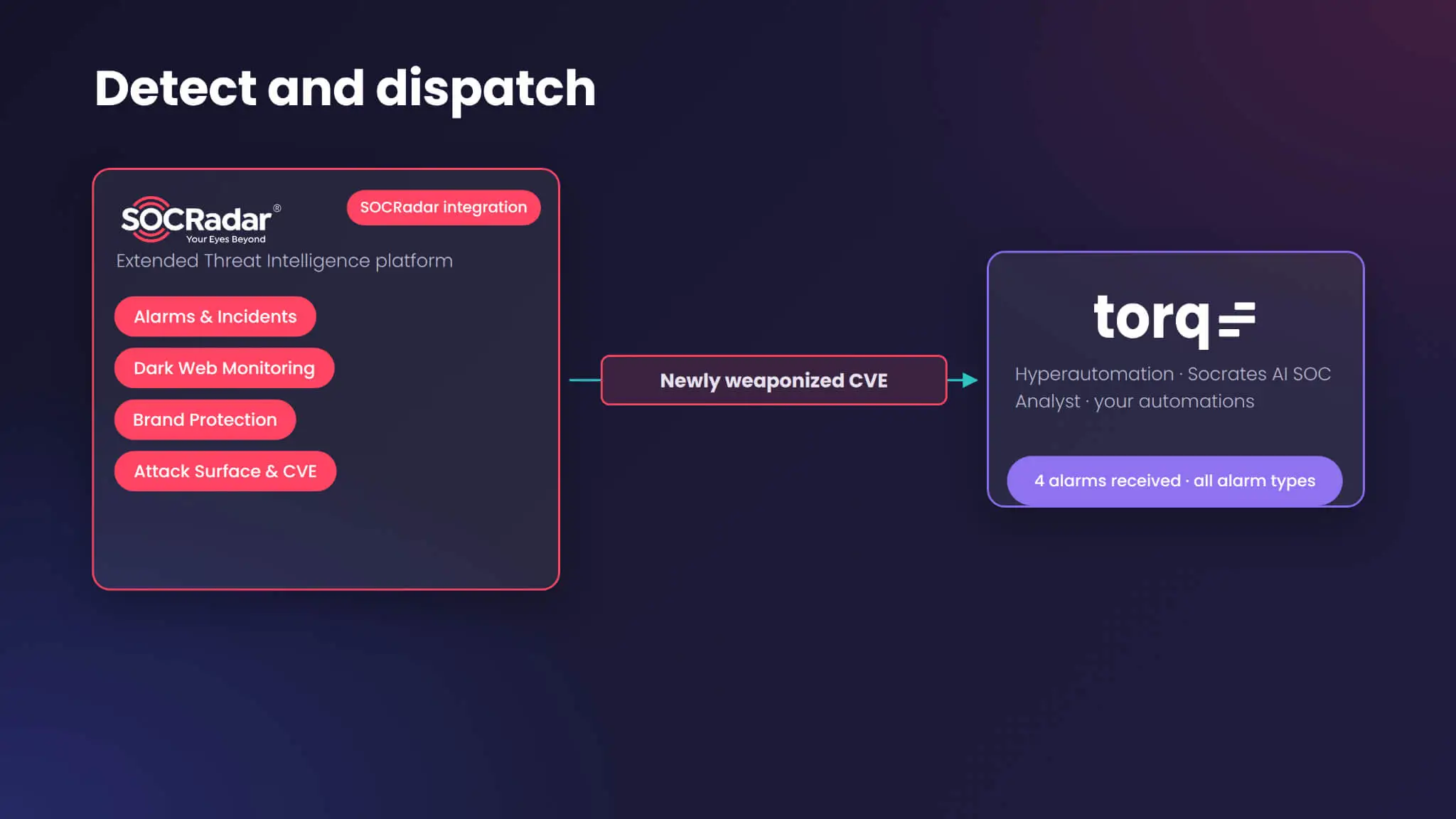
SOCRadar correlates Surface, Deep and Dark Web findings into prioritized alarms and pushes them straight into Torq.
The SOCRadar integration is now available in Torq, the AI SOC and hyperautomation platform.
What flows from SOCRadar into Torq: When an alarm or incident fires, SOCRadar pushes it directly into Torq to trigger investigation and response workflows. Every alarm is sent; which cases Torq acts on is defined by the workflows your team configures.
AI-powered enrichment: Inside Torq, Socrates, Torq’s AI SOC Analyst, uses SOCRadar APIs to add entity reputation, indicator details, CVE intelligence and discovered-asset context to the investigation before an analyst is involved. Enrichment capabilities depend on the customer’s SOCRadar API entitlements.
Automated response: Configured Torq workflows then act across the stack: rotate credentials, revoke sessions, block indicators at the endpoint and perimeter, submit takedown requests and open cases, running as independent parallel branches where needed.
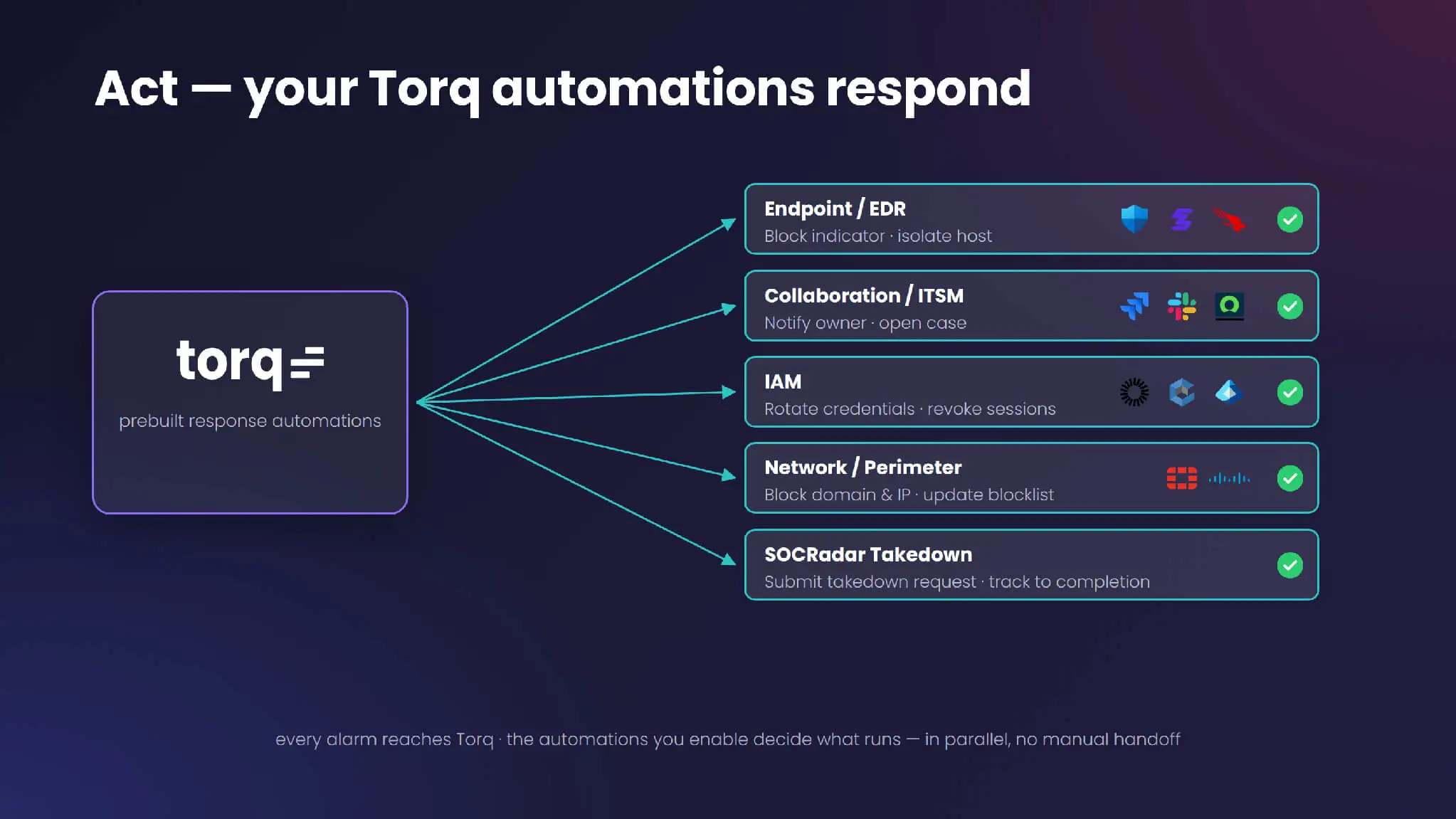
Torq workflows act in parallel: rotate credentials, revoke sessions, block indicators, file takedowns, open cases.
Bidirectional updates: Alarm status, severity, assignee, tags and comments are written back into SOCRadar directly from Torq, so SOCRadar remains the authoritative record of what was found and what was done about it.
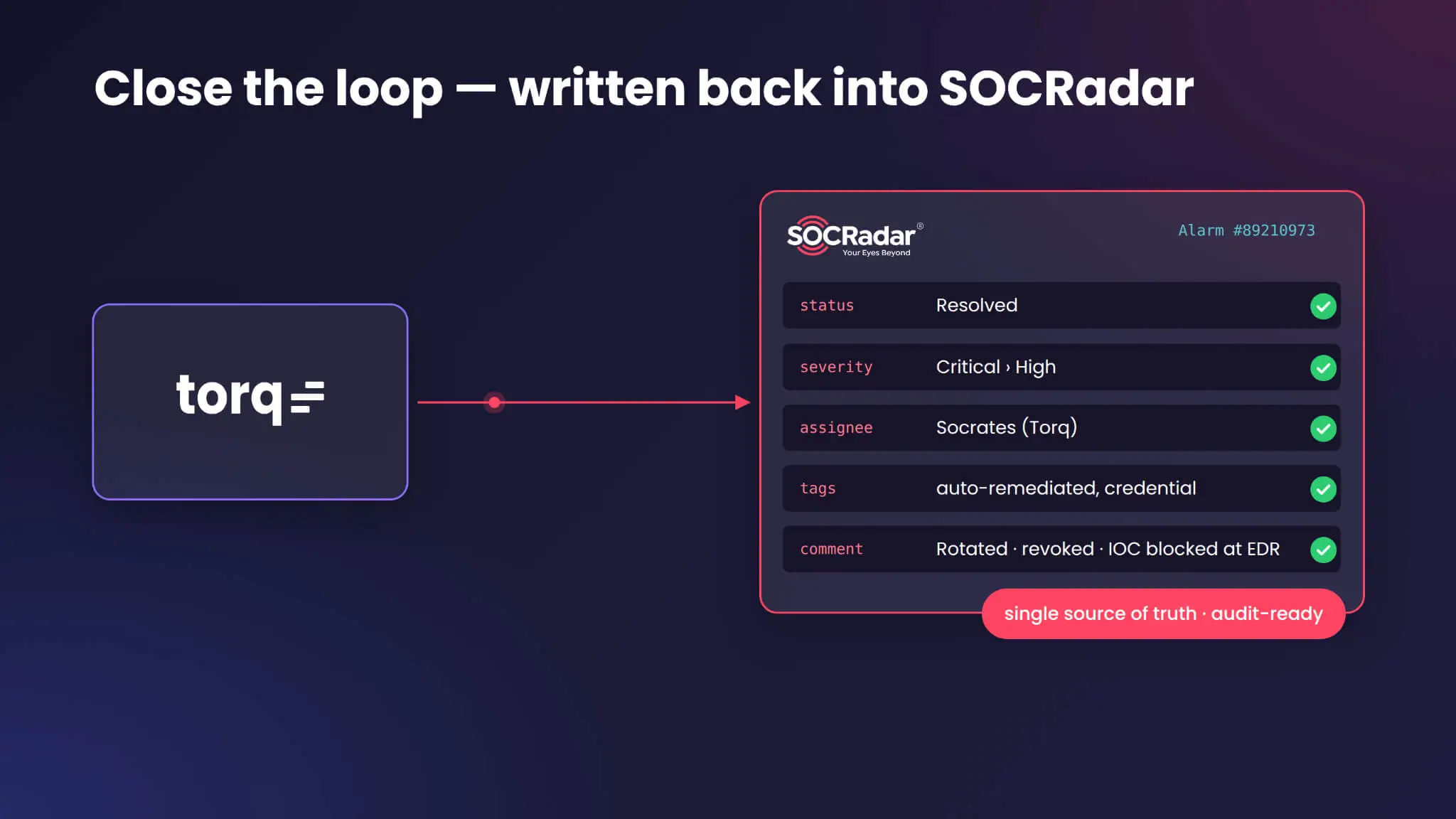
Status, severity, assignee, tags and comments are written back into SOCRadar, keeping it the single source of truth.
Key Use Cases
- Credential and PII exposure: trigger response workflows for exposed identity data and compromised credentials, rotating credentials and revoking sessions the moment Dark Web monitoring surfaces them
- Phishing and brand abuse: validate impersonating domains, initiate takedown workflows and track progress to resolution
- Indicator enrichment and blocking: enrich suspicious indicators against reputation intelligence and push verdicts to enforcement points
- Vulnerability triage: combine CVE intelligence with discovered-asset context so remediation targets exposed systems first
How It Works in Practice
A SOCRadar alarm fires: a batch of credentials for your domain has appeared on a Dark Web market. The alarm goes straight into Torq. Socrates pulls the entity and indicator context from SOCRadar, cross-references the accounts against your identity provider, and confirms two of them belong to active employees with live sessions.
The workflow branches. One branch forces a password reset and revokes the sessions. Another opens a case and notifies the account owners’ manager. A third updates the SOCRadar alarm: status set to Investigating, assignee set to the on-call responder, a comment recording what was done and when. By the time you open SOCRadar to review the morning’s alarms, this one already shows who handled it and how, and the credentials that were for sale no longer work.
Take the Next Step
For mutual customers, the value is straightforward: SOCRadar supplies validated, prioritized external alarms, and Torq turns them into enriched, automated response while keeping SOCRadar’s record complete and audit-ready.
To get started, enable the SOCRadar integration in Torq and connect it with your SOCRadar API credentials; your SOCRadar customer success manager can confirm which API entitlements your enrichment workflows will need. Not yet a customer of either platform? Request a demo and we will walk through the joint workflow with you.
Frequently Asked Questions
Which SOCRadar alarms are sent to Torq?
SOCRadar pushes every alarm and incident into Torq. The workflows your team configures in Torq define which cases are acted on.
What does Socrates add to a SOCRadar alarm?
Socrates, Torq’s AI SOC Analyst, uses SOCRadar APIs to add entity reputation, indicator details, CVE intelligence and discovered-asset context to the investigation. Available enrichment depends on the customer’s SOCRadar API entitlements.
What does Torq write back to SOCRadar?
Alarm status, severity, assignee, tags and comments, so SOCRadar remains the authoritative record of what was found and what was done about it.
How do I enable the integration?
Enable the SOCRadar integration in Torq and connect it with your SOCRadar API credentials. Your SOCRadar customer success manager can confirm which API entitlements your enrichment workflows need.
Learn More
- Torq platform
- All SOCRadar integrations
- Request a demo


