


Jun 29, 2026
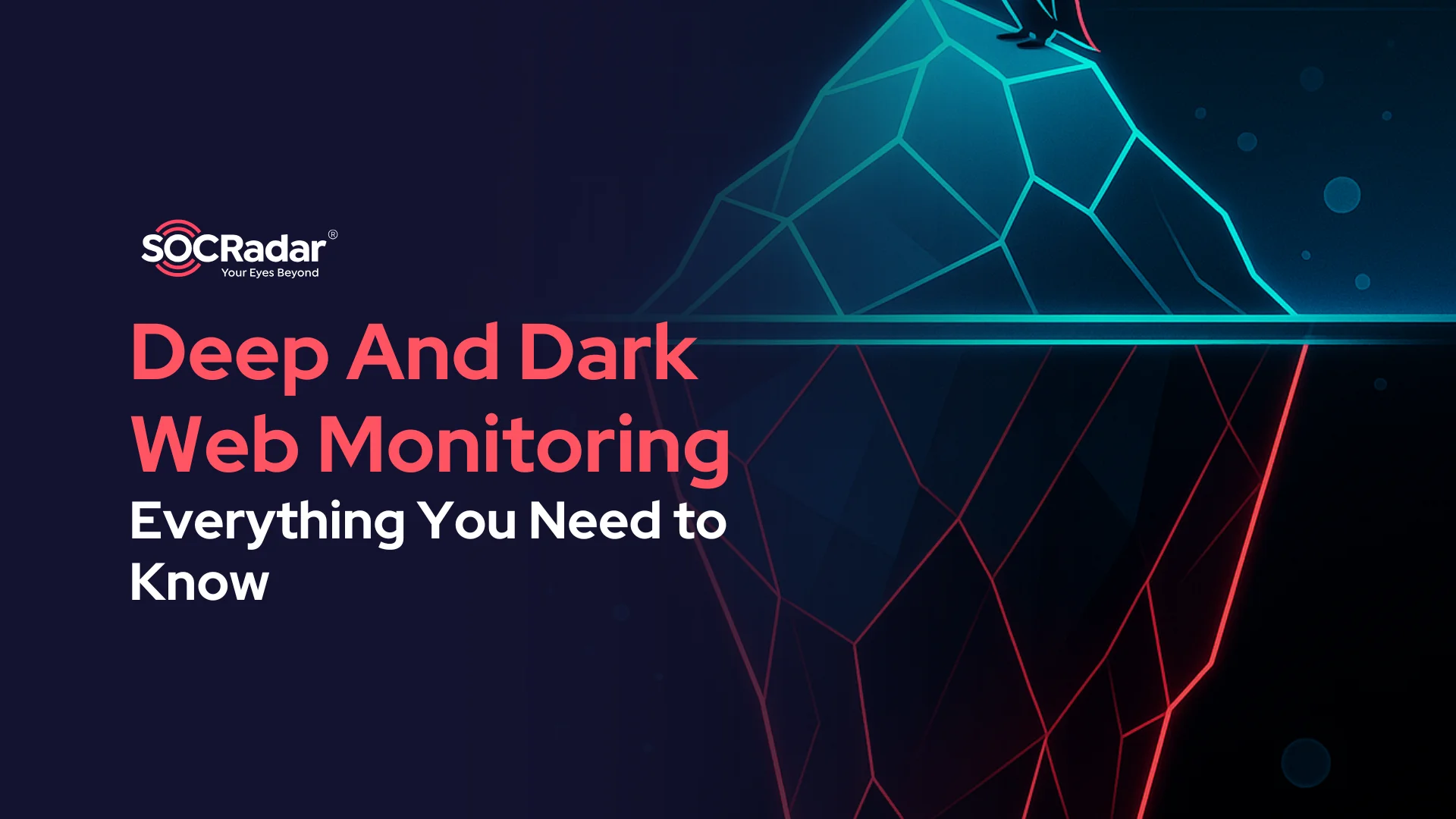
Table Of Content
Deep and Dark Web Monitoring
What Is Deep Web and Dark Web Monitoring?
Understanding the Structure and Purpose of the Deep Web
Visibility and Indexing: How Search Engines Treat Each Layer
Why Companies Need Deep and Dark Web Monitoring in 2025
Types of Threats Detected Through Deep and Dark Web Monitoring
How Deep and Dark Web Monitoring Prevents Data Breaches
Real-Time Alerting and Automated Scanning Capabilities
Integration with SOC and SIEM Platforms
Industries That Benefit Most from Web Monitoring
Best Tools and Practices for Effective Monitoring
Corporate Risk Management Through External Monitoring
FAQ: Deep and Dark Web Monitoring
Related Articles
Sep 11, 2025
8 Mins Read

Deep and Dark Web Monitoring
Threat actors operate across multiple layers of the internet, from surface web to encrypted Dark Web marketplaces. Traditional security tools only monitor your internal network, leaving external threats invisible. That’s why SOCRadar’s Advanced Dark Web Monitoring solution provides comprehensive visibility across all hidden web layers, detecting threats before they impact your organization in 2025.
What Is Deep Web and Dark Web Monitoring?
Deep Web and Dark Web monitoring is a comprehensive cybersecurity approach that tracks threats, data leaks, and malicious activity across all hidden layers of the internet. This proactive security measure helps organizations detect exposed credentials, brand impersonation, and planned attacks before they cause damage.
Monitoring platforms scan Deep Web databases for credential leaks, Dark Web marketplaces for stolen data, hidden forums for threat intelligence, and encrypted channels for attack planning.

This external visibility complements traditional security tools by monitoring threats that originate outside your network perimeter.

Illustration showing the Surface, Deep, and Dark Web as layers of an iceberg.
Understanding the Structure and Purpose of the Deep Web
The deep web includes all internet content not indexed by traditional search engines and represents approximately 90% of online content. It serves essential privacy and security functions for organizations worldwide.
Deep web content includes private databases and academic journals, login-protected portals like email and banking, internal company systems and SaaS platforms, government databases and legal archives, plus medical records and patient portals.
Monitoring the deep web helps detect when legitimate private content becomes exposed or compromised, providing early warning of potential security incidents.
Visibility and Indexing: How Search Engines Treat Each Layer
Understanding how different web layers work helps explain why specialized monitoring is necessary:
| Web Layer | Search Engine Access | Content Types | Access Requirements | Monitoring Approach | Security Risks |
| Surface Web | Fully indexed and searchable | Public websites, blogs, news | No credentials needed | Traditional web monitoring | SEO poisoning, public defacement |
| Deep Web | Hidden behind access controls | Private databases, email, banking | Valid login credentials | Credential and database monitoring | Data breaches, insider threats |
| Dark Web | Intentionally hidden via encryption | Anonymous forums, marketplaces | Tor browser + .onion URLs | Specialized dark web scanning | Stolen data sales, attack planning |
SOCRadar’s monitoring solutions address all three layers, providing complete visibility into external threats across the entire internet spectrum. The platform’s advanced scanning capabilities detect threats that traditional security tools miss by monitoring hidden forums, encrypted marketplaces, and private databases where threat actors operate.
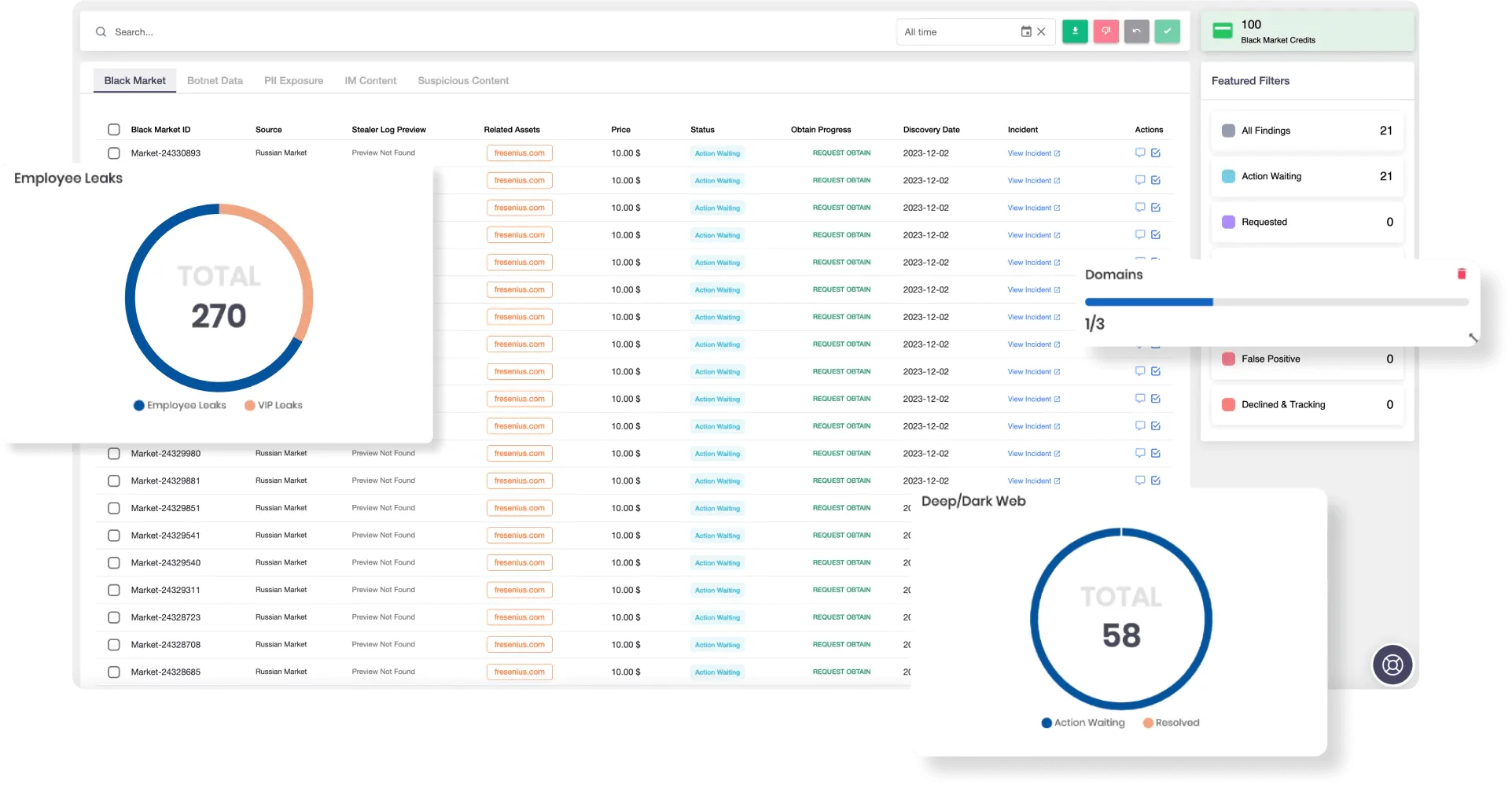
SOCRadar’s Advanced Dark Web Monitoring module dashboard showing real-time threat detection across multiple Dark Web sources and marketplaces
Why Companies Need Deep and Dark Web Monitoring in 2025
Modern cyber threats originate across multiple web layers. Without monitoring these hidden areas, organizations miss critical early warning signs.
Companies using one of the top threat intelligence platforms like SOCRadar gain early threat detection before attacks launch, brand protection from impersonation campaigns, credential leak alerts for compromised accounts, and valuable threat intelligence from threat actor communications.
Companies using one of the top threat intelligence platforms like SOCRadar gain visibility into external threats that traditional security tools miss.
Types of Threats Detected Through Deep and Dark Web Monitoring
Credential Leaks: Employee login credentials, customer account information, administrative passwords, and API keys and tokens.
Data Breaches: Customer databases for sale, internal documents leaked, financial records exposed, and intellectual property theft.
Brand Threats: Phishing kit distribution, domain impersonation, executive impersonation, and fake social media accounts.
Attack Planning: Target reconnaissance data, malware samples and tools, vulnerability exploitation guides, and insider threat communications.
Ransomware Activities: Ransomware groups often operate across Dark Web forums and marketplaces, sharing attack tools, negotiating with victims, and selling stolen data. These groups also actively seek initial access from brokers who sell compromised network credentials and VPN access. Monitoring these activities helps organizations detect potential ransomware threats before attacks occur and understand threat actor tactics, including their procurement of network access.
Ransomware attacks and advanced threat actors are evolving daily, targeting businesses across all industries. Staying ahead requires more than just security tools; it demands actionable intelligence delivered quickly and accurately.
SOCRadar provides organizations with insights on recent attacks broken down by targeted country and industry, early indicators of ransomware campaigns, intelligence on which threat groups operate in your sector, and clear, reliable threat intelligence to strengthen defenses.
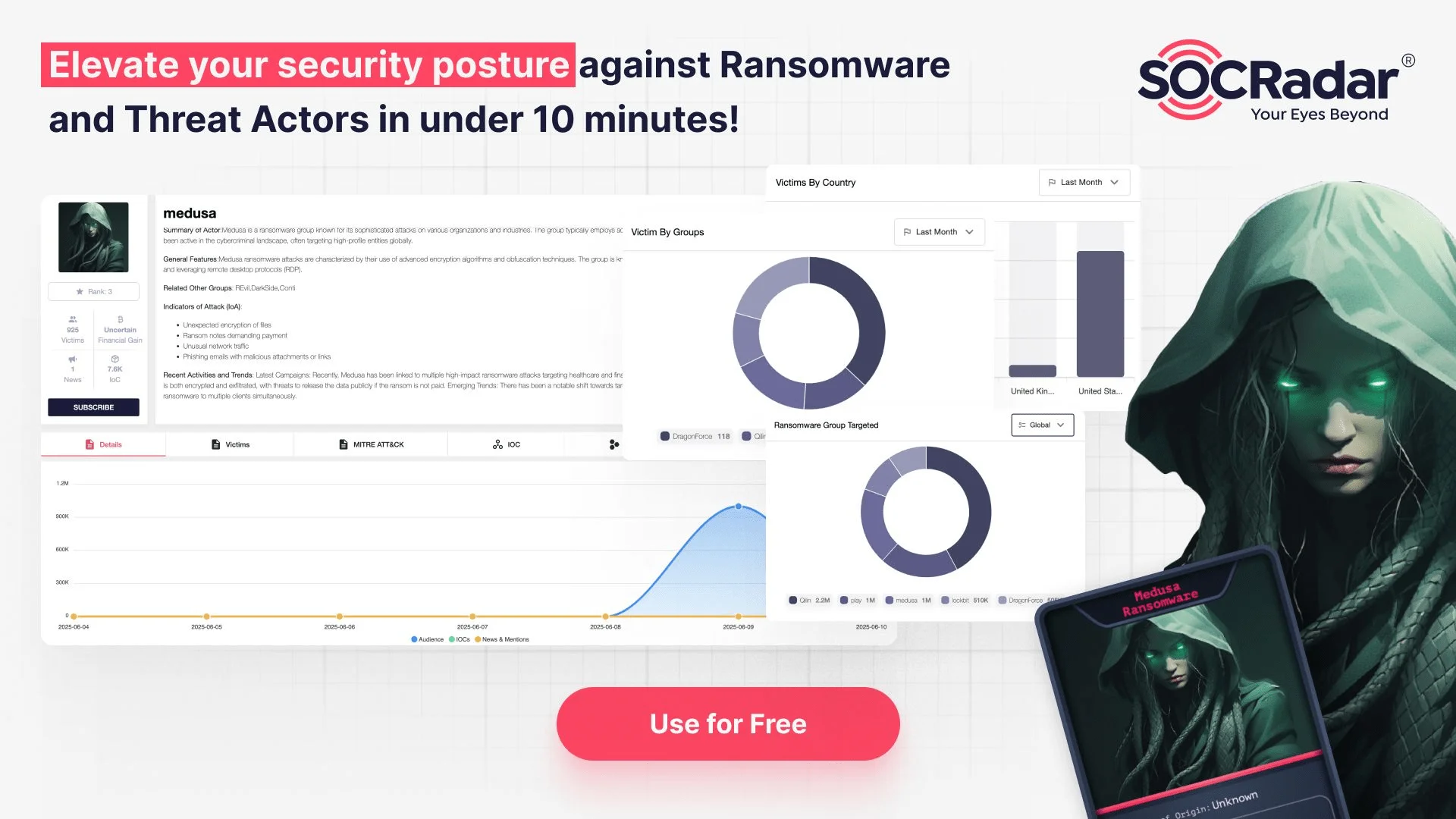
SOCRadar platform showing detailed ransomware group analysis, including attack patterns, targeted sectors, and geographic distribution of recent campaigns
How Deep and Dark Web Monitoring Prevents Data Breaches
Early Warning System: Detect leaked credentials and exposed data before attackers exploit them. This advance notice allows security teams to reset compromised passwords, secure vulnerable systems, notify affected users, and implement additional controls.
Proactive Threat Hunting: Monitor threat actor communications to understand attack methods and targets. This intelligence helps organizations:
- Strengthen defenses against known techniques
- Patch vulnerabilities before exploitation
- Train employees on emerging threats
- Update incident response procedures
Real-Time Alerting and Automated Scanning Capabilities
Real-Time Alerting: Modern monitoring solutions provide real-time alerts when threats are detected, including immediate email notifications, dashboard alerts with severity ratings, integration with SIEM and SOAR platforms, and mobile app notifications for critical threats.
Automated Scanning Features:
- Continuous monitoring of threat sources
- AI-powered threat scoring for prioritization
- Automated data collection from multiple sources
- Regular reporting on threat landscape changes
Integration with SOC and SIEM Platforms
SIEM Integration Benefits:
- Enrich security alerts with external threat context
- Correlate internal events with external intelligence
- Automate threat response workflows
- Centralize threat data management
Supported Platforms:
- Splunk and IBM QRadar
- Microsoft Sentinel
- Cortex XSOAR
- Chronicle Security Operations
This integration creates a unified Security Operations Center (SOC) approach to threat management across all web layers.
Industries That Benefit Most from Web Monitoring
Financial Services:
- Detect stolen payment card data
- Monitor for banking trojans
- Track executive targeting campaigns
- Protect customer financial information
Healthcare:
- Secure patient data from exposure
- Monitor for medical record sales
- Detect insider threat communications
- Ensure HIPAA compliance
Manufacturing:
- Protect intellectual property
- Monitor supply chain threats
- Detect industrial espionage
- Secure operational technology
Government:
- Track nation-state activities
- Monitor for data exfiltration
- Detect insider threats
- Protect classified information
Best Tools and Practices for Effective Monitoring
Essential Tool Features:
- Multi-source data collection
- Real-time threat alerting
- Customizable monitoring rules
- Integration capabilities
- User-friendly dashboards
Implementation Best Practices:
- Define clear monitoring objectives
- Establish alert prioritization rules
- Train security teams on threat analysis
- Regularly update monitoring parameters
- Integrate with existing security tools
Advanced monitoring platforms combine these features with AI-driven threat analysis for comprehensive protection.
Corporate Risk Management Through External Monitoring
Risk Reduction Strategies:
- Continuous visibility into external threat landscape
- Early detection of targeted attacks
- Brand protection from impersonation
- Compliance support for data protection regulations
Measurable Outcomes: Organizations using deep and dark web monitoring typically see:
- 60% faster threat detection times
- 40% reduction in successful phishing attacks
- 75% improvement in brand protection
- 90% better regulatory compliance
FAQ: Deep and Dark Web Monitoring
What is deep and dark web monitoring? Deep and dark web monitoring is the process of tracking threats, data leaks, and malicious activity across hidden internet layers to detect risks before they impact your organization.
Why is it important to monitor both the deep and dark web? Different threats exist on each layer. The deep web contains leaked credentials and private data, while the dark web hosts threat actor marketplaces and attack planning forums.
What types of threats can be detected through deep and dark web monitoring? Credential leaks, data breaches, brand impersonation, phishing kits, malware distribution, and attack planning communications.
How does deep and dark web monitoring help prevent data breaches? By detecting leaked credentials and exposed data early, organizations can secure systems and reset passwords before attackers exploit them.
Can this type of monitoring protect my brand from impersonation or leaks? Yes. Monitoring detects fake domains, phishing campaigns, executive impersonation, and brand misuse across hidden web layers.
Is real-time alerting possible with deep and dark web monitoring tools? Yes. SOCRadar provides instant notifications via email, dashboard alerts, and SIEM integrations when threats are detected.
What industries benefit most from deep and dark web monitoring? Financial services, healthcare, manufacturing, government, and any organization handling sensitive data or facing targeted attacks.
How does web monitoring integrate with SOC and SIEM platforms? Through APIs and native integrations that enrich security alerts with external threat intelligence and automate response workflows.
What are the differences between surface web and deep/dark web monitoring? Surface web monitoring tracks public threats, while deep and dark web monitoring focuses on hidden threats in private databases and encrypted networks.
Is it legal to monitor the dark web for threat intelligence? Yes. Monitoring for defensive cybersecurity purposes is legal and considered a security best practice.