

Mar 10, 2026
Feb 19, 2026
5 Mins Read
Sep 13, 2026
Table Of Content
Related Articles
SMS Bombing
Threat Actors
Jan 08, 2026
Dark Web Monitoring
Feb 19, 2026
Ransomware
Jan 31, 2026
OSINT Framework
Apr 17, 2026

What Is AI Brand Protection?
AI brand protection applies machine learning and automated analysis to discover, classify, prioritize, and investigate online abuse of an organization, its executives, products, and customers. It can help identify look-alike domains, phishing pages, fake profiles, counterfeit listings, fraudulent ads, and unauthorized mobile applications.
Automation improves coverage and triage, but a model output is not proof of abuse. Effective programs combine brand context, infrastructure evidence, content similarity, human validation, legal criteria, platform rules, and a documented takedown process.
Key Takeaways
- Look-alike domains and phishing sites is one important form or technique.
- Detection depends on correlated technical and operational context.
- Prevention should reduce both initial access and post-compromise impact.
- Response must preserve evidence and remove every reusable access path.
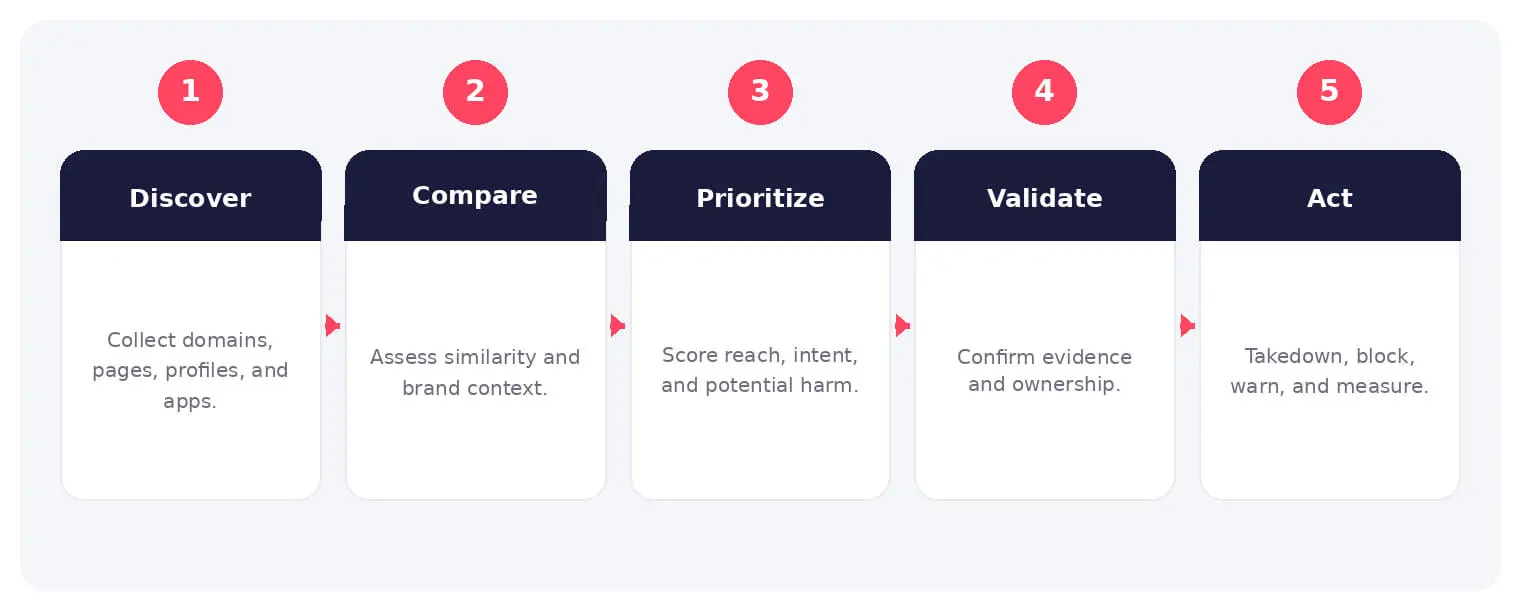
How AI Brand Protection Works
The sequence shown above is not mandatory in every case, but it provides a practical way to connect initial opportunity with the actor’s objective. Individual steps may occur in parallel, repeat, or be completed by different participants.
Automation improves coverage and triage, but a model output is not proof of abuse. Effective programs combine brand context, infrastructure evidence, content similarity, human validation, legal criteria, platform rules, and a documented takedown process.
Common Types and Techniques
- Look-alike domains and phishing sites
- Executive and social-media impersonation
- Counterfeit listings and fraudulent advertising
- Fake mobile apps and unauthorized brand use
Security and Business Risks
- Credential theft and customer fraud
- Loss of revenue and brand trust
- Executive-targeted scams and BEC support
- Legal, support, and incident-response cost
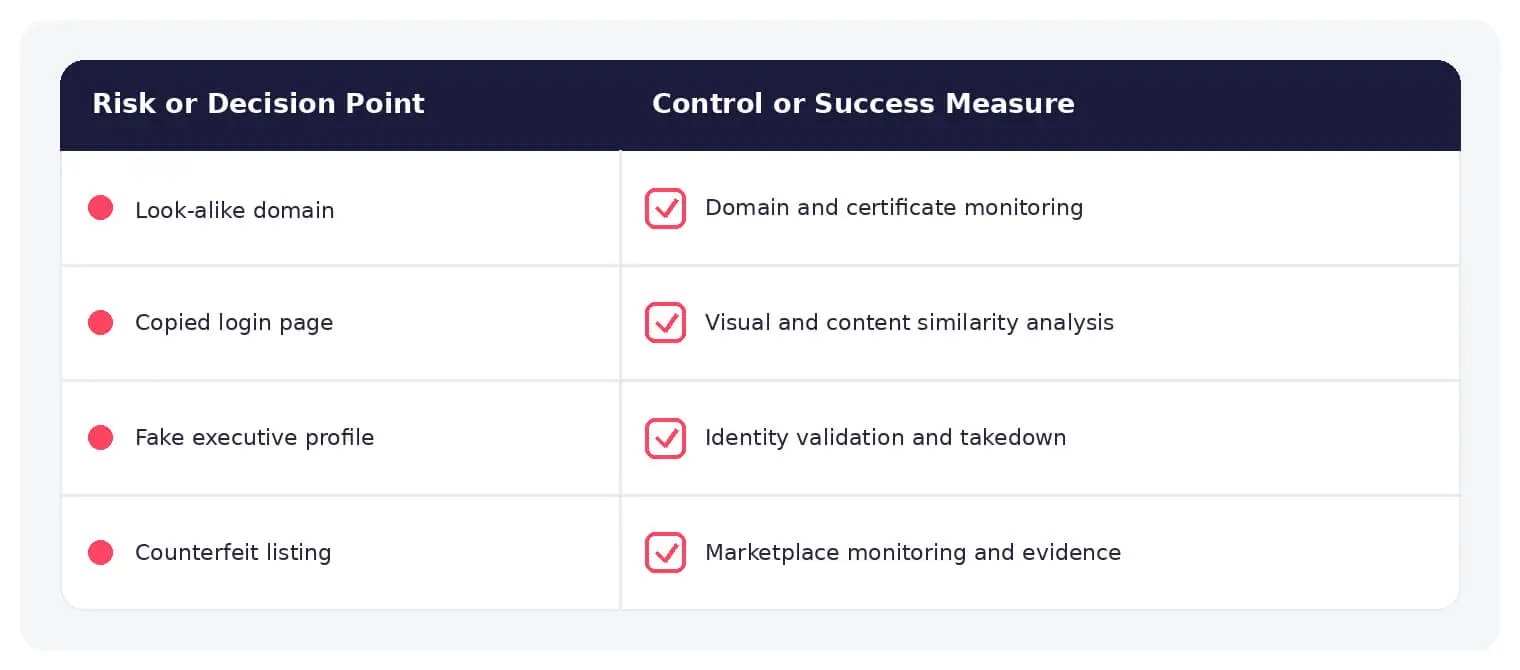
Warning Signs and Detection
Monitor new domains, certificates, DNS, page content, logos, app stores, social platforms, marketplaces, advertising, and threat channels. Prioritize findings that combine strong similarity with active harmful behavior.
Prevention and Response
Register critical domains, harden official accounts, publish trusted channels, monitor continuously, validate alerts, preserve evidence, maintain provider contacts, and measure takedown time and recurrence.
How SOCRadar Can Help
SOCRadar combines external asset visibility, threat intelligence, Dark Web monitoring, vulnerability context, and indicator enrichment to help teams identify exposure and investigate activity connected to AI brand protection.
Explore SOCRadar Brand Protection or request a demo to strengthen threat-informed prevention and investigation.
Frequently Asked Questions
What Does AI Brand Protection Cover?
It spans look-alike domains, phishing pages, fake social media profiles, executive impersonation, counterfeit marketplace listings, fraudulent advertisements, and unauthorized mobile applications. Machine learning extends coverage across these channels at a scale and speed manual review cannot match, surfacing candidates for investigation.
How Do Attackers Use AI to Scale Brand Impersonation?
Generative tools let actors produce convincing phishing pages, cloned marketing content, synthetic support or reviewer profiles, and batches of domain variants in minutes rather than days. This volume overwhelms manual monitoring and shortens the window in which abuse must be found before customers are deceived.
How Does Machine Learning Detect Look-Alike Domains?
Detection models compare candidate domains against known brand assets using string similarity, homoglyph and typosquat patterns, page layout and logo matching, and metadata such as registration date, TLS certificates, and DNS records. Newly registered domains that combine brand terms with suspicious infrastructure receive higher scores for analyst review.
Which Channels Should Brand Protection Programs Monitor?
Core channels include new domain registration feeds, certificate transparency logs, app stores, social media platforms, online marketplaces, advertising networks, and underground forums where cloned assets or customer credentials may surface. Coverage should reflect where the brand actually operates and where customers can be reached.
Which Signals Indicate Active Brand Abuse Rather Than Coincidence?
Similarity alone is not proof of abuse. Higher-risk findings pair look-alike branding with active behavior, such as a fresh domain with a valid certificate, credential-harvesting forms, paid advertising driving traffic, or a spike in customer complaints about fake support accounts.
Why Is Human Review Still Required After Automated Detection?
A model can flag similarity, but it cannot judge intent, authorization, or legal standing. Analysts determine whether content is deceptive, licensed use, parody, or unrelated, and legal teams apply platform rules and jurisdiction criteria before a case moves to enforcement.
What Happens During a Takedown Request?
Evidence is preserved first, including screenshots, HTTP headers, WHOIS records, and hosting details. Reports then go to the registrar, hosting provider, marketplace, app store, social platform, or ad network with the relevant policy or legal basis, and each case is tracked to completion. Response times vary by provider, which is why established contacts and escalation paths matter.
How Can Organizations Reduce Exposure to Brand Abuse?
Practical steps include:
- Registering high-risk typosquat and variant domains before attackers can claim them
- Enforcing SPF, DKIM, and DMARC to counter direct email spoofing of the domain
- Hardening official social media and app store accounts
- Publishing a clear list of legitimate domains and channels customers can verify against
What Business Impact Can Unchecked Brand Abuse Cause?
Unaddressed abuse leads to stolen customer credentials, payment fraud, revenue lost to counterfeit listings, and erosion of brand trust. Executive impersonation can also support business email compromise by lending false authority to fraudulent payment or credential requests.
Is Brand Impersonation the Same as Email Domain Spoofing?
No. Domain spoofing forges the sender identity of an email, which SPF, DKIM, and DMARC are designed to counter. Impersonation usually relies on genuinely registered look-alike domains and real infrastructure, so email authentication alone will not stop it; detection, blocking, and takedown are also required.