What Is AI Threat Detection?
AI threat detection applies machine learning, language models, and automated reasoning to identify, correlate, and prioritize suspicious security activity.
AI can find patterns across large volumes of endpoint, identity, network, cloud, and threat-intelligence data. It should support analysts rather than act as an unreviewed authority, especially when evidence is incomplete or an automated action could affect production.
Key Takeaways
- AI threat detection applies machine learning, language models, and automated reasoning to identify, correlate, and prioritize suspicious security activity.
- AI can find patterns across large volumes of endpoint, identity, network, cloud, and threat-intelligence data. It should support analysts rather than act as an unreviewed authority, especially when evidence is incomplete or an automated action could affect production.
- False positives that disrupt operations is a primary concern.
- Effective programs combine prevention, continuous visibility, accountable ownership, and tested response.
How It Works
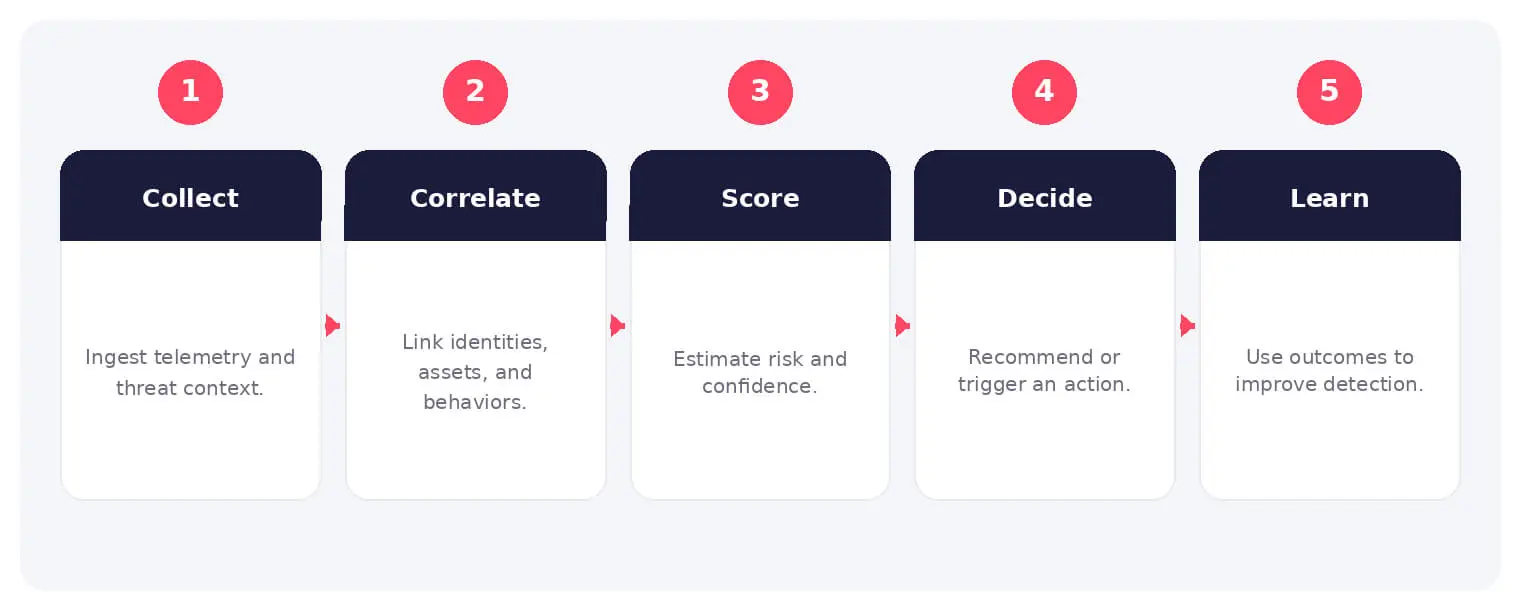
The operating flow above turns the concept into observable steps. Exact implementations vary, but each stage needs accountable ownership, trusted inputs, documented policy, and evidence that analysts can use during investigation and review.
AI can find patterns across large volumes of endpoint, identity, network, cloud, and threat-intelligence data. It should support analysts rather than act as an unreviewed authority, especially when evidence is incomplete or an automated action could affect production.
Common Types and Capabilities
- Behavior and anomaly detection
- Malware and phishing classification
- Alert correlation and prioritization
- Agentic investigation and response
Security and Business Risks
- False positives that disrupt operations
- False negatives and silent model failure
- Poisoned data and adversarial manipulation
- Opaque decisions and automation overreach
Warning Signs and Detection
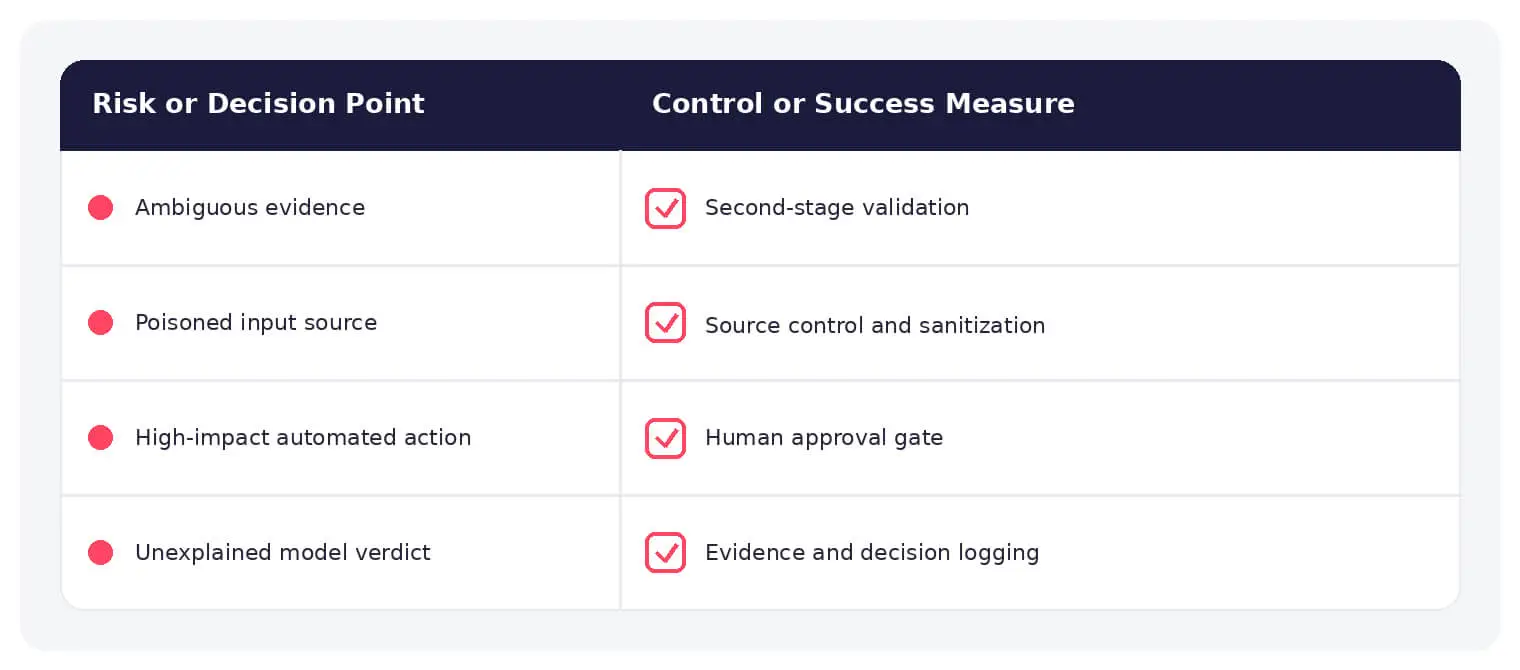
Monitor abrupt changes in model output, confidence without supporting evidence, feature or data drift, source-quality failures, unusual suppression patterns, repeated analyst overrides, prompt injection, and automated actions outside policy.
Best Practices
Use trusted and allowlisted data, document model scope, test adversarial cases, preserve evidence, validate with independent controls, require approval for high-impact action, monitor drift, and provide rollback and human escalation.
How SOCRadar Can Help
SOCRadar adds external visibility, threat intelligence, exposure context, and continuous monitoring to help teams validate and prioritize risks related to AI threat detection. This context complements internal AI, cloud, security operations, and governance controls.
Explore SOCRadar Agentic Threat Intelligence or request a demo to strengthen threat-informed prevention and response.
Frequently Asked Questions
What Is AI Threat Detection?
AI threat detection applies machine learning, language models, and automated reasoning to identify, correlate, and prioritize suspicious activity across endpoint, identity, network, cloud, and threat-intelligence data. It is built to surface patterns that manual review would miss at scale, while keeping analysts in control of final decisions.
How Does AI Threat Detection Differ From Rule-Based Detection?
Rule-based detection matches known signatures or fixed conditions, while AI-driven detection evaluates behavioral patterns and statistical anomalies across large datasets. That makes it capable of flagging novel activity, but it also introduces risks such as opaque decisions and noisy alerts that require analyst validation.
What Are the Main Risks of AI Threat Detection?
The primary concerns are operational disruption and loss of trust in the tooling:
- False positives that interrupt production or waste analyst time
- False negatives and silent model failure
- Poisoned data and adversarial manipulation of inputs
- Automation overreach where opaque decisions trigger unreviewed actions
How Does AI Threat Detection Work in Practice?
Most implementations ingest telemetry from trusted sources, analyze incoming activity for anomalies, correlate related signals into prioritized alerts, and route findings to analysts with supporting evidence. Each stage needs accountable ownership, documented policy, and evidence analysts can use during investigation and review.
What Warning Signs Suggest an AI Detection Model Is Failing?
Watch for abrupt changes in model output, high confidence without supporting evidence, feature or data drift, source-quality failures, unusual alert suppression, repeated analyst overrides, and automated actions taken outside policy. These signals often appear before the model causes significant operational impact.
What Should Analysts Do When an AI Tool Flags Suspicious Activity?
Treat the alert as a lead rather than a verdict. Review the supporting evidence, validate the finding with independent controls, weigh context such as asset criticality and user history, and require human approval before any high-impact automated action is executed.
How Can Teams Reduce False Positives From AI Detection?
Feed models allowlisted and trusted data, document the model’s scope, test it against known benign behavior, and track which alerts analysts routinely override. Preserving evidence and monitoring drift over time also help distinguish real threats from noise.
Can Attackers Manipulate AI Threat Detection Systems?
Yes. Attackers can poison training data, craft inputs that evade classification, or use prompt injection against language-model-driven tools. Testing adversarial cases, monitoring source quality, and gating automated actions behind approval reduce these risks.
What Is Model Drift and Why Does It Matter?
Model drift occurs when the data feeding a detection model changes over time, such as new infrastructure, new application behavior, or shifting attacker techniques, causing accuracy to degrade quietly. Continuous drift monitoring and periodic retesting against current threats help catch degradation before detection quality erodes.
Does AI Threat Detection Replace Security Analysts?
No. AI should support analysts by correlating data and prioritizing alerts, not act as an unreviewed authority. Human oversight remains essential, especially when evidence is incomplete or an automated action could affect production systems.

Oct 27, 2026
PHP2Shell Weaponized After Japanese Real Estate Extortion
An exposed server ties an extortion wave on about 20 Japanese property sites to an operator who later weaponized PHP2Shell (CVE-2026-109618, CVE-2026-109619)…

Oct 27, 2026
Wasmtime Sandbox Escape Flaws Patched in Cranelift
Two critical Wasmtime sandbox escape flaws, CVE-2026-115889 and CVE-2026-115893, let a crafted WebAssembly (Wasm) module push the Cranelift compiler into generating unsafe…

Oct 26, 2026
Node2Shell: Brotli Flaw Hits Python Packages
[Update] October 27, 2026: PHP Ships Windows Builds With Brotli Fix The Node2Shell Brotli flaw (CVE-2026-111497), disclosed alongside Node.js fixes on October…
Intelligence in your inbox every Thursday.
Join 30,000+ security professionals reading SOCRadar research.
Subscribe