
What Is Endpoint Security?
Endpoint security protects laptops, desktops, servers, mobile devices, and other connected systems from compromise, misuse, and data loss.
Modern programs combine prevention, detection, investigation, and response. They must cover managed and remote devices while connecting endpoint events with identity, network, cloud, vulnerability, and threat-intelligence context.
Key Takeaways
- Endpoint security protects laptops, desktops, servers, mobile devices, and other connected systems from compromise, misuse, and data loss.
- Modern programs combine prevention, detection, investigation, and response. They must cover managed and remote devices while connecting endpoint events with identity, network, cloud, vulnerability, and threat-intelligence context.
- Malware and ransomware execution is a primary concern.
- Effective security combines prevention, continuous visibility, ownership, and tested response.
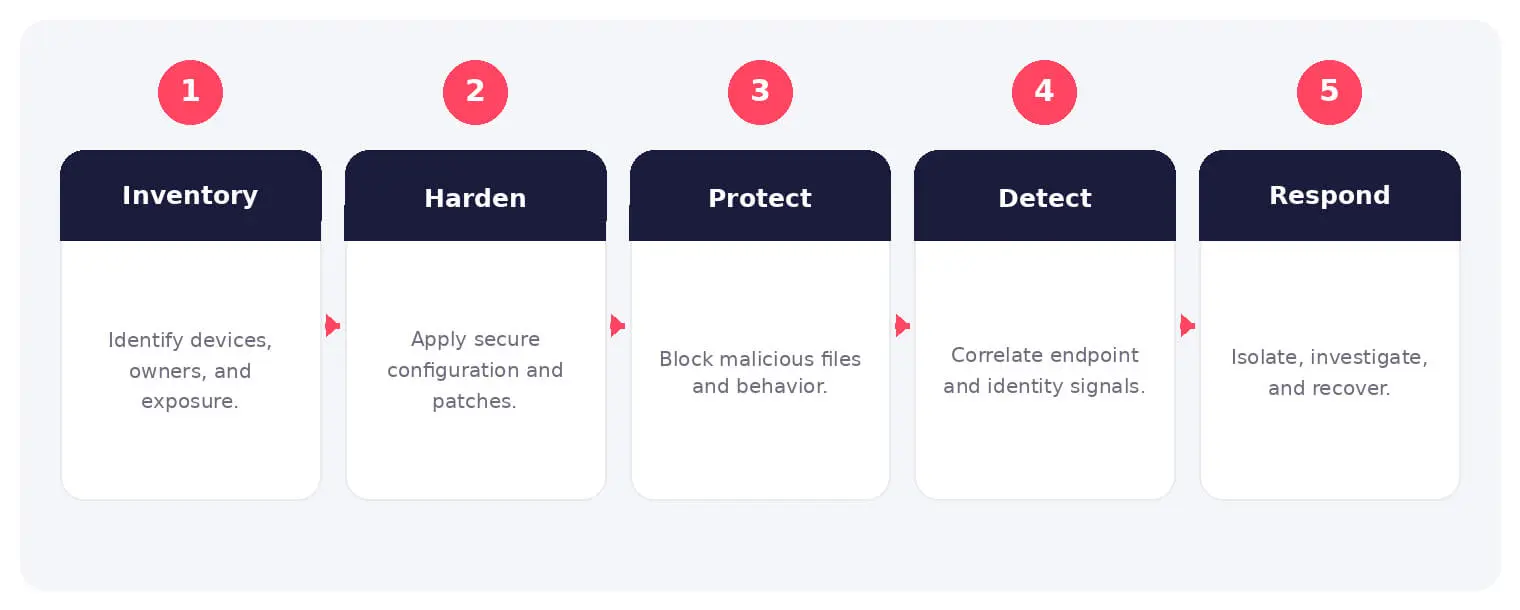
How It Works
The operating flow above turns the concept into observable steps. Exact implementations vary, but each stage needs accountable ownership, trusted inputs, documented policy, and evidence that analysts can use during investigation and review.
Modern programs combine prevention, detection, investigation, and response. They must cover managed and remote devices while connecting endpoint events with identity, network, cloud, vulnerability, and threat-intelligence context.
Common Types and Capabilities
- Endpoint protection platforms
- Endpoint detection and response
- Mobile and server security
- Extended detection and response
Security and Business Risks
- Malware and ransomware execution
- Credential and session theft
- Privilege escalation and persistence
- Data theft and lateral movement
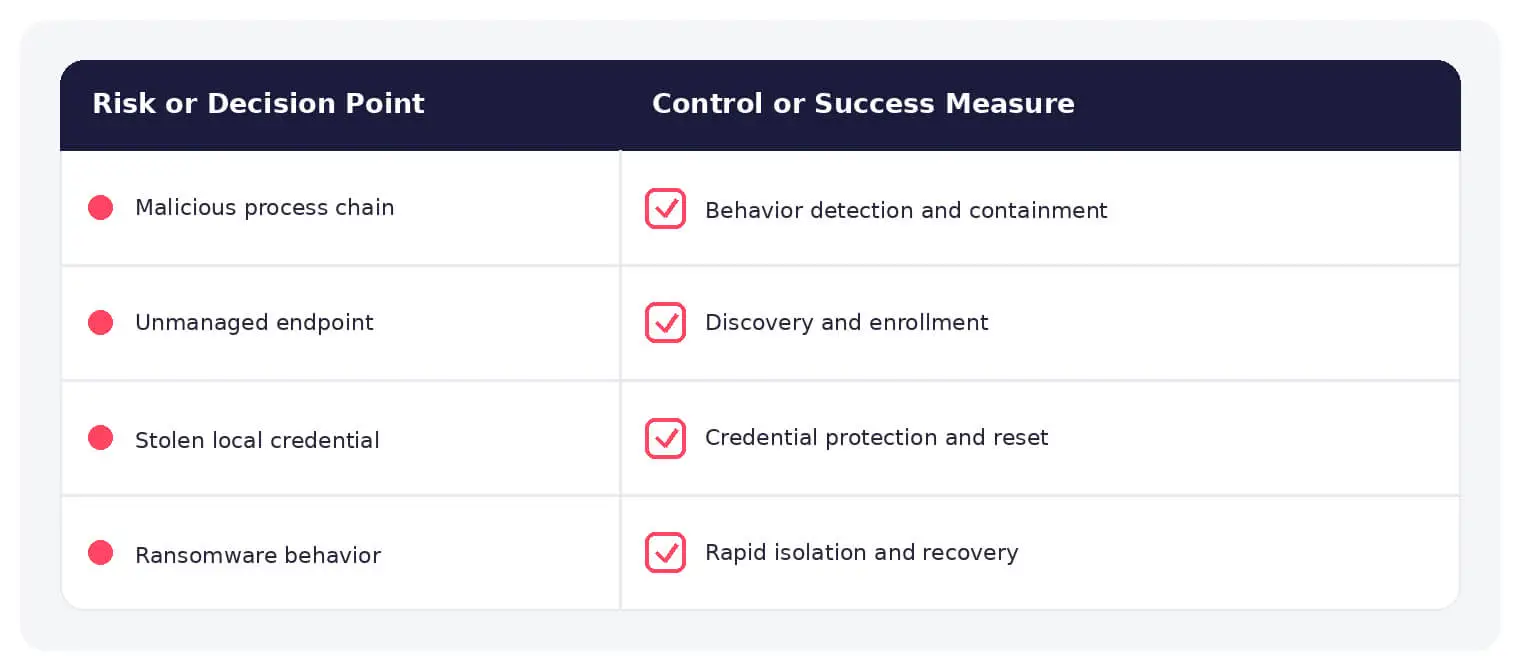
Warning Signs and Detection
Monitor suspicious child processes, script abuse, credential dumping, disabled agents, unusual logons, persistence changes, mass file modification, command-and-control traffic, and unexpected data staging.
Best Practices
Maintain a complete inventory, remove local admin rights, patch quickly, harden applications, use behavior-based detection, protect credentials, segment devices, retain telemetry, and test isolation and recovery.
How SOCRadar Can Help
SOCRadar adds external visibility, threat intelligence, exposure context, and continuous monitoring to help teams validate and prioritize risks related to endpoint security. This context complements internal endpoint, identity, and network controls.
Explore SOCRadar Vulnerability Intelligence or request a demo to strengthen threat-informed prevention and response.
Frequently Asked Questions
What is the main purpose of endpoint security?
Endpoint security protects laptops, desktops, servers, mobile devices, and other connected systems from compromise, misuse, and data loss.
What is a common security risk?
Malware and ransomware execution.
What should security teams monitor?
Monitor suspicious child processes, script abuse, credential dumping, disabled agents, unusual logons, persistence changes, mass file modification, command-and-control traffic, and unexpected data staging.
What is the first practical step?
Maintain a complete inventory, remove local admin rights, patch quickly, harden applications, use behavior-based detection, protect credentials, segment devices, retain telemetry, and test isolation and recovery.
Oct 26, 2026
Node2Shell: Brotli Flaw Hits Python Packages
The Node2Shell Brotli flaw (CVE-2026-111497), disclosed alongside Node.js fixes on October 21, 2026, also reaches Python through the PyPI Brotli and brotlicffi…
Oct 26, 2026
Finaxis, WoWInstaller, Moodle, MyHairCare & HT Médica Leaks
SOCRadar Dark Web Team identified several underground posts, including an alleged Finaxis.cloud data sale involving 400GB of information, a resurfaced WoWInstaller database…
Oct 23, 2026
CVE-2026-114625: Actively Exploited VeloCloud Orchestrator Flaw Grants Superuser Access
CVE-2026-114625 is an actively exploited SQL injection flaw in VeloCloud Orchestrator that lets authenticated users gain superuser operator privileges…
Intelligence in your inbox every Thursday.
Join 30,000+ security professionals reading SOCRadar research.
Subscribe