

Mar 10, 2026
Mar 25, 2026
6 Mins Read
Sep 13, 2026
Table Of Content
Related Articles

SMS Bombing

Threat Actors
Jan 08, 2026
Dark Web Monitoring
Feb 19, 2026

Ransomware
Jan 31, 2026
OSINT Framework
Apr 17, 2026

What Is Cybersecurity Platformization?
Cybersecurity platformization consolidates related security capabilities, data, policy, and workflows into a smaller number of integrated platforms.
The objective is to reduce fragmented visibility and manual handoffs while improving shared context and response. Consolidation is not automatically safer: organizations must evaluate coverage, interoperability, migration risk, data ownership, resilience, cost, and dependence on a vendor.
Key Takeaways
- Cybersecurity platformization consolidates related security capabilities, data, policy, and workflows into a smaller number of integrated platforms.
- The objective is to reduce fragmented visibility and manual handoffs while improving shared context and response. Consolidation is not automatically safer: organizations must evaluate coverage, interoperability, migration risk, data ownership, resilience, cost, and dependence on a vendor.
- Vendor concentration and lock-in is a primary concern.
- Effective programs combine prevention, continuous visibility, accountable ownership, and tested response.
How It Works
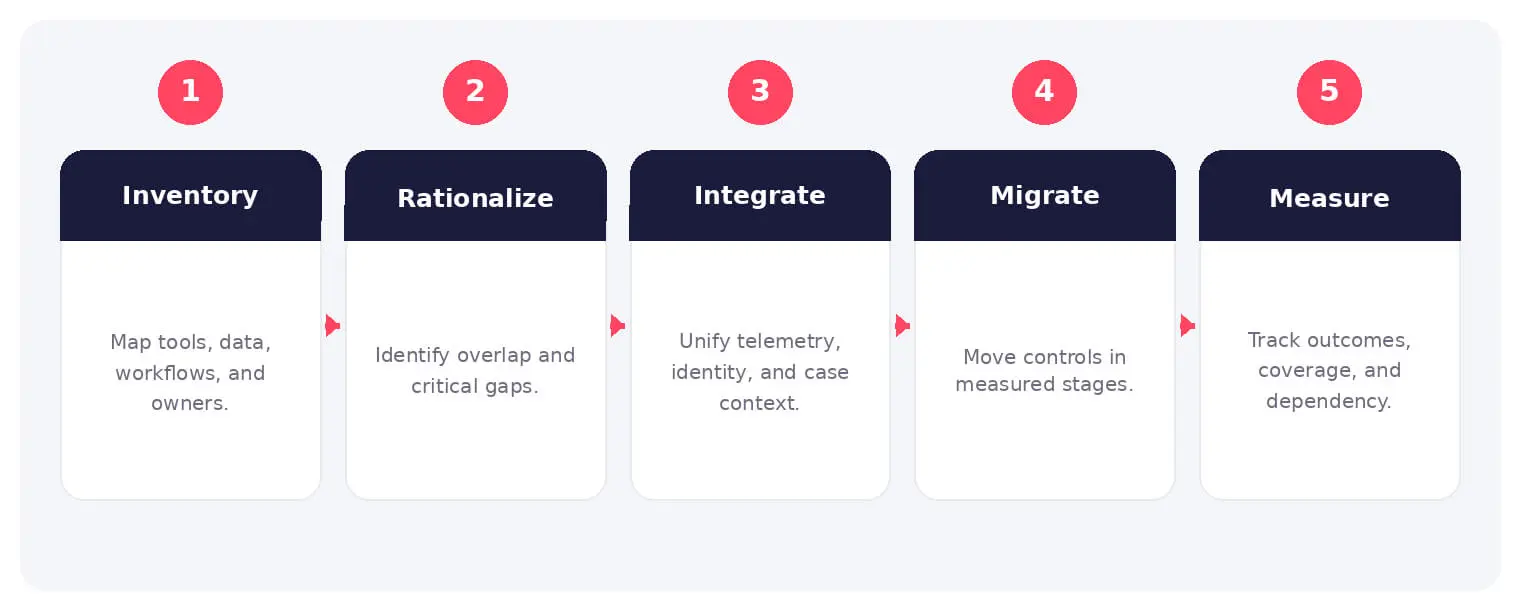
The operating flow above turns the concept into observable steps. Exact implementations vary, but each stage needs accountable ownership, trusted inputs, documented policy, and evidence that analysts can use during investigation and review.
The objective is to reduce fragmented visibility and manual handoffs while improving shared context and response. Consolidation is not automatically safer: organizations must evaluate coverage, interoperability, migration risk, data ownership, resilience, cost, and dependence on a vendor.
Common Types and Capabilities
- Detection and response platforms
- Cloud-native security platforms
- Identity and access platforms
- External threat and exposure platforms
Security and Business Risks
- Vendor concentration and lock-in
- Capability gaps hidden by broad packaging
- Migration outages and lost telemetry
- Unified administrative compromise
Warning Signs and Detection
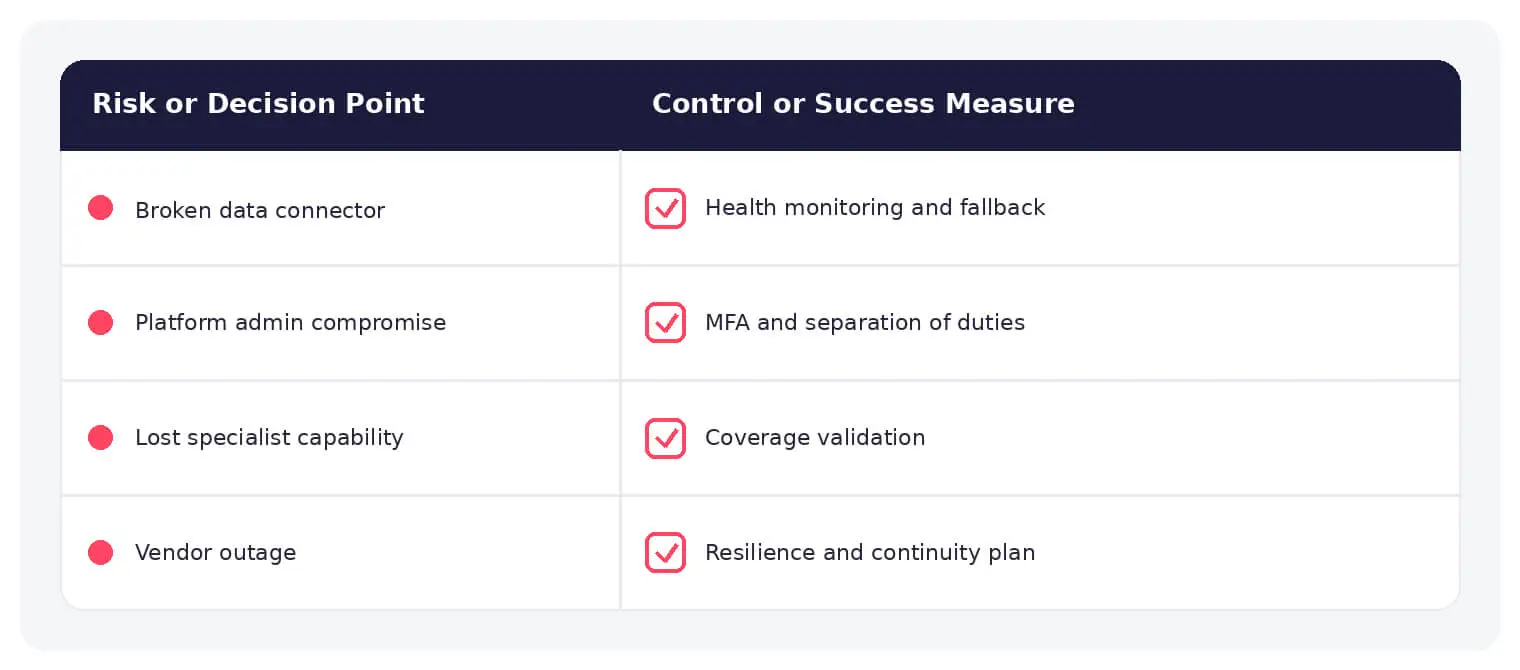
Monitor connector health, data-latency changes, coverage reductions, policy mismatches, missing fields, failed migrations, new privileged platform accounts, licensing changes, detection regressions, and response workflows that still require manual transfer.
Best Practices
Start from operating outcomes, preserve open interfaces, test feature depth, migrate in phases, retain critical redundancy, govern shared data, restrict administration, validate detections, measure response improvement, and maintain an exit plan.
How SOCRadar Can Help
SOCRadar adds external visibility, threat intelligence, exposure context, and continuous monitoring to help teams validate and prioritize risks related to cybersecurity platformization. This context complements internal AI, cloud, security operations, and governance controls.
Explore SOCRadar Extended Threat Intelligence or request a demo to strengthen threat-informed prevention and response.
Frequently Asked Questions
What Is Cybersecurity Platformization?
Cybersecurity platformization is the practice of consolidating related security capabilities — such as detection and response, cloud security, identity, and exposure management — into a smaller number of integrated platforms. The intent is to reduce fragmented tooling so that data, policy, and workflows are shared across functions. Because consolidation changes how security operations run, it also introduces dependencies that need to be managed deliberately.
How Does Platformization Differ From a Best-of-Breed Tool Stack?
A best-of-breed model selects a specialized product for each function and connects them through integrations, while platformization favors fewer vendors that share a common data layer, policy engine, and console. Neither approach is inherently better; the right balance depends on coverage requirements, integration effort, team capacity, and tolerance for vendor dependence. Many organizations operate a hybrid of the two.
Why Are Organizations Consolidating Their Security Tools?
Common drivers include alert fatigue across disconnected consoles, the maintenance burden of custom integrations, licensing sprawl, and limited staffing to operate many point products. Fewer platforms can reduce manual handoffs between tools and give analysts shared context during investigations. Cost savings are often a motivation, but they depend on licensing terms and the effort required to migrate.
What Are the Main Security Risks of Cybersecurity Platformization?
The most significant risks include:
- Vendor concentration and lock-in, which increases the impact of a single provider’s outage, price change, or product decision.
- Capability gaps hidden by broad packaging, where a bundled module is shallower than the specialized tool it replaced.
- Migration outages and lost telemetry while functions are moved between platforms.
- Unified administrative compromise, where one privileged account can affect several security functions at once.
These risks do not make consolidation unsafe, but they call for explicit evaluation and controls before and after cutover.
What Is Vendor Lock-In and How Can It Be Reduced?
Lock-in occurs when data formats, configurations, or workflows are difficult to move to another provider, leaving the organization dependent on one vendor’s pricing, roadmap, and performance. Teams can reduce it by securing data ownership and export rights, favoring platforms that support open interfaces and standard formats, and maintaining a documented exit plan. Testing the export process periodically — before it is needed — is also worthwhile.
Can Consolidation Create Detection Gaps?
Yes. Replacing specialized tools with bundled modules can reduce depth in specific areas, and migrations can silently drop data sources, fields, or detection rules. Teams should test feature depth against real requirements and compare detection coverage before and after each cutover so regressions are caught during the move rather than during an incident.
What Warning Signs Suggest a Platform Consolidation Is Causing Problems?
Indicators worth monitoring include:
- Degraded connector health or increasing data latency
- Missing fields, reduced coverage, or policy mismatches after a change
- Failed or incomplete migrations that leave telemetry gaps
- New privileged platform accounts without a clear owner
- Detection regressions or response steps that again require manual transfer between tools
Licensing changes that quietly alter available features can also signal that the consolidated platform is no longer meeting expectations.
How Should Teams Approach a Security Platform Migration?
Migrate in phases rather than moving all functions at once, starting with lower-risk capabilities. Preserve telemetry continuity during each phase and keep critical redundancy in place until the new platform demonstrably meets its objectives. Define measurable outcomes — such as coverage targets or response times — before the migration begins so improvement can be verified afterward.
How Can Organizations Limit the Impact of a Compromised Platform Administrator?
Restrict platform administration to the minimum number of accounts, separate routine administrative duties from high-privilege configuration roles, and protect those identities with phishing-resistant MFA and session controls. Monitor privileged account creation and configuration changes, since one compromised administrative account can affect multiple security functions at once. An incident of this kind should be treated as having platform-wide scope, not as a single-tool problem.
Does Platform Consolidation Reduce Security Costs?
Not automatically. Consolidating licenses can lower procurement and integration overhead, but savings may be offset by migration effort, higher pricing for bundled tiers, and the cost of retaining fallback coverage for critical functions. A realistic business case compares total operating cost over time rather than license counts alone.
Is Cybersecurity Platformization the Same as XDR?
No. Extended detection and response (XDR) is one example of the platformization pattern, combining telemetry and response across endpoints, email, identity, and cloud. Platformization is the broader strategy behind it and can also encompass cloud-native security, identity and access, and external threat and exposure platforms.