Accenture Breach Claim: 35GB of Data Stolen
A threat actor using the handle 888 has claimed to be selling around 35GB of Accenture-related data on a cybercrime forum, making the latest Accenture breach claim a case worth monitoring. The alleged dataset reportedly includes source code, cloud access secrets, and configuration files, but key details remain unverified.
Here is what you need to know about the claim, Accenture’s response, and the security risks involved.
What Is the Latest Accenture Breach Claim?
SOCRadar’s platform shows a forum listing dated July 6, 2026, where the threat actor 888 advertised alleged Accenture data for sale under an “Accenture Data Breach” post. The actor claimed to have stolen 35GB of data, including source code and other sensitive technical material. The listing also indicates that the alleged dataset was being offered for sale via Monero (XMR).
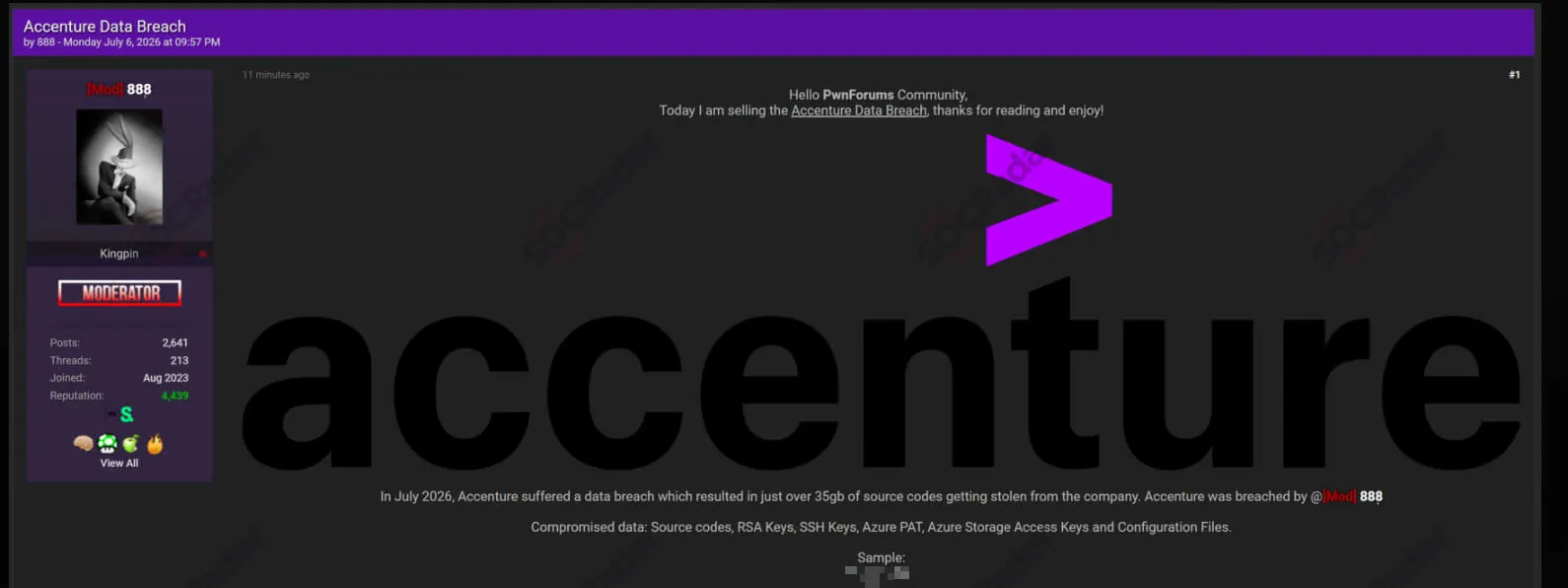
888’s forum listing advertising an alleged Accenture data breach (SOCRadar)
According to the forum claim, the alleged dataset includes:
- Source code
- RSA keys
- SSH keys
- Azure personal access tokens
- Azure storage access keys
- Configuration files
What Has Accenture Confirmed About the Breach?
Reportedly, Accenture confirmed that it is aware of the issue, has remediated the source, and does not see an impact on operations or service delivery. Accenture’s acknowledgment elevates this beyond a forum rumor, but does not validate the actor’s broader data theft claims.
Public reporting does not show that Accenture has confirmed the 35GB figure, validated the exact content of the alleged dataset, explained how the actor gained access, or disclosed whether customer data was affected. For now, the most accurate framing is that Accenture has confirmed an isolated security matter, while the actor’s broader data theft claims remain only partly substantiated.
Why Would Source Code and Cloud Secrets Matter?
If the advertised material is authentic and current, the exposure could create risk beyond a standard data leak. Source code can help attackers understand internal application logic, identify weak implementation patterns, and search for hardcoded secrets or exploitable paths in custom systems.
The alleged inclusion of infrastructure-level secrets raises the stakes. SSH keys, RSA private keys, Azure personal access tokens, and Azure storage access keys may allow unauthorized access to repositories, storage resources, CI/CD workflows, or other cloud-linked services if they are still active and overly permissive.
That could create several downstream risks:
- Cloud security risk: Valid Azure tokens or storage keys could provide access to cloud resources.
- Development environment risk: Repository or CI/CD access could expose build processes, deployment logic, or internal tooling.
- Supply-chain risk: Source code and configuration files could help attackers identify vulnerabilities in software used by clients or partners.
- Operational risk: Active credentials could support unauthorized access, lateral movement, or intellectual property theft.
The practical impact depends on what the secrets can access, whether they have already been rotated, and whether monitoring shows suspicious use before remediation.
What Do We Know About the Threat Actor 888?
Attribution remains limited to the actor handle 888, while available information does not tie the July 2026 claim to a known ransomware operation or a broader campaign. SOCRadar XTI platform shows that the same handle appeared in both the July 2026 Accenture listing and an earlier Accenture-related forum post from June 2024.
What Is the Earlier 2024 Accenture Claim by 888?
The same threat actor also made an Accenture-related claim in June 2024. At the time, the actor alleged that a third-party breach had exposed data linked to more than 32,000 current and former Accenture employees.
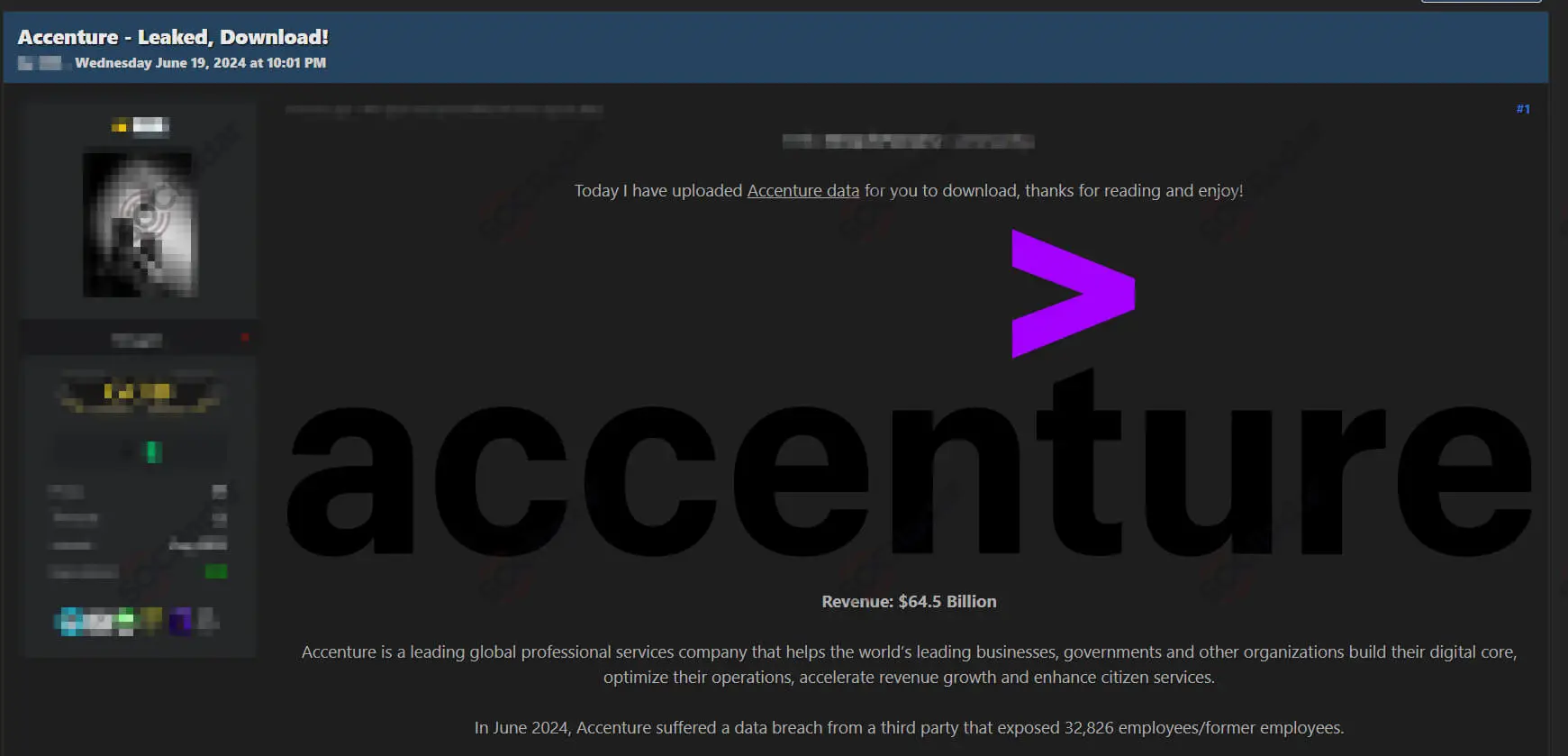
888’s June 2024 forum post alleging Accenture data exposure through a third-party breach (SOCRadar)
Accenture later disputed the scale of the 2024 claim, saying its review found only limited employee-identifying information and no evidence that Accenture or client systems had been compromised.
How Should Security Teams Respond?
Even when a breach claim is only partly confirmed, the alleged data types are serious enough to justify defensive checks. Organizations facing a possible repository or secrets exposure scenario should focus on reducing credential risk and validating development environment integrity.
1. Rotate and Revoke Potentially Exposed Secrets
Security teams should rotate or revoke credentials that may appear in repositories, configuration files, or build systems, including:
- SSH keys
- RSA private keys
- Azure personal access tokens
- Azure storage access keys
- Service account credentials
- CI/CD secrets and deployment tokens
Teams should also check for recently created credentials that do not match normal provisioning activity.
2. Review Azure and Cloud Logs
Cloud logs can help determine whether exposed credentials were used before they were rotated.
Useful checks include:
- Azure sign-in activity
- Service principal activity
- Storage account access
- Key Vault access
- Token use from unusual geographies or networks
- Privilege changes involving cloud identities
Short-lived credentials, least privilege, and stronger secret lifecycle controls can reduce the impact of future exposure.
3. Validate Repository and CI/CD Integrity
If source code exposure is suspected, teams should review repository and pipeline activity for signs of unauthorized access or tampering.
Important signals include:
- Unusual repository cloning
- Large or repeated downloads
- Changes to build scripts
- Suspicious dependency source updates
- Modified pipeline variables
- Unexpected changes to release or signing workflows
Any secrets found in repositories should be removed, rotated, and investigated for possible misuse.
4. Correlate Identity, Repository, and Cloud Activity
A repository event may not tell the full story on its own. Security teams should correlate source control logs with identity, endpoint, and cloud telemetry.
This can help determine whether access was isolated, tied to a compromised developer account, or connected to broader activity across cloud and development environments.
How Can SOCRadar Dark Web Monitoring Help?
The alleged Accenture breach listing appeared on July 6, 2026 – the same day SOCRadar’s platform flagged it. In cases like this, security teams need to know where the post appeared, whether samples are circulating, whether the actor is asking for payment, and whether related credentials or internal data show up in underground sources.
SOCRadar’s Dark Web Monitoring capabilities help monitor Dark Web forums, marketplaces, Telegram channels, leaked databases, stealer logs, and underground discussions for exposed corporate data and breach-related mentions. These signals can help your organization identify suspicious data sale posts, leaked credentials, and developing exposure narratives earlier.
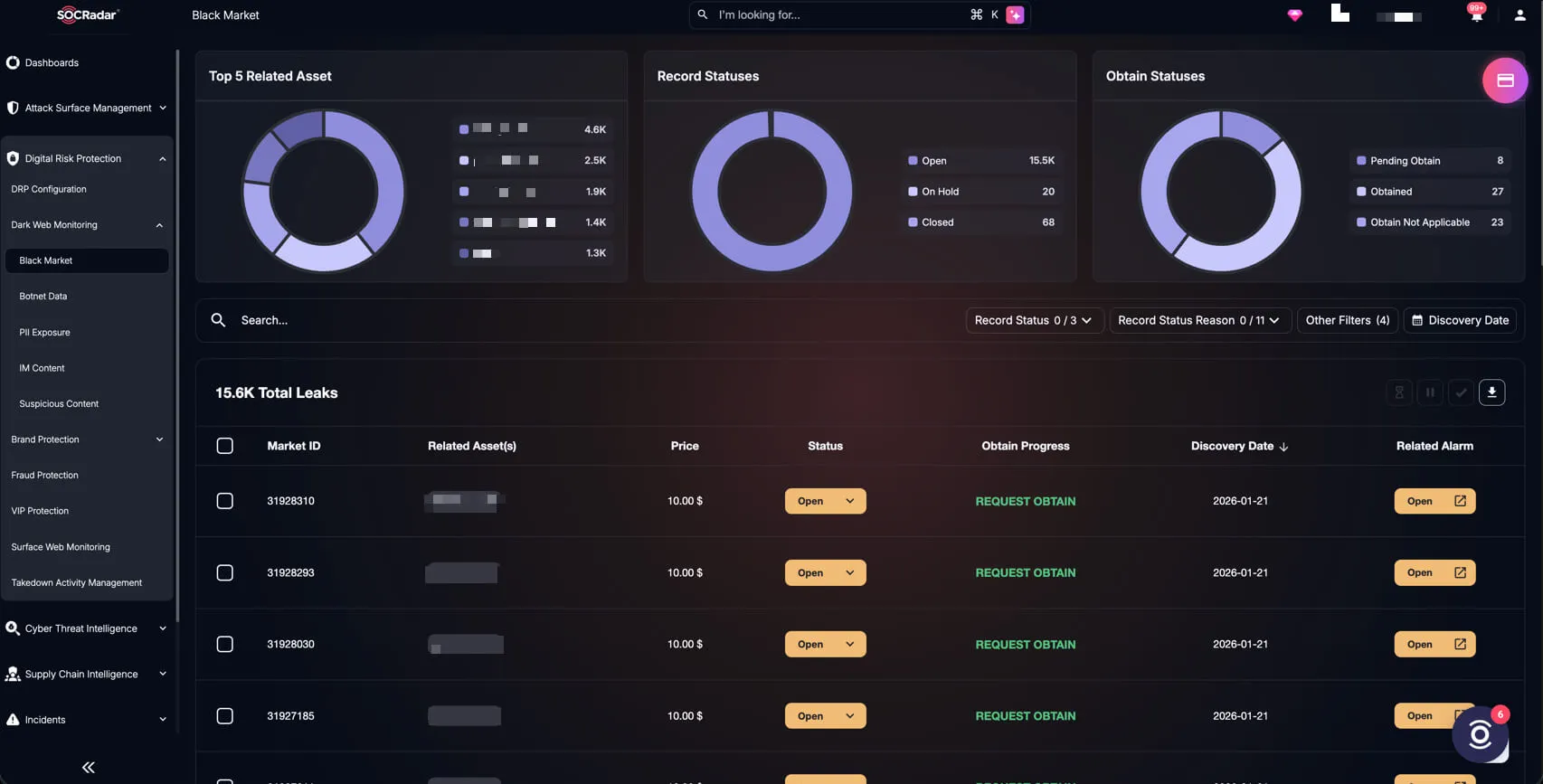
SOCRadar’s Dark Web Monitoring, Black Markets
SOCRadar’s Cyber Threat Intelligence capabilities can also support threat actor tracking by helping analysts follow actor behavior, related claims, and recurring activity across underground communities.
What Remains Unverified in the Accenture Breach Claim?
Several important details remain unclear:
- Whether the full advertised dataset is authentic
- Whether the 35GB figure is accurate
- Whether the alleged data is current
- Whether any keys, tokens, or credentials are still valid
- Whether customer or client-related information was affected
- How the actor allegedly gained access
- Whether the exposure was limited to a development environment or involved broader systems
These unknowns matter because source code exposure and credential leakage can lead to very different levels of risk depending on freshness, validity, and access scope. Until more technical evidence becomes available, the Accenture breach claim should be treated as a serious but still partially unverified allegation that requires careful monitoring.