

Mar 10, 2026

Apr 17, 2026
4 Mins Read
Sep 13, 2026
Table Of Content
Related Articles

SMS Bombing

Threat Actors
Jan 08, 2026
Dark Web Monitoring
Feb 19, 2026

Ransomware
Jan 31, 2026
OSINT Framework
Apr 17, 2026

What Are Stealer Logs?
Stealer logs are collections of data stolen from infected devices by information-stealing malware.
Logs may contain passwords, browser cookies, session tokens, autofill data, cryptocurrency wallets, files, device details, and application credentials. A log can expose several organizations through one infected personal or work device.
Key Takeaways
- Browser passwords and autofill is a central category or capability.
- Reliable assessment requires identity, timing, source, and operational context.
- Detection should correlate external, identity, device, network, and cloud evidence.
- Response should preserve evidence and remove every reusable access path.
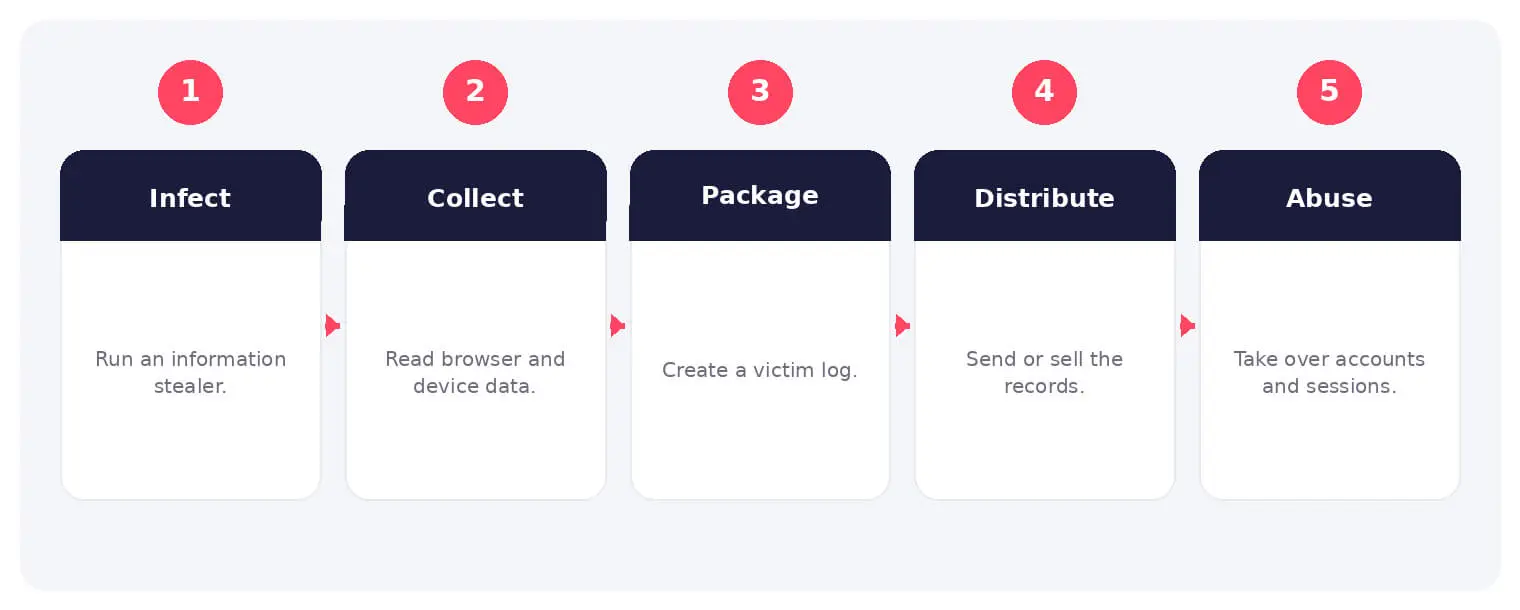
How Stealer Logs Works
The sequence above provides a practical operating model. Individual stages may overlap, repeat, or involve different people and services, so analysts should validate each step against the available evidence.
Logs may contain passwords, browser cookies, session tokens, autofill data, cryptocurrency wallets, files, device details, and application credentials. A log can expose several organizations through one infected personal or work device.
Common Types and Techniques
- Browser passwords and autofill
- Session cookies and tokens
- Cryptocurrency and application data
- Device profiles and stolen files
Security and Business Risks
- Account takeover despite password changes
- Corporate access from personal devices
- Financial and identity theft
- Source-code and cloud compromise
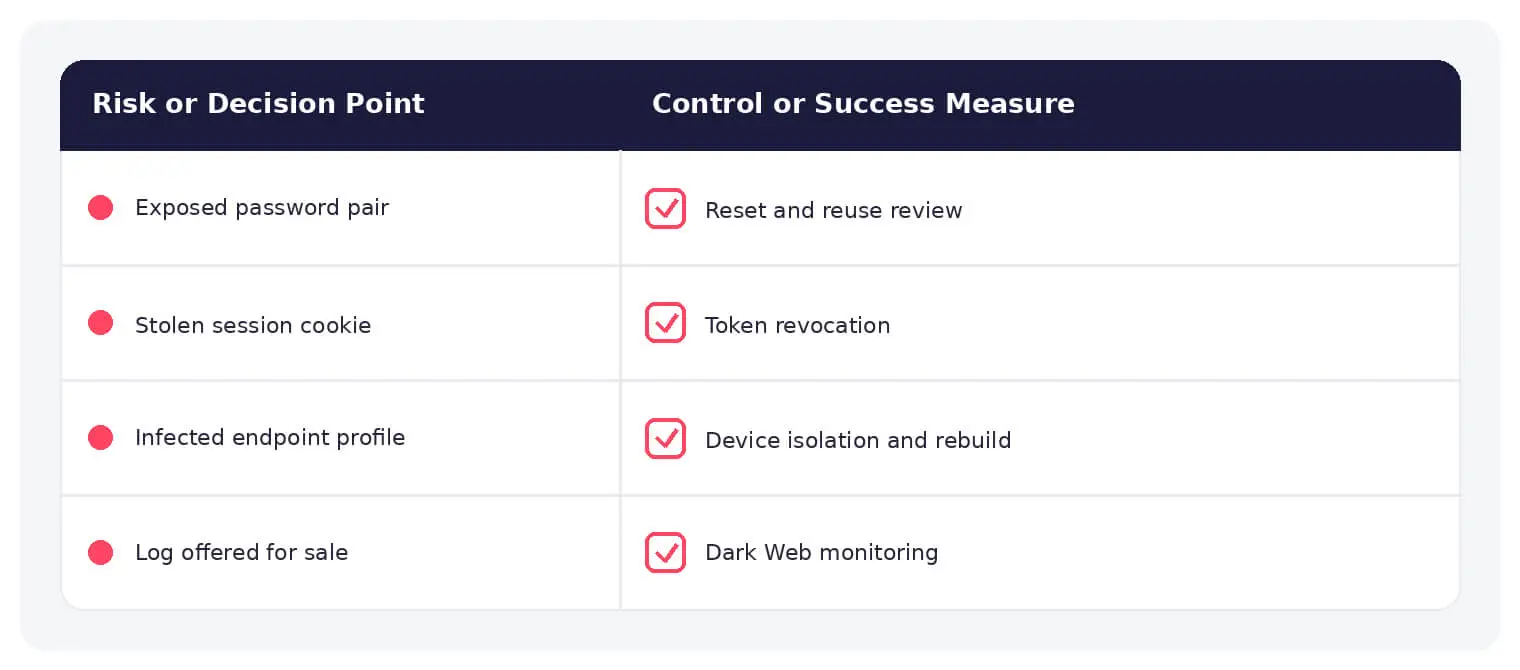
Warning Signs and Detection
Validate affected identities, timestamp, device details, token types, source, duplicates, and overlap with authentication or endpoint events.
Prevention and Response
Reset exposed passwords, revoke sessions and tokens, enforce phishing-resistant MFA, isolate and rebuild infected devices, and hunt for access across connected services.
How SOCRadar Can Help
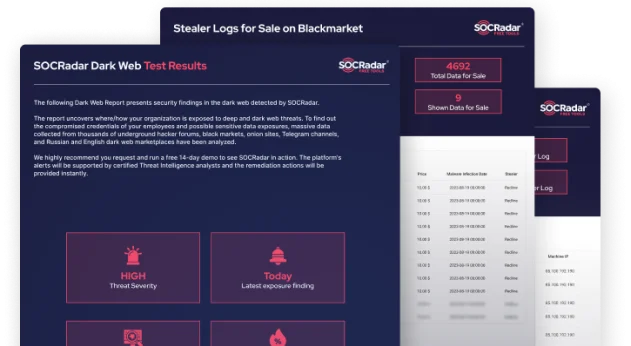
SOCRadar combines external visibility, threat intelligence, Dark Web monitoring, brand protection, vulnerability context, and indicator enrichment to help teams investigate exposure connected to stealer logs.
Explore SOCRadar Dark Web Monitoring or request a demo to strengthen threat-informed prevention and response.
Frequently Asked Questions
What Are Stealer Logs?
Stealer logs are collections of data harvested from infected devices by information-stealing malware. A single log can contain saved browser passwords, cookies, session tokens, autofill data, cryptocurrency wallet files, device details, and application credentials. Because malware quietly collects whatever the infected user had access to, one log can expose several organizations at once.
What Data Do Stealer Logs Typically Contain?
Most stealer logs bundle together several high-value data categories, including:
- Browser passwords and autofill data saved in Chrome, Edge, Firefox, and other browsers
- Session cookies and tokens that can bypass the login process entirely
- Cryptocurrency wallets and application credentials stored locally on the device
- Device profiles and stolen files that reveal the user, the system, and its connections
Why Do Password Changes Fail to Stop Stealer Log Account Takeovers?
Stolen session cookies and tokens often remain valid even after a password reset, allowing attackers to walk straight into accounts without ever logging in. That is why password changes alone do not close the gap. Defenders must revoke active sessions and tokens, then enforce phishing-resistant MFA to remove every reusable access path.
How Can One Infected Device Expose Multiple Organizations?
Information stealers do not distinguish between personal and work activity. A single infected laptop or home PC can hold corporate SSO sessions, VPN profiles, email credentials, and cloud storage logins tied to several employers or clients. This is what turns one commodity infection into a multi-organization incident.
What Warning Signs Suggest Credentials Have Appeared in Stealer Logs?
Warning signs include sessions from unfamiliar devices or locations, authentication events that overlap with known infostealer activity, and alerts that corporate credentials or cookies surfaced on underground markets. Validate the affected identities, timestamps, device details, token types, and source, and check for duplicates or overlap with authentication and endpoint telemetry before acting.
How Should Organizations Respond to Stealer Log Exposure?
Treat confirmed exposure as an active incident: reset exposed passwords, revoke all sessions and tokens, and enforce phishing-resistant MFA on affected accounts. Isolate and rebuild infected devices rather than cleaning them in place, and hunt for attacker access across connected services such as email, cloud storage, code repositories, and financial systems. Preserve evidence throughout so the full scope of the intrusion can be established.
Which Prevention Measures Reduce the Risk of Stealer Logs?
Layered prevention starts with phishing-resistant MFA, endpoint detection on every device that touches corporate resources, and conditional access policies that flag risky or impossible sign-ins. Keep browsers and operating systems patched, discourage storing corporate credentials in personal browser profiles, and train users to avoid the cracked software and phishing pages that commonly distribute info stealers.
What Is the Business Impact of Stealer Log Compromise?
Beyond account takeover, stealer logs enable financial and identity theft, source-code theft, and cloud or SaaS compromise that can lead to fraud and ransomware. Because a single log can expose multiple organizations, incidents often extend to partners and customers. The result can include direct financial loss, regulatory exposure, and lengthy remediation across identity, endpoint, and cloud environments.