Dark Web Profile: Dire Wolf Ransomware
Dire Wolf emerged in 2025 and quickly carried out disruptive ransomware attacks in multiple regions. Dire Wolf appeared on dark web leak sites within weeks and was noted in security reports as a new threat actor.
Dire Wolf presents itself with a blunt message on its leak site: “We only seek money. No morals, no political stance.” The statement is intended to intimidate victims and to emphasize a purely financial motive.
Dire Wolf now stands out as a growing risk for organizations. The group’s emergence highlights how new ransomware operations can escalate quickly and cause serious damage.
Who is Dire Wolf Ransomware?
Dire Wolf is a financially motivated ransomware group that surfaced publicly in May 2025. From the outset, it positioned itself as a professional operation, unveiling its presence with a leak site on the dark web and an encrypted Tox channel for victim communications. Unlike politically driven actors, Dire Wolf emphasizes that its only motive is profit.
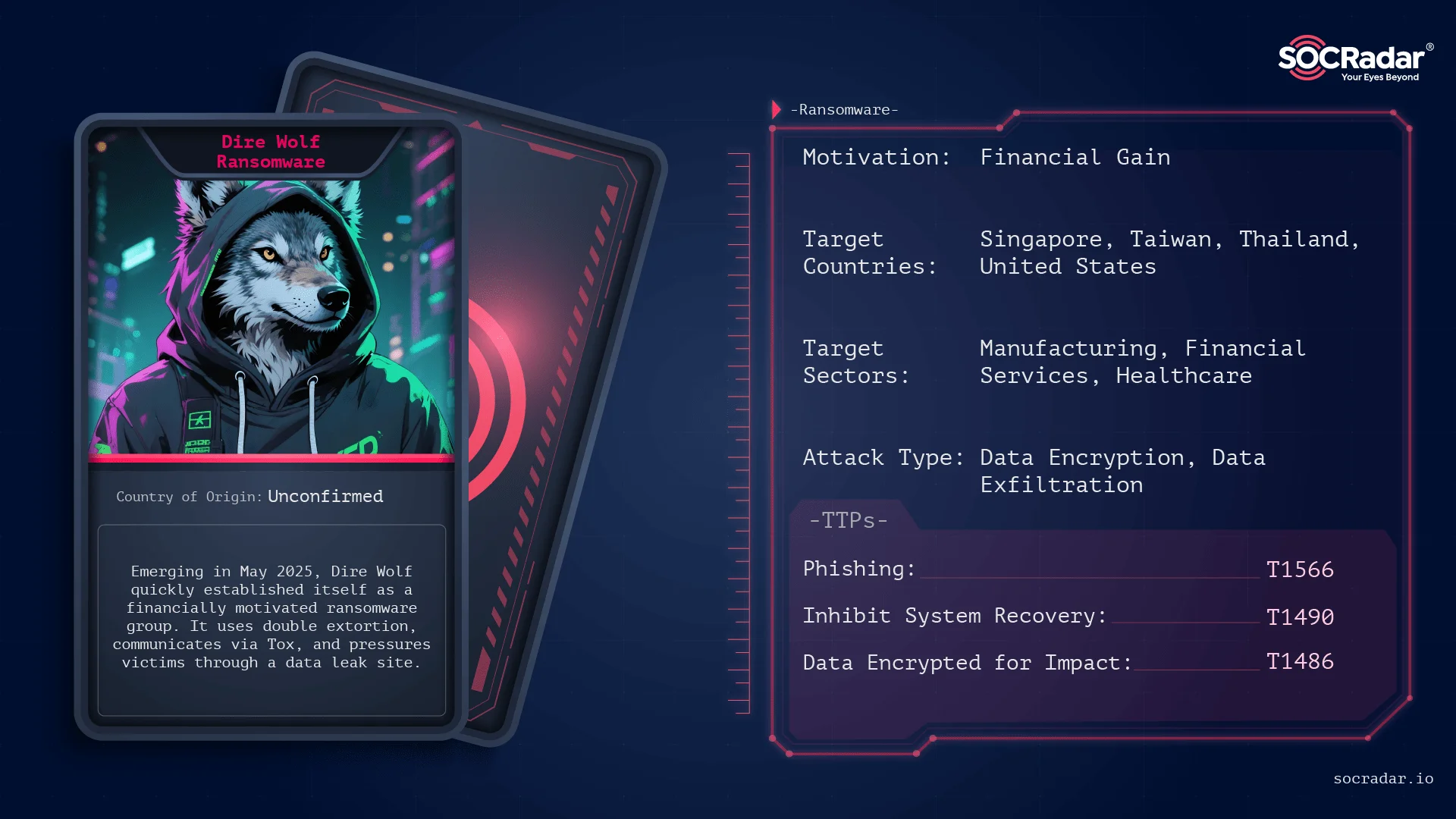
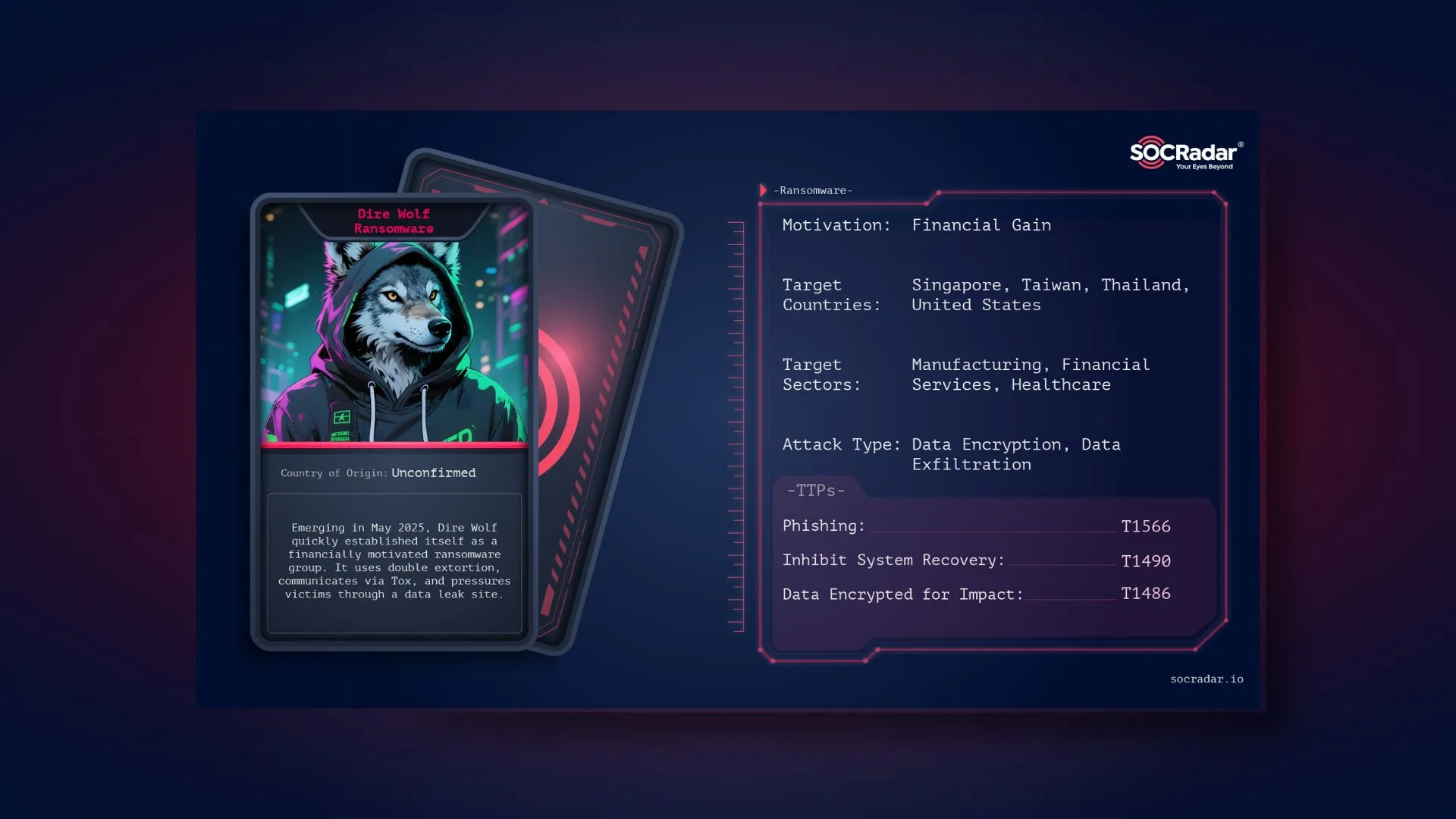
Dire Wolf threat actor card
In just a few months, the group claimed responsibility for 41 victims worldwide. Early disclosures highlighted organizations in Thailand, Taiwan, Singapore, and the United States among the most impacted. Its targeting strategy does not appear limited to a single geography or sector; instead, it has focused on any enterprise with valuable data and the capacity to pay.
The operators run a classic double extortion model. They steal data, encrypt systems, then threaten publication on a Tor leak site if talks fail. Negotiations are handled over Tox using victim-specific credentials provided in the ransom note. The note is titled HowToRecoveryFiles.txt, and often includes a proof link to a small data sample. Countdown language typically promises a short confidentiality window, then a longer deadline before public leak.
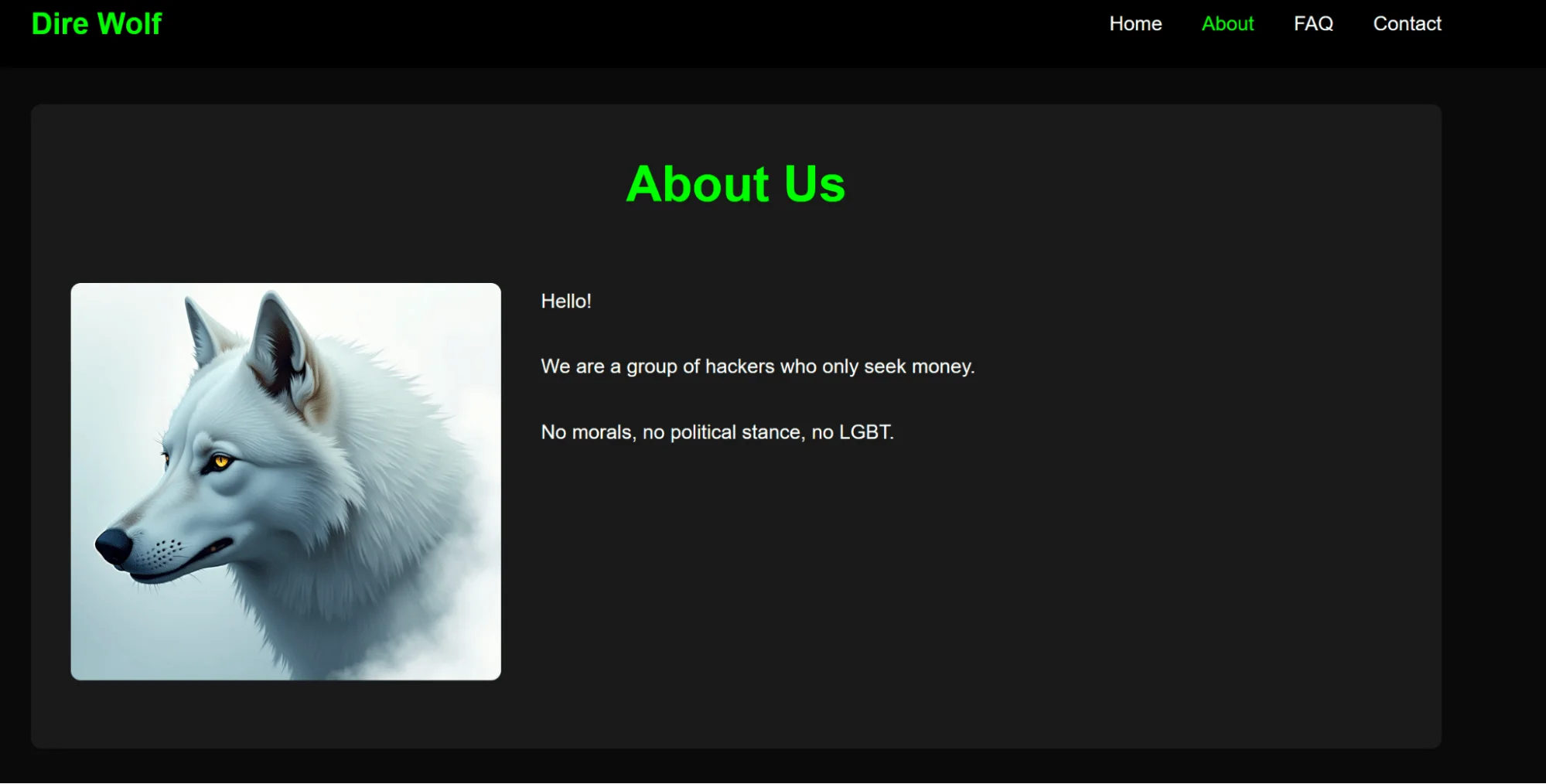
Dire Wolf ransomware’s Data Leak Site, About Us tab
Claimed location and language. On its leak site the group states “Based in New York, NY.” Analysts consider this unverified and likely misdirection. The site and ransom notes are written in English, generally fluent with occasional non-native phrasing.
Operating model. Evidence points to a tight core team rather than a broad RaaS program. Builds are customized per victim, ransom notes are personalized with unique logins, and communications are routed through a private Tor negotiation panel. Reported demands around 500,000 USD have been observed in at least one case.
Key identifiers mentioned in reporting.
- Tor leak portal reachable at a known onion address tied to Dire Wolf.
- Negotiations via Tox with a published long Tox ID for contact.
- Marker and mutex artifacts created during runs, plus the distinctive .Dire Wolf extension.

What are Dire Wolf’s Targets?
Dire Wolf’s victimology highlights a global footprint, but with a strong concentration in Asia. From the very beginning, the group demonstrated that it was not confined to one geography or industry, instead pursuing organizations where downtime and data exposure could exert the most pressure.
The largest share of confirmed victims comes from Singapore, with Taiwan and the United Kingdom close behind. Other frequently listed countries include Thailand and the United States, with additional cases spread across Australia, Brazil, and Canada. The dominance of Singapore, Taiwan, and Thailand in the data suggests that Dire Wolf has placed particular emphasis on the Asia-Pacific region while still striking in Europe and North America.
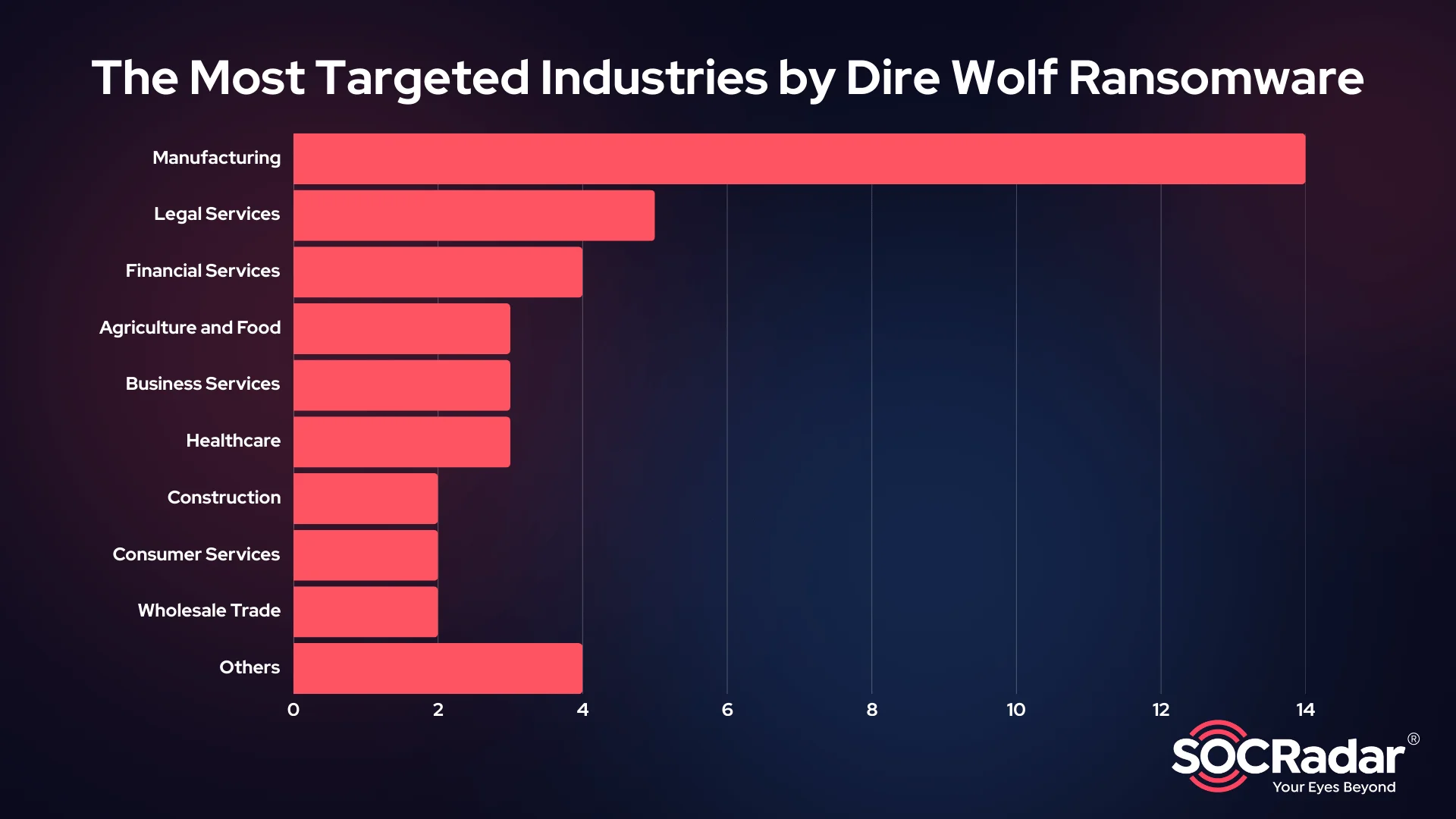
The most targeted industries by Dire Wolf Ransomware (SOCRadar)
Across sectors, manufacturing firms stand out as the most heavily impacted, underscoring the ransomware’s disruptive potential on production and supply chains. Legal services and financial services follow, reflecting the appeal of sensitive client data and regulatory risks. Additional cases involve agriculture, healthcare, business services, construction, and consumer-facing industries.
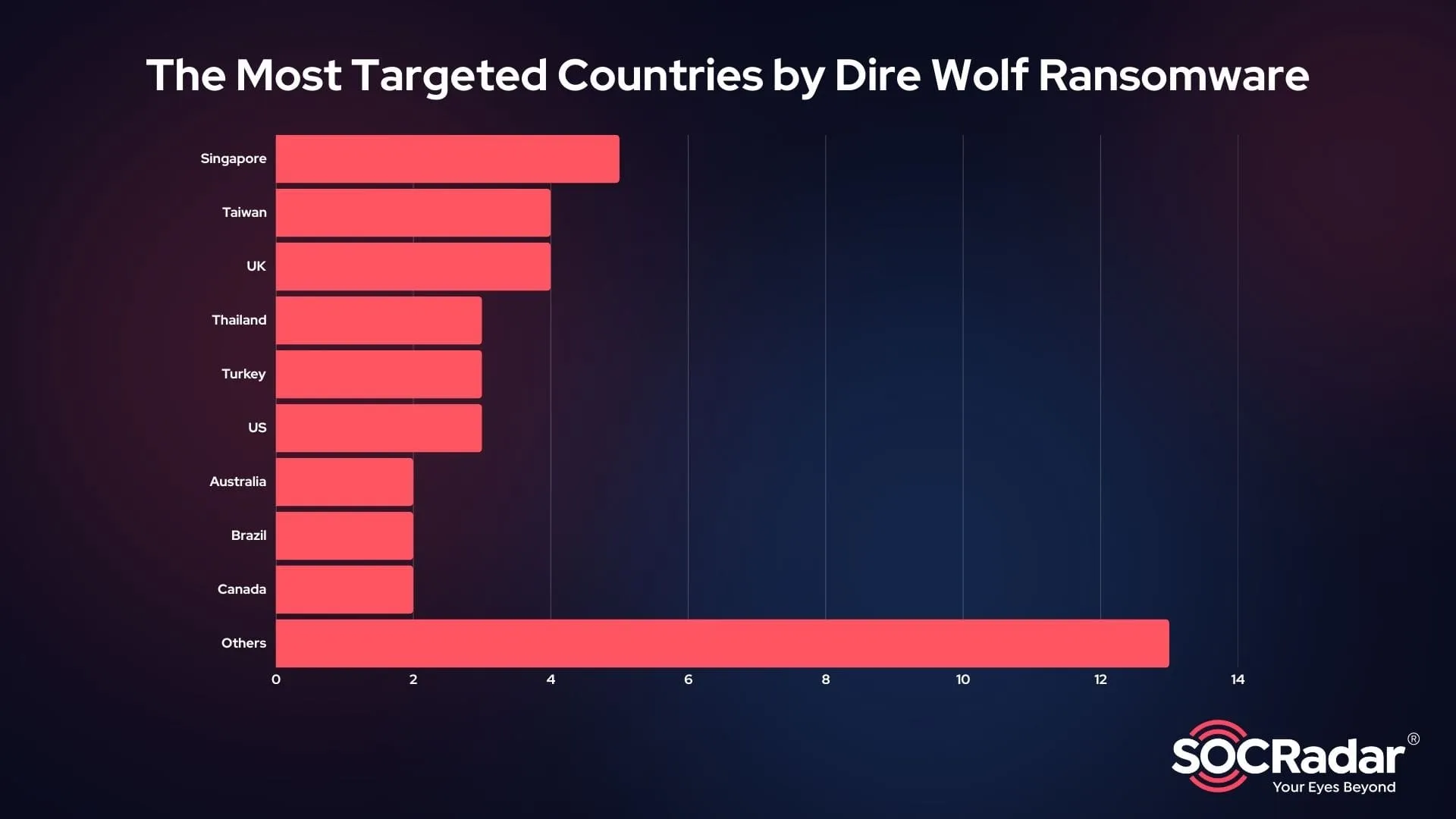
The most targeted countries by Dire Wolf Ransomware (SOCRadar)
Together, these patterns suggest a strategy aimed at organizations where both operational continuity and confidential information are critical. By focusing heavily on Asia while still maintaining global reach, Dire Wolf has positioned itself as a ransomware group capable of adapting to different environments and exploiting vulnerabilities across multiple verticals.
What are Dire Wolf’s Techniques?
Dire Wolf combines aggressive sabotage with efficient encryption to maximize damage and pressure victims into paying. Its design shows careful planning: it prevents multiple runs on the same system, disables nearly every recovery option, erases forensic evidence, and uses strong cryptography to lock files. The ransomware’s behavior illustrates the hallmarks of a modern human-operated campaign rather than a simple automated threat.
Technical characteristics
- Language and packing: The payload is written in Go and often packed with UPX. Go provides cross-platform flexibility, while UPX makes static analysis more difficult and delays detection.
- Single-run safety: At startup, Dire Wolf checks for the marker file C:runfinish.exe and the mutex GlobalDire WolfAppMutex. If either exists, the malware self-deletes, ensuring it runs only once per host and avoids redundant encryption.
- Anti-recovery and anti-forensics: Before encrypting data, Dire Wolf disables the Windows Event Log service and deletes shadow copies, backup catalogs, and recovery options using vssadmin, wmic, wbadmin, and bcdedit. It also clears the main event logs (Application, System, Security, Setup) with wevtutil to remove traces of its activity. Independent researchers who examined early samples noted that these steps were consistently observed across different intrusions, a sign that the operators refined their process before going public.
- Process and service termination: The ransomware forcefully stops processes and services that could interfere with encryption. These include database engines (MSSQL, Oracle), mail servers (Exchange, Outlook), virtualization platforms (VMware), backup solutions (Veeam, Backup Exec), update services, and antivirus or EDR agents. This ensures files are unlocked and defenses disabled before encryption begins. Technical notes published by analysts, including Trustwave SpiderLabs, confirmed that this “kill-list” covers a wide range of enterprise applications.
- Encryption routine: Dire Wolf applies a hybrid cryptographic approach. It uses Curve25519 for key exchange and ChaCha20 for file encryption, deriving keys through SHA-256. Files smaller than 1 MB are fully encrypted, while larger files have their first 1 MB encrypted to accelerate the process. All affected files receive the .Dire Wolf extension.
- Extensions and exclusions: To keep the system operational, the malware avoids encrypting Windows directories, registry hives, boot files, and file types such as executables, DLLs, drivers, and disk images. It also skips files already marked with the .Dire Wolf extension.
- Ransom note and communications: After encryption, Dire Wolf drops a ransom note named HowToRecoveryFiles.txt in each directory. The note contains victim-specific credentials for logging into a Tor negotiation portal, often with a sample of stolen data as proof. Victims are given a short confidentiality period of a few days, followed by a longer deadline of about thirty days before data is leaked.
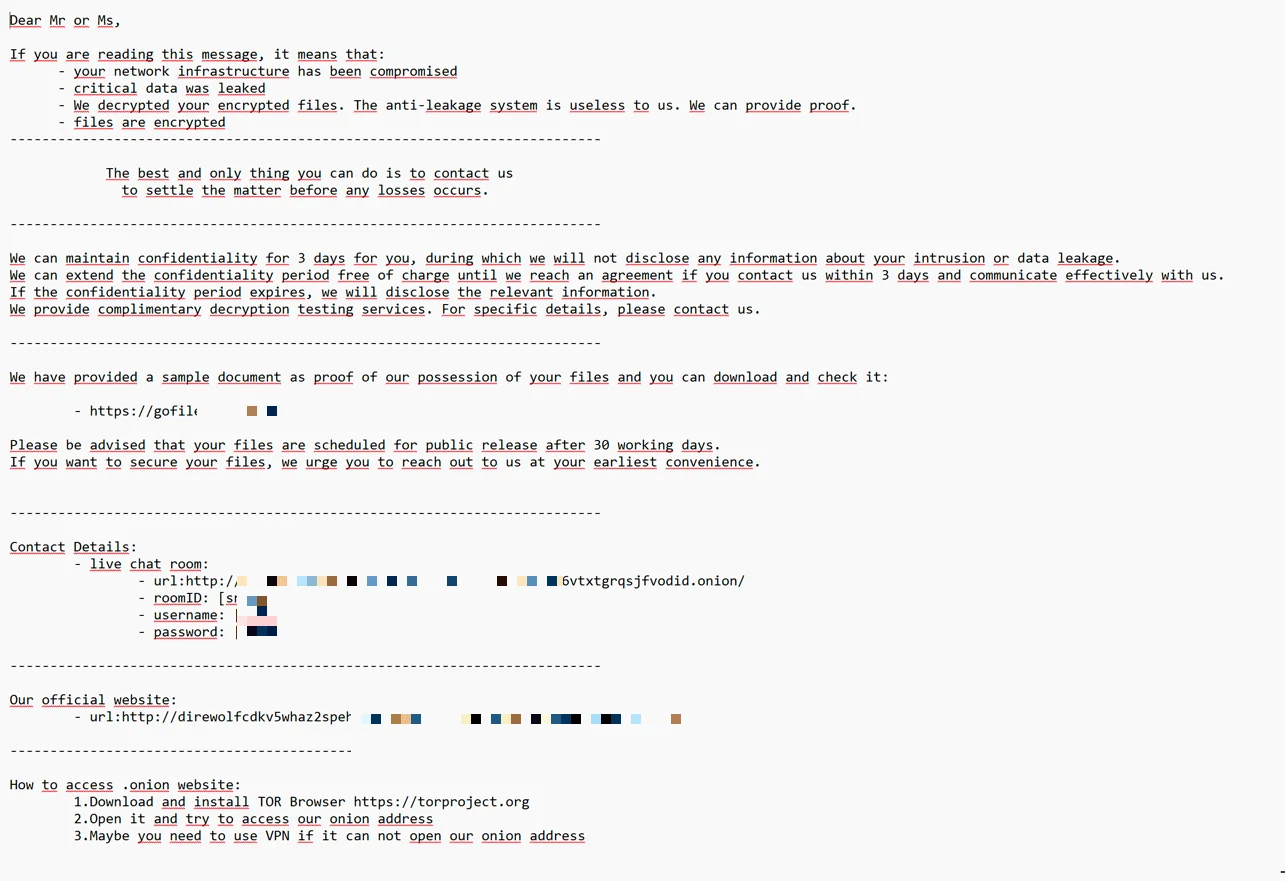
HowToRecoveryFiles.txt
- Wrap-up behavior: Once encryption completes, the malware creates the marker file C:runfinish.exe, forces a reboot with shutdown -r -f -t 10, and deletes its own binary to obstruct forensic analysis.
- Propagation and infection vectors: Dire Wolf does not spread automatically like a worm but is deployed manually once attackers already have network access. Initial compromise is likely achieved through spear-phishing emails with malicious attachments, exploitation of exposed services such as RDP or VPN, or weak credential practices. Third-party or managed service providers may also be leveraged, though no confirmed cases have been published. After initial entry, operators map the network, escalate privileges, exfiltrate data, and then launch a coordinated, multi-host deployment. Reports comparing early intrusions suggest a patient, hands-on style, consistent with established ransomware crews rather than inexperienced actors.
What are the Mitigation Tactics Against Dire Wolf?
Defending against Dire Wolf requires more than a single tool or security layer. The group’s operators disable backups, erase logs, and kill security processes before encryption begins, leaving little room for recovery if preparations are not already in place. A layered defense strategy is therefore critical.
- Secure and resilient backups: Maintain offline or immutable backups that Dire Wolf cannot access or erase. Apply the 3-2-1 rule (three copies, two formats, one offline) and test restorations regularly.
- Identity and remote access controls: Enforce multi-factor authentication on VPN, RDP, and all administrative accounts. Use strong, unique passwords and monitor for brute-force attempts. Disable unused accounts promptly.
- Network segmentation and least privilege: Separate critical servers, backup systems, and domain controllers from user networks. Limit administrative rights and restrict tools like PowerShell and WMI to administrators only.
- Endpoint detection and response (EDR): Deploy EDR solutions that can detect suspicious behaviors such as mass process termination, shadow copy deletions, and rapid file renaming. Configure alerts for commands commonly abused by ransomware, including vssadmin delete shadows and wevtutil cl.
- Email and web security: Filter malicious attachments and links at the gateway. Apply sandboxing for unknown files and run continuous phishing-awareness training. Block access to anonymization networks when possible.
- Patch and harden systems: Apply security patches to VPN appliances, web servers, and operating systems promptly. Disable unnecessary remote services and enforce firewall restrictions on RDP or similar protocols.
- Incident response readiness: Develop and rehearse a ransomware incident response plan. This should include steps to isolate infected hosts, preserve forensic evidence, and notify law enforcement. Speed is critical since Dire Wolf completes its encryption quickly.
- Continuous monitoring and intelligence: Monitor for known IoCs such as .Dire Wolf file extensions, ransom note filenames, and unusual system markers like C:runfinish.exe. Subscribe to updated intelligence feeds to stay ahead of new variants.
How Can SOCRadar Help?
To stay resilient against a group like Dire Wolf, organizations must move beyond basic defenses and adopt an intelligence-led security posture. The first step is assessing exposure and monitoring both internal and external risks. Start with SOCRadar Labs – Dark Web Report, which provides a free view of your domain’s presence in underground spaces.
Continuously monitor underground forums, ransomware leak sites, and Tor portals for mentions of your organization. Since Dire Wolf publishes victim data to pressure payment, early detection of leaks is critical for containment and response.
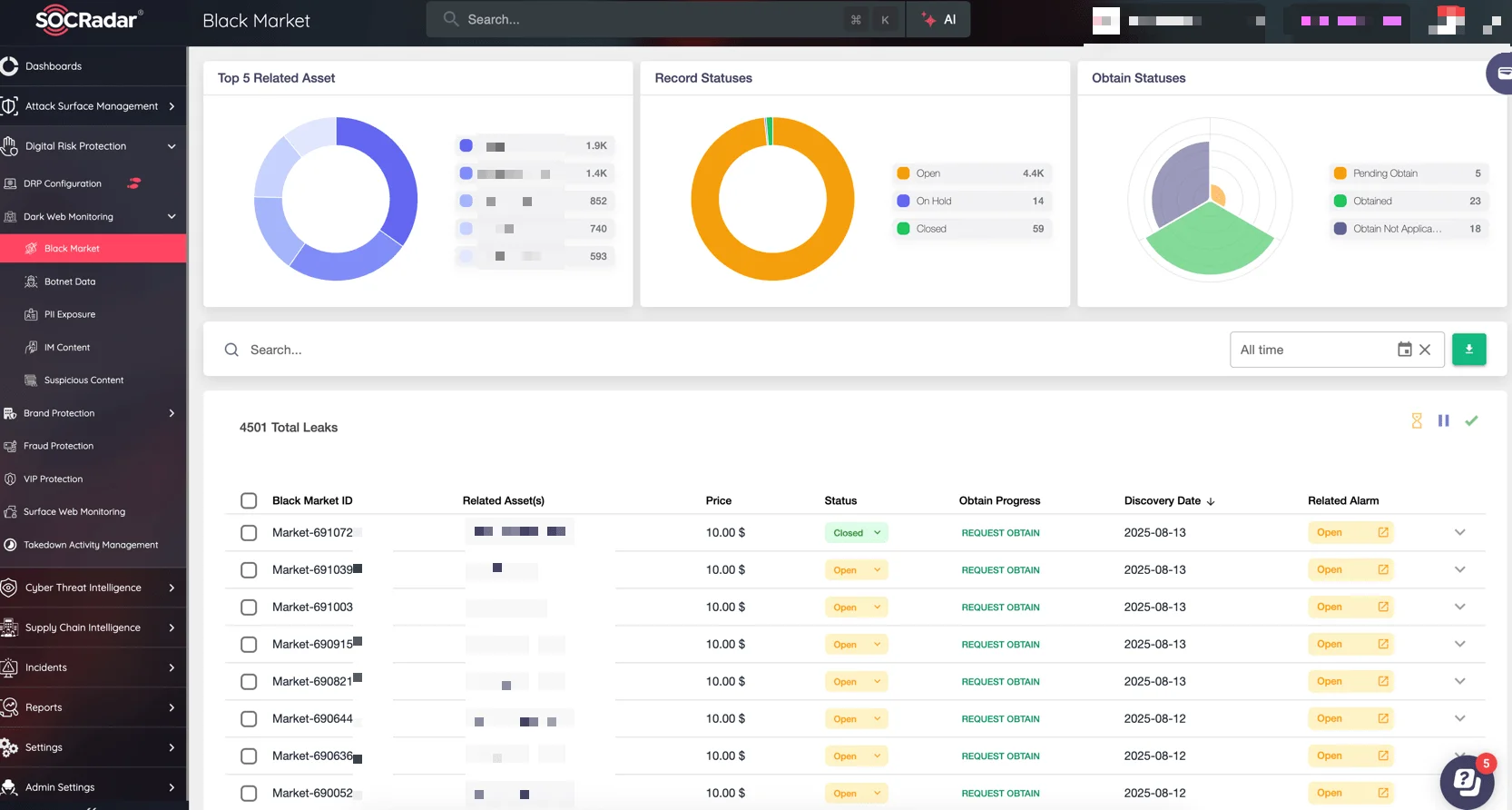
SOCRadar’s Dark Web Monitoring
Identify and mitigate exposed services such as RDP, VPN endpoints, and vulnerable web applications that ransomware actors frequently exploit for initial access. Proactive asset discovery reduces the risk of intrusion.
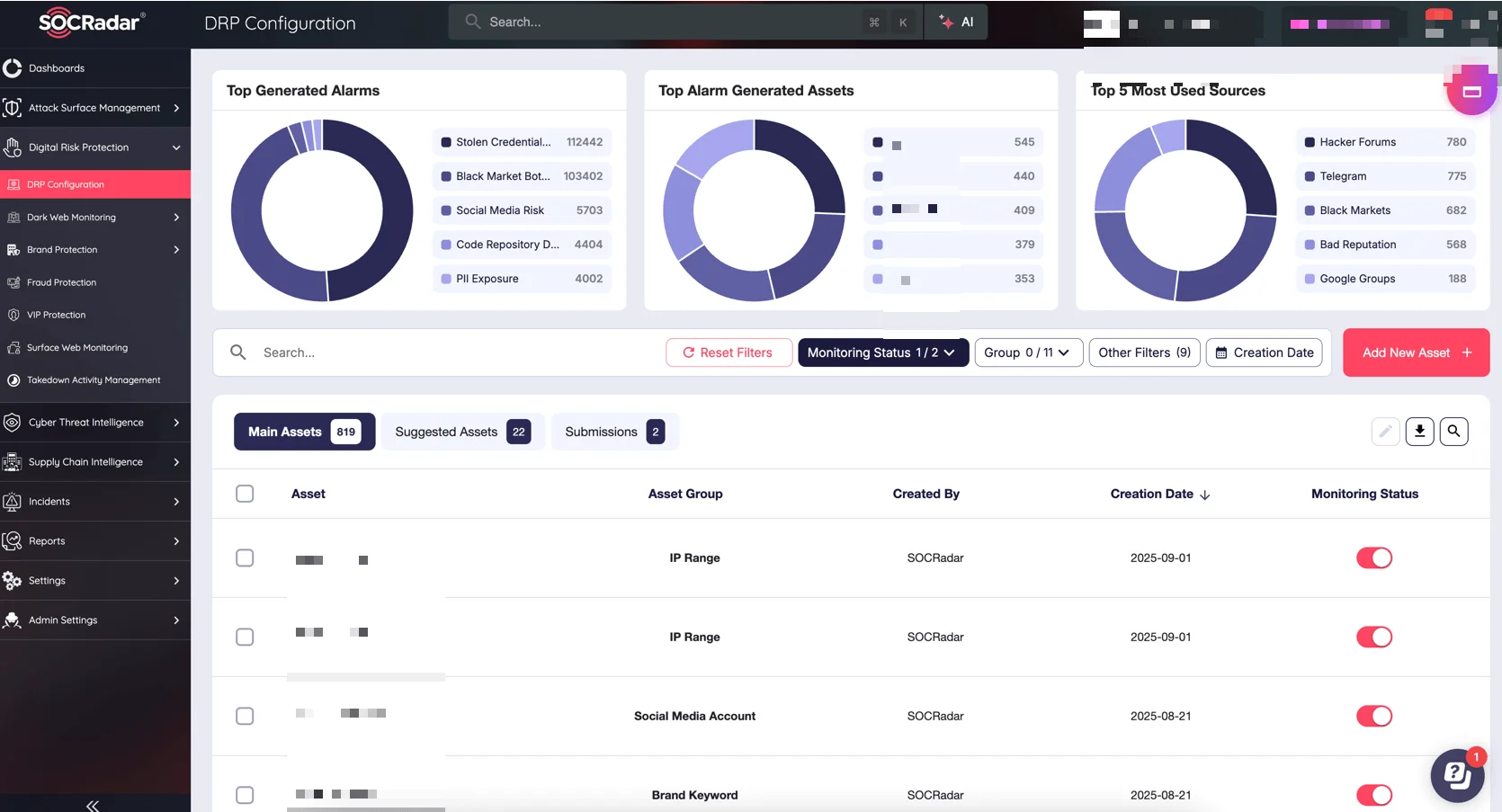
SOCRadar’s Attack Surface Management
Track your brand and digital footprint to detect impersonation, phishing campaigns, or fraudulent domains that attackers may use to trick employees or partners during intrusion attempts.
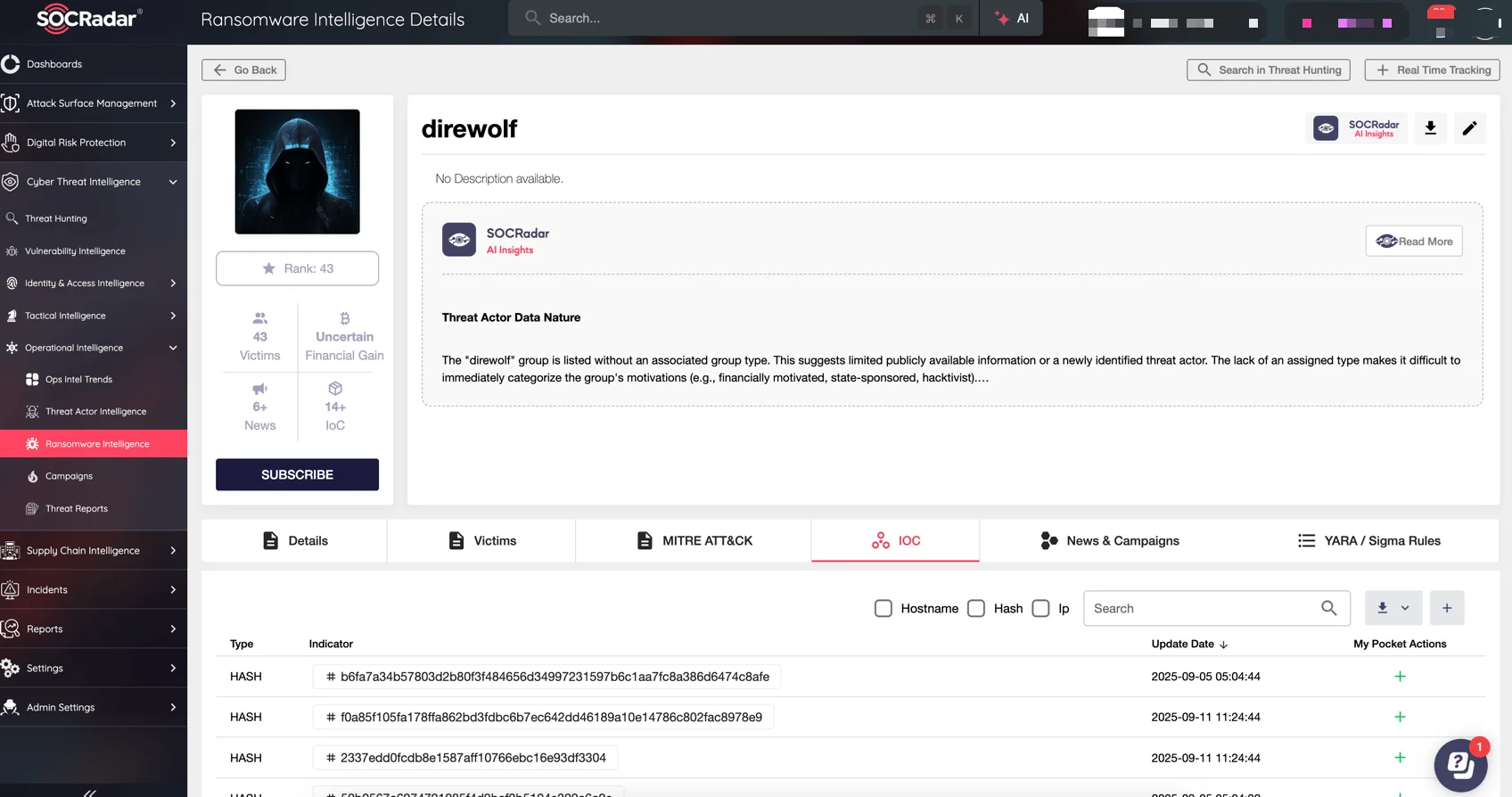
SOCRadar’s Ransomware Intelligence
Dire Wolf’s rapid rise shows how quickly a new ransomware operation can disrupt global industries. With SOCRadar’s Ransomware Intelligence module, defenders gain access to updated IoCs, YARA rules, and contextual analysis to detect, monitor, and respond effectively before the damage is done.