What Is Dark Web Threat Intelligence and Why It Matters
Dark web threat intelligence has emerged as a critical component of modern cybersecurity strategies, enabling organizations to detect threats before they materialize into full-scale attacks. As cybercriminals migrate operations to encrypted networks and hidden marketplaces, security teams must gather actionable intelligence from these shadowy corners of the internet.
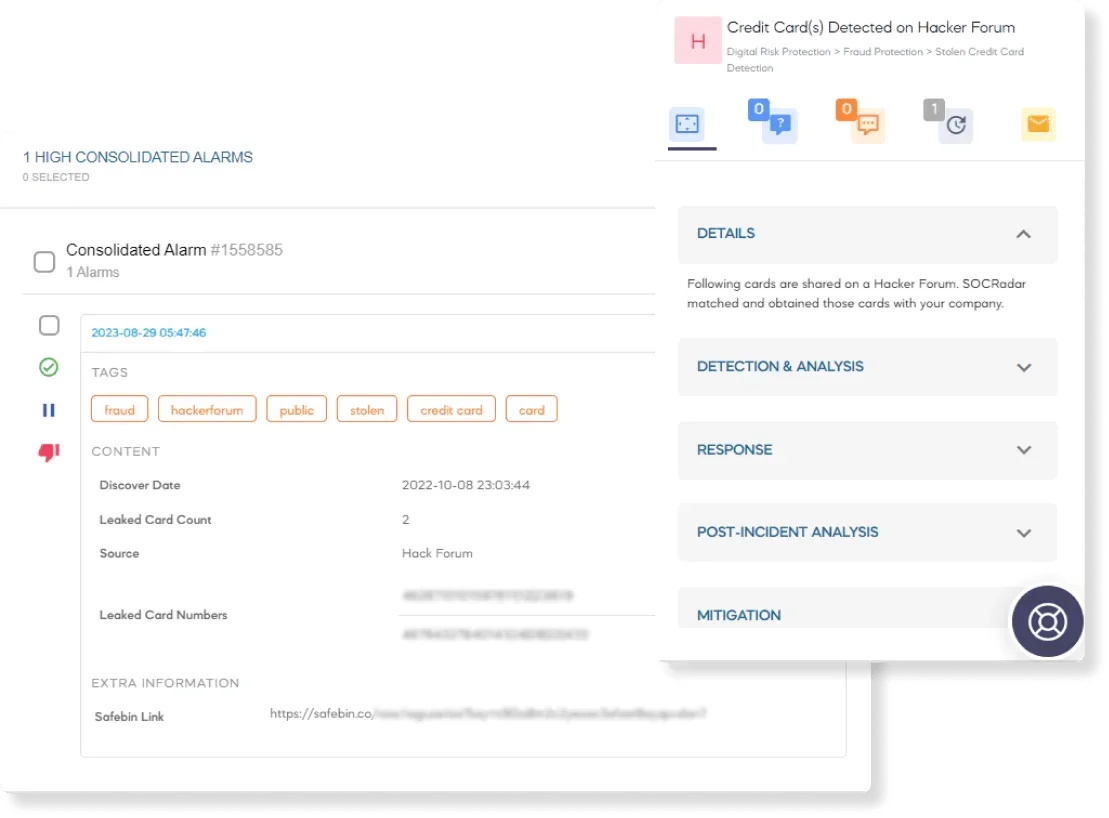
SOCRadar Advanced Dark Web Monitoring
Dark web threat intelligence is basically about gathering and analyzing information from encrypted networks, underground forums, and illegal marketplaces that use .onion domains. It breaks down into four main parts: collecting data from these dark web sites, analyzing threats to find what’s actually relevant, figuring out who the bad actors are, and then using all that information to beef up security.
Companies care about it because it helps them spot breaches early, plan better defenses, prevent fraud, respond to incidents faster, and make smarter security decisions overall. When hackers start selling your employees’ login info or chatting about targeting your company, having eyes on the dark web means you can get ahead of the problem instead of just cleaning up the mess afterward.
Key Threat Actors Operating Across the Dark Web
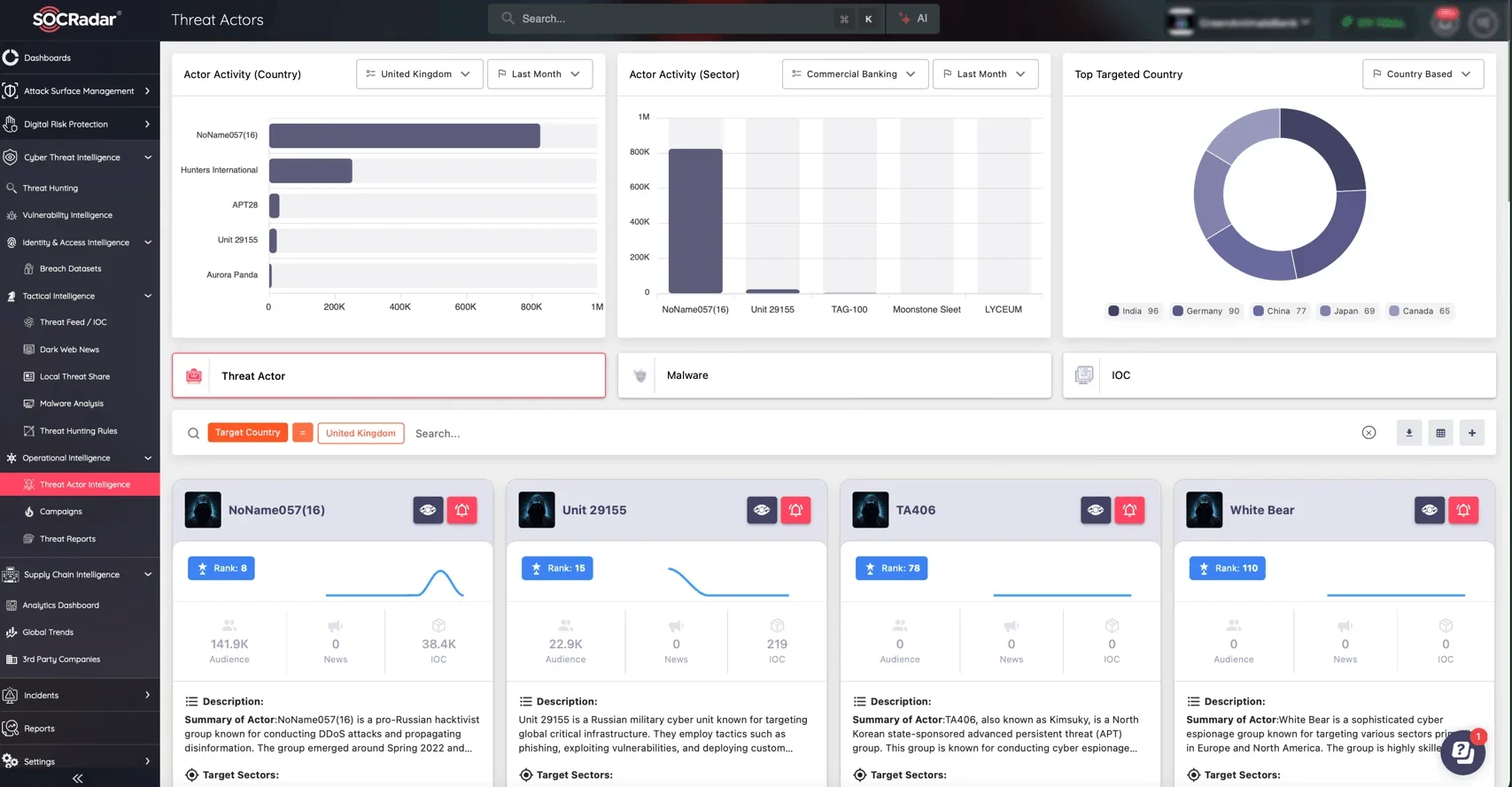
Easily track threat actors’ footprints; gain insights into their operations and TTPs via SOCRadar’s Threat Actor Intelligence
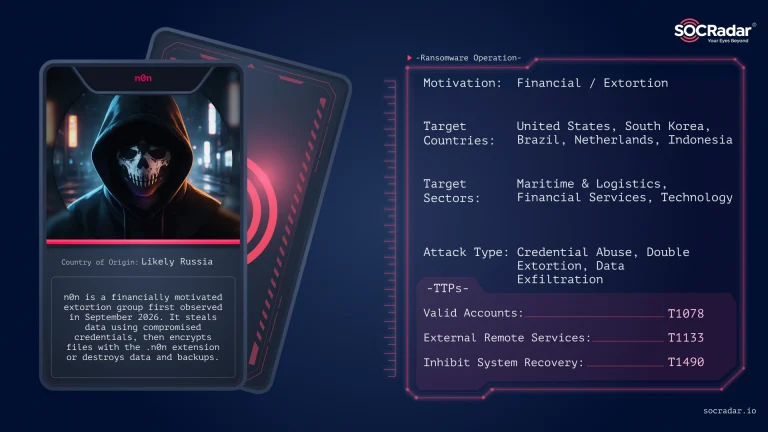
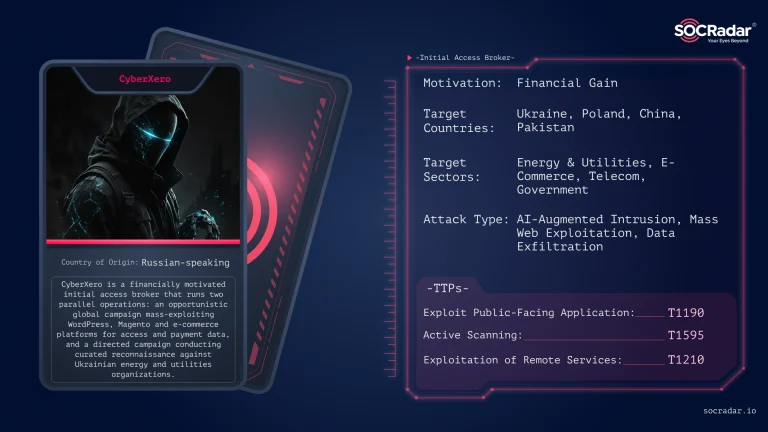
The dark web brings together various types of threat actors, each with their own goals and skill levels. Ransomware-as-a-Service (RaaS) operators like LockBit and ALPHV run well-organized criminal businesses, recruiting partners while managing the technical backbone. Initial access brokers focus on one thing: selling unauthorized entry points into networks to other cybercriminals. Credential harvesting operations make money by selling stolen usernames and passwords through illegal marketplaces.
Nation-state affiliated groups leverage dark web infrastructure to hide their tracks, while Cybercrime-as-a-Service providers supply specialized resources. Think about custom malware, hosting platforms, and money laundering services for criminals who lack technical expertise.

How Intelligence Is Gathered from .onion Networks

Collecting intelligence requires specialized technical setup. Tor network access is the starting point for many. It is used to reach .onion sites. Automated monitoring systems constantly scan forums, marketplaces, and data leak sites using web scraping tools adapted to handle dark web complexities.
Human intelligence gathering involves analysts manually exploring these communities to pick up on context and nuances that automated tools often miss. Collaborative intelligence sharing with other organizations and agencies helps expand what you can collect, while technical infrastructure monitoring keeps tabs on the hosting providers and payment systems that keep criminal operations running.
Dark Web Forums, Marketplaces, and Leak Sites Explained
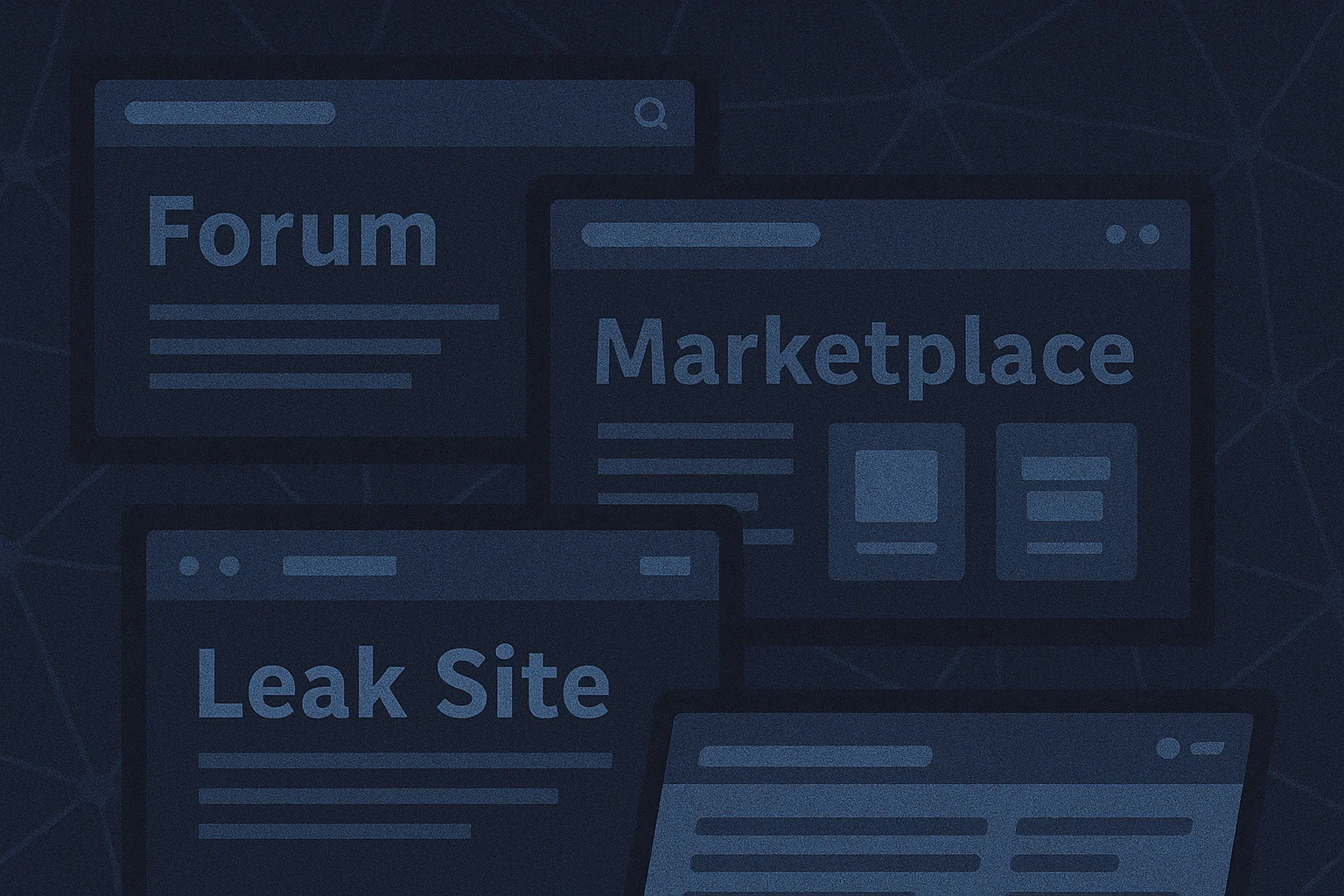
Underground forums work like social networks for cybercriminals, complete with reputation scores and invite-only access. Illicit marketplaces function as criminal versions of online stores, featuring product listings, customer reviews, and secure payment systems for illegal goods.
Leak sites and data dumps focus on publishing stolen data, from basic text-sharing sites to complex searchable databases. Specialized service platforms offer the infrastructure criminals need such as bulletproof web hosting, cryptocurrency laundering, and technical support while communication platforms provide encrypted messaging for coordinating illegal activities.
Tracking Ransomware Groups Using Dark Web Signals
Ransomware groups leave behind plenty of useful intelligence through their dark web activities. Recruitment posts show what they’re prioritizing and which regions they’re targeting based on the affiliates they’re trying to hire. Infrastructure ads give you a window into the technical systems and services backing their operations.
Victim negotiations provide real-time information about ongoing attacks, while data leak operations show the full extent of breaches through their dedicated leak sites. Internal communications sometimes get exposed when groups have security issues or members turn against each other, offering rare glimpses into how these operations actually work.
How SOC and CTI Teams Use Dark Web Feeds
Security Operations Centers and Cyber Threat Intelligence teams build dark web feeds into their day-to-day operations. Real-time alerting systems ping these teams when relevant indicators show up on dark web platforms. Threat hunting operations use this intelligence to guide proactive searches for new malware and attack methods.
Incident response teams leverage dark web intelligence to understand if attackers are discussing their breach or selling stolen data, helping them gauge the full scope of an incident. Risk assessment processes use dark web insights to identify which threats are most likely to target their industry or organization type. Threat briefing and reporting incorporates dark web findings to give leadership a clearer picture of the current threat landscape and emerging risks.
Legal and Ethical Boundaries of Monitoring the Dark Web
Passive monitoring of publicly accessible dark web content is generally legal, but organizations must avoid purchasing illegal goods or participating in criminal activities. Jurisdictional considerations create compliance challenges for international organizations operating across different legal frameworks.
Data handling requirements demand secure storage and strict access controls for sensitive content collected from these sources. Ethical guidelines should govern all collection activities to ensure responsible use while respecting privacy boundaries and maintaining professional standards in intelligence gathering.
From Insight to Action: Applying Dark Web Intelligence in Real Time
Automated threat processing systems use machine learning to classify threats and generate actionable recommendations, sometimes updating security controls without manual intervention. Incident escalation procedures ensure critical intelligence reaches the right people through tiered alert systems based on threat severity and potential impact.
Defensive control updates translate intelligence into practical security measures like firewall rules, email filters, and endpoint protection settings. Threat hunting activities use intelligence to develop targeted search hypotheses, while strategic planning integration incorporates emerging threat trends into broader security architecture decisions.
Challenges in Validating and Verifying Dark Web Threat Data
Source credibility assessment evaluates how reliable information is based on the source’s track record and standing within criminal communities. Information corroboration involves cross-checking details across multiple sources and consulting with industry partners to confirm accuracy. Timing verification helps determine whether intelligence refers to current threats, future plans, or past activities.
Technical validation involves testing claimed capabilities and tools while maintaining strict security boundaries to avoid compromise. Context interpretation requires understanding the cultural nuances and coded language that criminals use to communicate, which can significantly change the meaning of intelligence.
Future Trends in Dark Web Intelligence and Threat Hunting
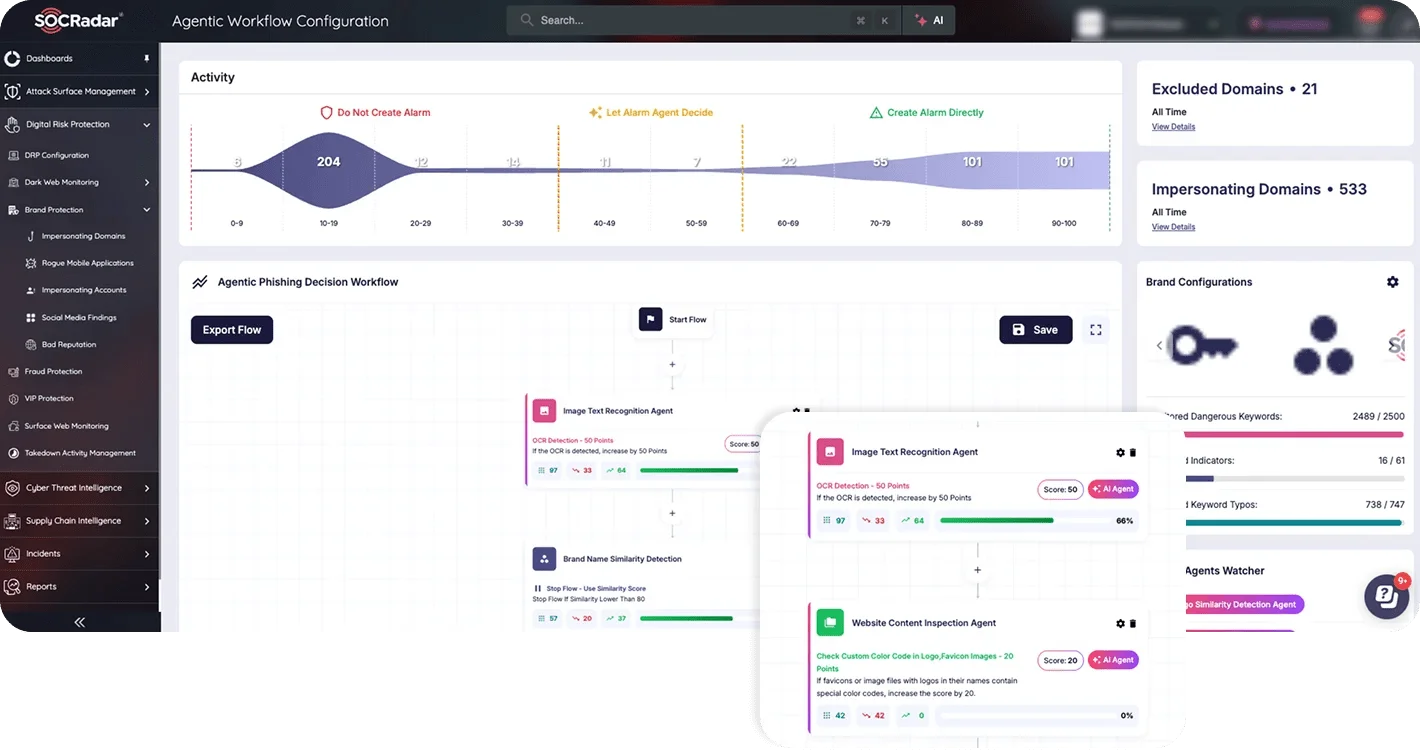
Artificial intelligence integration is transforming analysis by automating threat detection and processing the complex language criminals use in their communications. Advanced attribution techniques use behavioral analysis and cross-platform tracking to better identify and follow threat actors across different sites and operations.
Real-time intelligence fusion combines dark web intelligence with other threat feeds to create a complete picture of the current threat landscape. Blockchain analysis helps trace criminal money flows and payment systems, while automated response capabilities can implement defensive measures based on intelligence without waiting for human approval.
The future depends on better integration of these advanced technologies, more sophisticated analysis methods, and stronger intelligence sharing partnerships across the security community.
Frequently Asked Questions
What is dark web threat intelligence?
Dark web threat intelligence is the systematic collection, analysis, and application of security-relevant information from encrypted networks, underground forums, and illicit marketplaces to identify threats before they impact organizations.
How is dark web intelligence different from deep web intelligence?
Dark web intelligence focuses on content accessible only through encrypted networks like Tor, while deep web intelligence encompasses all non-indexed web content including password-protected sites and private databases.
What types of threats are commonly found on the dark web?
Common threats include stolen credentials, ransomware-as-a-service operations, initial access broker advertisements, leaked corporate data, malware discussions, phishing kit distributions, and insider threat recruitment.
Is it legal to monitor and collect data from the dark web?
Passively monitoring publicly accessible dark web content is generally legal, but organizations must avoid purchasing illegal goods or participating in criminal activities.
How do security teams gather intelligence from the dark web?
Teams use specialized Tor browsers, automated monitoring systems, human analysts for contextual interpretation, collaborative partnerships, and technical infrastructure monitoring.
Can dark web intelligence help prevent ransomware attacks?
Yes, by identifying recruitment activities, infrastructure advertisements, attack planning discussions, and target selection criteria that enable proactive defenses.
What are onion sites, and why are they important for threat monitoring?
Onion sites are websites accessible only through Tor networks with .onion extensions, important because many cybercriminal operations use them for anonymity and evading detection.
Which threat actors are typically active on the dark web?
Active actors include ransomware operators, initial access brokers, credential harvesters, nation-state group, cybercrime-as-a-service providers, and malware developers.
How do SOC and SIEM platforms use dark web feeds?
They integrate feeds for real-time alerting, threat hunting guidance, incident response enhancement, strategic assessment, and correlation with other security events.
What are the challenges of analyzing threat data from the dark web?
Key challenges include assessing source credibility, corroborating information, determining temporal relevance, validating capabilities, and interpreting cultural nuances in communications.