

Sep 07, 2026
Table Of Content
PassiveNeuron Cyber Espionage Campaign: What Cybersecurity Leaders Must Know
What Is PassiveNeuron?
What Are the Key Highlights?
How Does PassiveNeuron Gain Access?
What Are the TTPs for the PassiveNeuron Campaign?
Why This Matters for Executives
Which Risks Deserve Executive Attention?
What Immediate Actions Should CISOs Prioritize?
What Should Incident Response Look Like?
What Detection Guidance Should SOC Teams Implement?
How Does Threat Intelligence Improve Response?
Quick Action Checklist
How to Measure Defensive Maturity (CISO KPIs)
Related Articles

PEEP: A Browser RAT Posing as a Chrome Extension
Sep 04, 2026
Exposing AnonyMousKIT: AI-Powered PhaaS Supply Chain
Aug 24, 2026



Oct 30, 2025
6 Mins Read
Jul 08, 2026

Summarize with:
PassiveNeuron Cyber Espionage Campaign: What Cybersecurity Leaders Must Know
Threat actors have increasingly shifted their focus from end-user systems to the servers that keep organizations running. The PassiveNeuron campaign exemplifies this evolution as a targeted espionage operation designed to infiltrate Internet-exposed Windows Server environments through opportunistic SQL-related attacks. Its methods reveal a disciplined, multi-stage approach built around stealth, persistence, and control rather than quick disruption.
This article explores how the campaign operates, the tactics confirmed by recent analyses, and the defensive priorities every CISO should act on to mitigate exposure.
What Is PassiveNeuron?
PassiveNeuron is a server‑focused cyber espionage campaign active since 2024 that targets Internet‑exposed Windows Server installations. Observed activity shows attackers attempting Remote Code Execution (RCE) via Microsoft SQL Server access (methods observed or suspected include credential brute‑force, credential stuffing, or SQL injection) and chaining into custom loaders and implants rather than relying on a single public CVE. Where the primary vector could not succeed, attackers switched to a DLL‑loader chain. These findings are based on SOCRadar analysis and published technical reports.

What Are the Key Highlights?
- Attempts to gain initial access via Microsoft SQL Server-related activity (brute‑force, suspicious SQL executions, or possible SQLi).
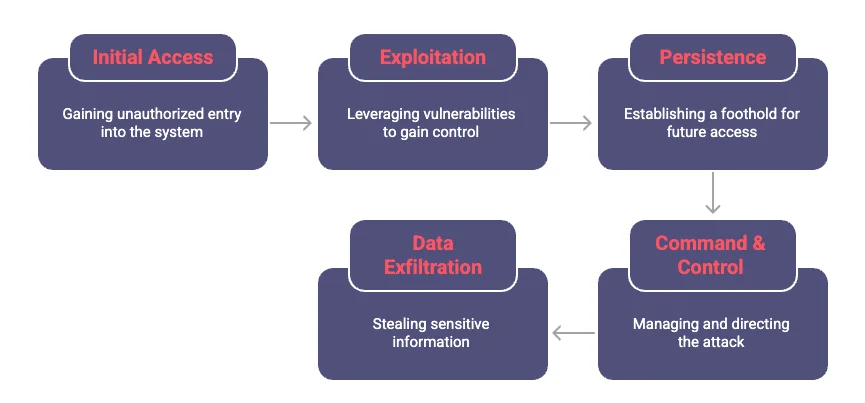
PassiveNeuron Attack Lifecycle
- Use of custom implants and loaders (Neursite: C/C++ backdoor; NeuralExecutor: .NET loader) alongside Cobalt Strike as a C2 management tool.
- Confirmed persistence technique: Phantom DLL Hijacking – unusually large or renamed DLLs placed in system paths to load malicious code at service startup.
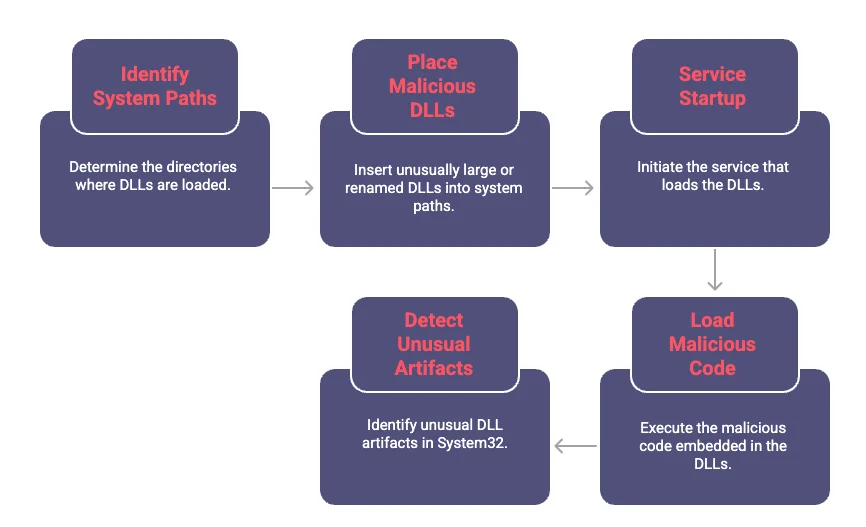
Phantom DLL Hijacking Sequence
- Web shell activity observed as an initial installation attempt in some cases, but often blocked/removed before full deployment – treat web shells as an attempted vector, not always a successful persistence method.
- Campaign variants (2025) include GitHub “dead‑drop” resolver behavior: loaders that retrieve C2 configuration or next‑stage URLs from public GitHub content.
- Primary observed targets: government, industrial, and financial sectors across Asia, Africa, and Latin America.

Heat map of countries affected by PassiveNeuron Campaign
How Does PassiveNeuron Gain Access?
Assume initial access is opportunistic and multi‑vector: suspicious SQL activity, exposed admin ports, weak/compromised credentials, or vulnerable web apps. Do not assert a single exploited CVE unless a specific CVE is published by a vendor or CERT.
What Are the TTPs for the PassiveNeuron Campaign?
Confirmed / Observed:
- Initial access: Microsoft SQL server activity (brute force / SQL execution patterns).
- Persistence: Phantom DLL Hijacking (System32 or service DLL paths with abnormal file sizes/names).
- C2 and lateral control: Cobalt Strike beacons; custom loaders (NeuralExecutor) that pull config from public endpoints (including GitHub).
Attempted / Not clearly confirmed:
- Web shells: installation attempts recorded, sometimes blocked – treat as attempted access rather than guaranteed persistence.
- Scheduled Tasks: not corroborated in public technical reports; remove as a confirmed technique unless you have internal forensic evidence.
- Generic claims of “fileless execution” or “process injection” should be marked as possible APT behaviors unless memory forensic evidence confirms them.
Why This Matters for Executives
PassiveNeuron represents a growing class of supply chain-leveraging APTs that exploit infrastructure blind spots rather than end-users. The campaign shows that delayed patch cycles and weak authentication can directly lead to:
- Financial and operational disruption.
- Regulatory non-compliance (NIS2, DORA, or regional equivalents).
- Brand and reputational damage due to data exfiltration.
Treat this not as a one-off threat but as an indicator of a broader shift: attackers weaponize public developer ecosystems (like GitHub) to hide in plain sight.
Which Risks Deserve Executive Attention?
| Risk | Business Impact | Likelihood | Priority |
| Unpatched SQL servers exposed to the internet | Full compromise, lateral movement, data theft | High | 🔴 Critical |
| Persistence via Phantom DLL Hijacking | Long dwell time, hidden access, delayed detection | Medium | 🟠 High |
| Use of public GitHub repositories as C2 channels | Bypass of network controls, supply chain abuse | Medium | 🟠 High |
| Weak admin credentials / missing MFA | Unauthorized access to privileged systems | High | 🔴 Critical |
CISOs should focus on patching and hardening exposed SQL environments first, followed by credential hygiene and continuous monitoring of persistence artifacts.
What Immediate Actions Should CISOs Prioritize?
- Patch and harden Microsoft SQL Server instances and related web applications – close unnecessary ports, disable stacked procedures like unused xp_cmdshell, and enforce least privilege.
- Enforce strong authentication: MFA for all privileged accounts and limit remote management to vetted jump hosts/VPNs.
- Hunt for anomalous DLL artifacts, and run memory captures on suspicious hosts for forensic analysis.
- Block known malicious C2 indicators and GitHub endpoints used as dead‑drop resolvers until verified.
- Ingest campaign‑specific IOCs and TTPs into SIEM/EDR for automated correlation (hash sets, network patterns, GitHub URL patterns).
What Should Incident Response Look Like?
- Isolate affected hosts quickly; collect volatile memory and disk images for forensic validation.
- Remove persistence artifacts (Phantom DLLs) and verify service integrity.
- Rotate credentials and rebuild any hosts that show signs of deep compromise.
- Conduct a post‑incident TTP review to update detection playbooks and tabletop exercises.
What Detection Guidance Should SOC Teams Implement?
- Monitor SQL telemetry for unexpected administrative commands (e.g., xp_cmdshell use, unusual OPENROWSET/OLE calls) and spikes in failed admin logins followed by successful web requests.
- Scan System32 and service DLL paths for anomalous files: unusually large DLLs, unexpected filenames (e.g., recently observed malicious loader names), and unsigned binaries masquerading as system libraries.
- Alert on unusual outbound HTTP(S) patterns to public code hosting platforms (GitHub) and any processes fetching raw content from such hosts.
- Add EDR rules to detect anomalous DLL load behavior and suspicious parent/child process relationships (for example, web server process spawning cmd/powershell with encoded commands).
- Correlate Cobalt Strike beacon indicators with other telemetry (network flows, EDR signals) to reduce false positives.
How Does Threat Intelligence Improve Response?
- Campaign‑specific feeds (hashes, loader names, GitHub resolver patterns, C2 behavioral signatures) enable prioritized hunting and faster containment.
- Use threat intelligence to enrich alerts so SOC analysts can triage based on known campaign risk rather than generic severity scores.
Quick Action Checklist
- Audit exposed SQL servers and apply emergency hardening.
- Hunt for anomalous System32 DLLs and block suspicious GitHub raw content fetches at the proxy.
- Enforce MFA and credential rotation for privileged accounts.
- Push updated IOC lists to EDR/SIEM and run immediate retrospective scans.
- Run a focused tabletop simulating a Windows‑server‑centred intrusion and test detection playbooks.
How to Measure Defensive Maturity (CISO KPIs)
To evaluate progress against PassiveNeuron-like threats, CISOs can track:
- Patch latency: Mean time to patch critical servers (goal: <7 days after patch release).
- Authentication coverage: ≥90% of administrative accounts protected with MFA.
- Mean Time to Detect (MTTD): SQL anomaly detection alerts investigated within 12 hours.
- Mean Time to Respond (MTTR): Confirmed incidents contained within 24 hours.
- IOC ingestion frequency: Threat feeds updated and correlated weekly.
These metrics provide quantifiable proof of resilience and can be reported to leadership and auditors as part of the organization’s cyber-risk posture assessment.