

| Date | Event |
| Pre-March 11, 2026 | Suspected Handala reconnaissance, including possible credential harvesting or brute-force activity targeting Stryker administrative accounts. This is based on public reporting and threat actor tradecraft, not a confirmed Stryker statement. |
| March 11, 2026 | The attack was executed, causing mass disruption across Stryker’s Microsoft environment. Public reporting says approximately 80,000 devices may have been wiped within hours, while Handala claimed a far higher number. Stryker filed an SEC 8-K disclosing a “global disruption” to its Microsoft environment. |
| March 12, 2026 | Stryker confirmed disruption to manufacturing, shipping, and order processing. It was reported that Handala had claimed responsibility for the incident. |
| March 13, 2026 | Stryker told customers that products remained safe to use and said it had no indication of ransomware or malware. Recovery efforts continued. |
| March 15, 2026 | Stryker said electronic ordering systems were being restored and that core transactional systems were on a recovery path, though the company told the SEC the full recovery timeline was still unknown. |
| March 16, 2026 | Ordering disruption continued, manual workarounds remained in use, and the investigation was still ongoing. No official root-cause statement or Stryker-specific IOC package had been released publicly. |
| March 17, 2026 | It was reported that Stryker had contained the cyberattack and was prioritizing restoration of systems supporting customers, ordering, and shipping. |
Mar 17, 2026
13 Mins Read
Mar 23, 2026

Summarize with:
Stryker Cyberattack: What You Need to Know
On March 11, 2026, Stryker disclosed a cyberattack that caused a global disruption to its Microsoft environment. Within days, the incident became one of the clearest examples of how attackers can cause enterprise-wide damage by abusing trusted cloud administration tools instead of deploying traditional malware. As of March 17, Stryker says it has contained the attack and is prioritizing restoration for customer-facing, ordering, and shipping systems.
That distinction matters. This was not framed as a classic ransomware event. Stryker said it had no indication of ransomware or malware, and it repeatedly stated that the disruption was limited to its internal Microsoft corporate environment. Public reporting and threat intelligence point instead to an identity compromise followed by abuse of Microsoft Intune administrative capabilities.
Below is a practical “what do you need to know” breakdown of the Stryker cyberattack, written to answer the questions security leaders, IT teams, and business stakeholders are asking right now.
What Happened In the Stryker Cyberattack?
Stryker disclosed in an SEC filing that on March 11, 2026, it identified a cybersecurity incident affecting certain IT systems and causing a global disruption to its Microsoft environment. The company said the incident disrupted access to information systems and business applications supporting parts of its operations and corporate functions, and that the timeline for full restoration was initially unknown.
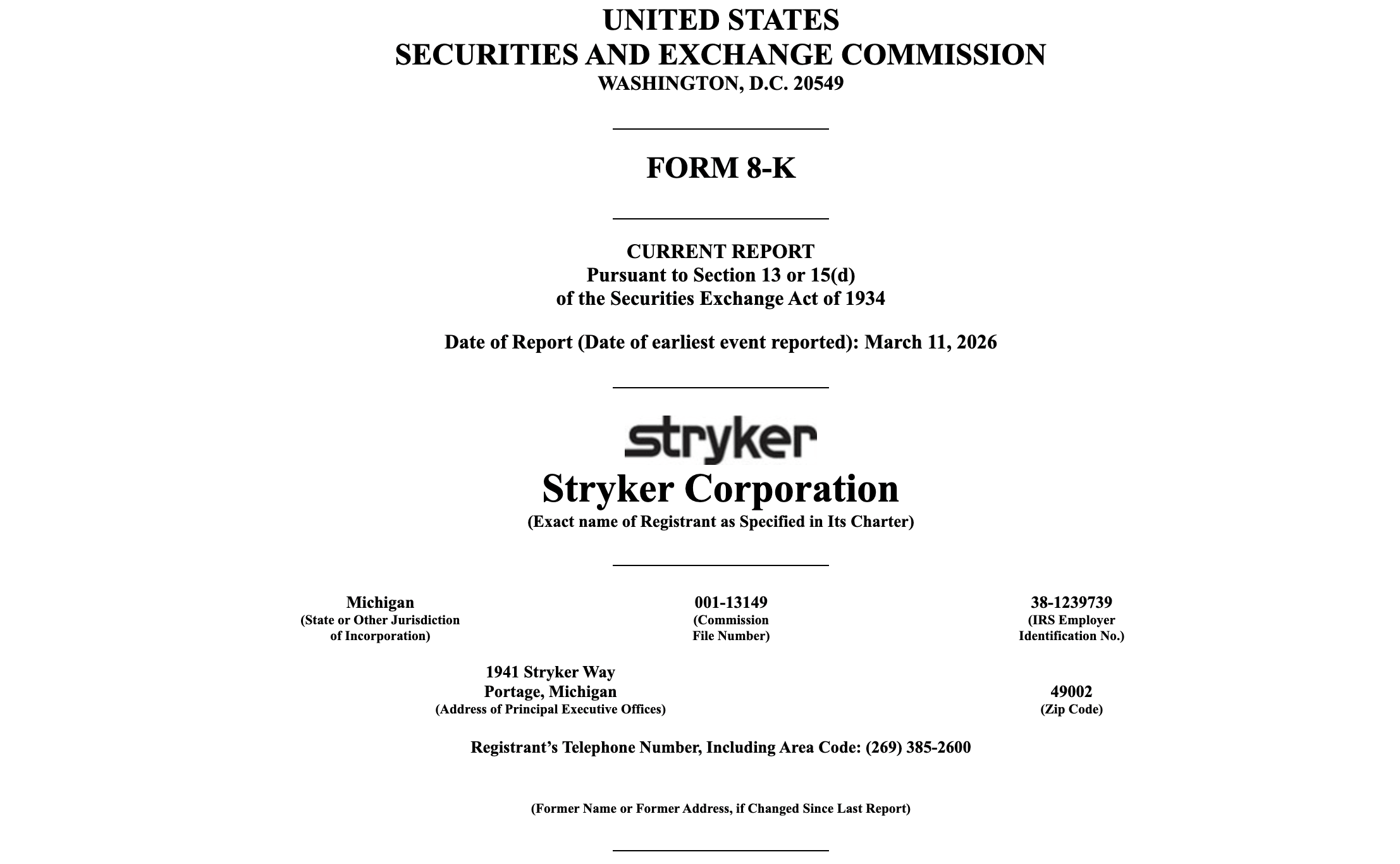
See the SEC Form 8-K filing for the incident here
In customer updates and later reporting, Stryker confirmed that the disruption affected order processing, manufacturing, and shipping. On March 17, it was reported that the company had contained the attack and was prioritizing systems that directly support customers, ordering, and shipping.
The operational effect was broad enough to disrupt business at scale, but Stryker has consistently said its medical products and patient-related services were not affected. That separation between corporate IT and product environments was one of the most important controls that limited the blast radius.
Here’s a timeline of the events:

Was the Stryker Cyberattack Caused by Ransomware?
No. Based on Stryker’s public statements, it was not caused by ransomware.
The company repeatedly said it had no indication of ransomware or malware and that the incident was contained to its internal Microsoft environment. That makes this case notable because the impact was still severe even without a confirmed ransomware payload, ransom demand, or conventional malware artifacts.
This is one of the main lessons from the incident. A destructive attack no longer needs a custom wiper executable on every endpoint. If attackers gain control of identity and device-management systems, they can use the organization’s own trusted tooling to create the same or worse effect.
How Did the Attack Work?
Public reporting points to a credential and identity compromise, not a malware-led intrusion.
Reports suggest that attackers used Microsoft Intune’s wipe capability after compromising an administrator account and creating a new Global Administrator account.
BleepingComputer cited a source familiar with the investigation and said nearly 80,000 devices were wiped between 5:00 and 8:00 a.m. UTC on March 11. Palo Alto Networks Unit 42 separately warned that recent Handala operations have reportedly relied on phishing and administrative access through Microsoft Intune.
That gives defenders a plausible working kill chain:
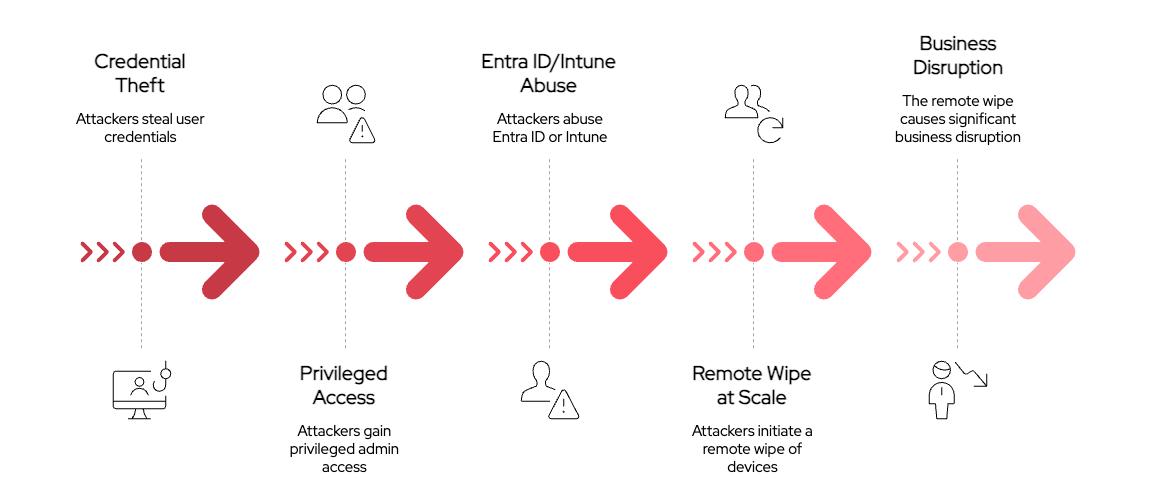
The possible attack sequence behind the Stryker breach
Stryker has not publicly confirmed that full chain as root cause, so it should be treated as an evidence-based inference rather than a final company statement. Still, it fits both the company’s “no malware” position and the reporting around Intune abuse.
Why Is Microsoft Intune Central to This Incident?
Because Microsoft Intune appears to be the mechanism that turned a privileged account compromise into a mass disruption event.
Microsoft’s Intune is a legitimate endpoint management platform. In normal use, it helps organizations provision devices, enforce policy, and remotely wipe lost or compromised endpoints. In the wrong hands, that same feature set becomes a destructive control plane. Public reporting says attackers used Intune’s native remote wipe command rather than deploying malicious binaries. That matters because many endpoint tools are designed to catch malware behavior on devices, not authorized actions initiated from a trusted admin plane.
This is why the Stryker case is resonating far beyond healthcare. It is a template for any enterprise running Microsoft Entra ID and Intune. If the management plane is compromised, traditional EDR may offer little protection against a wipe issued by your own tenant.
Who Was Behind the Stryker Cyberattack?
Handala Hack Team claimed responsibility for the attack on Stryker. Multiple security firms assess Handala as an Iran-linked persona associated with Void Manticore, also tracked as Red Sandstorm and Banished Kitten, and linked to Iran’s Ministry of Intelligence and Security.
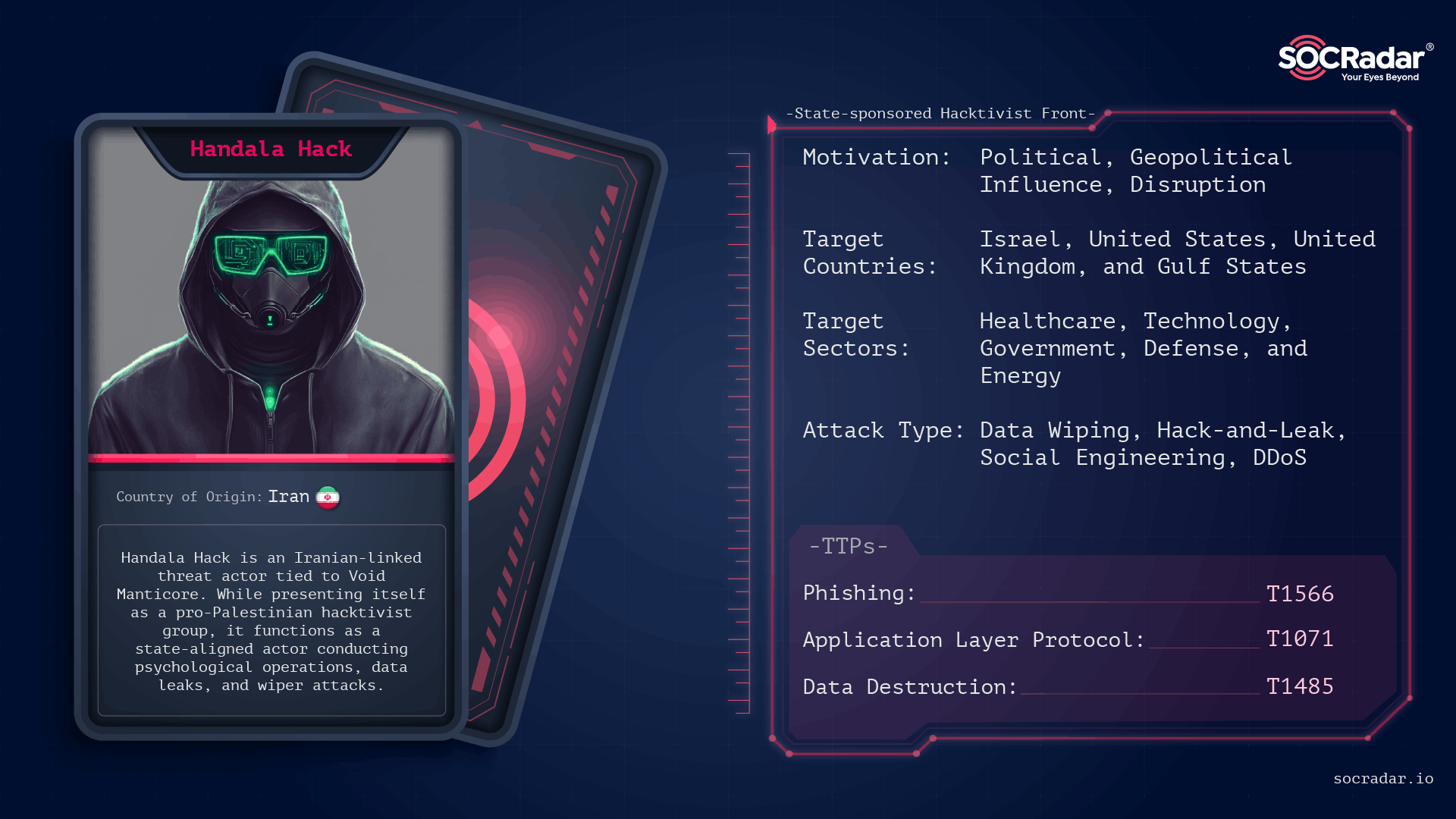
Threat actor card of Handala Hack
Still, attribution should be stated carefully. Stryker itself has not officially confirmed who carried out the attack. The strongest public wording is that Handala claimed responsibility, and multiple security firms have linked the group to Iranian state interests.
Why Was Stryker Targeted?
Reuters reported that Handala claimed the attack was retaliation for a strike on a girls’ school in Minab, southern Iran. Other motives cited by the group include:
- Stryker’s ties to the U.S. defense ecosystem,
- and its acquisition of Israeli firm OrthoSpace.
These points may help explain the actor’s stated rationale, but they remain claims made by the group, not verified motive statements from Stryker or investigators.
For defenders, the more practical takeaway is that organizations with symbolic, defense-adjacent, U.S.-linked, or Israel-linked profiles may face elevated risk during periods of geopolitical escalation. That risk can extend well beyond government or military entities and affect private-sector companies seen as strategically or politically significant.
For additional context around related cyber activity in the region, SOCRadar’s Iran–Israel/US War 2026: Live Cyber Attack Dashboard offers a live view of incidents and threat activity.
How Many Devices Were Wiped, and Was Data Stolen?
Handala claimed it wiped more than 200,000 systems across 79 countries and stole 50 TB of data. Public reporting closer to the investigation paints a more conservative picture. Reports suggest that nearly 80,000 devices were wiped and that investigators found no indication that data was exfiltrated.
So the cleanest wording today is this:
- The attack caused major disruption and appears to have wiped tens of thousands of devices.
- The 80,000-device figure is the better-supported working number in public reporting.
- The 200,000 devices / 50 TB exfiltration claim comes from the actor and should not be treated as confirmed.
- As of March 17, no public Stryker, CISA, or Microsoft release has confirmed a Stryker-specific exfiltration package or IOC set.
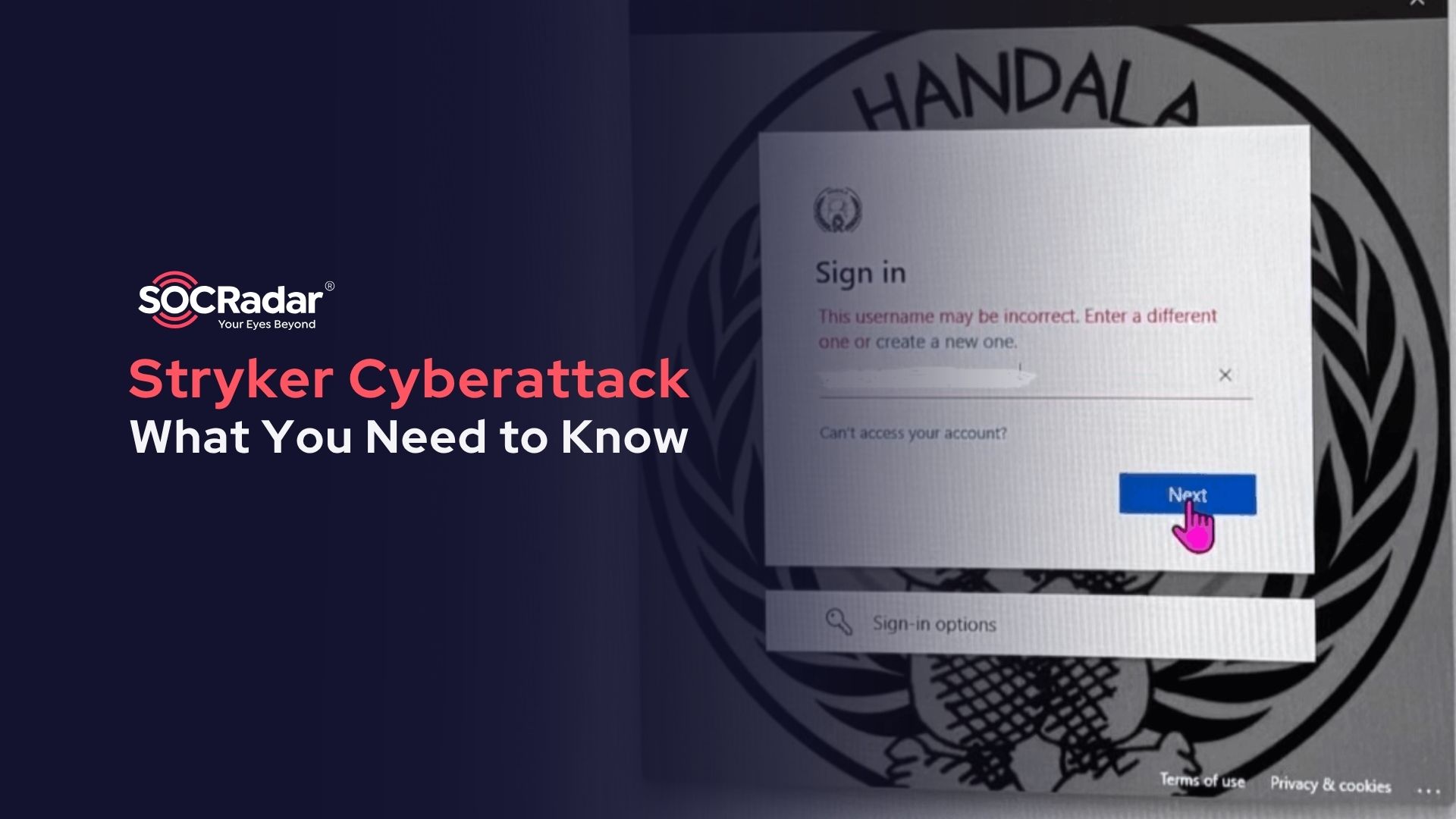
Handala published public claims and propaganda related to the incident. Reports indicated that some affected login screens displayed the group’s logo after devices were wiped. However, that should not be confused with proof of verified data theft or a confirmed public release of authentic stolen Stryker data.
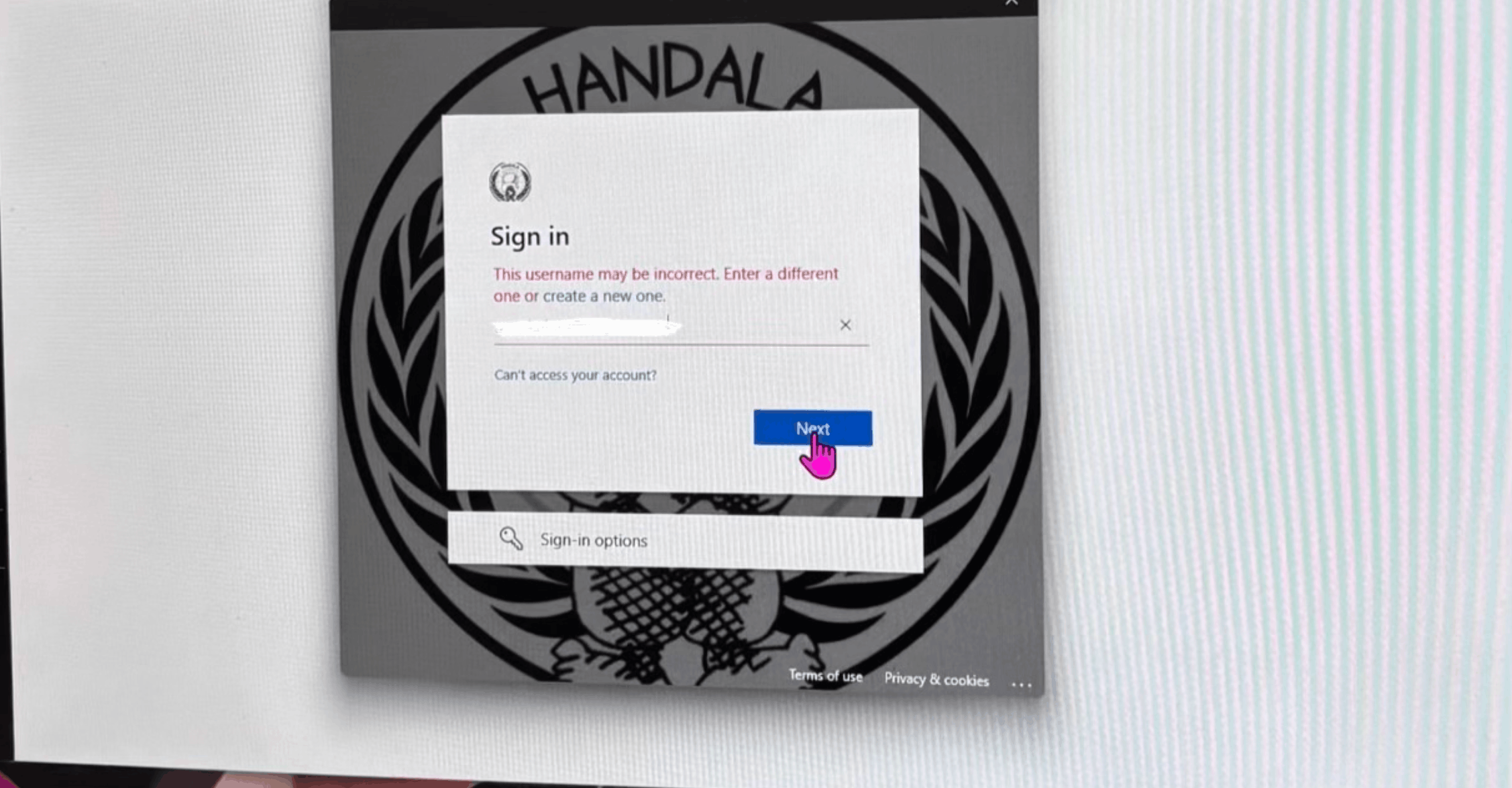
A reported image from inside Stryker showed Handala branding displayed on affected login screens (WWMT)
Were Stryker Medical Devices and Patient Services Affected?
According to Stryker, no.
The company has repeatedly said its connected and non-connected products remain safe to use. Its customer updates specifically stated that products such as Mako, Vocera, and LIFEPAK were not impacted, and it was reported on March 17 that no patient-related services or connected medical products were affected.
This suggests Stryker’s product and patient-facing systems were segregated from the compromised corporate Microsoft environment, which likely prevented a serious business disruption from becoming a patient safety event.
What Are the Biggest Security Lessons From the Stryker Attack?
The biggest lesson is simple: your cloud admin plane is a Tier-1 attack surface.
Researchers’ warning about Handala’s use of phishing and Intune admin abuse, together with Stryker’s no-malware statements, shows how destructive operations are shifting toward identity and management-plane compromise. In this model, a privileged account can become the wiper.
A second lesson is that business continuity matters as much as prevention. Stryker had to rely on manual workarounds while restoring ordering and shipping, and it told investors that the recovery timeline was initially unknown. Resilience is not just a backup conversation anymore; it is an operational continuity requirement for cloud-admin compromise scenarios.
A third lesson is that actor propaganda must be separated from verified facts. Sophos explicitly warns that groups like Handala exaggerate operational impact, and that is exactly why reporting on device counts, exfiltration, or geopolitical motive needs careful wording.
What Should CISOs & SOC Teams Check Right Now?
The Stryker incident highlights a few immediate priorities for defenders:
- Review privileged access: Audit all Global Admin, Intune Admin, and other high-risk Entra roles. Check who has access, when those roles were last used, whether any new admin accounts were created, and whether standing privileges can be reduced or eliminated.
- Hunt for suspicious wipe activity: Look for bulk Intune RemoteWipe or FactoryReset actions, especially if they were triggered unexpectedly or at scale.
- Watch for unusual admin behavior: Investigate new Global Administrator creation, unusual PIM activations, privileged sign-ins from unfamiliar locations, and impossible-travel patterns.
- Check for credential exposure: Review whether privileged Microsoft cloud, VPN, or device-management accounts may have been exposed through phishing, stealer logs, or Dark Web leaks. External exposure and Dark Web Monitoring platforms such as SOCRadar XTI can also help security teams identify leaked credentials, monitor actor claims, and prioritize response actions.
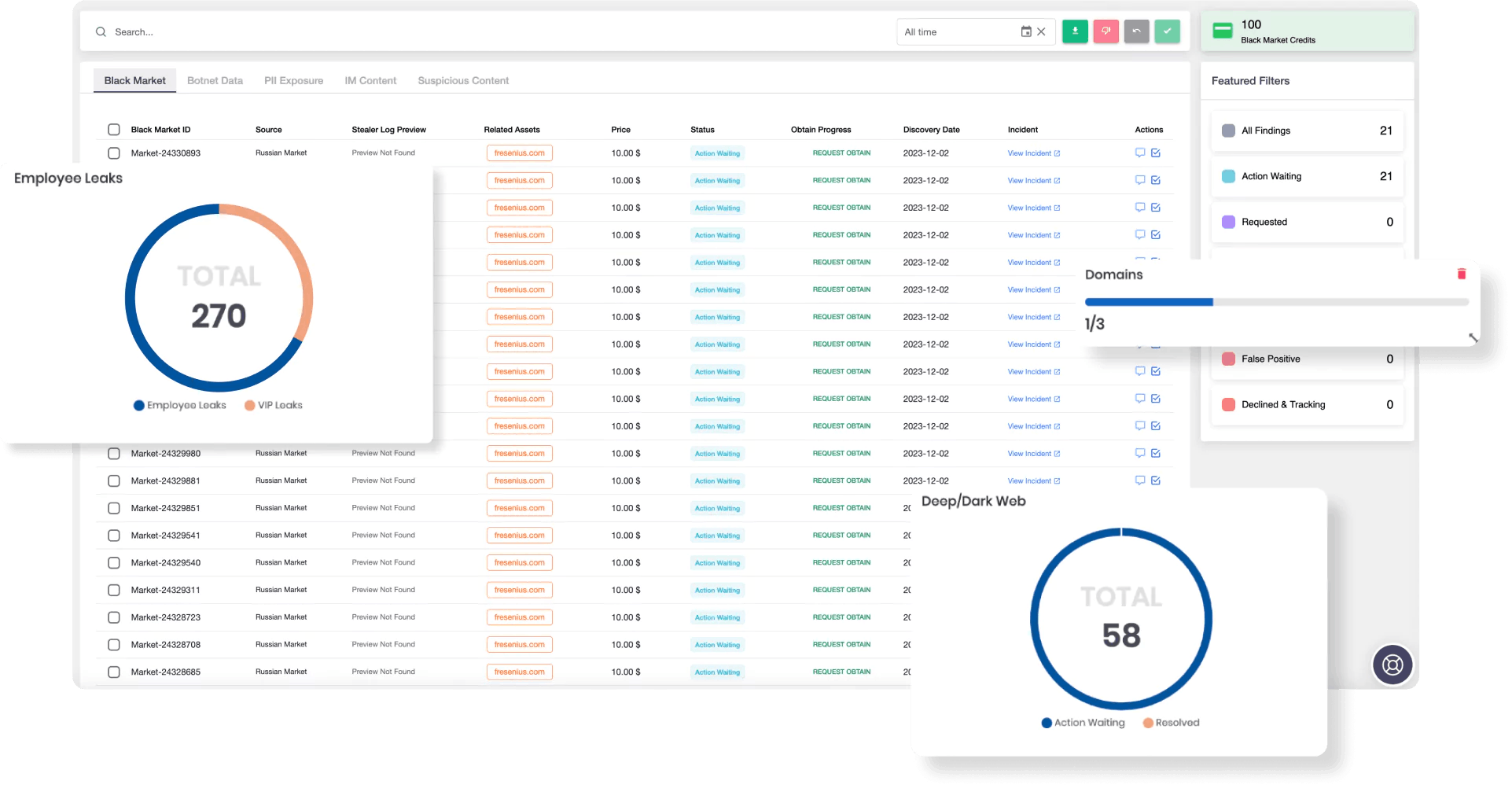
SOCRadar’s Dark Web Monitoring
- Expand destructive-activity detections: Monitor for unusual RDP access, LSASS dumping, registry hive exports, suspicious PowerShell activity, and the use of tools such as ADRecon, NetBird, or VeraCrypt.
- Validate recovery readiness: Confirm that offline or immutable backups are available and that restore procedures have been tested. In a destructive attack, recovery capability may be the most important control left.
What Does the Stryker Incident Mean for BYOD and Non-Medtech Organizations?
It means this is not only a Stryker story.
If employee-owned devices are enrolled in the same Intune tenant as corporate devices, a compromised administrator may be able to wipe personal phones, tablets, or laptops with the same command used for company hardware. Public reporting on the Stryker incident said some employees with personal devices enrolled in the company network lost personal data during the wipe. That raises both operational and legal questions, especially in jurisdictions with strong employment and privacy protections.
And this risk is not limited to medtech or defense-adjacent firms. Any organization using Entra ID and Intune should treat the MDM and identity layer as a top-tier control plane. The Stryker attack may be healthcare-focused in impact, but the underlying attack pattern is enterprise-wide.
Are There Public Indicators of Compromise Linked to the Threat Actor Behind the Stryker Attack?
- 5986ab04dd6b3d259935249741d3eff2 – Handala Wiper hash
- 3cb9dea916432ffb8784ac36d1f2d3cd – Handala PowerShell Wiper hash
- 3236facc7a30df4ba4e57fddfba41ec5 – VeraCrypt installer hash
- 3dfb151d082df7937b01e2bb6030fe4a – NetBird installer hash
- e035c858c1969cffc1a4978b86e90a30 – NetBird hash
- 82.25.35[.]25 – C2 infrastructure
- 31.57.35[.]223 – C2 infrastructure
- 107.189.19[.]52 – C2 / payload retrieval server
- 146.185.219[.]235 – C2 infrastructure
These indicators are useful for threat hunting and retrospective review, but they should not be presented as officially confirmed Stryker-specific indicators.
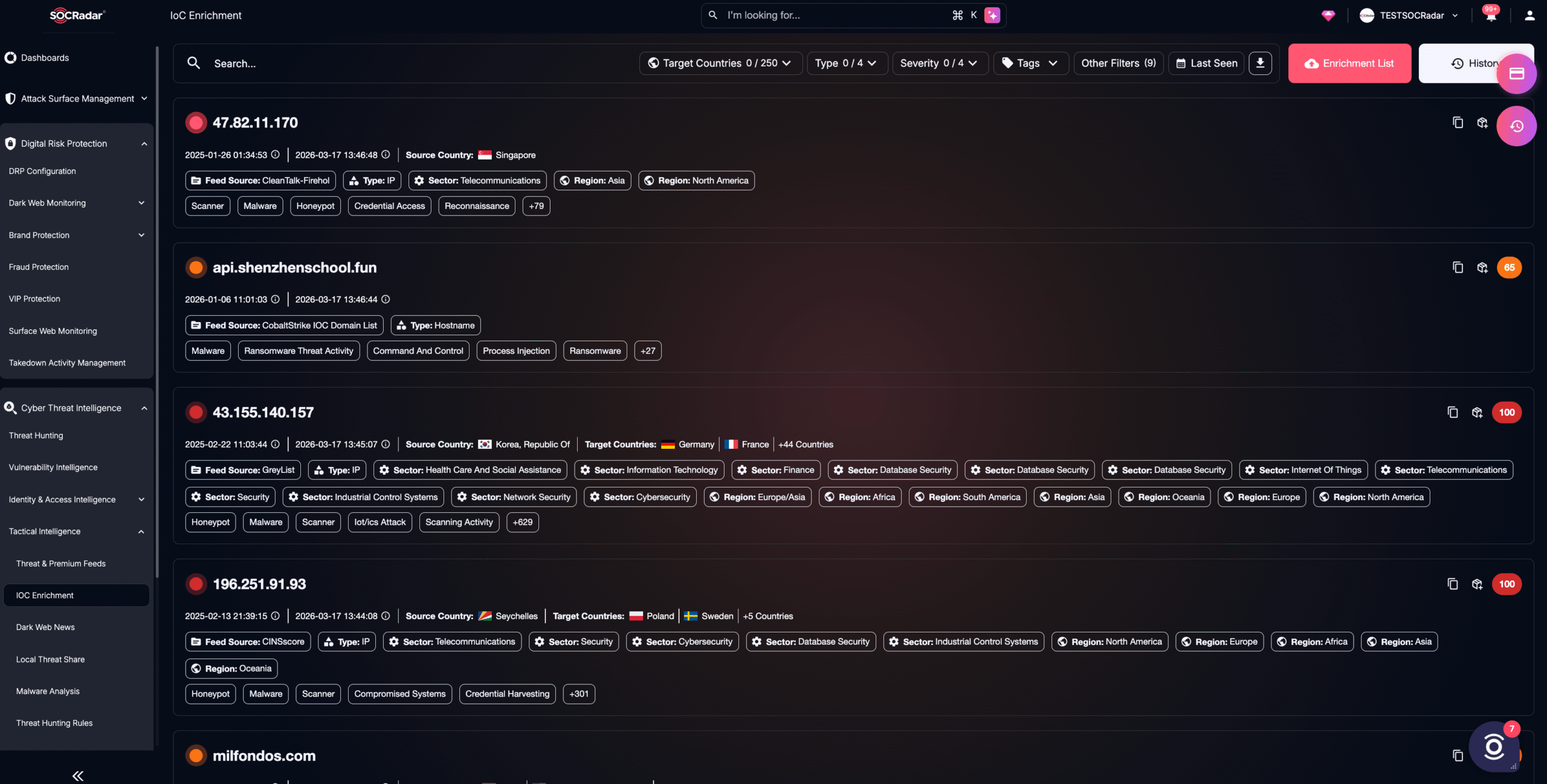
SOCRadar’s Cyber Threat Intelligence module, IoC Enrichment
For teams investigating these indicators, IoC enrichment can add useful context beyond a hash or IP alone. SOCRadar’s IoC Enrichment helps analysts quickly surface related threat intelligence, infrastructure context, and connected activity.
What Is Still Unknown About the Stryker Cyberattack?
Key questions remain unanswered, including how the attackers first gained access, how many devices were ultimately affected, and whether any data theft actually occurred. Stryker also said in its SEC filing that the full restoration timeline was unknown, although by March 17 it said the attack had been contained and recovery was focused on critical business systems.
The financial picture is still developing as well. Stryker has not published a full estimate of operational or recovery costs, but the incident disrupted ordering, manufacturing, and shipping, and the stock fell 3.6% after the breach was disclosed.
Conclusion
The Stryker cyberattack is a warning about where destructive operations are heading next. Attackers do not always need malware to cripple a business. Sometimes all they need is privileged access to the identity and device-management plane.
For CISOs, the message is direct: protect Entra ID, Intune, privileged roles, conditional access, and recovery workflows with the same urgency once reserved for domain admin and perimeter defenses. When the management plane is compromised, your own tools can become the attack.

Table Of Content
Stryker Cyberattack: What You Need to Know
What Happened In the Stryker Cyberattack?
Was the Stryker Cyberattack Caused by Ransomware?
How Did the Attack Work?
Why Is Microsoft Intune Central to This Incident?
Who Was Behind the Stryker Cyberattack?
Why Was Stryker Targeted?
How Many Devices Were Wiped, and Was Data Stolen?
Were Stryker Medical Devices and Patient Services Affected?
What Are the Biggest Security Lessons From the Stryker Attack?
What Should CISOs & SOC Teams Check Right Now?
What Does the Stryker Incident Mean for BYOD and Non-Medtech Organizations?
Are There Public Indicators of Compromise Linked to the Threat Actor Behind the Stryker Attack?
What Is Still Unknown About the Stryker Cyberattack?
Conclusion
Related Articles

Critical Cisco NX-OS Flaws Threaten Nexus Switches
Oct 09, 2026

CVE-2026-21589: Critical Atlassian File Access
Oct 07, 2026

CVE-2026-88779: Citrix NetScaler Zero-Day
Oct 06, 2026

CVE-2026-90970: GitLab AI Gateway RCE
Oct 05, 2026
FortiMail Zero-Day Under Active Exploitation
Oct 02, 2026