
What Is an API Attack?
An API attack is an attempt to abuse an application programming interface to access data, perform unauthorized actions, disrupt service, or exploit the business process behind an application. Attackers target both technical weaknesses and legitimate API functions used in unintended ways.
APIs often expose direct paths to identities, data, transactions, and partner systems. Their predictable requests make discovery and automation efficient. Effective defense requires an accurate inventory, strong identity controls, object-level authorization, input validation, resource limits, and contextual monitoring.
Key Takeaways
- API security begins with discovering every production, legacy, partner, and shadow endpoint.
- Authentication does not replace authorization; every object and action requires a server-side check.
- Business-logic abuse may use valid requests and evade conventional vulnerability scanning.
- Logs should preserve user, token, endpoint, object, decision, and response context.
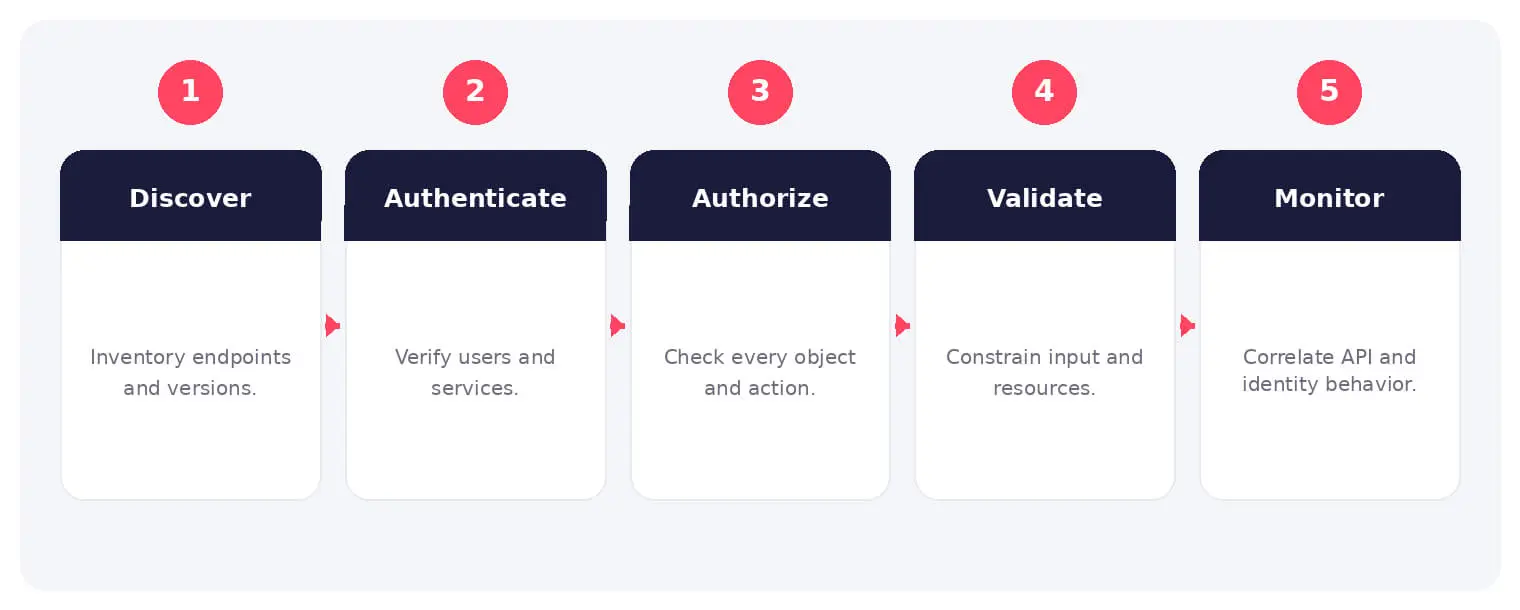
How an API Attack Works
Attackers discover endpoints through documentation, application traffic, JavaScript, mobile clients, errors, leaked schemas, and predictable naming. They test identifiers, parameters, methods, tokens, versions, and rate limits.
Some attacks exploit injection or server-side request forgery. Others change an object ID, replay a request, automate account creation, abuse a promotion, or invoke a sensitive function outside the intended workflow.
Common Types and Techniques
- Broken object-level and function-level authorization
- Weak authentication, token validation, or session handling
- Injection, mass assignment, SSRF, and unsafe input
- Business-logic abuse and unrestricted resource consumption
Security and Business Risks
- Exposure or alteration of customer and business data
- Unauthorized administrative or financial actions
- Service degradation, resource exhaustion, and unexpected cost
- Compromise of connected partners and downstream systems
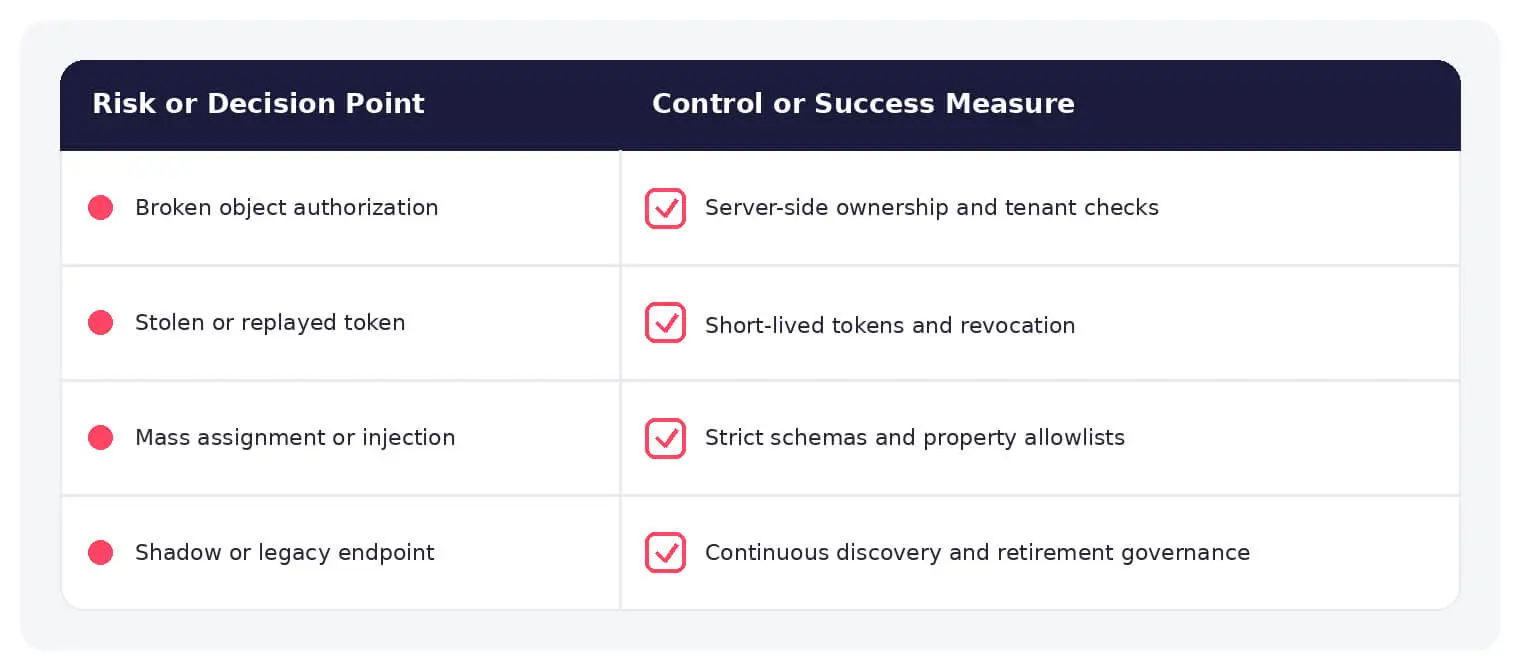
Warning Signs and Detection
Monitor sequential object access, unusual response sizes, token reuse, sudden geography or device changes, repeated authorization failures, abnormal transaction sequences, and resource spikes. Correlate gateway, identity, application, and data-layer telemetry.
Prevention and Response
Maintain a living API inventory, validate tokens, use least-privilege scopes, authorize every object and function, enforce strict schemas, constrain files and URLs, protect secrets, and apply behavior-aware rate limits. Test tenant isolation and negative authorization cases.
How SOCRadar Can Help
SOCRadar combines external asset visibility, threat intelligence, Dark Web monitoring, vulnerability context, and indicator enrichment to help teams identify exposure and investigate activity connected to API attack.
Explore SOCRadar Attack Surface Management or request a demo to strengthen threat-informed prevention and investigation.
Frequently Asked Questions
What Is an API Attack?
An API attack is an attempt to abuse an application programming interface to access data, perform unauthorized actions, disrupt service, or exploit the business process behind an application. Attackers favor APIs because they expose direct paths to identities, data, transactions, and partner systems, and their predictable request structure makes misuse easy to automate at scale.
What Is Broken Object-Level Authorization?
Broken object-level authorization occurs when an API fails to verify that the authenticated caller actually owns or may access a specific object. By changing an ID or identifier in a request, an attacker can read or modify another user’s or tenant’s data. Server-side ownership and tenant checks on every request are the primary defense.
How Does a Business-Logic Attack Differ From an Injection Attack?
Injection attacks submit malformed input to break expected processing, while business-logic abuse uses well-formed, valid requests in an unintended sequence or context, such as replaying a transaction or automating promotion abuse. Because these requests look legitimate, conventional vulnerability scanners often miss them.
How Do Attackers Discover Undocumented API Endpoints?
Endpoints are frequently uncovered through client-side JavaScript, mobile application traffic, public or leaked documentation, verbose error messages, and predictable naming patterns. Old versions and developer deployments stay reachable if they are never decommissioned, which is why endpoint inventory work is continuous rather than a one-time project.
Where Do Attackers Obtain API Keys and Secrets?
Hardcoded credentials in public repositories, tokens embedded in mobile apps, secrets exposed in client-side code, and keys traded on underground forums are common sources. Dark Web monitoring, such as the capability SOCRadar provides, can surface leaked keys and exposed data before they are actively abused.
Which Warning Signs Point to an Ongoing API Attack?
Sequential access to object IDs, unusually large or uniform response sizes, token reuse across geographies or devices, repeated authorization failures, and abnormal transaction sequences or resource spikes all warrant investigation. Correlating gateway, identity, application, and data-layer telemetry helps separate malicious patterns from legitimate traffic.
What Business Damage Can an API Attack Cause?
Consequences include exposure or alteration of customer records, unauthorized financial or administrative actions, service degradation, resource exhaustion, and unexpected cloud costs. Because APIs often connect to partner and downstream systems, a single compromise can extend well beyond the original application.
What Should Teams Do After Detecting an API Attack?
Review logs that retain user, token, endpoint, object, authorization decision, and response context to establish what data and functions the attacker reached. Rotate exposed keys and tokens, check whether partner or downstream systems were affected, and remediate the abused flaw before affected endpoints return to normal service.
How Can Teams Reduce API Attack Risk Over Time?
Maintain a living inventory of production, legacy, partner, and shadow (undocumented or unmanaged) API endpoints; enforce least-privilege scopes with server-side checks on every object and function; and apply strict schema validation and behavior-aware rate limits. Regularly test tenant isolation and negative authorization cases, since these flaws rarely appear in standard scans.
Why Is Authentication Alone Not Enough to Secure an API?
Authentication identifies who is calling, but it does not define what that caller may do. Without per-object and per-function authorization, schema validation, and resource limits, a validly authenticated user can still read another tenant’s data, invoke sensitive functions outside the intended workflow, or exhaust backend resources.

Oct 16, 2026
CVE-2026-102764: BeyondTrust Zero-Day Exploited
BeyondTrust has disclosed CVE-2026-102764, a critical Remote Support vulnerability exploited as a zero-day weeks before customers received a patch. The attack began…
Oct 15, 2026
Cisco Secure Email & PAN-OS Zero-Days Exploited
Cisco Secure Email & PAN-OS Zero-Days Exploited Cisco and Palo Alto Networks have patched two actively exploited zero-day vulnerabilities that can lead…
Oct 15, 2026
SOCRadar Splunk Integration: New MSSP and Vulnerability Apps
SOCRadar Splunk Integration: New MSSP and Vulnerability Apps Your analysts live in Splunk. Your external risk does not: SOCRadar alarms for dozens…
Intelligence in your inbox every Thursday.
Join 30,000+ security professionals reading SOCRadar research.
Subscribe