
What Is Hacktivism?
Hacktivism is the use of digital intrusion, disruption, exposure, or influence activity to advance a political, ideological, or social cause. Participants may be established collectives, temporary online communities, sympathetic individuals, insiders, or actors using an activist identity as cover.
Campaigns often respond quickly to elections, conflicts, court decisions, corporate actions, and public controversies. Claims can be exaggerated, recycled, or fabricated to attract attention, so defenders should verify technical evidence before accepting an actor narrative.
Key Takeaways
- Hacktivism seeks attention and influence as well as technical impact.
- DDoS, defacement, data leaks, doxxing, account takeover, and influence operations are recurring tactics.
- Public claims require validation because old data and unrelated outages are frequently misrepresented.
- Organizations should align technical response, executive decisions, legal review, and public communication.
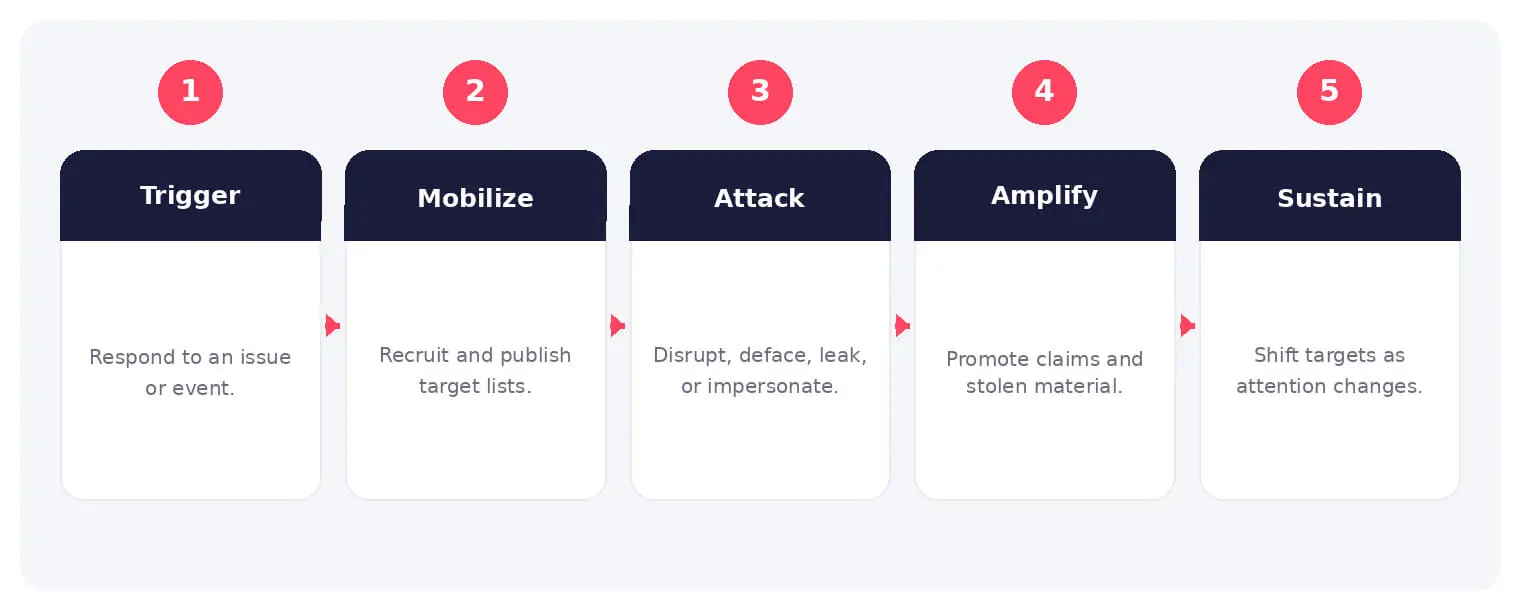
How Hacktivism Works
Actors select a target associated with an issue, then recruit supporters and announce operations through public or private channels. Low-cost tools and shared target lists allow loosely coordinated participants to generate volume quickly.
Operations may combine DDoS, website alteration, credential abuse, data theft, doxxing, false claims, and amplification on social platforms. The publicity cycle can continue after technical containment.
Common Types and Techniques
- Distributed denial-of-service and traffic flooding
- Website defacement and account takeover
- Data theft, leaks, and doxxing
- Influence operations and exaggerated breach claims
Security and Business Risks
- Public-facing service disruption and support demand
- Exposure of personal or organizational information
- Reputational pressure and misinformation
- Physical safety concerns for targeted individuals
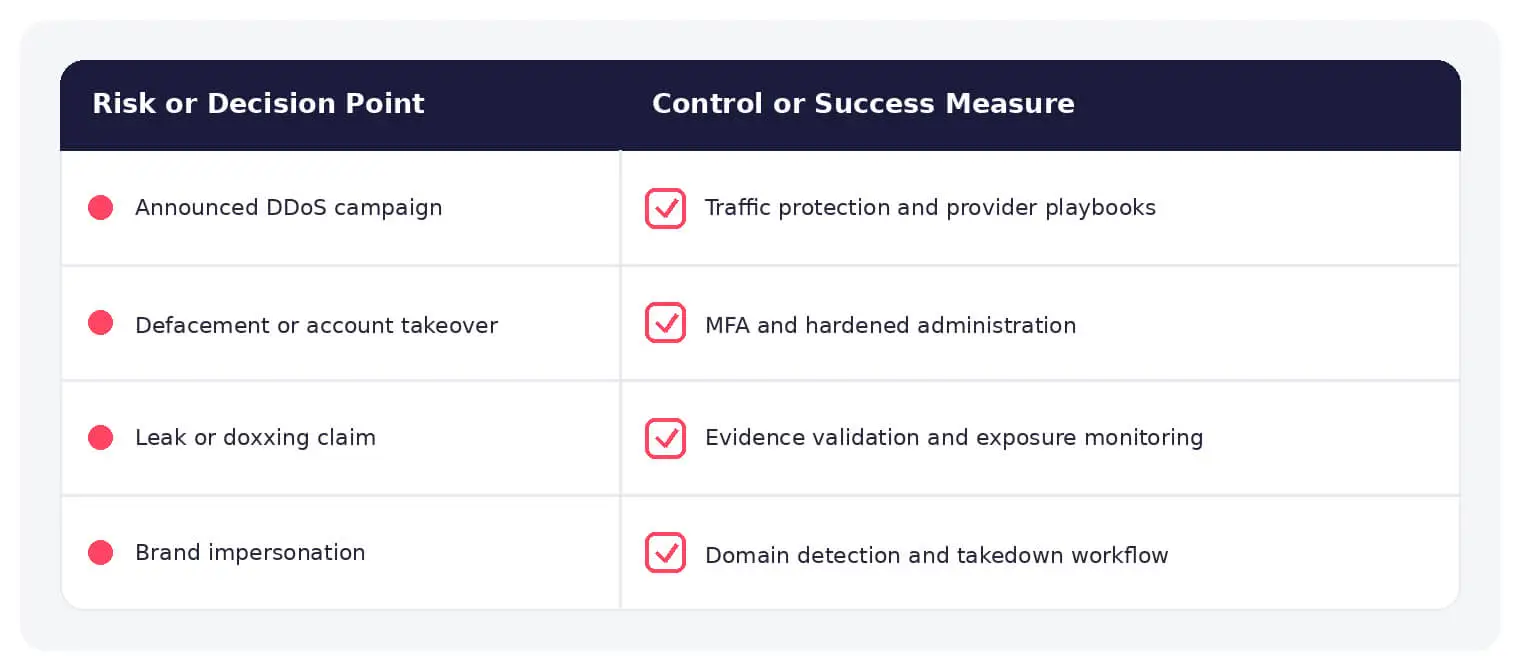
Warning Signs and Detection
Monitor campaign announcements, target lists, impersonation, leaked credentials, look-alike domains, traffic anomalies, and changes to public systems. Validate claims against logs, timestamps, sample data, and affected assets before communicating conclusions.
Prevention and Response
Protect public services with DDoS readiness, strong administration and MFA, rapid patching, resilient hosting, current contact trees, and practiced communications. Monitor external channels while distinguishing credible intent and capability from attention-seeking claims.
How SOCRadar Can Help
SOCRadar combines external asset visibility, threat intelligence, Dark Web monitoring, vulnerability context, and indicator enrichment to help teams identify exposure and investigate activity connected to hacktivism.
Explore SOCRadar Brand Protection or request a demo to strengthen threat-informed prevention and investigation.
Frequently Asked Questions
What Is Hacktivism and Who Carries It Out?
Hacktivism is the use of digital intrusion, disruption, exposure, or influence activity to advance a political, ideological, or social cause. Participants range from established collectives and temporary online communities to sympathetic individuals, insiders, or actors who use an activist identity as cover for other motives.
What Tactics Do Hacktivists Commonly Use?
Recurring techniques include:
- Distributed denial-of-service attacks and traffic flooding
- Website defacement and account takeover
- Data theft, leaks, and doxxing
- Influence operations, including exaggerated or recycled breach claims
Why Do Hacktivists Announce Their Operations Publicly?
Attention and influence are central objectives, not side effects. Announcements, shared target lists, and hashtags recruit loosely coordinated participants, pressure the target, and shape public narratives. The publicity cycle can continue even after the technical activity has been contained.
How Can an Organization Verify a Hacktivist Breach Claim?
Compare the claim against internal evidence such as logs, timestamps, sample data, and whether the listed assets were actually affected. Many claims recycle old leaks, attribute unrelated outages to the group, or overstate the level of access. Independent technical review should come before any public confirmation.
What Warning Signs Often Precede a Hacktivist Campaign?
Watch for campaign announcements and target lists that name your organization, brand impersonation, leaked credentials, look-alike domains, and unusual traffic patterns against public-facing systems. Separating credible intent and capability from attention-seeking posts helps teams avoid spending effort on noise.
What Should an Organization Do First When Targeted?
Contain the immediate technical impact, preserve evidence, and determine whether any exposed data is genuine. Before responding publicly, align security, legal, executive, and communications teams, and avoid repeating or amplifying unverified actor claims.
How Can Organizations Reduce Their Risk Before a Campaign Begins?
Maintain DDoS readiness and resilient hosting, enforce strong administration and MFA on public-facing services, apply patches quickly, and keep escalation contact lists current. Practiced incident communications and routine monitoring of external channels support a controlled response instead of a reactive one.
What Business Risks Come with Hacktivist Targeting?
Service disruption and surging support demand are often the most visible effects, but campaigns can also expose personal or organizational information, create reputational pressure through misinformation, and raise physical safety concerns for named individuals. Some of these impacts persist after services are restored.
Can Hacktivism Ever Be Legal?
Peaceful digital protest exists, but unauthorized access, service disruption, data theft, threats, and publication of protected information can violate laws in many jurisdictions. Legal outcomes depend on the specific conduct and where it occurs, so most hacktivist techniques carry real legal risk even when framed as activism.
How Is Hacktivism Different from Cyberterrorism?
Hacktivism generally pursues political or social influence through protest, exposure, or disruption, while cyberterrorism seeks to create fear or severe societal harm. The labels are contested, so sound analysis describes observed behavior and impact rather than relying on what an actor calls itself.

Oct 16, 2026
CVE-2026-102764: BeyondTrust Zero-Day Exploited
BeyondTrust has disclosed CVE-2026-102764, a critical Remote Support vulnerability exploited as a zero-day weeks before customers received a patch. The attack began…

Oct 15, 2026
Cisco Secure Email & PAN-OS Zero-Days Exploited
Cisco Secure Email & PAN-OS Zero-Days Exploited Cisco and Palo Alto Networks have patched two actively exploited zero-day vulnerabilities that can lead…
Oct 15, 2026
SOCRadar Splunk Integration: New MSSP and Vulnerability Apps
SOCRadar Splunk Integration: New MSSP and Vulnerability Apps Your analysts live in Splunk. Your external risk does not: SOCRadar alarms for dozens…
Intelligence in your inbox every Thursday.
Join 30,000+ security professionals reading SOCRadar research.
Subscribe