


Mar 10, 2026
Jun 25, 2026
5 Mins Read
Sep 13, 2026
Table Of Content
Related Articles

SMS Bombing

Threat Actors
Jan 08, 2026
Dark Web Monitoring
Feb 19, 2026

Ransomware
Jan 31, 2026
OSINT Framework
Apr 17, 2026

What Is a Website Defacement Attack?
A website defacement attack changes a site without authorization, typically replacing pages, images, or messages to embarrass an organization, promote a cause, spread propaganda, or demonstrate access. The visible alteration may be only one part of a broader compromise.
Defacement can follow stolen administrator credentials, a vulnerable content management system, insecure file upload, compromised hosting, or unauthorized deployment access. Responders should not assume the incident is limited to appearance or restore content before preserving evidence.
Key Takeaways
- Homepage and content replacement is one important form or technique.
- Detection depends on correlated technical and operational context.
- Prevention should reduce both initial access and post-compromise impact.
- Response must preserve evidence and remove every reusable access path.
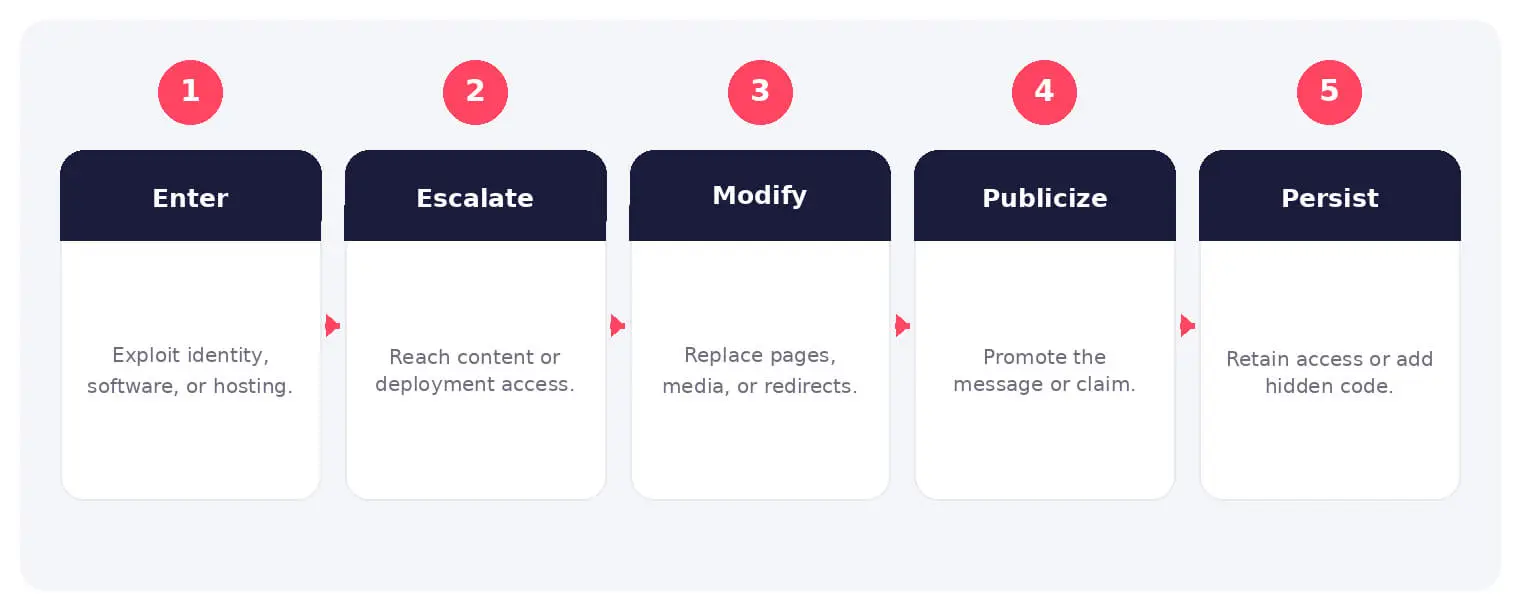
How a Website Defacement Attack Works
The sequence shown above is not mandatory in every case, but it provides a practical way to connect initial opportunity with the actor’s objective. Individual steps may occur in parallel, repeat, or be completed by different participants.
Defacement can follow stolen administrator credentials, a vulnerable content management system, insecure file upload, compromised hosting, or unauthorized deployment access. Responders should not assume the incident is limited to appearance or restore content before preserving evidence.
Common Types and Techniques
- Homepage and content replacement
- Malicious redirects and injected messages
- DNS or hosting account manipulation
- Mass defacement through shared platforms
Security and Business Risks
- Loss of public trust and brand credibility
- Malware or phishing delivered to visitors
- Evidence of deeper server or identity compromise
- Operational, legal, and communications cost
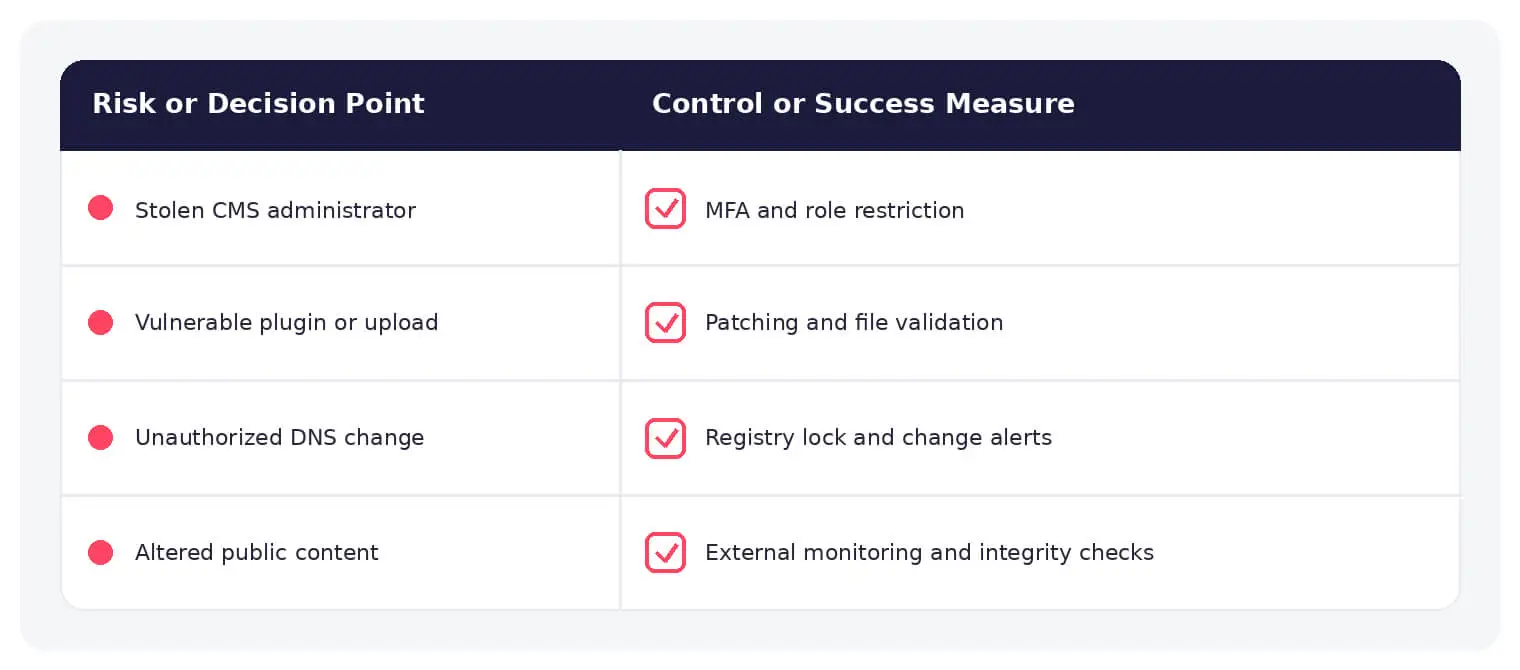
Warning Signs and Detection
Monitor file integrity, CMS and hosting logins, deployment activity, DNS changes, administrator actions, unexpected redirects, and public-page changes. External monitoring can detect alteration before internal teams notice.
Prevention and Response
Use phishing-resistant MFA, patch CMS components, remove unused plugins, limit write and deployment permissions, protect DNS and hosting accounts, maintain verified backups, and separate recovery credentials.
How SOCRadar Can Help
SOCRadar combines external asset visibility, threat intelligence, Dark Web monitoring, vulnerability context, and indicator enrichment to help teams identify exposure and investigate activity connected to website defacement attack.
Explore SOCRadar Brand Protection or request a demo to strengthen threat-informed prevention and investigation.
Frequently Asked Questions
What Counts as a Website Defacement Attack?
A website defacement attack changes a site without authorization, typically replacing pages, images, or text with attacker-controlled messages. Motives range from ideology and publicity to reputation damage or a demonstration of access. The visible alteration may be only one part of a broader compromise.
Why Is Website Defacement More Than a Cosmetic Incident?
Defacement proves that someone obtained unauthorized access to the site, its CMS, or its hosting environment. That same access can support malware delivery to visitors, data theft, hidden persistence, or compromised administrator identities. Responders should treat it as a security incident, not an appearance problem.
How Do Attackers Gain the Access Needed to Deface a Site?
Common entry paths include stolen administrator credentials, vulnerable CMS components or plugins, insecure file upload functionality, compromised hosting accounts, and unauthorized access to deployment pipelines. Once write access to web content, DNS, or hosting is obtained, altering public pages can follow quickly.
What Techniques Appear Besides Replacing the Homepage?
Defacement can also involve malicious redirects, injected scripts or messages, DNS or hosting account manipulation, and mass defacement of many sites through a shared platform or provider. Some changes are loud and public, while others quietly alter content to serve visitors malicious code or misleading information.
How Can Organizations Detect a Defacement Quickly?
Useful signals include file integrity alerts, unusual CMS or hosting logins, unexpected deployment activity, DNS changes, and unexpected redirects. External page monitoring can flag altered public content before internal teams notice, which matters outside business hours and on weekends.
What Should Responders Do Before Restoring a Defaced Website?
Preserve evidence first by capturing logs, the modified files, and the current page state before anything is overwritten. Then remove reusable access paths: unauthorized accounts, exposed credentials, and unnecessary write or deployment permissions. A password reset alone may not end a stolen session on every platform, so active sessions should be revoked where the platform supports it.
How Should a Defaced Site Be Restored Safely?
Restore from a verified backup that predates the compromise, and confirm the backup itself has not been altered. Patch or close the original entry point before the site returns to production, then monitor file integrity, logins, and page content closely for repeated changes.
Which Controls Reduce the Risk of Website Defacement?
Layered controls reduce both initial access and post-compromise impact:
- Phishing-resistant MFA on CMS, hosting, and DNS accounts
- Timely patching of CMS core, themes, and plugins, with unused plugins removed
- Restricted write and deployment permissions limited to what each role requires
- Protected DNS and hosting accounts with monitored changes
- Verified backups kept with separate recovery credentials
What Business Damage Can a Defacement Cause?
Public trust and brand credibility can suffer quickly when visitors see attacker content on a trusted domain. Injected content can also expose visitors to malware or phishing, and the incident often carries operational, legal, and communications costs while access paths are investigated and closed.
Why Do Attackers Leave a Visible Message Instead of Staying Hidden?
Public messages can serve ideology, publicity, reputation damage, or a demonstration of capability. In some cases the defacement also distracts attention from a quieter intrusion, which is why responders should investigate for persistence and data access beyond the visible change.