
What Is CAASM?
Cyber Asset Attack Surface Management (CAASM) consolidates asset data from existing security and IT systems to create a normalized view of devices, identities, applications, cloud resources, and their controls.
CAASM focuses on internal asset visibility, coverage gaps, ownership, and control posture. It complements External Attack Surface Management, which discovers internet-facing assets from an outside-in perspective.
Key Takeaways
- Asset inventory and reconciliation is a central category or capability.
- Reliable assessment requires identity, timing, source, and operational context.
- Detection should correlate external, identity, device, network, and cloud evidence.
- Response should preserve evidence and remove every reusable access path.
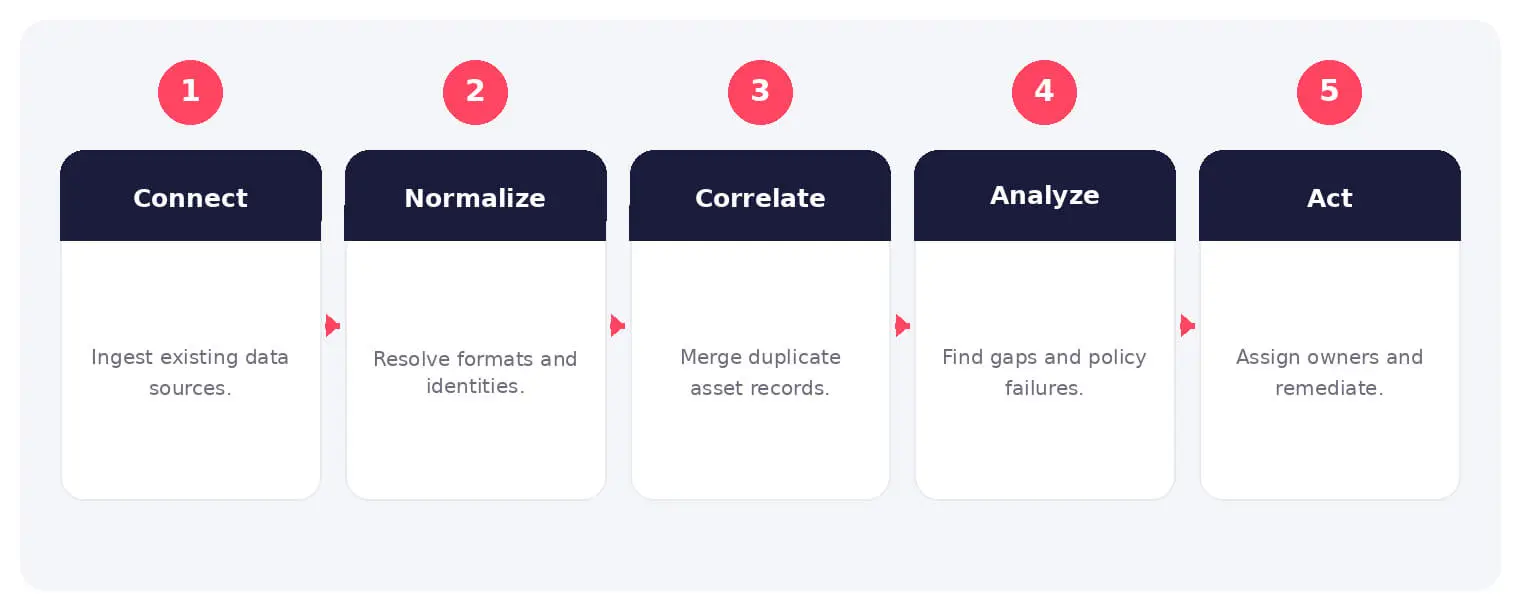
How CAASM Works
The sequence above provides a practical operating model. Individual stages may overlap, repeat, or involve different people and services, so analysts should validate each step against the available evidence.
CAASM focuses on internal asset visibility, coverage gaps, ownership, and control posture. It complements External Attack Surface Management, which discovers internet-facing assets from an outside-in perspective.
Common Types and Techniques
- Asset inventory and reconciliation
- Security-control coverage analysis
- Cloud, identity, and application visibility
- Policy queries and remediation workflows
Security and Business Risks
- Unknown or unmanaged assets
- Conflicting inventory and ownership data
- Missing endpoint or vulnerability controls
- Slow investigation and remediation
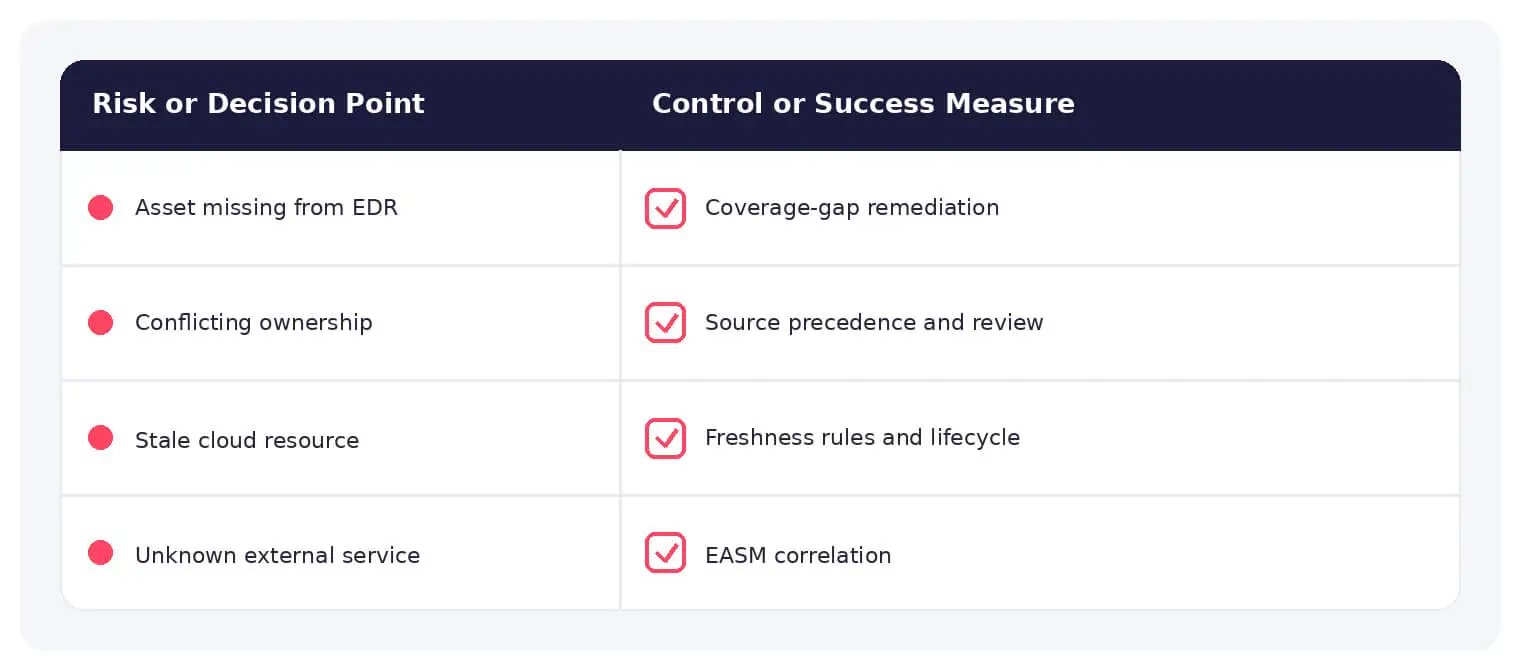
Warning Signs and Detection
Compare records across endpoint, cloud, identity, vulnerability, network, and configuration systems to identify stale, duplicate, or uncovered assets.
Prevention and Response
Define authoritative sources and ownership, normalize identifiers, set freshness rules, monitor connector health, and connect findings to accountable remediation workflows.
How SOCRadar Can Help
SOCRadar combines external visibility, threat intelligence, Dark Web monitoring, brand protection, vulnerability context, and indicator enrichment to help teams investigate exposure connected to CAASM.
Explore SOCRadar Attack Surface Management or request a demo to strengthen threat-informed prevention and response.
Frequently Asked Questions
What Is Cyber Asset Attack Surface Management (CAASM)?
CAASM is a practice and tool category that consolidates asset data from existing security and IT systems, such as endpoint, cloud, identity, and vulnerability platforms, into a normalized view of devices, identities, applications, and their controls. Its focus is internal: visibility, coverage gaps, ownership, and control posture across the environment.
How Does CAASM Differ From External Attack Surface Management (EASM)?
CAASM works from the inside out, reconciling data from tools already deployed to show what exists in the environment and how well it is protected. EASM discovers internet-facing assets from an outside-in perspective, revealing exposed services and shadow assets. The two approaches complement each other rather than replace one another.
Why Are Unknown or Unmanaged Assets a Problem?
Assets missing from inventory, such as unmanaged endpoints, orphaned cloud resources, or untracked service accounts, often lack endpoint agents, patching, and vulnerability scanning. Attackers can exploit these gaps, and responders struggle to scope incidents when affected systems cannot be mapped to an owner. Conflicting inventory and ownership data between tools compounds both issues.
How Does CAASM Collect Asset Data?
CAASM typically relies on API integrations with existing tools rather than deploying new agents. It queries endpoint management, cloud platforms, identity providers, vulnerability scanners, and configuration systems, then normalizes identifiers so records describing the same asset can be reconciled. Data freshness and connector health directly affect how reliable the resulting picture is.
How Can Teams Identify Stale, Duplicate, or Uncovered Assets?
Compare records across endpoint, cloud, identity, vulnerability, network, and configuration systems. Assets that appear in one source but not others, lack a clear owner, or have no endpoint or vulnerability controls are candidates for reconciliation. Reviewing the identity, timing, and source of each record helps distinguish genuine coverage gaps from simple data sync issues.
What Steps Support a Reliable CAASM Program?
Define authoritative sources for each asset type, assign ownership, and normalize identifiers so records merge correctly. Set freshness rules for how long data remains trusted, monitor connector health for failed integrations, and connect findings to remediation workflows with accountable owners. Without these operational foundations, even a consolidated view drifts out of date.
How Does CAASM Improve Incident Response?
During an incident, analysts can quickly determine which devices, identities, and cloud resources are affected, whether security controls covered them, and who owns them. This shortens scoping and containment decisions and supports the goal of removing every reusable access path, such as exposed credentials or unmanaged endpoints. Correlating evidence across device, identity, network, and cloud sources also reduces the chance of missing related systems.
Which Coverage Gaps Does CAASM Commonly Reveal?
Typical findings include endpoints missing detection or encryption agents, assets excluded from vulnerability scanning, cloud resources without security controls, identities lacking multi-factor authentication, and applications with stale ownership. Security-control coverage analysis maps each asset against deployed controls, making these gaps queryable instead of buried in individual consoles.
Is CAASM Only Useful for Cloud Environments?
No. Cloud visibility is an important component, but CAASM also covers on-premises endpoints, servers, network assets, identities, and applications by reconciling data from the tools already managing them. Hybrid environments often benefit the most because records for the same asset tend to be split across cloud and on-premises systems.
Should CAASM Replace an Existing Asset Inventory or CMDB?
In most cases, CAASM augments existing inventories rather than replacing them. It consolidates and reconciles data from CMDBs, endpoint platforms, and cloud provider inventories, flagging conflicts and gaps instead of acting as the sole system of record. Organizations should still designate authoritative sources so conflicting records can be resolved deliberately.

Oct 16, 2026
CVE-2026-102764: BeyondTrust Zero-Day Exploited
BeyondTrust has disclosed CVE-2026-102764, a critical Remote Support vulnerability exploited as a zero-day weeks before customers received a patch. The attack began…

Oct 15, 2026
Cisco Secure Email & PAN-OS Zero-Days Exploited
Cisco Secure Email & PAN-OS Zero-Days Exploited Cisco and Palo Alto Networks have patched two actively exploited zero-day vulnerabilities that can lead…
Oct 15, 2026
SOCRadar Splunk Integration: New MSSP and Vulnerability Apps
SOCRadar Splunk Integration: New MSSP and Vulnerability Apps Your analysts live in Splunk. Your external risk does not: SOCRadar alarms for dozens…
Intelligence in your inbox every Thursday.
Join 30,000+ security professionals reading SOCRadar research.
Subscribe