
What Is a DNS Server?
A Domain Name System (DNS) server answers or forwards queries that map domain names to records such as IP addresses, mail servers, and service locations.
Recursive resolvers locate and cache answers for clients, while authoritative servers publish records for domains they control. Some systems perform both roles, but separating their purpose and exposure reduces risk.
Key Takeaways
- A Domain Name System (DNS) server answers or forwards queries that map domain names to records such as IP addresses, mail servers, and service locations.
- Recursive resolvers locate and cache answers for clients, while authoritative servers publish records for domains they control. Some systems perform both roles, but separating their purpose and exposure reduces risk.
- Cache poisoning and DNS hijacking is a primary concern.
- Strong programs combine prevention, continuous visibility, ownership, and tested response.
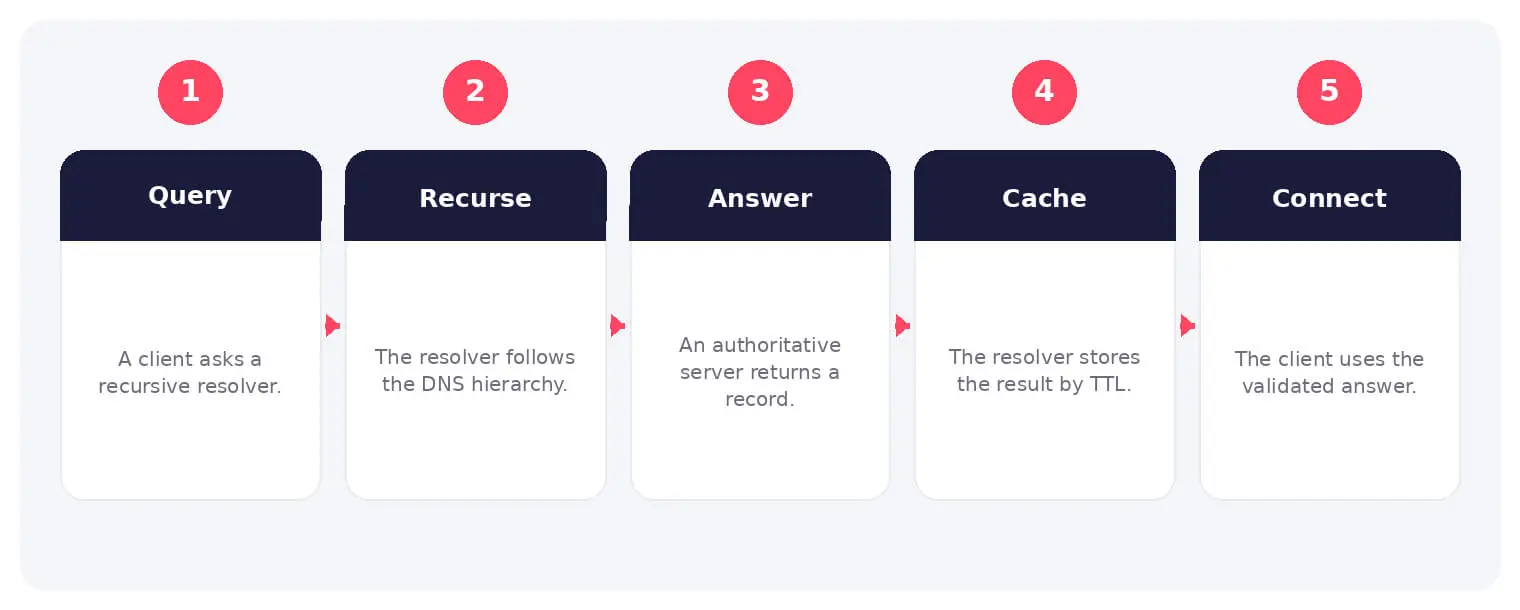
How It Works
The operating flow above turns a broad security objective into observable steps. Exact implementations vary, but each stage needs an owner, trusted inputs, documented policy, and evidence that analysts can use during investigation and review.
Recursive resolvers locate and cache answers for clients, while authoritative servers publish records for domains they control. Some systems perform both roles, but separating their purpose and exposure reduces risk.
Common Types and Capabilities
- Recursive and caching resolvers
- Authoritative name servers
- Root and top-level-domain servers
- Forwarding, filtering, and local DNS services
Security and Business Risks
- Cache poisoning and DNS hijacking
- Reflection and amplification attacks
- Unauthorized zone transfers or record changes
- Outages, censorship, and traffic redirection
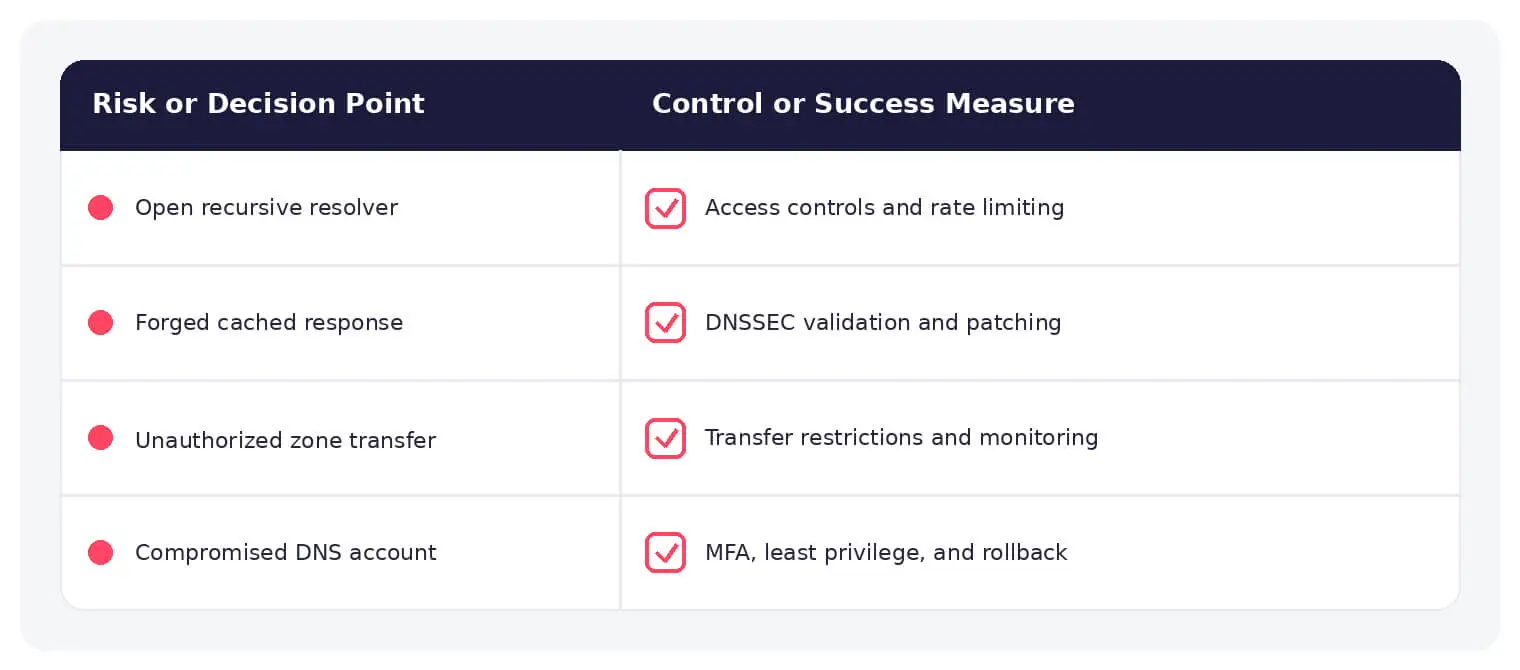
Warning Signs and Detection
Monitor unexpected record or name-server changes, cache anomalies, open recursion, amplification traffic, failed DNSSEC validation, zone-transfer attempts, NXDOMAIN spikes, and management access from unusual sources.
Best Practices
Separate recursive and authoritative roles, disable open recursion, restrict zone transfers, protect registrar and DNS accounts with MFA, patch servers, use response-rate limiting, monitor changes, and deploy DNSSEC appropriately.
How SOCRadar Can Help
SOCRadar adds outside-in asset visibility, threat intelligence, exposure context, and continuous monitoring that help security teams validate and prioritize risks related to DNS server. This context complements internal cloud, data, network, and identity controls.
Explore SOCRadar Attack Surface Management or request a demo to strengthen threat-informed prevention and response.
Frequently Asked Questions
What is the main purpose of dns server?
A Domain Name System (DNS) server answers or forwards queries that map domain names to records such as IP addresses, mail servers, and service locations.
What is a common security risk?
Cache poisoning and DNS hijacking.
What should security teams monitor?
Monitor unexpected record or name-server changes, cache anomalies, open recursion, amplification traffic, failed DNSSEC validation, zone-transfer attempts, NXDOMAIN spikes, and management access from unusual sources.
What is the first practical step?
Separate recursive and authoritative roles, disable open recursion, restrict zone transfers, protect registrar and DNS accounts with MFA, patch servers, use response-rate limiting, monitor changes, and deploy DNSSEC appropriately.

Oct 26, 2026
Node2Shell: Brotli Flaw Hits Python Packages
The Node2Shell Brotli flaw (CVE-2026-111497), disclosed alongside Node.js fixes on October 21, 2026, also reaches Python through the PyPI Brotli and brotlicffi…

Oct 26, 2026
Finaxis, WoWInstaller, Moodle, MyHairCare & HT Médica Leaks
SOCRadar Dark Web Team identified several underground posts, including an alleged Finaxis.cloud data sale involving 400GB of information, a resurfaced WoWInstaller database…
Oct 23, 2026
CVE-2026-114625: Actively Exploited VeloCloud Orchestrator Flaw Grants Superuser Access
CVE-2026-114625 is an actively exploited SQL injection flaw in VeloCloud Orchestrator that lets authenticated users gain superuser operator privileges…
Intelligence in your inbox every Thursday.
Join 30,000+ security professionals reading SOCRadar research.
Subscribe