What Is Tactical Cyber Threat Intelligence?
Tactical cyber threat intelligence explains how adversaries conduct attacks through their tactics, techniques, procedures, tools, and operational patterns.
It helps security architects, hunters, detection engineers, and responders translate observed adversary behavior into control improvements. Tactical intelligence lasts longer than many technical indicators but still needs versioning as actors change tools and methods.
Key Takeaways
- Tactical cyber threat intelligence explains how adversaries conduct attacks through their tactics, techniques, procedures, tools, and operational patterns.
- It helps security architects, hunters, detection engineers, and responders translate observed adversary behavior into control improvements. Tactical intelligence lasts longer than many technical indicators but still needs versioning as actors change tools and methods.
- Generic TTP lists without local relevance is a primary concern.
- Effective programs combine clear scope, evidence, accountable ownership, and continuous review.
How It Works
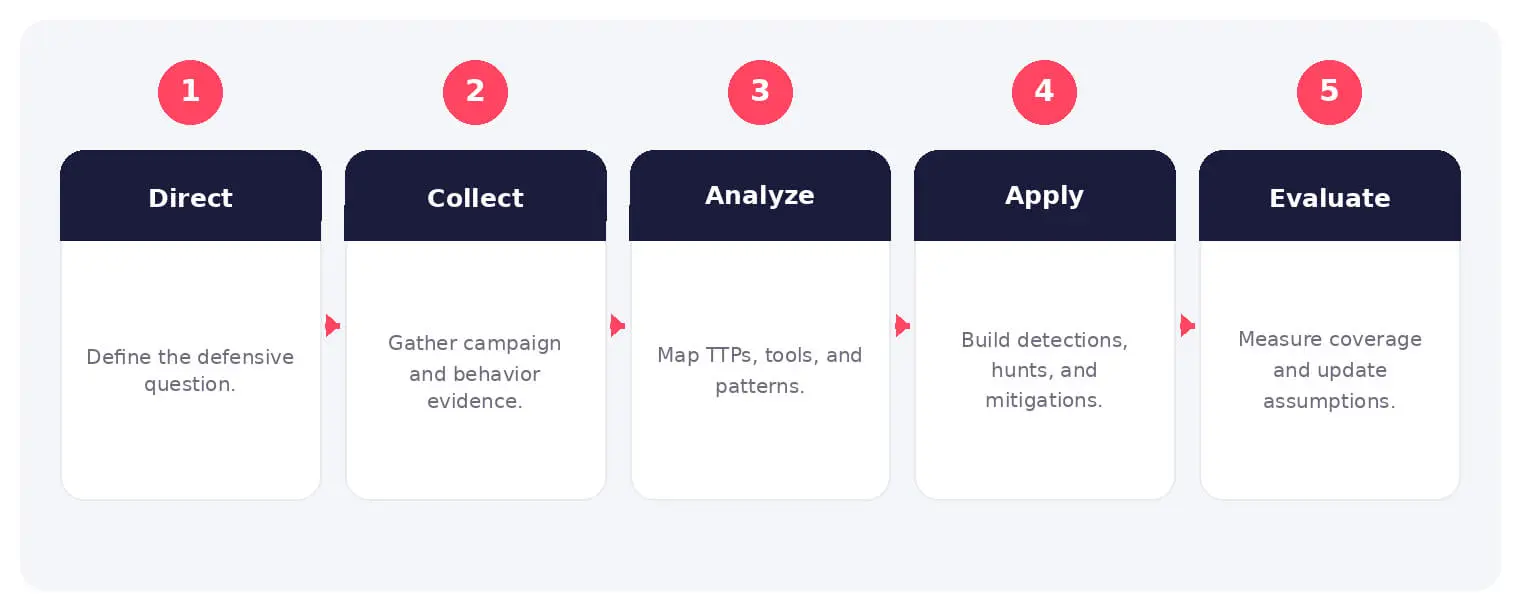
The operating flow above turns the concept into observable steps. Exact implementations vary, but each stage needs accountable ownership, trusted inputs, documented policy, and evidence that practitioners can use during review and decision-making.
It helps security architects, hunters, detection engineers, and responders translate observed adversary behavior into control improvements. Tactical intelligence lasts longer than many technical indicators but still needs versioning as actors change tools and methods.
Common Types and Capabilities
- MITRE ATT&CK technique analysis
- Campaign and intrusion-chain reporting
- Detection and hunting guidance
- Control-gap and emulation assessments
Security and Business Risks
- Generic TTP lists without local relevance
- Attribution bias and copied reporting
- Detections that lack required telemetry
- Stale assumptions about actor behavior
Warning Signs and Detection
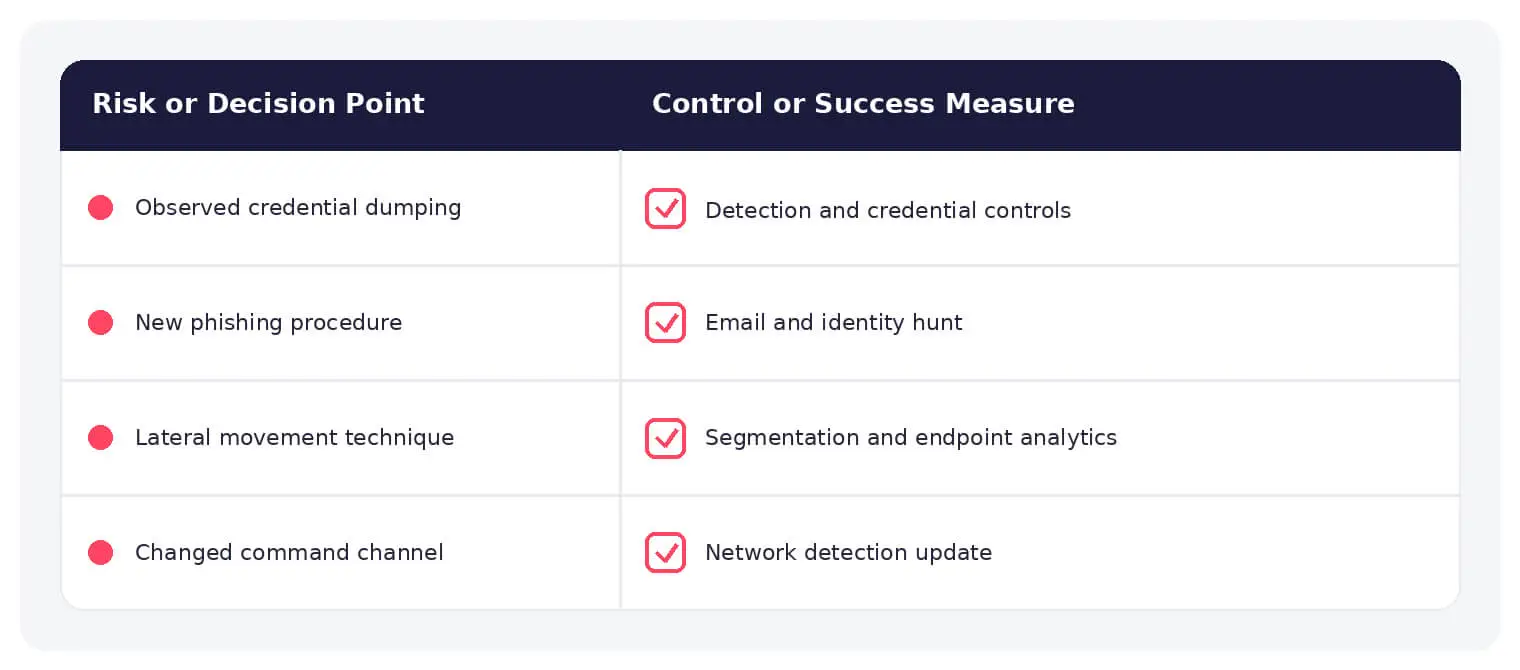
Monitor changes in delivery methods, execution, credential access, persistence, lateral movement, command and control, and exfiltration, then compare observed behaviors with available telemetry, current detections, control coverage, and recent analyst cases.
Best Practices
Start with priority threats, record source and confidence, map evidence rather than labels, connect TTPs to data sources, test detections, validate mitigations, track changes over time, and feed incident outcomes back into intelligence requirements.
How SOCRadar Can Help
SOCRadar adds external visibility, threat intelligence, exposure context, and continuous monitoring to help teams validate and prioritize risks related to tactical threat intelligence. This context complements internal engineering, governance, vulnerability, and security operations controls.
Explore SOCRadar Cyber Threat Intelligence or request a demo to strengthen threat-informed prevention and response.
Frequently Asked Questions
What Does Tactical Cyber Threat Intelligence Include?
Tactical intelligence documents how adversaries operate: the tactics they pursue, the techniques and procedures they use, the tools they deploy, and the operational patterns that link intrusions together. It is written for practitioners such as detection engineers, threat hunters, and incident responders rather than executive audiences. Because it describes behavior instead of single indicators, it typically stays relevant longer than hashes, IP addresses, or domain lists.
How Is Tactical Intelligence Different from Strategic and Operational Intelligence?
Strategic intelligence addresses which actors matter and why, supporting leadership and investment decisions, while operational intelligence focuses on specific campaigns and actor capabilities. Tactical intelligence sits closer to the adversary’s tradecraft, describing how intrusions are executed so defenders can build detections, tune controls, and hunt for behavior. Technical indicators complement all three, but they age faster than behavioral descriptions.
What Role Does MITRE ATT&CK Play in Tactical Threat Intelligence?
MITRE ATT&CK provides a shared matrix of adversary tactics and techniques that gives teams a common language for reporting, mapping, and measurement. Analysts use it to align intelligence reporting with internal telemetry, measure detection coverage, and prioritize gaps. Many organizations also use ATT&CK-based adversary emulation to test whether documented procedures hold up in practice.
What Is the Biggest Risk in a Tactical Intelligence Program?
The most common failure is producing generic TTP lists that lack relevance to the organization’s actual threat profile. Other frequent issues include:
- Copied vendor reporting and attribution bias that add authority without local value
- Detections that reference techniques the environment cannot observe because required telemetry is missing
- Stale assumptions about actor behavior that are never revisited as tools and methods change
How Do Teams Turn TTP Intelligence into Working Detections?
Start by mapping each reported technique to the data sources that can observe it, such as process creation logs, authentication events, or network traffic. Write or adapt analytics against that telemetry, test them with controlled emulation, and record the confidence and evidence behind each mapping. A technique without a viable data source should trigger a logging or visibility decision rather than a detection that quietly never fires.
What Warning Signs Suggest Adversary Tactics Are Changing?
Watch for shifts in delivery methods, execution behavior, credential access, persistence mechanisms, lateral movement, command and control, and exfiltration patterns. Comparing newly observed behavior against current detections, control coverage, and recent analyst cases helps confirm whether a change is real or simply noise in reporting.
How Long Does Tactical Intelligence Remain Useful?
Behavioral descriptions usually outlast individual indicators, but they are not permanent. Threat actors retire tools, rotate infrastructure, and adjust procedures, so TTP assessments need versioning and scheduled review. Tracking changes over time also produces its own insight into how an actor’s tradecraft evolves.
How Should Teams Validate Their Detections and Mitigations?
Run control-gap assessments and adversary emulation exercises that execute mapped techniques against production-equivalent telemetry. Purple team testing pairs intelligence with engineering so both detection logic and preventive controls are exercised together. Feeding the results back into intelligence requirements keeps the program aligned with what the environment can actually see and stop.
How Does Tactical Intelligence Support Incident Response and Threat Hunting?
During an incident, documented TTPs help responders anticipate an attacker’s likely next steps, hunt for persistence, and scope the intrusion faster. For proactive hunting, behavioral intelligence provides hypotheses to test against telemetry rather than waiting for a matching indicator. Linking incident outcomes back to intelligence requirements closes the loop between response and collection.
What Is a Common Misconception About Tactical TTP Reporting?
A frequent mistake is treating actor labels and attribution as the deliverable instead of the underlying evidence. Mapping concrete observed behaviors to techniques gives defenders something actionable regardless of which group performed them. Without that evidence mapping, reports become difficult to act on and hard to maintain as actors change.
Oct 16, 2026
CVE-2026-102764: BeyondTrust Zero-Day Exploited
BeyondTrust has disclosed CVE-2026-102764, a critical Remote Support vulnerability exploited as a zero-day weeks before customers received a patch. The attack began…
Oct 15, 2026
Cisco Secure Email & PAN-OS Zero-Days Exploited
Cisco Secure Email & PAN-OS Zero-Days Exploited Cisco and Palo Alto Networks have patched two actively exploited zero-day vulnerabilities that can lead…
Oct 15, 2026
SOCRadar Splunk Integration: New MSSP and Vulnerability Apps
SOCRadar Splunk Integration: New MSSP and Vulnerability Apps Your analysts live in Splunk. Your external risk does not: SOCRadar alarms for dozens…
Intelligence in your inbox every Thursday.
Join 30,000+ security professionals reading SOCRadar research.
Subscribe