What Is Threat Intelligence?
Threat intelligence is evidence-based knowledge about threats that helps a defined audience make a security or business decision.
Useful intelligence is produced through direction, collection, processing, analysis, dissemination, and evaluation. It is not a feed or a list of indicators by itself; value depends on relevance, timeliness, confidence, context, and whether the consumer can act.
Key Takeaways
- Threat intelligence is evidence-based knowledge about threats that helps a defined audience make a security or business decision.
- Useful intelligence is produced through direction, collection, processing, analysis, dissemination, and evaluation. It is not a feed or a list of indicators by itself; value depends on relevance, timeliness, confidence, context, and whether the consumer can act.
- Collection without clear requirements is a primary concern.
- Effective programs combine clear scope, evidence, accountable ownership, and continuous review.
How It Works
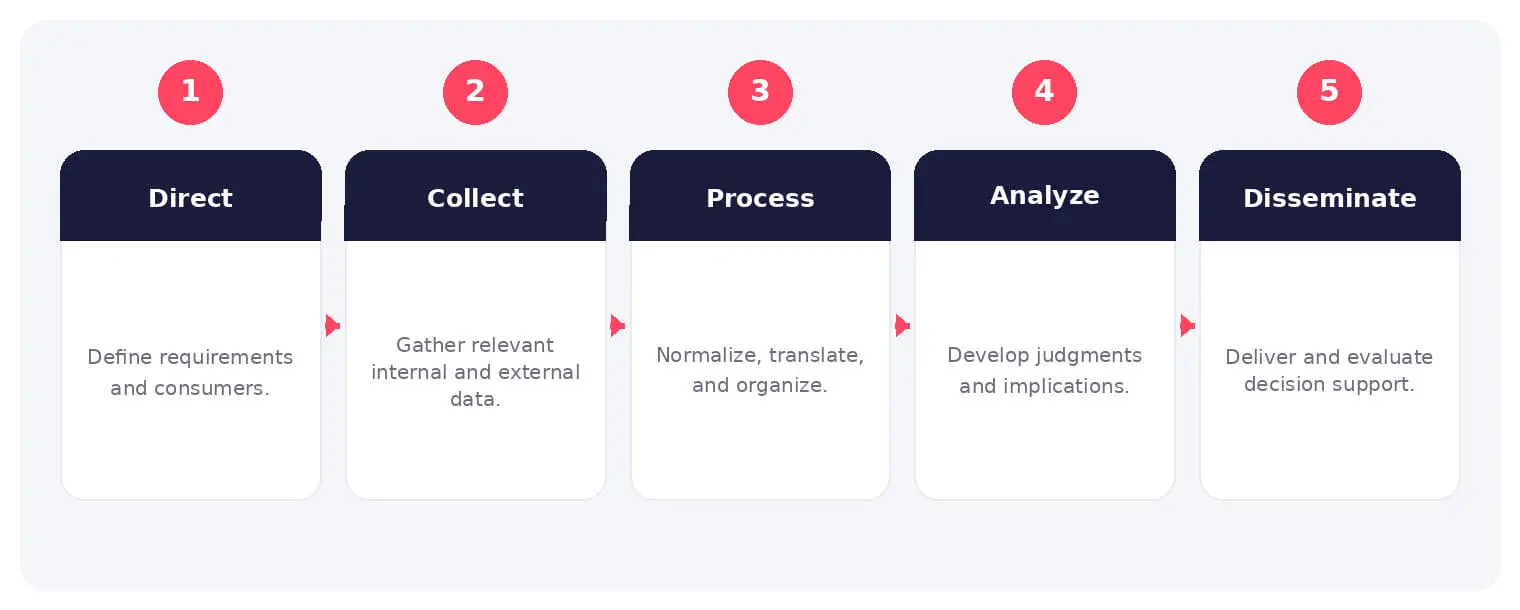
The operating flow above turns the concept into observable steps. Exact implementations vary, but each stage needs accountable ownership, trusted inputs, documented policy, and evidence that practitioners can use during review and decision-making.
Useful intelligence is produced through direction, collection, processing, analysis, dissemination, and evaluation. It is not a feed or a list of indicators by itself; value depends on relevance, timeliness, confidence, context, and whether the consumer can act.
Common Types and Capabilities
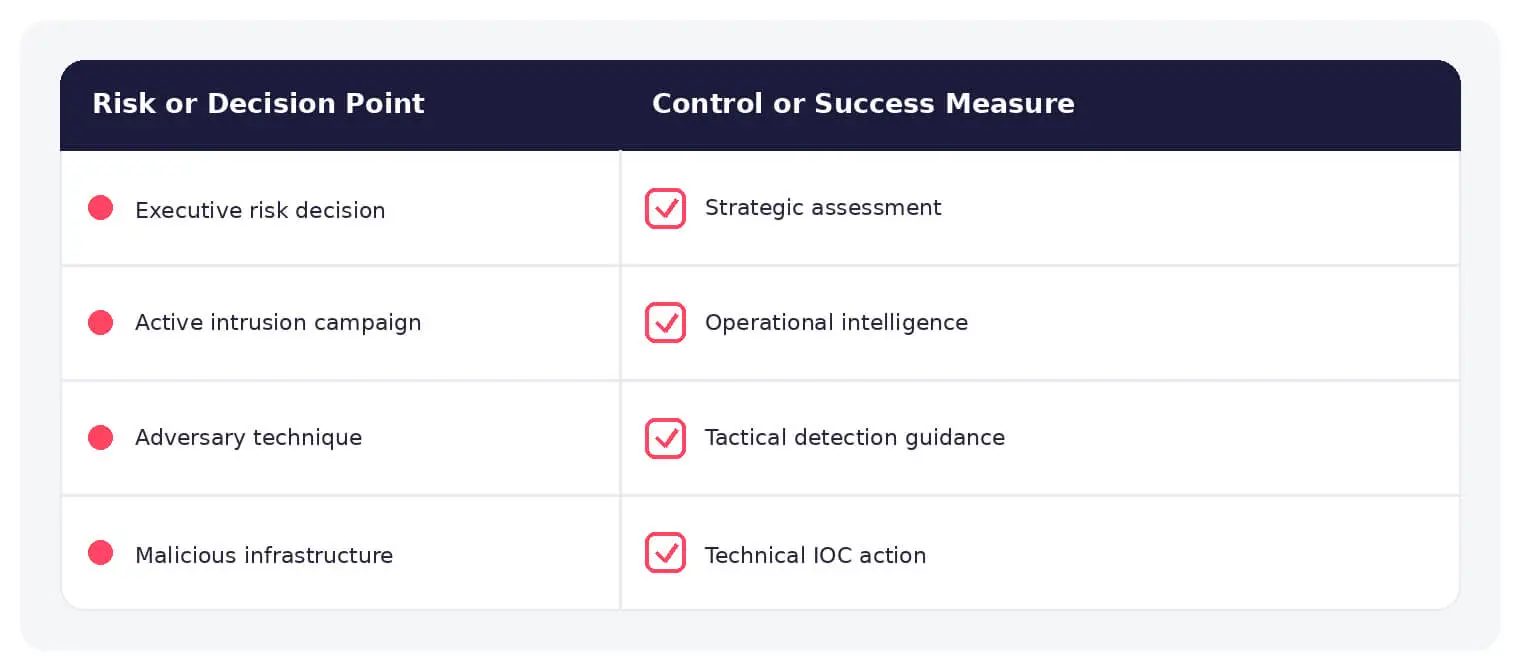
- Strategic threat intelligence
- Operational threat intelligence
- Tactical threat intelligence
- Technical threat intelligence
Security and Business Risks
- Collection without clear requirements
- Unverified reporting and circular sourcing
- Intelligence delivered too late to act
- Outputs disconnected from business decisions
Warning Signs and Detection
Monitor whether priority intelligence requirements remain current, sources are independent, confidence is stated, reporting reaches the intended consumer, indicators are aging, intelligence changes detections or controls, and decision-makers provide useful feedback.
Best Practices
Start with a decision, use diverse sources, distinguish facts from assessments, record provenance, state confidence and uncertainty, tailor depth to the audience, automate processing rather than judgment, protect sensitive reporting, and measure operational outcomes.
How SOCRadar Can Help
SOCRadar adds external visibility, threat intelligence, exposure context, and continuous monitoring to help teams validate and prioritize risks related to threat intelligence. This context complements internal engineering, governance, vulnerability, and security operations controls.
Explore SOCRadar Cyber Threat Intelligence or request a demo to strengthen threat-informed prevention and response.
Frequently Asked Questions
What Is Threat Intelligence and Who Is It For?
Threat intelligence is evidence-based knowledge about current or emerging threats that a specific audience—executives, incident responders, or analysts—can use to make a security or business decision. The defining trait is actionability: if the recipient cannot act on it, it is data rather than intelligence.
What Are the Four Main Types of Threat Intelligence?
Threat intelligence is commonly split into four types, each aimed at a different audience and decision:
- Strategic – informs executive decisions about risk, budgets, and investment.
- Operational – describes threat actor intent, capability, and active or upcoming campaigns.
- Tactical – covers adversary tactics, techniques, and procedures (TTPs) that defenders can counter.
- Technical – includes specific indicators such as IP addresses, domains, file hashes, and malware signatures.
Mature programs usually deliver more than one type, tailored to each consumer.
How Does the Threat Intelligence Cycle Work?
Most programs follow six stages: direction, collection, processing, analysis, dissemination, and evaluation. Each stage needs accountable ownership and trusted inputs, and the evaluation stage should feed back into direction so requirements stay current as threats and business priorities change.
How Is Threat Intelligence Different From a Threat Feed?
A feed is a list of raw indicators; intelligence adds relevance, context, confidence, and timeliness so the consumer can act. Feeds can be a valuable input, but they only become intelligence after processing, analysis, and alignment with defined requirements.
What Is the Most Common Failure in Threat Intelligence Programs?
Collection without clear requirements is a primary concern. Teams gather large volumes of data without knowing which decisions it should support, so much of it is never analyzed or acted on. Defining priority intelligence requirements first keeps collection focused, reviewable, and tied to real outcomes.
What Is Circular Reporting and Why Does It Matter?
Circular reporting occurs when several sources appear independent but trace back to the same origin, creating false confidence in unverified claims. Analysts reduce this risk by recording provenance for every report and confirming key claims against at least one genuinely independent source.
What Warning Signs Suggest a Threat Intelligence Program Is Underperforming?
Watch for priority intelligence requirements that have not been reviewed in months, sources that recycle the same origin, indicators aging out without replacement, and reporting that never changes a detection, control, or decision. Silence from intended consumers is another signal that reporting is not reaching the right audience in a usable form.
How Do You Define Priority Intelligence Requirements?
Start with the decisions the organization needs to make—such as which vulnerabilities to remediate first or whether an active campaign affects your sector—then work backward to the questions that inform those decisions. Write each requirement narrowly, name its consumer, and review it on a set schedule so it does not go stale.
How Should Intelligence Be Tailored to Different Audiences?
Executives generally need concise risk and business-impact summaries, while SOC analysts need technical depth such as indicators, TTPs, and detection guidance. Automating processing and formatting is reasonable, but judgment and tailoring should remain with analysts because context determines what each audience can actually do with the report.
What Business Decisions Can Threat Intelligence Support?
Beyond blocking indicators, intelligence informs decisions such as prioritizing patching based on active exploitation, justifying security investment to leadership, assessing sector or third-party risk, and shaping incident response plans. Measuring these operational outcomes—not feed volume—is how a program demonstrates its value.

Oct 27, 2026
PHP2Shell Weaponized After Japanese Real Estate Extortion
An exposed server ties an extortion wave on about 20 Japanese property sites to an operator who later weaponized PHP2Shell (CVE-2026-109618, CVE-2026-109619)…
Oct 27, 2026
Wasmtime Sandbox Escape Flaws Patched in Cranelift
Two critical Wasmtime sandbox escape flaws, CVE-2026-115889 and CVE-2026-115893, let a crafted WebAssembly (Wasm) module push the Cranelift compiler into generating unsafe…
Oct 26, 2026
Node2Shell: Brotli Flaw Hits Python Packages
[Update] October 27, 2026: PHP Ships Windows Builds With Brotli Fix The Node2Shell Brotli flaw (CVE-2026-111497), disclosed alongside Node.js fixes on October…
Intelligence in your inbox every Thursday.
Join 30,000+ security professionals reading SOCRadar research.
Subscribe