

Mar 10, 2026
Feb 19, 2026
5 Mins Read
Sep 13, 2026
Table Of Content
Related Articles
SMS Bombing
Threat Actors
Jan 08, 2026
Dark Web Monitoring
Feb 19, 2026
Ransomware
Jan 31, 2026
OSINT Framework
Apr 17, 2026

What Is Technical Threat Intelligence?
Technical threat intelligence provides detailed, machine-actionable artifacts associated with malicious infrastructure, files, messages, vulnerabilities, and activity.
Examples include domains, IP addresses, URLs, file hashes, certificates, malware signatures, email artifacts, and exploit details. This intelligence supports rapid detection and blocking, but many indicators decay quickly and require context, confidence, and expiration.
Key Takeaways
- Technical threat intelligence provides detailed, machine-actionable artifacts associated with malicious infrastructure, files, messages, vulnerabilities, and activity.
- Examples include domains, IP addresses, URLs, file hashes, certificates, malware signatures, email artifacts, and exploit details. This intelligence supports rapid detection and blocking, but many indicators decay quickly and require context, confidence, and expiration.
- Stale indicators and false positives is a primary concern.
- Effective programs combine clear scope, evidence, accountable ownership, and continuous review.
How It Works
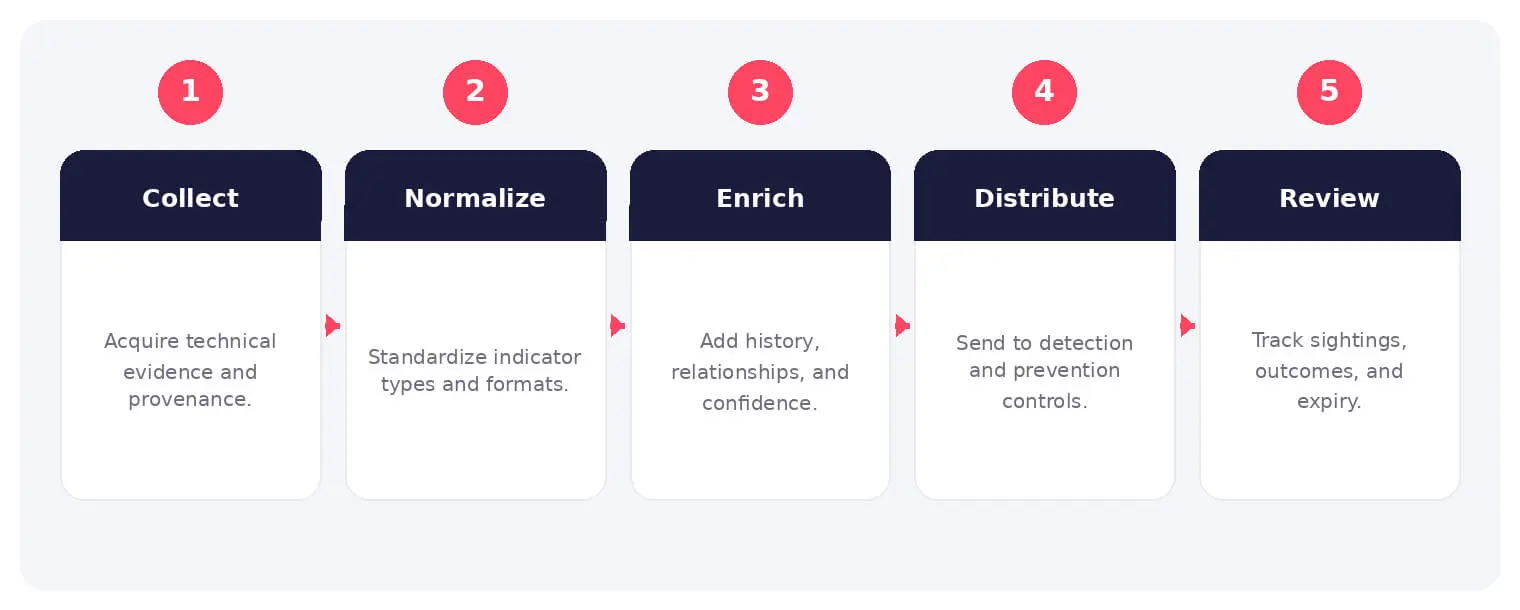
The operating flow above turns the concept into observable steps. Exact implementations vary, but each stage needs accountable ownership, trusted inputs, documented policy, and evidence that practitioners can use during review and decision-making.
Examples include domains, IP addresses, URLs, file hashes, certificates, malware signatures, email artifacts, and exploit details. This intelligence supports rapid detection and blocking, but many indicators decay quickly and require context, confidence, and expiration.
Common Types and Capabilities
- Network and domain intelligence
- File, malware, and signature intelligence
- Email and phishing artifacts
- Vulnerability and exploit intelligence
Security and Business Risks
- Stale indicators and false positives
- Shared infrastructure that causes overblocking
- Feed volume without prioritization
- Missing provenance and inconsistent verdicts
Warning Signs and Detection
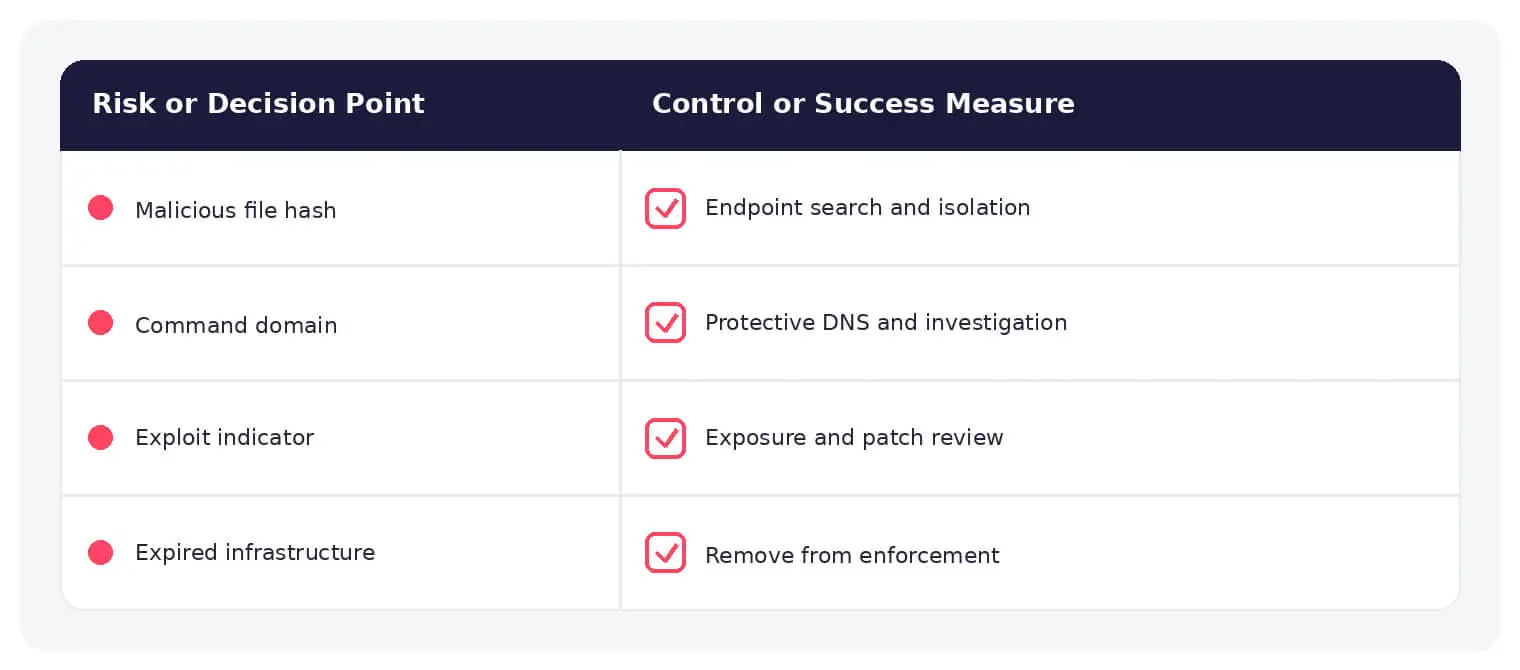
Validate first and last seen dates, source reliability, passive DNS, certificate history, malware relationships, infrastructure ownership, internal prevalence, exploit activity, asset exposure, sightings across telemetry, and whether an indicator still supports action.
Best Practices
Use structured formats, retain provenance, enrich before enforcement, separate hunt and block thresholds, assign confidence and TTLs, deduplicate feeds, record analyst disposition, monitor control capacity, and convert recurring technical evidence into behavioral detections.
How SOCRadar Can Help
SOCRadar adds external visibility, threat intelligence, exposure context, and continuous monitoring to help teams validate and prioritize risks related to technical threat intelligence. This context complements internal engineering, governance, vulnerability, and security operations controls.
Explore SOCRadar IOC Radar or request a demo to strengthen threat-informed prevention and response.
Frequently Asked Questions
What Is Technical Threat Intelligence?
Technical threat intelligence consists of machine-actionable artifacts tied to malicious infrastructure, files, messages, vulnerabilities, and activity. Common examples include IP addresses, domains, URLs, file hashes, TLS certificates, malware signatures, email artifacts, and exploit details. It is produced primarily for automated consumption by security controls rather than for narrative reporting.
How Is Technical Threat Intelligence Different From Strategic and Operational Threat Intelligence?
Strategic intelligence covers long-term trends and risk for leadership, while operational intelligence describes actor campaigns, motivations, and infrastructure patterns. Technical intelligence operates at the artifact level, feeding detection and blocking actions directly. The layers complement one another, but only technical intelligence is typically structured for machine parsing.
How Do Security Teams Use Technical Indicators in Daily Operations?
Indicators are typically loaded into detection and enforcement controls, where they drive blocklists, correlation rules, and hunting queries. Common integration points include:
- SIEM and EDR correlation rules
- Firewall, proxy, and DNS filters
- Email gateways and web filters
- Threat intelligence platforms that deduplicate and score feeds
Teams generally reserve enforcement for high-confidence indicators and use lower-confidence ones for detection and investigation.
Why Do Technical Indicators Lose Value Over Time?
Adversaries rotate infrastructure through fast-flux hosting, short-lived domains, CDN services, and disposable accounts, so many indicators become irrelevant within days. This indicator decay is why artifacts should carry first and last seen dates, confidence scores, and TTLs. These fields help controls stop acting on indicators that no longer reflect active threats.
What Are the Main Risks of Blocking on Technical Indicators?
Stale indicators and false positives are the primary concerns. Overblocking is a recurring problem when shared infrastructure, such as CDN and cloud IP ranges, is blocked at the address level. High feed volume without prioritization also creates noise that analysts must triage.
How Should Teams Validate an Indicator Before Acting on It?
Review first and last seen dates, source reliability, and provenance, then enrich the indicator with passive DNS, certificate history, and malware relationships. Infrastructure ownership matters because an IP may belong to a hosting provider rather than the threat actor. Internal prevalence and sightings across telemetry show whether the indicator is relevant to your environment.
How Can Teams Reduce False Positives From Shared Infrastructure?
Use stricter confidence thresholds for blocking than for hunting, and prefer domain or hash indicators over bare IPs when infrastructure is shared. Maintain allowlists for legitimate CDN and cloud ranges, deduplicate overlapping feeds, and record analyst dispositions so recurring exceptions stay consistent.
What Formats and Fields Support Reliable Indicator Sharing?
Structured formats such as STIX, MISP, and OpenIOC preserve context that flat indicator lists lose. Valuable fields include confidence ratings, first and last seen timestamps, source attribution, campaign or malware tags, and expiration values. Retaining provenance lets downstream teams judge reliability before enforcement.
Can Technical Indicators Alone Detect Advanced Threats?
Not on their own. Capable actors change infrastructure faster than blocklists can propagate, which leaves indicator-only defenses blind to newly minted artifacts. Converting recurring technical evidence into behavioral detections, such as YARA or Sigma rules and network behavior analytics, maintains coverage even when specific artifacts rotate.
How Does Technical Threat Intelligence Affect Security Operations?
Well-governed indicator programs speed containment and reduce alert noise, while poorly managed feeds increase triage load and can disrupt legitimate business traffic through overblocking. Tracking false positive rates, monitoring control capacity, and reviewing indicator relevance on a schedule keep the effort sustainable over time.