

Mar 10, 2026

Feb 19, 2026
5 Mins Read
Sep 13, 2026
Table Of Content
Related Articles
SMS Bombing
Threat Actors
Jan 08, 2026
Dark Web Monitoring
Feb 19, 2026
Ransomware
Jan 31, 2026
OSINT Framework
Apr 17, 2026

What Is a Virtual CISO (vCISO)?
A virtual Chief Information Security Officer (vCISO) provides part-time or outsourced security leadership to organizations that need strategic expertise without a full-time executive appointment.
A vCISO can develop strategy, governance, risk management, metrics, policy, compliance readiness, incident oversight, and board communication. Accountability, authority, access, conflicts, continuity, and the boundary between advice and operational execution must be explicit.
Key Takeaways
- A virtual Chief Information Security Officer (vCISO) provides part-time or outsourced security leadership to organizations that need strategic expertise without a full-time executive appointment.
- A vCISO can develop strategy, governance, risk management, metrics, policy, compliance readiness, incident oversight, and board communication. Accountability, authority, access, conflicts, continuity, and the boundary between advice and operational execution must be explicit.
- Unclear decision authority is a primary concern.
- Effective programs combine clear scope, evidence, accountable ownership, and continuous review.
How It Works
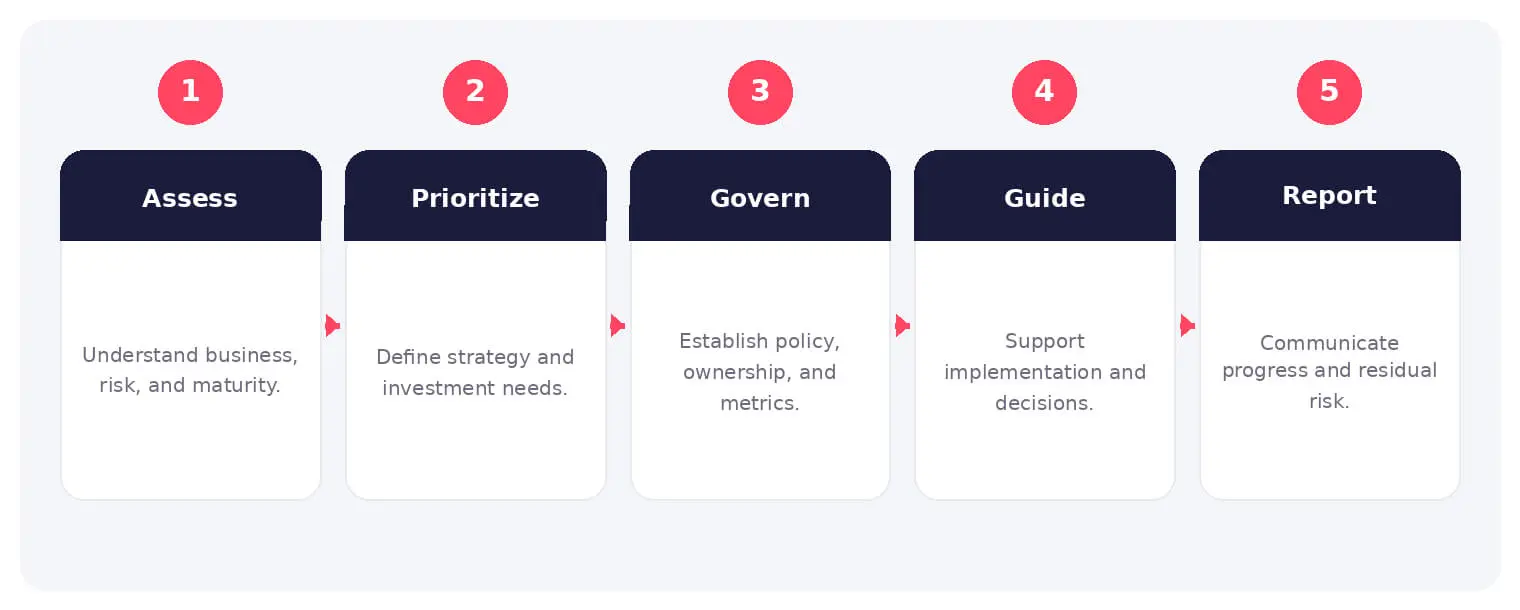
The operating flow above turns the concept into observable steps. Exact implementations vary, but each stage needs accountable ownership, trusted inputs, documented policy, and evidence that practitioners can use during review and decision-making.
A vCISO can develop strategy, governance, risk management, metrics, policy, compliance readiness, incident oversight, and board communication. Accountability, authority, access, conflicts, continuity, and the boundary between advice and operational execution must be explicit.
Common Types and Capabilities
- Fractional executive leadership
- Project and compliance-focused vCISO
- Advisory and board support
- Managed-service and specialist vCISO
Security and Business Risks
- Unclear decision authority
- Generic templates without business context
- Conflict between advice and service sales
- Dependency on one external individual
Warning Signs and Detection
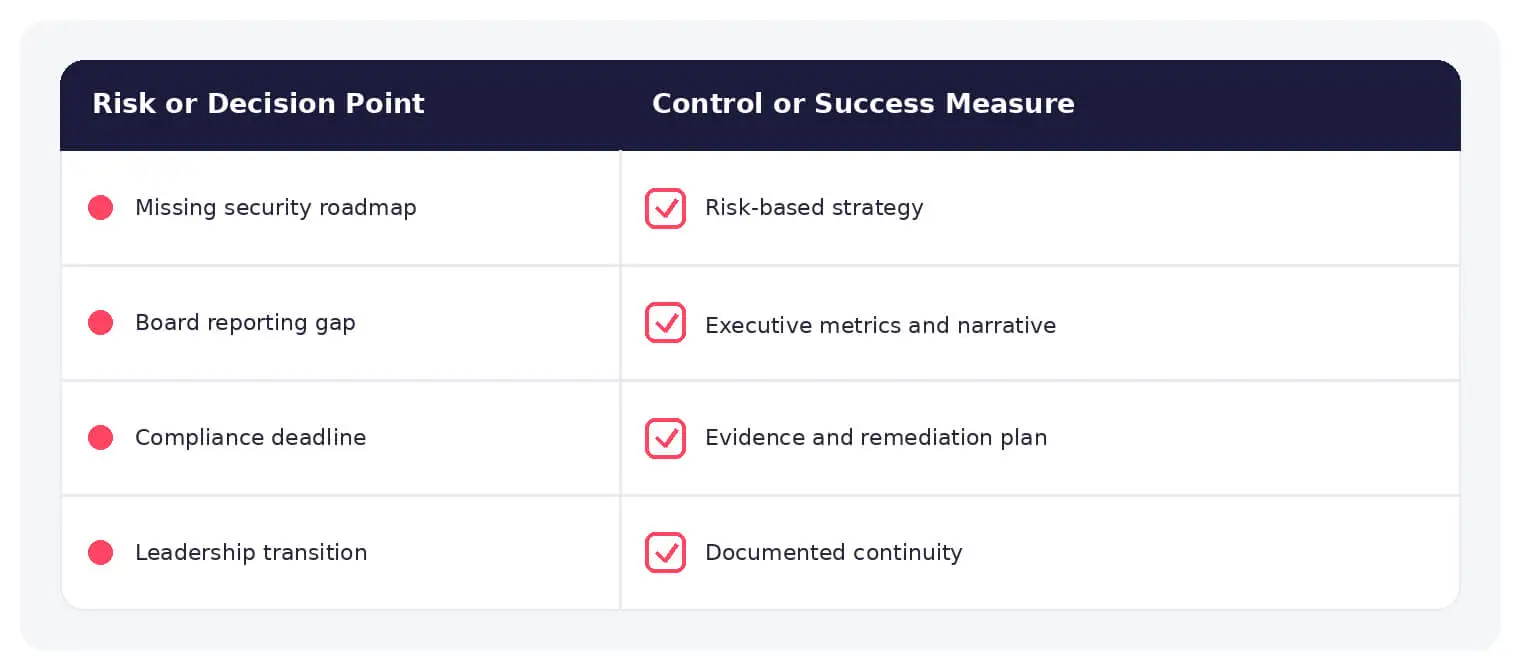
Monitor overdue risk decisions, policies without owners, metrics without outcomes, unresolved audit issues, unclear incident escalation, recurring exceptions, stakeholder dissatisfaction, changes in provider staff, undocumented knowledge, and recommendations tied only to products the provider sells.
Best Practices
Define scope and authority, require independence and confidentiality, set measurable outcomes, establish executive access, document decisions, maintain internal owners, test incident participation, review conflicts, plan continuity, and reassess whether the engagement still fits.
How SOCRadar Can Help
SOCRadar adds external visibility, threat intelligence, exposure context, and continuous monitoring to help teams validate and prioritize risks related to virtual CISO. This context complements internal engineering, governance, vulnerability, and security operations controls.
Explore SOCRadar Cyber Threat Intelligence or request a demo to strengthen threat-informed prevention and response.
Frequently Asked Questions
What Is a Virtual Chief Information Security Officer (vCISO)?
A vCISO is an experienced security executive who provides part-time, fractional, or outsourced leadership to organizations that need strategic guidance without a full-time executive appointment. The role typically covers security strategy, governance, risk management, policy, compliance readiness, and reporting to executives and the board. Scope, authority, and reporting lines are set by the engagement contract rather than internal employment.
What Is the Main Risk in a vCISO Engagement?
Unclear decision authority is the primary concern. When the contract does not specify who approves risk decisions, how much access the vCISO receives, and where advisory work ends and operational execution begins, accountability gaps follow. Documenting these boundaries before work starts reduces the risk considerably.
How Does a vCISO Engagement Typically Work?
Most engagements begin with an assessment of the current security posture, followed by a prioritized roadmap, policy development, and measurable objectives. The vCISO then works on a scheduled basis, such as several days per month, joining leadership meetings, reviewing risk registers, and tracking progress against agreed deliverables. Cadence and success metrics should be defined upfront so both sides can measure value.
What Warning Signs Suggest a vCISO Engagement Is Underperforming?
Watch for patterns such as:
- Overdue risk decisions and policies without named owners
- Metrics reported without outcomes or follow-through
- Unresolved audit findings and recurring exceptions
- Unclear incident escalation and stakeholder dissatisfaction
- Recommendations tied only to products the provider sells
Heavy dependency on one external individual, combined with undocumented knowledge and frequent provider staff changes, is another signal that the arrangement needs review.
How Should an Organization Start a vCISO Engagement?
Define scope and authority in writing first: which decisions the vCISO can make independently, which require executive approval, and which systems and data are accessible. Establish direct executive access, agree on measurable outcomes, and name internal owners who retain responsibility alongside the vCISO. Documenting decisions from day one protects continuity if personnel change.
What Should a vCISO Contract Include?
A strong agreement covers independence and confidentiality obligations, conflict-of-interest disclosures (important when the provider also sells security products), data handling rules, and a continuity plan for provider staff changes. It should also describe incident participation expectations and set a point at which the engagement is reassessed for fit.
Can a vCISO Lead Incident Response?
A vCISO usually provides incident oversight: guiding escalation, coordinating executive and regulator communication, and running post-incident reviews. Hands-on containment and forensic work generally remain with internal teams or retained specialists, so the division of labor should be agreed in advance. Testing the arrangement through tabletop exercises reveals gaps before a real incident occurs.
How Does a vCISO Support Compliance and Board Reporting?
A vCISO maps controls to relevant frameworks, prepares audit evidence, and translates technical risk into business language for leadership and the board. This helps organizations reach compliance readiness without a full-time hire, although certification still depends on the organization’s actual implementation and sustained operation of controls.
What Is the Difference Between a vCISO and a Fractional CISO?
The terms overlap heavily, and both describe part-time security leadership. Some providers use fractional to signal a fixed monthly allocation of hours, while virtual can imply more remote or on-demand delivery. Either way, the essentials are identical: defined scope, accountable ownership, and measurable outcomes.
When Does a vCISO Make More Sense Than a Full-Time CISO?
A vCISO fits organizations that need strategic leadership but lack the budget, security workload, or maturity to justify a full-time executive. Common situations include scaling companies preparing for compliance reviews, firms operating between CISO appointments, and teams that need board-level guidance a few days per month. Organizations facing sustained regulatory pressure and managing large internal security teams may eventually outgrow the model.