

Oct 07, 2026
Table Of Content
Top 10 Dark Web Search Engines
Why People Use Dark Web Search Engines
Top Dark Web Search Engines in 2026 Comparison Table
How Dark Web Search Engines Work
Top 10 Dark Web Search Engines in 2026
Bonus: SOCRadar Dark Web Search Engine
Technical Comparison
How to Browse the Dark Web Anonymously
Risks of Using Dark Web Search Engines
How Security Teams Use Dark Web Search Engines
Frequently Asked Questions
Related Articles






Jun 03, 2026
29 Mins Read
Jun 04, 2026

Summarize with:
Top 10 Dark Web Search Engines
This guide compares the top Dark Web search engines active in 2026 for safer, privacy-focused research and secure access to hidden services. The Dark Web search engines that security researchers and threat intelligence teams rely on most include: Ahmia, Torch, Haystak, DuckDuckGo, OnionLand, Deep Search, VormWeb, Tor66, and Excavator.The Hidden Wiki is also a useful curated directory entry point. SOCRadar’s Dark Web Search Engine is included as a bonus at the end because it works in a different way. It is not just a search engine, but a purpose-built threat intelligence platform.
What is a Dark Web Search Engine?
A Dark Web search engine crawls hidden services inside the Tor network. It indexes .onion sites through links, directories, and user submissions. These sites do not appear on Google, so users need Tor Browser and a dedicated Dark Web search engine to find them. This guide compares the top Dark Web search engines active in 2026, covering privacy, content filtering, V3 onion support, and the best use cases for each.
Why People Use Dark Web Search Engines
Dark Web search engines serve a wider range of legitimate purposes than popular perception suggests.
Security researchers and threat intelligence teams use them for privacy-focused browsing, secure investigations, and anonymous intelligence collection. and to study threat actor behavior without exposing organizational infrastructure.
Threat intelligence teams rely on them to monitor darknet forums, ransomware leak sites, and darknet marketplaces for mentions of monitored assets, stolen credentials, and emerging attack tooling.
Journalists and human rights investigators use anonymous browsing and hidden services discovery to communicate safely with sources in high-censorship environments where an uncensored search engine is the only viable research option.
Law enforcement and compliance teams use Dark Web Monitoring workflows to identify criminal infrastructure and gather evidence under legal authorization.
Researchers studying network security, onion routing, or anonymization technologies access the Dark Web as a primary data source. Wherever operational security, anonymous communication, or access to hidden services is a professional requirement, Dark Web search engines are a foundational tool.
Top Dark Web Search Engines in 2026 Comparison Table
The top Dark Web search engines differ significantly in indexing quality, content filtering, network coverage, and suitability for different research contexts. Use the table below to compare them at a glance.
| Engine | V3 Support | Content Filtering | Access | Best Use Case |
| Ahmia | Yes | Yes | Clearnet + onion | General research, security analysis |
| Torch | Partial | None | Tor only | Broad unfiltered discovery |
| Haystak | Yes | Partial (premium) | Clearnet + Tor | Filtered deep search |
| DuckDuckGo | Yes | Minimal | Clearnet + Tor | Privacy-focused general search |
| OnionLand | Yes (+ I2P) | None | Clearnet + Tor | Multi-network, hybrid discovery |
| Deep Search | Yes | None | Tor only | Awareness only — known scam promoter |
| VormWeb | Yes | Partial (labeled results) | Clearnet + Tor | Beginner-friendly, labeled risk levels |
| Tor66 | Yes | Partial (curated) | Tor + clearnet mirror | Categorized browsing, cross-verification |
| Excavator | Yes | None | Tor only | Marketplace and forum crawling |
| Hidden Wiki | Updating | Curated | Tor only | Initial directory orientation |
| SOCRadar (Bonus) | Yes | Security-focused | Platform login | Threat intelligence, IOC search, SOC workflows |
How Dark Web Search Engines Work
Surface web search engines and Dark Web search engines operate very differently. Surface web search engines crawl publicly accessible pages, build indexes, and serve keyword results within milliseconds. Dark Web search engines face a structurally different problem set.
.onion sites are not reachable from the clearnet: Crawlers must operate inside the Tor network to discover and index onion addresses. This limits crawl speed and coverage substantially compared to surface web indexing, and it makes maintaining a fresh index far more resource-intensive.
V2 versus V3 onion addressing: The Tor Project deprecated V2 onion services in 2021. V2 addresses are 16-character strings derived from an RSA key hash. V3 addresses are 56-character strings derived from an Ed25519 key pair, offering significantly stronger cryptographic guarantees and resistance to impersonation attacks. As of 2026, the majority of active onion infrastructure has migrated to V3. Search engines that have not updated their crawlers to handle V3 addressing return a high proportion of dead or unreachable links, making them significantly less useful for current research.
Content Filtering in Dark Web Search Engines: Some engines apply blocklists. Others index without restriction. The difference matters both for legal compliance and for result quality: unfiltered engines surface harmful content alongside legitimate research targets.
How Dark Web Search Engines Determine Intelligence Value: A general-purpose onion crawler that indexes forum posts, marketplace listings, and static pages provides a very different intelligence surface from a purpose-built threat intelligence platform that indexes stealer logs, ransomware leak sites, and closed forum discussions. Knowing which tool serves which purpose reduces wasted analyst time.
Top 10 Dark Web Search Engines in 2026
1. Ahmia
Access: Clearnet (ahmia.fi) and .onion address Content filtering: Strict abuse blocklist actively maintained V3 support: Yes
Ahmia is one of the most consistently recommended top Dark Web search engines for security researchers and analysts in 2026. Developed with support from the Tor Project, it maintains a strict policy against indexing abusive material through an actively maintained blocklist, and its results are available through both a standard clearnet URL and a dedicated .onion address. The dual access model allows users to access it securely through the Tor browser without DNS leakage, while also making it reachable for quick reference on standard browsers.
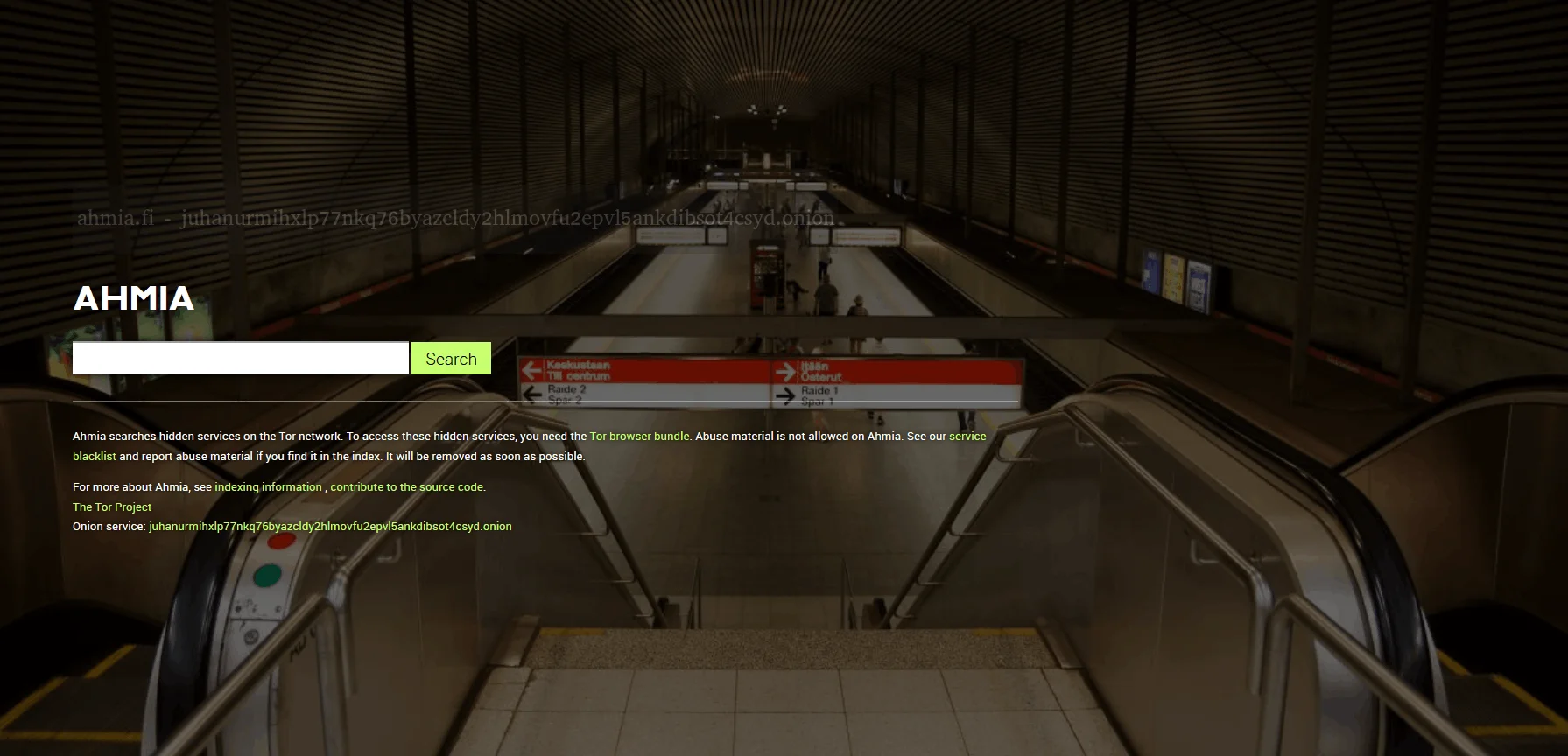
Ahmia Dark Web Search Engine
Ahmia’s open-source codebase, available on GitHub, is a meaningful differentiator for security teams. Analysts can review the indexing methodology directly, and organizations with the technical capability can use Ahmia as a foundation for building customized onion site indexes tailored to specific monitoring requirements.
In practical threat intelligence workflows, Ahmia functions best as a discovery and reconnaissance tool. It reliably surfaces active onion sites across forums, marketplaces, and services. Results can then be passed into deeper monitoring platforms for continuous tracking. For teams conducting open-source intelligence work on Dark Web infrastructure, Ahmia provides a reliable, legally defensible starting point.
Pros:
- Actively maintained abuse blocklist
- Open-source and auditable codebase
- Clearnet and onion access options
- Tor Project affiliated
Cons:
- Smaller index than Torch for raw volume
- No threat intelligence-specific features or categorization
- Results require manual analysis for security relevance
Best for: Researchers, journalists, and security analysts who need a filtered, reliable, and auditable entry point to onion content.
2. Torch
Access: Tor browser required (.onion only) Content filtering: None V3 support: Partial (large V2 legacy index, V3 coverage allegedly improving)
Torch is one of the oldest continuously operating Dark Web search engines, having maintained active onion crawling since the early 2010s and surviving numerous disruptions that ended similar projects. Its primary value is index size: Torch claims one of the largest collections of onion site content available through any public search engine, built through years of continuous crawling. For broad, unfiltered discovery, it remains a frequently referenced starting point among security researchers.
Torch Dark Web Search Engine
The trade-offs are significant and worth stating clearly. Torch applies no content filtering whatsoever, meaning results will include harmful, malicious, and illegal material. The interface carries substantial advertising, which in the Dark Web context carries a higher risk than surface web advertising, given the prevalence of phishing and malware distribution through Dark Web ad networks. The V2 deprecation has also affected result quality: a notable portion of Torch’s index references onion addresses that are no longer active. Search relevance is limited, with results feeling closer to keyword matching than ranked relevance.
For threat intelligence purposes, Torch is a useful broad discovery tool when no other context is available, but analysts should treat results as raw starting points requiring independent verification.
Pros:
- One of the largest onion indexes available publicly
- Long operational history and track record of surviving disruptions
- Fast load times and familiar interface
Cons:
- No content filtering, harmful content will appear in results
- Heavy advertising carries phishing and malware risk
- V3 coverage incomplete, higher dead link rate than newer engines
- Poor search relevance for anything beyond exact-match queries
Best for: Initial broad discovery of onion infrastructure when no other context is available, used by experienced analysts with appropriate operational security practices.
3. Haystak
Access: Clearnet and Tor Content filtering: Partial (premium tier adds filtering options) V3 support: Yes
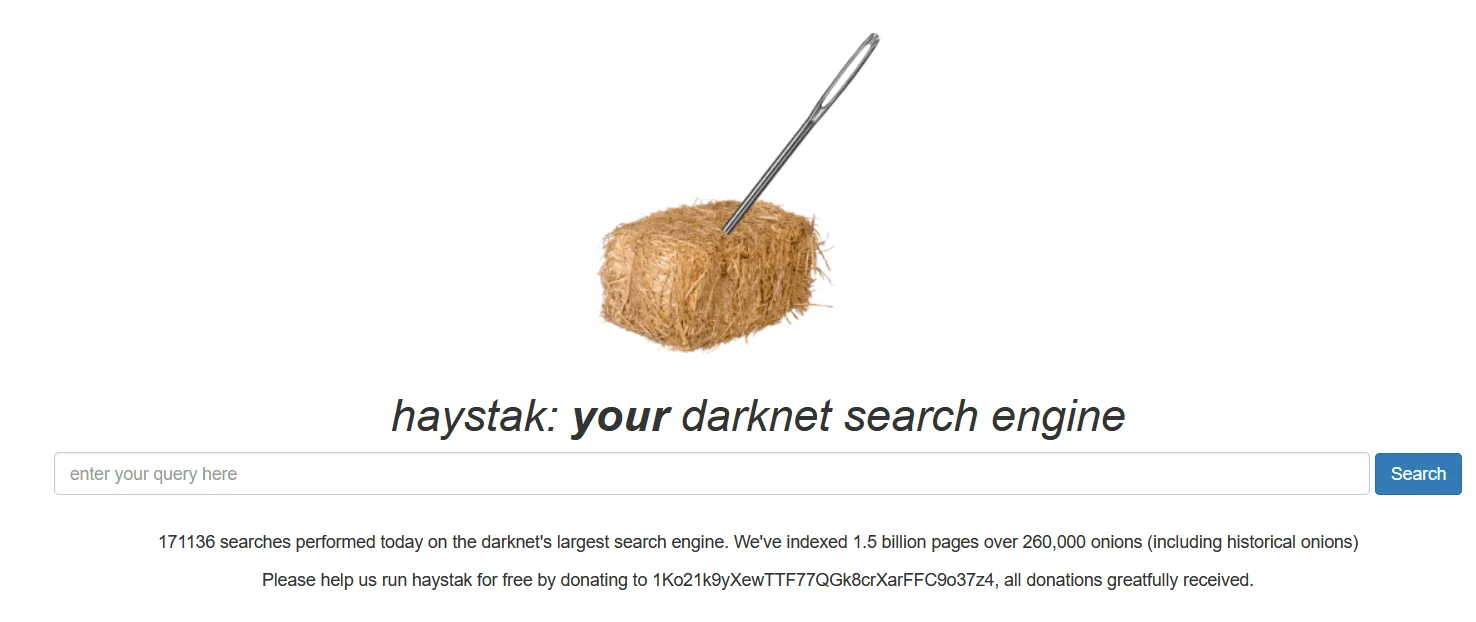
Haystak has built a reputation as one of the more capable general-purpose Dark Web search engines for research use, primarily because of its filtering options. Unlike Torch or other unfiltered engines, Haystak allows users to narrow results by content type and other parameters, reducing the manual triage burden that makes raw Dark Web search so time-intensive. The free tier provides broad access to the Haystak index. The premium tier adds enhanced filtering, expanded search depth, and access to additional sections of the index.
Haystak Dark Web Search Engine
For security research specifically, Haystak’s filtering capability is operationally useful. Researchers can reduce irrelevant or potentially risky content categories and focus queries on types of sites relevant to a specific investigation, such as forums discussing a particular malware family or markets matching specific product keywords. V3 onion support means the index reflects current Dark Web infrastructure more accurately than engines still working through V2 legacy data.
Haystak claims to have indexed over 1.5 billion pages across more than 260,000 onion sites, making it one of the largest self-reported indexes in the Dark Web search space — though this figure comes from Haystak’s own homepage and has not been independently verified. Haystak does not apply automatic content filtering by default. Users remain responsible for what they access, and the absence of baseline safety filtering means it should be used by individuals with a clear research purpose and appropriate operational security practices in place.
Pros:
- Advanced filtering options reduce manual triage time
- V3 onion support for current infrastructure coverage
- Clearnet accessible for easier initial navigation
- Premium tier adds meaningful additional capability
Cons:
- No automatic content filtering in the free tier
- Premium features require a paid subscription
- Index size figures are self-reported and unverified
Best for: Security researchers and analysts who need structured, filterable search results rather than raw volume, and who want a tool with clearnet access for initial navigation.
4. DuckDuckGo
Access: Clearnet and .onion version (V3 address) Content filtering: Minimal V3 support: Yes (the engine itself operates on a V3 .onion address)
DuckDuckGo is primarily a surface web search engine, but it remains one of the more privacy-focused Dark Web search engines available through Tor. It comes as the default search option in the Tor Browser. Its relevance to Dark Web search comes from two factors: it is accessible via a V3 .onion address, and its strict no-log privacy policy means search activity is not recorded or associated with user identifiers. This makes it relevant to analysts who use the Tor browser for operational security purposes during Dark Web research sessions.
DuckDuckGo Dark Web Search Engine
For the specific use case of Dark Web content discovery, DuckDuckGo’s onion coverage is limited. It indexes a small subset of .onion content and is more accurately described as a privacy-preserving entry point for general web searching inside the Tor network. Security professionals who use Tor as part of their operational security posture typically use DuckDuckGo for surface web research and switch to dedicated Dark Web engines for onion-specific discovery work.
Pros:
- Strict no-log policy protects analyst operational security
- V3 .onion address provides secure access
- Default in Tor Browser, zero configuration required
- Accessible from standard browsers without Tor
Cons:
- Very limited .onion-specific indexing
- No threat intelligence features
- Not designed for dedicated Dark Web content discovery
Best for: Analysts using the Tor browser who want a privacy-respecting search engine for surface web research as part of an operational security posture, used alongside dedicated Dark Web tools for onion-specific queries.
5. OnionLand
Access: Clearnet (onionland.io) and Tor Content filtering: None V3 support: Yes (also indexes I2P and clearnet content)
OnionLand is a multi-network hybrid Dark Web search engine that distinguishes itself by indexing across Tor onion sites, I2P network addresses, and portions of the clearnet simultaneously from a single query interface. For security teams tracking threat actors who distribute operations across multiple anonymized networks, this cross-network coverage provides discovery capability that single-network tools cannot offer.
OnionLand Dark Web Search Engine
The interface is clean and includes autocomplete suggestions, making it more accessible than many Tor-only tools. OnionLand also provides real-time status indicators on whether specific .onion links are currently online or offline, which saves analysts time that would otherwise be spent attempting connections to inactive infrastructure. The I2P indexing, while not comprehensive, covers a network layer that most other top Dark Web search engines ignore entirely.
Important caveats: OnionLand may require JavaScript activation for some features, which can create privacy trade-offs for users prioritizing maximum anonymity. Independent user reviews also flag a higher-than-average prevalence of scam sites in OnionLand results compared to filtered alternatives. Analysts should treat results with additional skepticism and verify links independently before engaging.
Pros:
- Multi-network indexing across Tor and I2P
- Real-time link status checking reduces dead-end connections
- Clearnet accessible with minimal friction
- Autocomplete and modern interface reduce navigation time
Cons:
- No content filtering
- Higher scam site prevalence flagged by independent reviews
- JavaScript requirement for some features creates potential privacy trade-offs
- I2P coverage not comprehensive
Best for: Teams tracking threat actors across multiple anonymized networks who are comfortable independently verifying results before engaging.
6. Deep Search
Access: Tor browser required (.onion only) Content filtering: None V3 support: Yes
Deep Search is a Dark Web search engine that promotes known scams on the Tor network. Deep Search claims to be built by students who created a new, powerful Tor search engine, stating: “We developed a new onion crawler with a unique ranking system.” While the premise sounds legitimate, the engine is documented on allegedly neutral onion indexes as a scam-promoting tool rather than a reliable research resource.
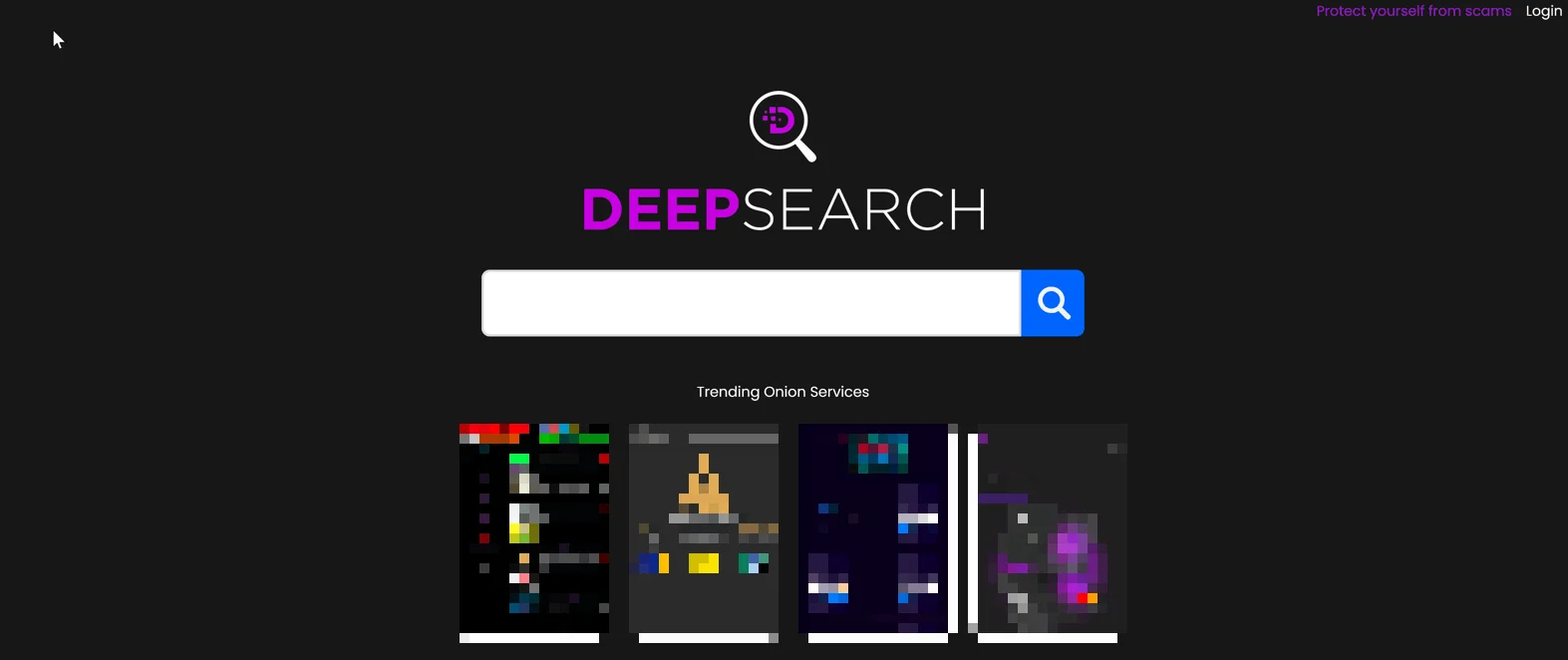
Deep Search Dark Web Search Engine
For analysts who encounter Deep Search referenced in community lists or older guides, it is worth understanding what it is before using it. The student-built framing and unique ranking system claims are not reflected in independent assessments of its actual behavior. Results should be treated with significant skepticism, and any sites surfaced through Deep Search should be independently verified before engagement.
Pros:
- Accessible via Tor with V3 onion support
- Popular on .onion index websites
Cons:
- Documented as promoting scam sites on the Tor network
- No content filtering or abuse blocking
- Claims about its origins and ranking system are unverified
- Not suitable for professional or compliance-sensitive research contexts
Best for: Awareness only. Security researchers should understand what Deep Search is and why it appears in older engine lists, but should use alternatives like Ahmia for actual research.
7. VormWeb
Access: Clearnet and Tor (.onion address available) Content filtering: Partial (results labeled as Verified, Warning, or Risky) V3 support: Yes
VormWeb is one of the few Dark Web search engines with German-developed roots, having launched in November 2020. Rather than returning unlabeled results, it categorizes each result as Secure, Moderate, or Risky, giving users immediate context about the safety and reliability of sites before clicking through. Sites flagged as Warning have not yet been verified. Sites flagged as Risky are known to contain potentially harmful or dangerous content. This labeling system makes VormWeb more accessible for analysts who are less experienced with Dark Web navigation, while still providing the broad indexing that experienced researchers need.
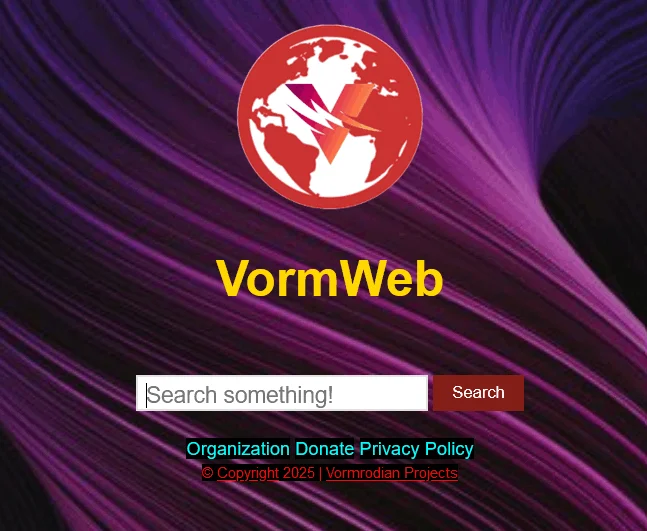
VormWeb Dark Web Search Engine
VormWeb deliberately avoids JavaScript and tracking, reducing the fingerprinting attack surface. It is accessible on both clearnet and through a .onion address, giving users flexibility in how they access it. The engine also maintains a blog and news section covering online privacy topics and Dark Web developments, which adds context for analysts orienting to the landscape.
The absence of hard content filtering means that Risky-labeled sites are still returned in results, requiring users to exercise judgment. The labeling system is a navigation aid, not a safety barrier.
Pros:
- Result risk labeling (Secure, Moderate, Risky) reduces navigation risk
- No JavaScript or tracking reduces fingerprinting exposure
- Clearnet and onion access options
- Accompanying blog provides useful privacy context
Cons:
- Risky-labeled content still appears in results, no hard filtering
- Labeling accuracy depends on the curation team’s coverage
- Smaller index than Torch or Haystak
Best for: Analysts who want risk-labeled results to guide navigation, or researchers newer to Dark Web search who benefit from explicit safety indicators before clicking through to results.
8. Tor66
Access: Tor primarily, clearnet mirrors available Content filtering: Partial (some curation applied) V3 support: Yes
Tor66 built a consistent reputation as a reliable, indexed, and categorized collection of active onion sites. Unlike pure crawlers, Tor66 combines automated indexing with user-submitted URLs, a crowdsourced approach that allows the index to expand through community contributions and surface sites that automated crawlers may not discover through standard link-following.
Users can sort results by categories, newest entries, and language, providing structured navigation options that general-purpose crawlers typically do not offer. Tor66 also offers a “Fresh Onions” feed of recently discovered services and automatically prunes dead links, though it does carry paid banner ads at the top of results.

Tor66 Dark Web Search Engine
For security teams, Tor66’s value is cross-verification. Its index differs in coverage and freshness from those of Torch, Ahmia, and Haystak, meaning a keyword or domain that does not appear in one engine’s results may surface in Tor66’s. Running parallel queries across multiple engines, using Tor66 as one of them, increases the probability of catching references that any single engine would miss.
Like many Tor tools, Tor66 may be accessible through mirrors that change over time. Analysts should verify the current active address through established community references rather than relying on any static link.
Pros:
- User submission model surfaces sites that automated crawlers miss
- “Fresh Onions” feed captures recently discovered services
- Categorized and sortable results for structured browsing
- Useful as a cross-verification source alongside primary engines
Cons:
- Mirror addresses may change, requiring address verification
- Paid banner ads appear at the top of results
- User submissions mean index quality is uneven across categories
- Not suitable as a sole primary engine for comprehensive research
Best for: Cross-verification of search results from other engines, and browsing by category when a structured directory approach is more useful than keyword ranking.
9. Excavator
Access: Tor browser required (.onion only) Content filtering: None V3 support: Yes
Excavator is a Dark Web search engine built in 2019 by an anonymous group of activists with a design philosophy of maximum anonymity and minimum attack surface. It avoids JavaScript entirely, a deliberate choice to reduce browser fingerprinting risk and the potential for script-based de-anonymization. For analysts who prioritize operational security during Dark Web research, this is a meaningful technical distinction from most other engines on this list.
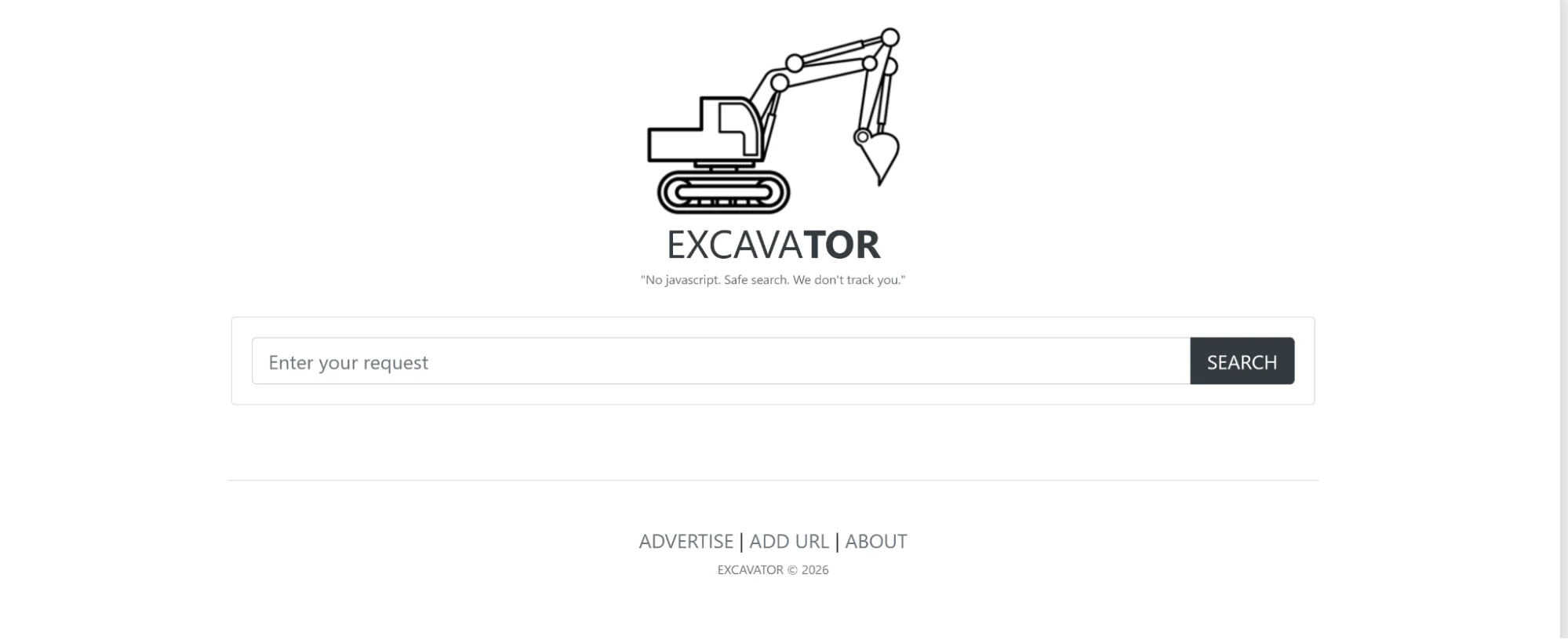
Excavator Dark Web Search Engine
Excavator prioritizes index freshness, surfacing recently discovered and recently updated onion links rather than maintaining a large historical archive. This makes it a useful complement to broader indexes like Torch or Haystak when tracking newly emerged Dark Web infrastructure.
Excavator applies no content filtering of any kind. Independent user reports flag that paid advertising slots on the engine have promoted abusive material, which is a significant concern for any research context. The no-log privacy claim is self-reported and has not been independently audited – there is no published warrant canary or transparency report. It should be used exclusively by analysts with a clear operational purpose, appropriate legal authorization, and established operational security protocols in place.
Pros:
- No JavaScript eliminates a significant fingerprinting and de-anonymization vector
- Freshness-focused index useful for tracking newly emerged onion infrastructure
- V3 onion support
Cons:
- No content filtering of any kind
- Paid advertising slots have been reported to promote abusive material
- No-log claim is self-reported with no independent audit or transparency report
- Not appropriate for compliance-sensitive environments or general use
Best for: Experienced analysts who need a JavaScript-free, freshness-focused discovery tool and are operating under strict protocols with appropriate legal authorization.
10. The Hidden Wiki
Access: Tor browser required (.onion only) Content filtering: Partial (community-maintained curation) V3 support: In transition (mix of V3 and legacy entries as of 2026)
The Hidden Wiki is not a search engine in the technical sense. It does not crawl or algorithmically index onion content. It is a community-maintained directory organized as a wiki, listing onion sites across categories with brief descriptions. In 2026, the most reliable version maintains approximately 5,000 links and uses automated availability checks to reduce dead entries. Multiple versions of The Hidden Wiki exist with varying reliability. This article refers to the original, community-maintained instance.
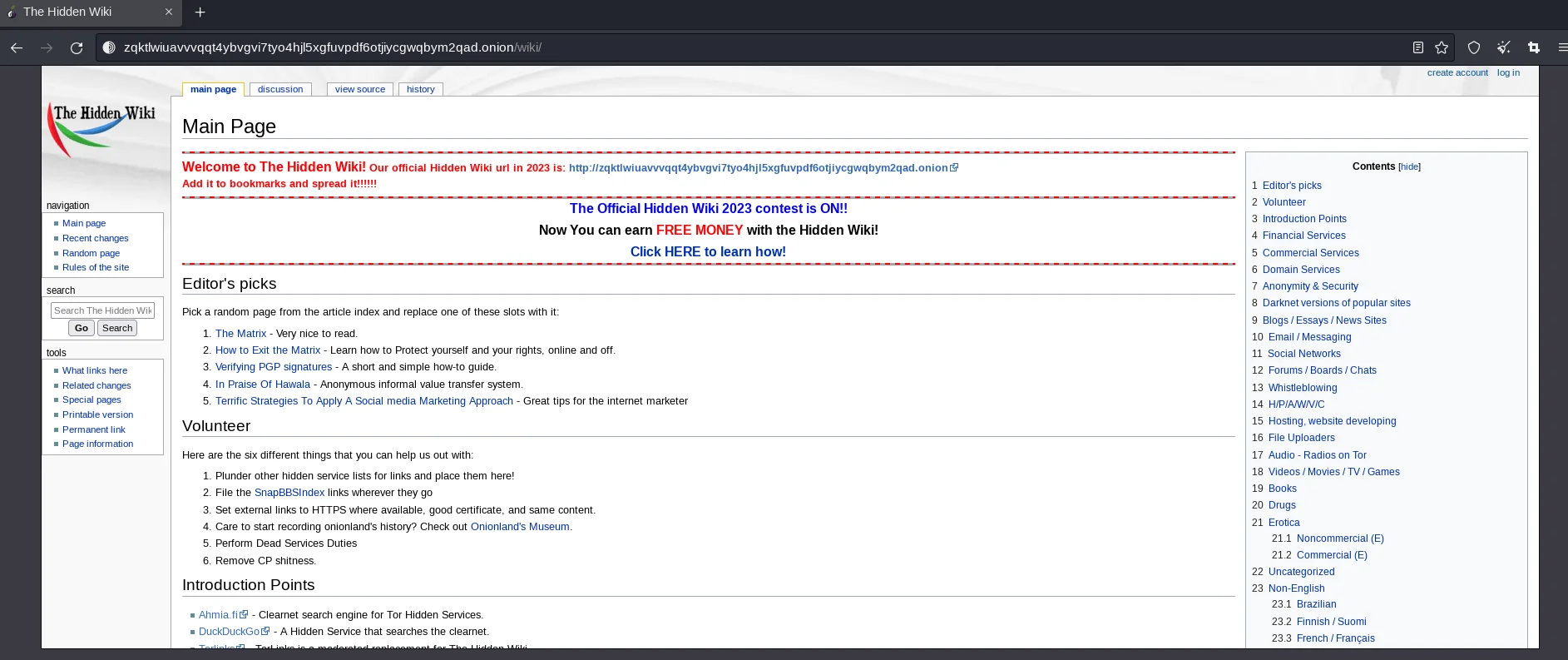
The Hidden Wiki Homepage
For security teams, The Hidden Wiki is most useful as an initial orientation tool when investigating a new area of Dark Web activity. It provides a curated starting index for understanding what types of sites operate in a given category, which forums are currently active, and which markets have maintained continuity despite law enforcement pressure. It supports the early-stage discovery phase of threat intelligence collection before a more targeted search using dedicated tools.
Community maintenance means accuracy and completeness vary significantly by category, and some sections reflect the interests of active contributors rather than systematic coverage of active sites.
Pros:
- Long-established reference point for Dark Web navigation
- Automated availability checks reduce dead link rate
- Organized by category for initial orientation
- No complex configuration required
Cons:
- A directory, not a search engine — no keyword indexing
- Community maintenance produces uneven coverage across categories
- V3 transition still in progress, some outdated links remain
- Multiple fake versions exist, the correct instance must be verified independently
Best for: Analysts who are orienting to a new area of Dark Web activity and need a structured starting directory before moving to targeted keyword searches with dedicated engines.
Bonus: SOCRadar Dark Web Search Engine
Access: SOCRadar Platform Type: Threat intelligence platform with integrated Dark Web search Content filtering: Security-focused indexing by design
SOCRadar’s Dark Web Search Engine operates on a different model from every other tool in this guide and is therefore listed separately. The tools above are general-purpose onion crawlers and directories that a researcher uses manually to discover Dark Web content. SOCRadar’s platform is a purpose-built threat intelligence system that continuously monitors Dark Web infrastructure, including closed forums, ransomware leak sites, stealer log markets, and Telegram channels, to surface intelligence relevant to specific organizations.
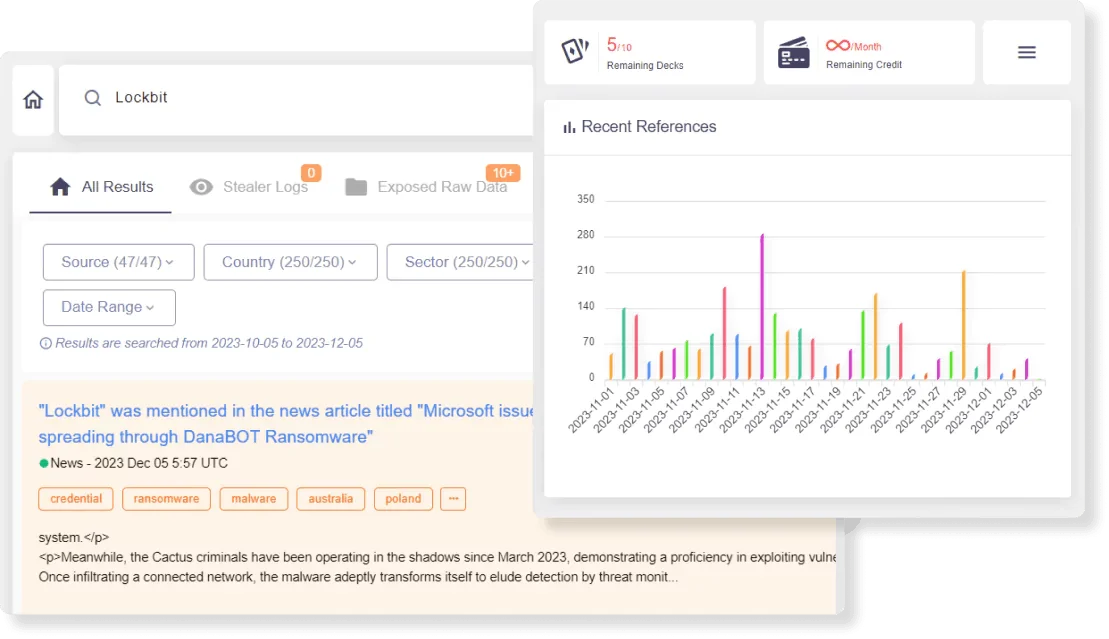
For security operations teams, the practical difference is significant. A standard Dark Web crawler returns a forum post mentioning a company’s domain. SOCRadar’s platform identifies whether that mention is part of an active breach discussion, a credential dump listing, a ransomware negotiation thread, or a threat actor targeting discussion and presents that context alongside the indicator of compromise. Search functionality spans keywords, IP addresses, email addresses, domains, file hashes, and URLs, making it directly compatible with IOC enrichment and SOAR integration workflows.
Credential and data leak detection is automated, with real-time alerting on new exposure tied to monitored assets. Region and industry-specific Dark Web news feeds reduce signal-to-noise for analysts who cannot manually triage high-volume Dark Web content.
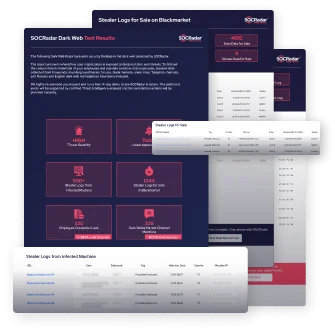
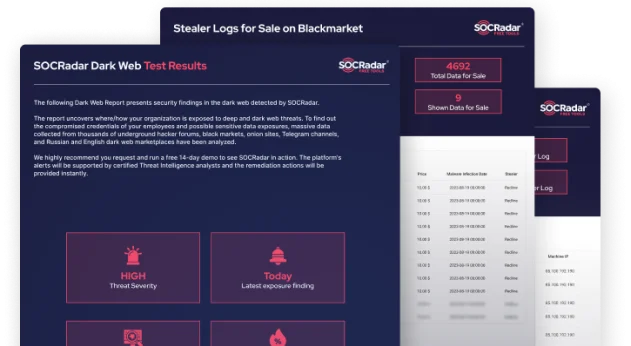
For organizations that want to assess their current Dark Web exposure without a full platform evaluation, the free Dark Web Report scans for domain and email exposure across forums, black markets, leak sites, and Telegram channels and returns results in minutes.
Key capabilities:
- IoC search across keywords, IPs, domains, emails, hashes, and URLs
- Stealer log and credential dump indexing with real-time alerting
- Ransomware leak site monitoring
- Closed forum and Telegram channel coverage
- Industry and region-specific threat news feeds
- SOAR integration support
Best for: Security operations centers and threat intelligence teams that need Dark Web intelligence operationalized into detection and response workflows rather than manual search sessions.
Technical Comparison
Indexing and V3 Onion Handling
The shift from V2 to V3 onion addressing is the most significant technical factor affecting Dark Web search engine utility in 2026. V3 addresses use 56-character identifiers derived from the service’s Ed25519 public key, providing stronger cryptographic guarantees against impersonation than V2’s 10-byte RSA key hash. Services that have migrated to V3 (now the majority of active onion infrastructure) are not discoverable by crawlers without V3 support.
For current Dark Web research, the engines with the most reliable V3 coverage are: Ahmia, Haystak, DuckDuckGo, OnionLand, VormWeb, Tor66, and Excavator. Torch’s V3 index is improving but incomplete. The Hidden Wiki is still transitioning its directory from legacy V2 links. Deep Search is excluded from this list, given documented reliability concerns.
Content Filtering Summary
For research conducted under compliance constraints or in organizational contexts where defensible records matter:
- Hard filtering (Abuse blocked): Ahmia
- Risk labeling without hard filtering: VormWeb, Tor66 (partial curation)
- Premium filtering options: Haystak
- No filtering: Torch, OnionLand, Excavator
- Avoid for research use: Deep Search (documented scam promotion)
- Security-focused indexing: SOCRadar (bonus)
How to Browse the Dark Web Anonymously
Anonymous browsing on the Dark Web starts with the right browser. Tor Browser is the standard tool: it routes traffic through the onion routing network across multiple encrypted relays, masking your IP address and enabling hidden services discovery across .onion infrastructure. Without it, any attempt at anonymous browsing on the Dark Web is undermined from the start. For a full breakdown of the best options, see Top 10 Dark Web Browsers for Anonymity.
Beyond the browser, safe Dark Web browsing requires deliberate habits:
- Disable JavaScript — removes one of the most common deanonymization vectors
- Avoid logins and downloads — prevents behavioral fingerprinting across sessions
- Use a dedicated research device — keep Dark Web activity off standard work infrastructure
- Cross-reference multiple engines — no single Dark Web search engine indexes everything; combine Ahmia, Torch, and Tor66 for the broadest hidden services discovery coverage
For organizations that need continuous Dark Web monitoring across darknet forums, darknet marketplaces, and ransomware leak sites without the operational risks of manual browsing, SOCRadar’s Dark Web monitoring automates the process with real-time alerting tied to monitored assets.
Risks of Using Dark Web Search Engines
Dark Web search engines are research tools, but they operate in a high-risk environment. Understanding the risks before using them is essential for analysts, researchers, and organizations alike.
- Malware and phishing — Dark Web ad networks and result pages frequently distribute malware or redirect to phishing sites. Unfiltered engines like Torch carry a significantly higher exposure rate than filtered alternatives like Ahmia.
- Deanonymization — JavaScript execution, WebRTC leaks, and misconfigured browsers can expose a user’s real IP address even through Tor. Engines that require JavaScript, such as some features of OnionLand, introduce additional risk for users prioritizing maximum anonymity.
- Exposure to illegal content — Unfiltered Dark Web search engines index darknet marketplaces, darknet forums, and other sites hosting prohibited material alongside legitimate research targets. Accessing this content, even inadvertently, can carry legal consequences depending on jurisdiction.
- Legal exposure — Using Dark Web search engines is legal in most countries, but the actions taken after discovery are not. Transacting on darknet marketplaces or downloading illegal content carries criminal liability regardless of which search engine was used to find the site.
- Operational security failures — Logging into personal accounts, reusing identifiers across sessions, or conducting research on standard work devices undermines the anonymous browsing protections that Tor provides.
Engines with content filtering -Ahmia- reduce but do not eliminate these risks. For organizations running structured Dark Web monitoring programs, automated platforms like SOCRadar remove the need for analysts to browse directly, significantly reducing operational and legal exposure.
How Security Teams Use Dark Web Search Engines
Credential and data leak monitoring:
The most common and immediately actionable use case. Analysts search for organizational email domains, employee credentials, and sensitive document identifiers to identify active leaks before they escalate. SOCRadar’s Credential and Data Leak Detection automates this at scale, removing the need for manual search engine queries.
Threat actor tracking:
Analysts follow specific threat actor handles across forums, monitor ransomware group leak sites, and track how group activity evolves after law enforcement disruption. This use case benefits most from engines with strong forum indexing: Ahmia and Haystak for filtered discovery, and Torch or Excavator for unfiltered breadth.
Vulnerability and exploit intelligence:
Dark Web forums surface discussions of newly weaponized vulnerabilities earlier than CVE publication or vendor advisories in many cases. Monitoring exploit discussions provides an earlier warning layer for prioritizing patch deployment. Ahmia and Haystak provide the most usable results for this use case, given their filtering and relevance ranking.
Infrastructure reconnaissance:
During incident response or threat hunting, analysts may need to identify Dark Web infrastructure associated with a specific threat actor, such as command-and-control addresses, payment wallets, or communication channels. Torch and Excavator can surface infrastructure that more selective engines may not have indexed. Tor66’s user-submitted index is also useful for finding recently active infrastructure that crawlers have not yet discovered.
Cross-verification:
No single Dark Web search engine has comprehensive coverage. Running queries across multiple engines (Ahmia for filtered results, Torch for breadth, and Tor66 for community-submitted coverage) increases confidence that relevant results are not being missed due to gaps in any single index.
For organizations that need continuous coverage without maintaining a dedicated research capacity, SOCRadar’s Dark Web monitoring provides automated alerting across forums, markets, leak sites, and Telegram channels, removing the need for ongoing manual search engine use.
Frequently Asked Questions
Which Dark Web search engines are confirmed active in 2026?
All ten engines in this guide are confirmed active as of mid-2026 based on current security researcher references: Ahmia, Torch, Haystak, DuckDuckGo, OnionLand, Deep Search, VormWeb, Tor66, Excavator, and The Hidden Wiki. Not Evil, which appeared in older versions of this guide, is no longer reliably operational.
What happened to Not Evil?
Not Evil went offline in 2024 and has not returned in a stable, verifiable form. Instances that appear to use the Not Evil brand may be impersonations or unrelated mirrors rather than the original service. It has been removed from this guide accordingly.
Are Dark Web search engines legal to use?
Using Dark Web search engines is legal in most jurisdictions. The Tor network is legal software in the majority of countries, and accessing it is not prohibited. What carries legal risk is what is accessed and what actions are taken. Accessing illegal marketplaces, downloading illegal content, or transacting for illegal goods carries legal exposure regardless of which search engine was used to find the site.
What is the difference between V2 and V3 onion addresses?
V2 onion addresses are 16-character strings derived from an RSA public key, deprecated by the Tor Project in 2021. V3 addresses are 56-character strings derived from an Ed25519 key pair, offering stronger cryptographic security and resistance to address impersonation. As of 2026, the majority of active onion services use V3 addressing, and search engines without functional V3 support return a significantly higher proportion of dead or unreachable links.
Which Dark Web search engine is best for security researchers?
For filtered, auditable general research: Ahmia. For broad unfiltered discovery: Torch. For marketplace intelligence with strong operational security: Excavator. For multi-network coverage: OnionLand. For risk-labeled results that aid safer navigation: VormWeb. For threat intelligence operationalized into SOC workflows: SOCRadar’s Dark Web Search Engine.
How do organizations monitor the Dark Web without running manual searches?
Automated Dark Web monitoring platforms continuously scan Dark Web forums, marketplaces, ransomware leak sites, and Telegram channels for mentions of monitored organizational assets, credentials, and indicators of compromise. SOCRadar’s Dark Web monitoring platform provides real-time alerting without requiring manual search engine queries. The free Dark Web Report provides an immediate snapshot of current organizational exposure.
Can Dark Web search engines be accessed from a regular browser?
Some engines, including Ahmia, DuckDuckGo, Haystak, OnionLand, and VormWeb, have clearnet interfaces accessible from standard browsers. However, these interfaces do not provide access to .onion content itself. Retrieving content from .onion sites requires a Tor browser or Tor-compatible connection. Using a regular browser to access a clearnet Dark Web search interface also leaves a browsing history and DNS record that a Tor connection would not.
Are Dark Web search engines safe and secure to use?
Dark Web search engines are tools, not threats in themselves, but using them involves real risks. Unfiltered engines surface harmful and illegal content alongside legitimate research targets. Clicking through results without appropriate operational security can expose your IP address, enable browser fingerprinting, or lead to sites distributing malware. Engines like Ahmia apply abuse filtering to reduce exposure. For any research context, using Tor Browser, disabling JavaScript where possible, and avoiding downloads significantly reduces risk. Organizations should ensure use is covered by a defined research policy before analysts access Dark Web search engines on company infrastructure.
Do Dark Web search engines require Tor?
Not always, but accessing .onion content does. Several Dark Web search engines, including Ahmia, Haystak, OnionLand, and VormWeb, offer clearnet interfaces that work in a standard browser. However, clicking through to actual .onion results requires a Tor-compatible connection. Using Tor Browser is the standard approach: it routes traffic through the onion routing network, providing anonymous browsing and enabling access to hidden services discovery that standard browsers cannot reach. Engines that are Tor-only, such as Torch, Deep Search, and Excavator, require Tor Browser to access the search interface itself.
Which Dark Web search engine is best for privacy?
For privacy-focused use, Ahmia and Excavator are the strongest options. Ahmia has a transparent, auditable codebase and does not log search queries. Excavator avoids JavaScript entirely, eliminating a major fingerprinting vector. DuckDuckGo’s strict no-log policy makes it a strong choice for surface web research inside the Tor Browser. Among all the Dark Web search engines in this guide, the privacy-focused combination most analysts use is DuckDuckGo for surface web queries and Ahmia or Excavator for onion-specific research, depending on whether filtered or unfiltered results are needed.
Can Dark Web search engines track users?
Some can and do. Engines that serve advertising, like Torch, run scripts and ad networks that can track browsing behavior and potentially fingerprint users. Engines that log search queries can associate query patterns with session data even when accessed through Tor. The no-log policies of engines like DuckDuckGo and the JavaScript-free design of Excavator are meaningful protections, but they are self-reported and not independently audited for most tools. Analysts with strict anonymity requirements should prefer engines with auditable codebases, avoid JavaScript, and treat all Dark Web search engines as potentially logging environments unless independently verified otherwise.
Unlike general-purpose Dark Web search engines, SOCRadar operationalizes Dark Web intelligence into continuous monitoring and detection workflows. SOCRadar monitors Dark Web search engine indexes, forums, ransomware leak sites, stealer log markets, and Telegram channels continuously. Security teams can operationalize this intelligence through the SOCRadar platform or assess their current exposure with the free Dark Web Report.
Choosing between the top Dark Web search engines depends on whether the priority is privacy, secure research, anonymous browsing, or operational threat intelligence.