What Is a Cyber Fusion Center?
A cyber fusion center integrates security operations, threat intelligence, fraud, risk, incident response, and relevant business teams around shared data and decisions.
Unlike a traditional SOC focused mainly on monitoring and response, a fusion center connects internal telemetry with external intelligence and business context. Its value comes from coordinated workflows and accountable action, not from placing more tools or teams in one room.
Key Takeaways
- A cyber fusion center integrates security operations, threat intelligence, fraud, risk, incident response, and relevant business teams around shared data and decisions.
- Unlike a traditional SOC focused mainly on monitoring and response, a fusion center connects internal telemetry with external intelligence and business context. Its value comes from coordinated workflows and accountable action, not from placing more tools or teams in one room.
- Duplicated work and competing priorities is a primary concern.
- Effective programs combine prevention, continuous visibility, accountable ownership, and tested response.
How It Works
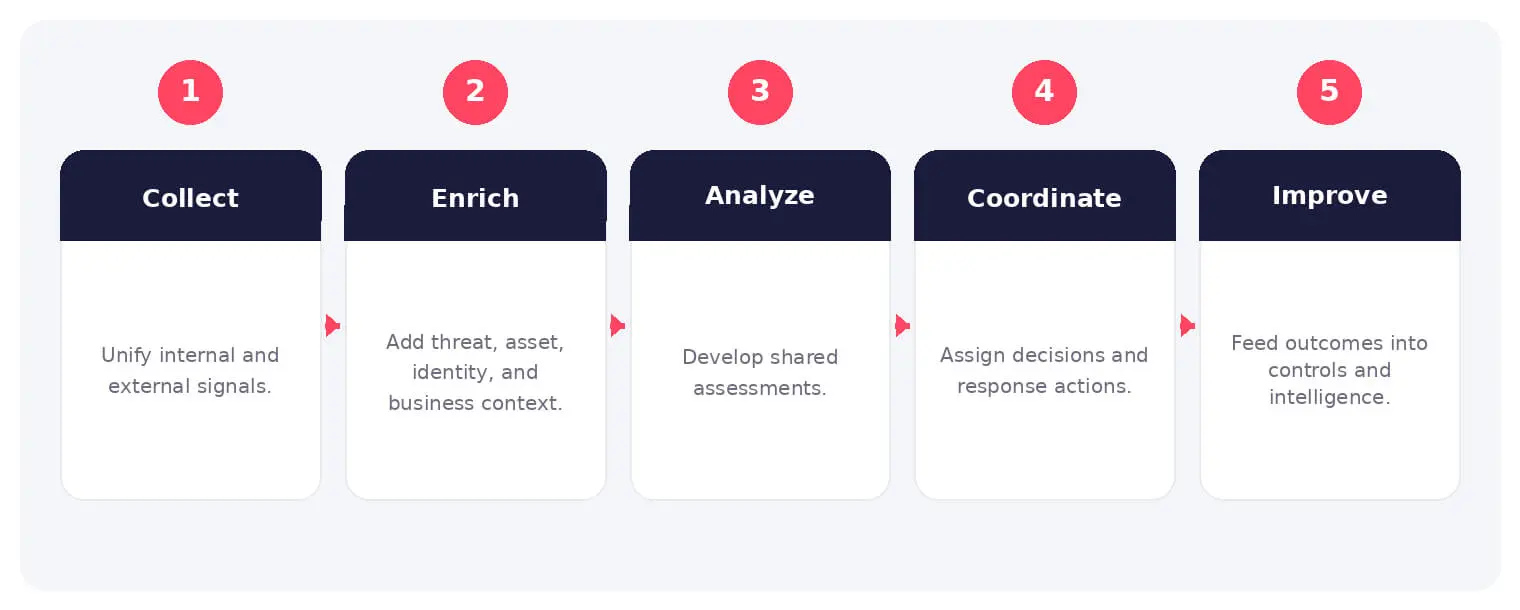
The operating flow above turns the concept into observable steps. Exact implementations vary, but each stage needs accountable ownership, trusted inputs, documented policy, and evidence that analysts can use during investigation and review.
Unlike a traditional SOC focused mainly on monitoring and response, a fusion center connects internal telemetry with external intelligence and business context. Its value comes from coordinated workflows and accountable action, not from placing more tools or teams in one room.
Common Types and Capabilities
- Security operations and incident response
- Cyber threat intelligence and hunting
- Fraud, brand, and physical-security coordination
- Risk, legal, communications, and business liaison
Security and Business Risks
- Duplicated work and competing priorities
- Tool integration without process alignment
- Unclear authority during incidents
- Sensitive intelligence shared too broadly
Warning Signs and Detection
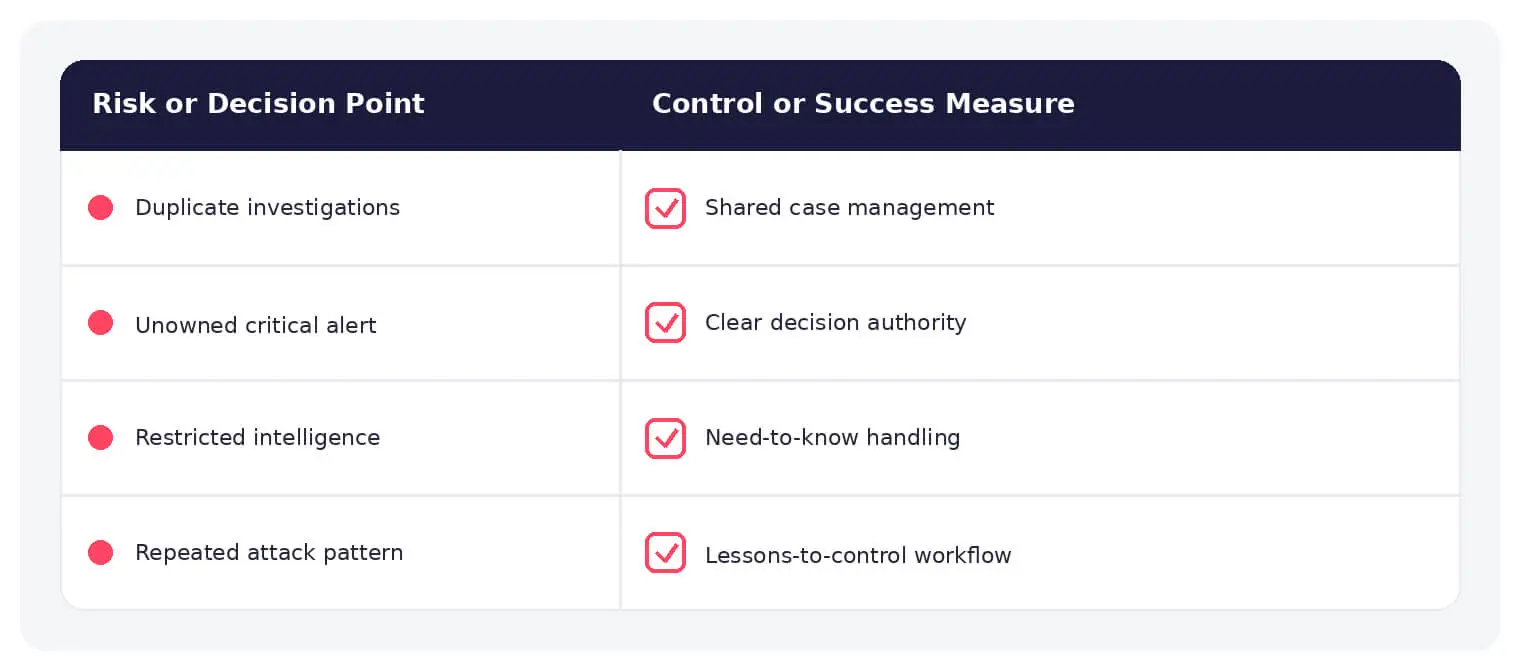
Monitor handoff delays, duplicate cases, unresolved ownership, conflicting severity ratings, intelligence without consumers, alerts without business context, stale playbooks, missed escalation deadlines, and repeated incidents with no control improvement.
Best Practices
Define mission and decision rights, use common taxonomy, integrate case workflows, control information sharing, measure outcomes, maintain executive escalation, run joint exercises, and turn incident lessons into detection and prevention changes.
How SOCRadar Can Help
SOCRadar adds external visibility, threat intelligence, exposure context, and continuous monitoring to help teams validate and prioritize risks related to cyber fusion center. This context complements internal AI, cloud, security operations, and governance controls.
Explore SOCRadar Cyber Threat Intelligence or request a demo to strengthen threat-informed prevention and response.
Frequently Asked Questions
How Is a Cyber Fusion Center Different From a Traditional SOC?
A traditional SOC focuses mainly on monitoring alerts and responding to incidents. A cyber fusion center connects security operations with threat intelligence, fraud, risk, incident response, and business teams so decisions rest on shared data and context. The difference lies in coordinated workflows and accountable ownership, not in relocating people into one room.
What Are the Most Common Operational Risks in a Cyber Fusion Center?
Duplicated work and competing priorities between teams are the primary concerns, usually traced to unclear decision rights. Tool integration without process alignment, unclear authority during incidents, and sensitive intelligence shared too broadly are other frequent failures. Each one slowly erodes trust in the fusion model.
How Does a Cyber Fusion Center Work Day to Day?
Internal telemetry, external intelligence, and business context feed shared case workflows in which each stage has an accountable owner, trusted inputs, and documented policy. Analysts work from evidence that supports both investigation and later review. Implementations vary, but handoffs, severity calls, and escalations follow a defined process rather than ad hoc agreement.
Which Teams Should Participate in a Cyber Fusion Center?
Core participants typically include security operations, incident response, and cyber threat intelligence, extended by fraud, brand, and physical-security coordination. Risk, legal, communications, and business liaison functions complete the model so incidents carry the right authority and messaging. Membership should follow the mission, not headcount.
What Warning Signs Suggest a Fusion Center Is Not Working?
Watch for handoff delays, duplicate cases, unresolved ownership, and conflicting severity ratings across teams. Intelligence without consumers, alerts without business context, stale playbooks, and missed escalation deadlines are further indicators. Repeated incidents with no control improvement suggest lessons are not being converted into action.
Where Should an Organization Start When Building a Cyber Fusion Center?
Define the mission and decision rights before adding tooling. Then establish a common taxonomy, integrate case workflows, and set controls for information sharing. This sequence helps prevent the center from becoming a room of connected tools without aligned processes.
How Should Sensitive Intelligence Be Shared Inside a Fusion Center?
Apply need-to-know handling so intelligence reaches the teams able to act on it instead of being broadcast widely. Tie sharing rules to classification, case context, and documented policy. Controlled sharing protects sources and legal position while keeping decisions informed.
How Should Fusion Center Performance Be Measured?
Measure outcomes rather than activity: duplicate case rates, handoff speed, escalation deadlines met, and whether incident lessons lead to detection or prevention changes. Executive escalation paths should be exercised and reviewed regularly. Metrics that only count processed alerts will hide coordination problems.
Why Do Joint Exercises Matter for a Cyber Fusion Center?
Joint exercises test decision rights, escalation paths, and cross-team handoffs under pressure before a major incident does the same. They expose gaps between documented playbooks and actual authority. Findings should feed directly into playbook updates and control changes.
What Is a Common Misconception About Cyber Fusion Centers?
That value comes from placing more tools or teams in one room. A fusion center earns its value through coordinated workflows, shared data, and accountable action that connect internal telemetry with external intelligence and business context. Without process alignment, it can simply duplicate effort at a higher cost.
Oct 16, 2026
CVE-2026-102764: BeyondTrust Zero-Day Exploited
BeyondTrust has disclosed CVE-2026-102764, a critical Remote Support vulnerability exploited as a zero-day weeks before customers received a patch. The attack began…
Oct 15, 2026
Cisco Secure Email & PAN-OS Zero-Days Exploited
Cisco Secure Email & PAN-OS Zero-Days Exploited Cisco and Palo Alto Networks have patched two actively exploited zero-day vulnerabilities that can lead…
Oct 15, 2026
SOCRadar Splunk Integration: New MSSP and Vulnerability Apps
SOCRadar Splunk Integration: New MSSP and Vulnerability Apps Your analysts live in Splunk. Your external risk does not: SOCRadar alarms for dozens…
Intelligence in your inbox every Thursday.
Join 30,000+ security professionals reading SOCRadar research.
Subscribe