
What Is a Kill Switch in Cybersecurity?
A kill switch is a control that rapidly stops, disables, isolates, or limits a system, process, connection, credential, or operation when a defined risk condition occurs.
Kill switches may be manual or automatic and can protect software, networks, industrial processes, cloud resources, accounts, and data transfers. Poorly designed controls can also cause outages or be abused by attackers.
Key Takeaways
- A kill switch is a control that rapidly stops, disables, isolates, or limits a system, process, connection, credential, or operation when a defined risk condition occurs.
- Kill switches may be manual or automatic and can protect software, networks, industrial processes, cloud resources, accounts, and data transfers. Poorly designed controls can also cause outages or be abused by attackers.
- Accidental activation and outage is a primary concern.
- Effective security combines prevention, continuous visibility, ownership, and tested response.
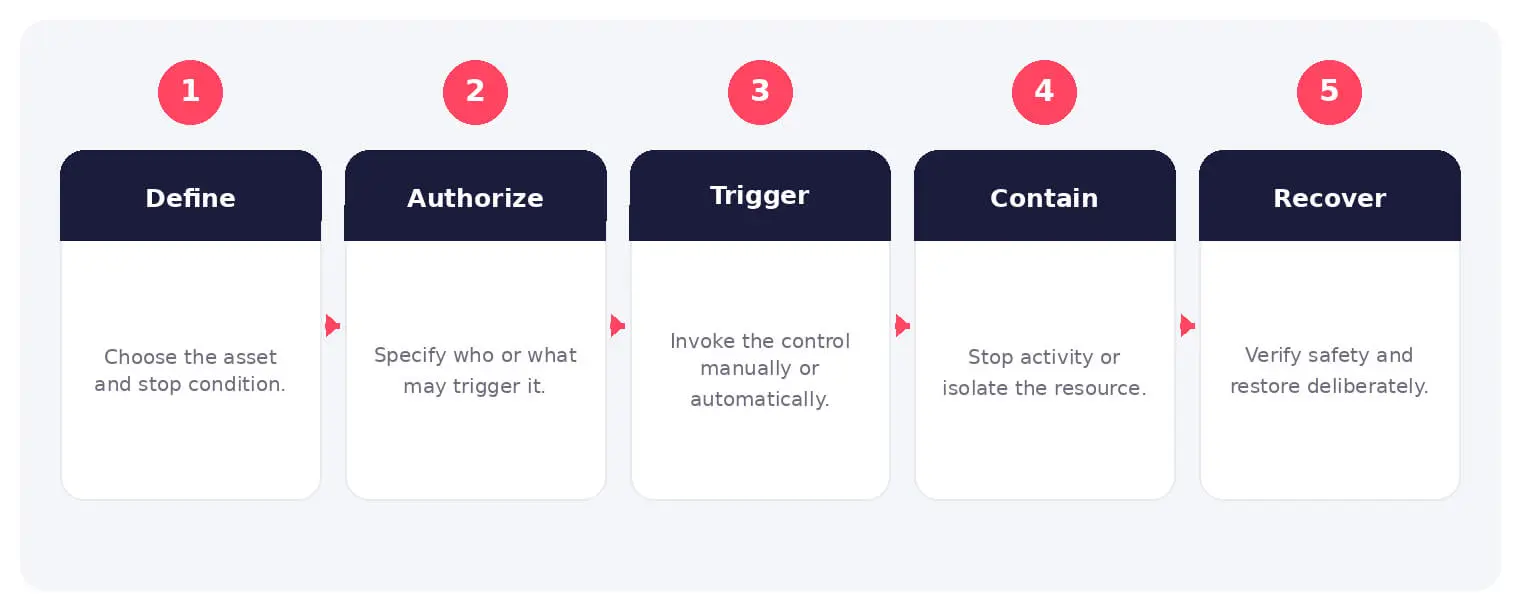
How It Works
The operating flow above turns the concept into observable steps. Exact implementations vary, but each stage needs accountable ownership, trusted inputs, documented policy, and evidence that analysts can use during investigation and review.
Kill switches may be manual or automatic and can protect software, networks, industrial processes, cloud resources, accounts, and data transfers. Poorly designed controls can also cause outages or be abused by attackers.
Common Types and Capabilities
- Application and process kill switches
- Network and connectivity isolation
- Account, token, and API revocation
- Industrial and physical emergency stops
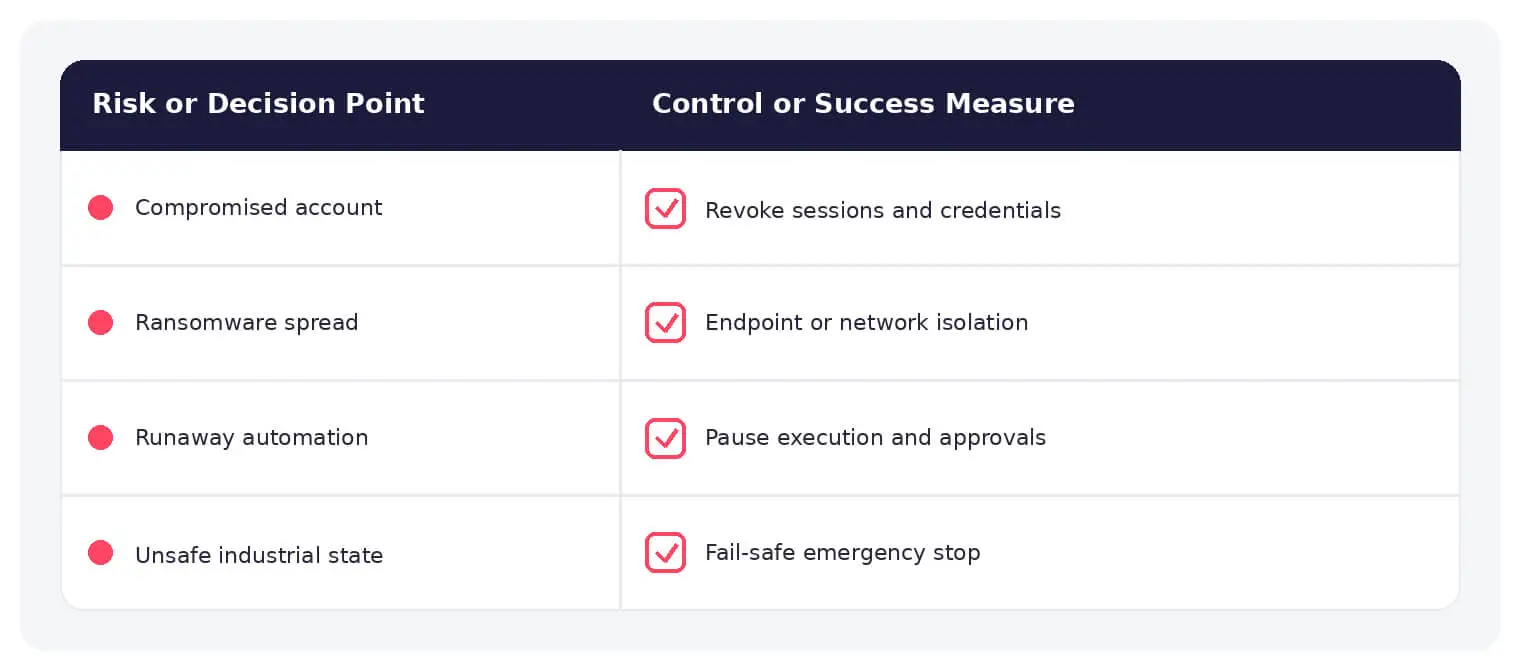
Security and Business Risks
- Accidental activation and outage
- Unauthorized or malicious triggering
- Failure during a real incident
- Unsafe recovery and hidden dependencies
Warning Signs and Detection
Monitor trigger attempts, policy changes, disabled controls, failed health checks, unauthorized administrator activity, unexpected isolation, automation errors, recovery attempts, and discrepancies between control state and actual system behavior.
Best Practices
Require strong authorization, separate duties, define safe defaults, test regularly, protect control paths, log every change and activation, provide manual alternatives, document dependencies, and rehearse recovery.
How SOCRadar Can Help
SOCRadar adds external visibility, threat intelligence, exposure context, and continuous monitoring to help teams validate and prioritize risks related to kill switch. This context complements internal endpoint, identity, and network controls.
Explore SOCRadar Extended Threat Intelligence or request a demo to strengthen threat-informed prevention and response.
Frequently Asked Questions
What is the main purpose of kill switch?
A kill switch is a control that rapidly stops, disables, isolates, or limits a system, process, connection, credential, or operation when a defined risk condition occurs.
What is a common security risk?
Accidental activation and outage.
What should security teams monitor?
Monitor trigger attempts, policy changes, disabled controls, failed health checks, unauthorized administrator activity, unexpected isolation, automation errors, recovery attempts, and discrepancies between control state and actual system behavior.
What is the first practical step?
Require strong authorization, separate duties, define safe defaults, test regularly, protect control paths, log every change and activation, provide manual alternatives, document dependencies, and rehearse recovery.

Oct 16, 2026
CVE-2026-102764: BeyondTrust Zero-Day Exploited
BeyondTrust has disclosed CVE-2026-102764, a critical Remote Support vulnerability exploited as a zero-day weeks before customers received a patch. The attack began…
Oct 15, 2026
Cisco Secure Email & PAN-OS Zero-Days Exploited
Cisco Secure Email & PAN-OS Zero-Days Exploited Cisco and Palo Alto Networks have patched two actively exploited zero-day vulnerabilities that can lead…
Oct 15, 2026
SOCRadar Splunk Integration: New MSSP and Vulnerability Apps
SOCRadar Splunk Integration: New MSSP and Vulnerability Apps Your analysts live in Splunk. Your external risk does not: SOCRadar alarms for dozens…
Intelligence in your inbox every Thursday.
Join 30,000+ security professionals reading SOCRadar research.
Subscribe