

Mar 10, 2026
Jan 31, 2026
5 Mins Read
Sep 13, 2026
Table Of Content
Related Articles
SMS Bombing
Threat Actors
Jan 08, 2026
Dark Web Monitoring
Feb 19, 2026
Ransomware
Jan 31, 2026
Dark Web
Jan 31, 2026
What Is Smishing?
Smishing is phishing delivered through SMS or another mobile text-messaging channel. Attackers impersonate banks, delivery companies, government agencies, employers, or familiar services and use urgency to push victims toward a malicious link, phone call, payment, or disclosure.
Mobile screens hide full URLs and message context, while users often act quickly on delivery, account, or payment alerts. Sender spoofing, compromised messaging accounts, and information from breaches can make the message appear credible.
Key Takeaways
- Package-delivery and toll-payment scams is a central category or technique.
- Reliable assessment requires source, ownership, timing, and operational context.
- Detection should connect external evidence with identity, device, network, and business signals.
- Response should protect affected people and remove reusable access paths.
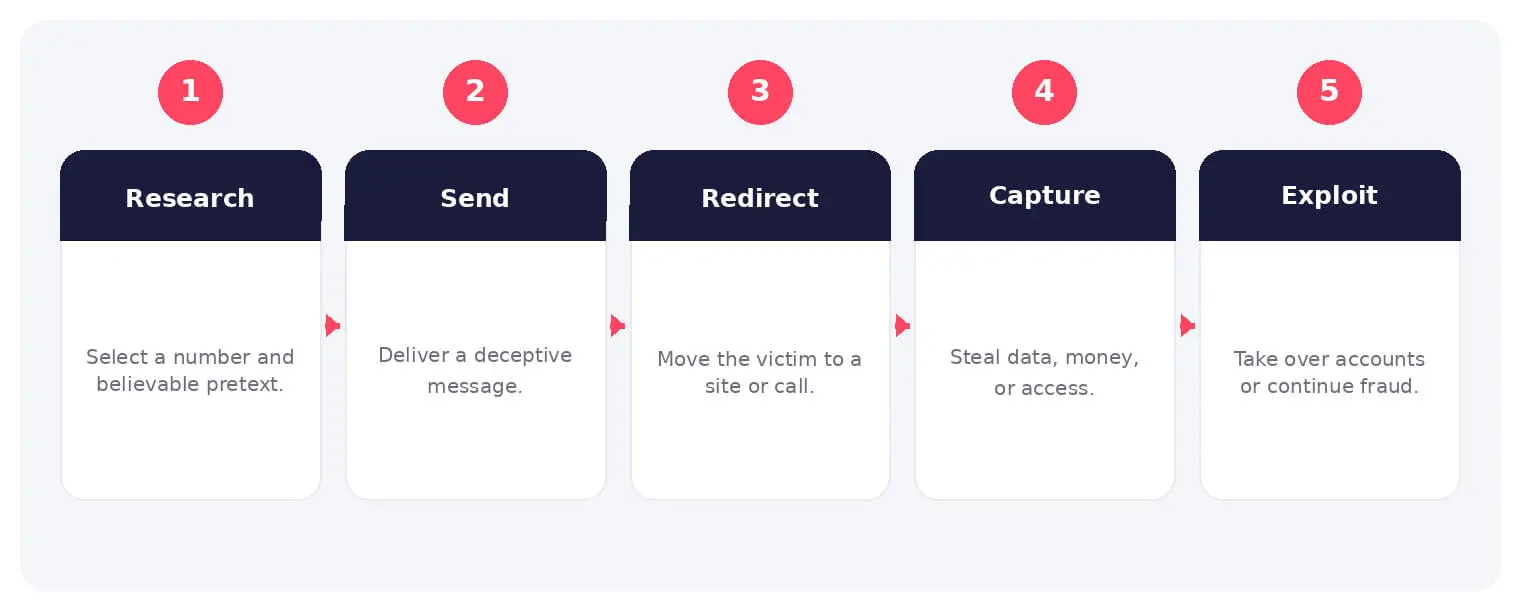
How Smishing Works
The sequence above provides a practical operating model. Individual steps can overlap, repeat, or involve different people and services, so each stage should be validated against available evidence.
Mobile screens hide full URLs and message context, while users often act quickly on delivery, account, or payment alerts. Sender spoofing, compromised messaging accounts, and information from breaches can make the message appear credible.
Common Types and Techniques
- Package-delivery and toll-payment scams
- Bank, tax, and government impersonation
- Credential phishing and OTP theft
- Malicious application and support-scam delivery
Security, Privacy, and Business Risks
- Credential theft and account takeover
- Payment, card, and identity fraud
- Malware installation on mobile devices
- Brand abuse and customer harm
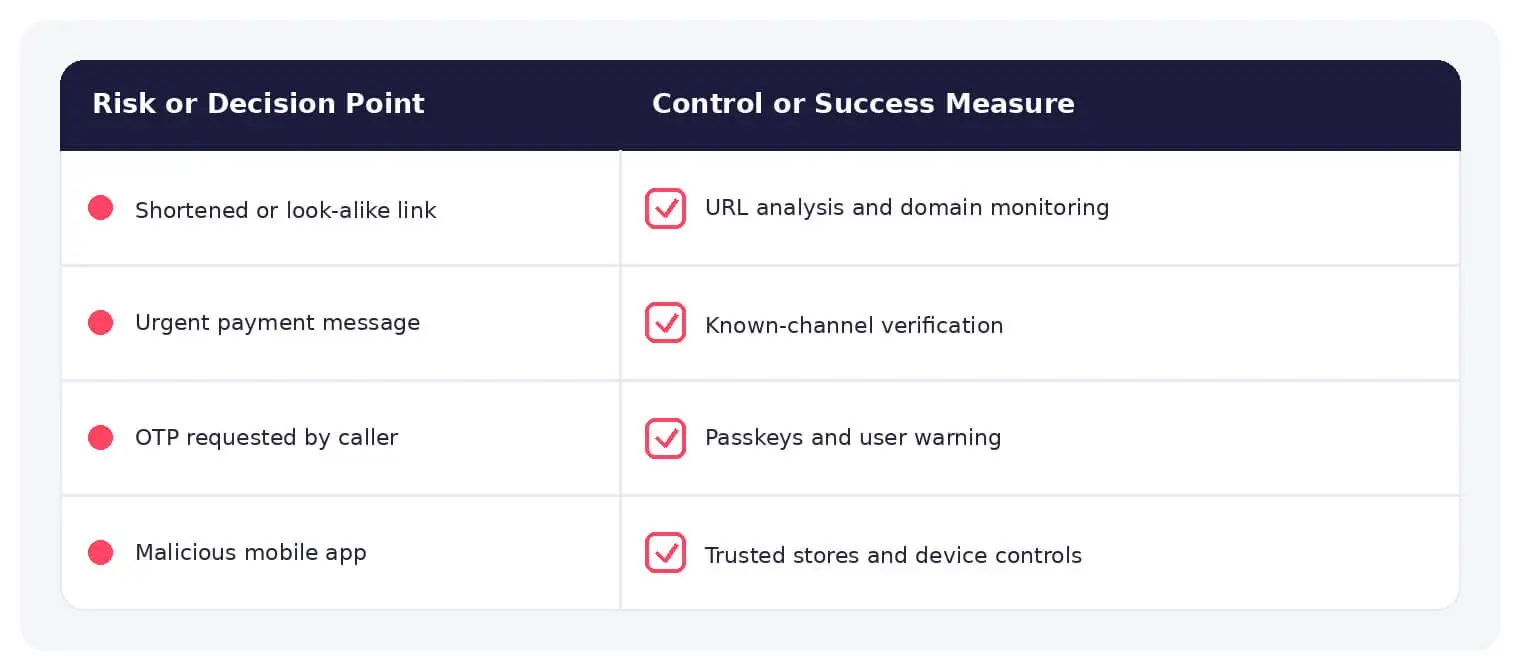
Warning Signs and Validation
Check the real destination, domain age and ownership, sender behavior, shortened links, message volume, device enrollment, OTP requests, new sessions, and transactions after the text.
Prevention and Response
Do not use message links for sensitive actions; open the known app or site directly. Use mobile threat protection, spam filtering, passkeys, transaction verification, domain monitoring, user reporting, and rapid takedown.
How SOCRadar Can Help
SOCRadar combines external intelligence, Dark Web visibility, brand monitoring, attack-surface discovery, and contextual enrichment to help teams identify exposure and investigate activity connected to smishing.
Explore SOCRadar Brand Protection or request a demo to strengthen external threat detection and response.
Frequently Asked Questions
Is Smishing Limited to SMS Text Messages?
No. Smishing covers any mobile text channel, including messaging apps and rich communication services, not just carrier SMS. The defining trait is the short-message lure, and the same fake delivery, banking, and toll pretexts appear across all of them.
Why Are Package-Delivery and Toll-Payment Texts So Common in Smishing?
These pretexts reach huge audiences with a single send because nearly everyone expects parcels or drives on tolled roads. The messages carry built-in urgency, such as an unpaid fee or a held package, and often request a small payment that lowers suspicion. Sending costs are minimal, so even a low response rate is profitable.
How Do Attackers Make Smishing Texts Look Trustworthy?
They use spoofed sender IDs or alphanumeric names, hijacked messaging accounts, and personal details drawn from breaches. Shortened links hide the true destination, and small mobile screens cut off the visible domain, so the message reads as routine until the tap. Timing tied to real events, like holiday shipping surges, adds further credibility.
What Does One-Time Passcode Theft Look Like in Smishing?
The attacker starts a login with a password obtained through phishing or a leak, which triggers a one-time passcode from the bank or service. A follow-up text or call posing as fraud support asks the victim to read the code back, then uses it to finish the login. No legitimate service asks for a one-time passcode over text or phone, so the code should not be shared in response.
Which Warning Signs Point to a Smishing Message?
Common indicators include an unexpected one-time passcode, a shortened link that resolves to a newly registered or unrelated domain, and pressure to pay or enter data within minutes. Legitimate banks and government agencies rarely begin sensitive actions from a text. Checking where a link actually leads before tapping catches many of these attempts.
What Should I Do if I Tapped a Link in a Suspicious Text?
Close the page without entering anything, then check the phone for unexpected apps, configuration profiles, or permission prompts. Run a scan with mobile security software, watch bank and email accounts for new sessions or transactions, and report the message through your carrier’s spam-reporting channel. If suspicious behavior appears afterward, a deeper device check may be warranted.
What Should I Do if I Entered Credentials on a Fake Login Page?
Change the password from a trusted device and revoke active sessions, since a reset alone does not always end an attacker’s existing login. Turn on phishing-resistant MFA such as passkeys or security keys, review recent transactions and account activity, and report unauthorized charges to the bank or service. Update the password anywhere else it was reused.
When Does Smishing Lead to Malware on a Phone?
Not every campaign uses malware. Many stop at card details or a direct payment, while others deliver Android banking trojans through fake app installs or persuade victims to grant accessibility permissions. Because the payload depends on the campaign’s goal, a tapped link alone justifies account monitoring even without visible symptoms.
How Can Organizations Reduce Smishing Risk?
Combine spam filtering, mobile threat defense on managed devices, and passkeys or phishing-resistant MFA to blunt credential theft. Train staff to reach banks, couriers, and internal systems through saved apps or bookmarks rather than message links, and give them a simple way to report suspicious texts. Domain monitoring and rapid takedown shorten the life of fake sender identities and phishing pages.