
What Is Vibe Coding?
Vibe coding is a software-development approach in which a person describes a desired outcome to an AI coding assistant and iteratively accepts or adjusts generated code, often without examining every implementation detail.
The approach can accelerate prototypes and routine work, but responsibility remains with the human and organization that deploy the result. Security risk increases when generated code, packages, secrets, infrastructure changes, and tests are accepted without understanding or verification.
Key Takeaways
- Vibe coding is a software-development approach in which a person describes a desired outcome to an AI coding assistant and iteratively accepts or adjusts generated code, often without examining every implementation detail.
- The approach can accelerate prototypes and routine work, but responsibility remains with the human and organization that deploy the result. Security risk increases when generated code, packages, secrets, infrastructure changes, and tests are accepted without understanding or verification.
- Insecure code that appears functional is a primary concern.
- Effective programs combine clear scope, evidence, accountable ownership, and continuous review.
How It Works
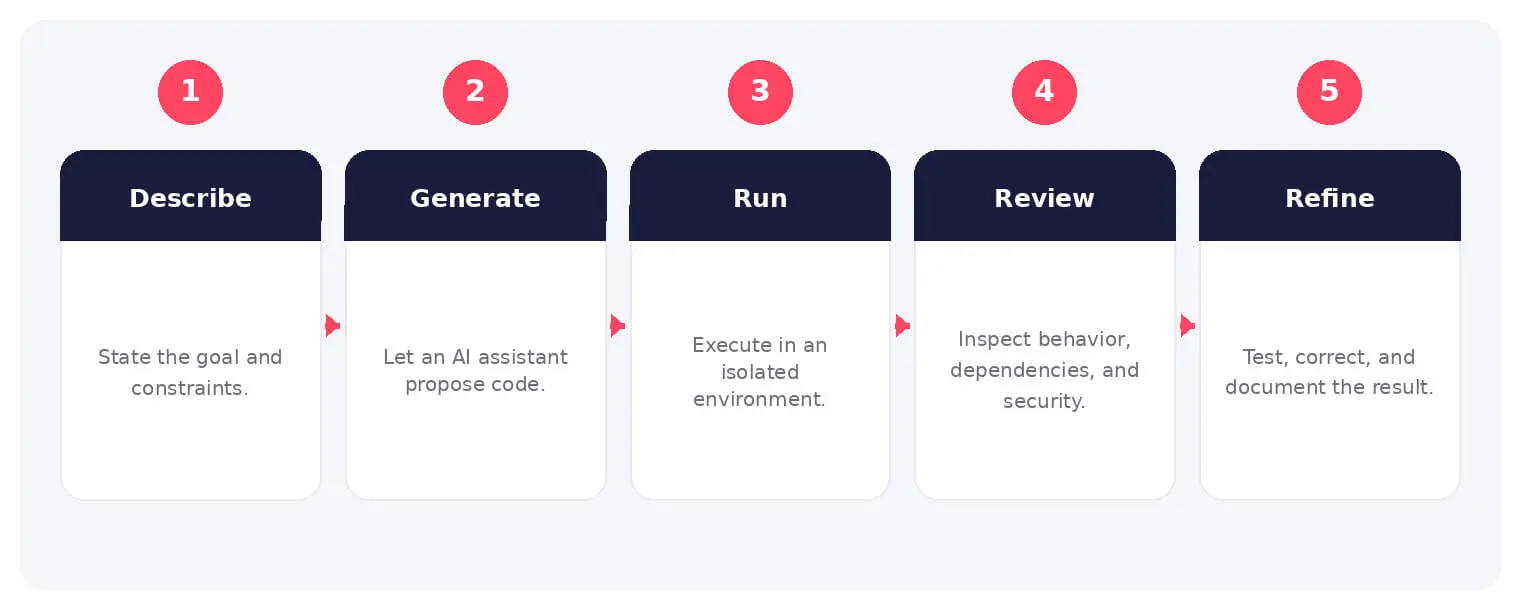
The operating flow above turns the concept into observable steps. Exact implementations vary, but each stage needs accountable ownership, trusted inputs, documented policy, and evidence that practitioners can use during review and decision-making.
The approach can accelerate prototypes and routine work, but responsibility remains with the human and organization that deploy the result. Security risk increases when generated code, packages, secrets, infrastructure changes, and tests are accepted without understanding or verification.
Common Types and Capabilities
- Prototype and interface generation
- Boilerplate and integration coding
- Test and documentation assistance
- Agentic multi-file development
Security and Business Risks
- Insecure code that appears functional
- Hallucinated or malicious dependencies
- Secrets and sensitive code sent to providers
- Changes no maintainer can explain
Warning Signs and Detection
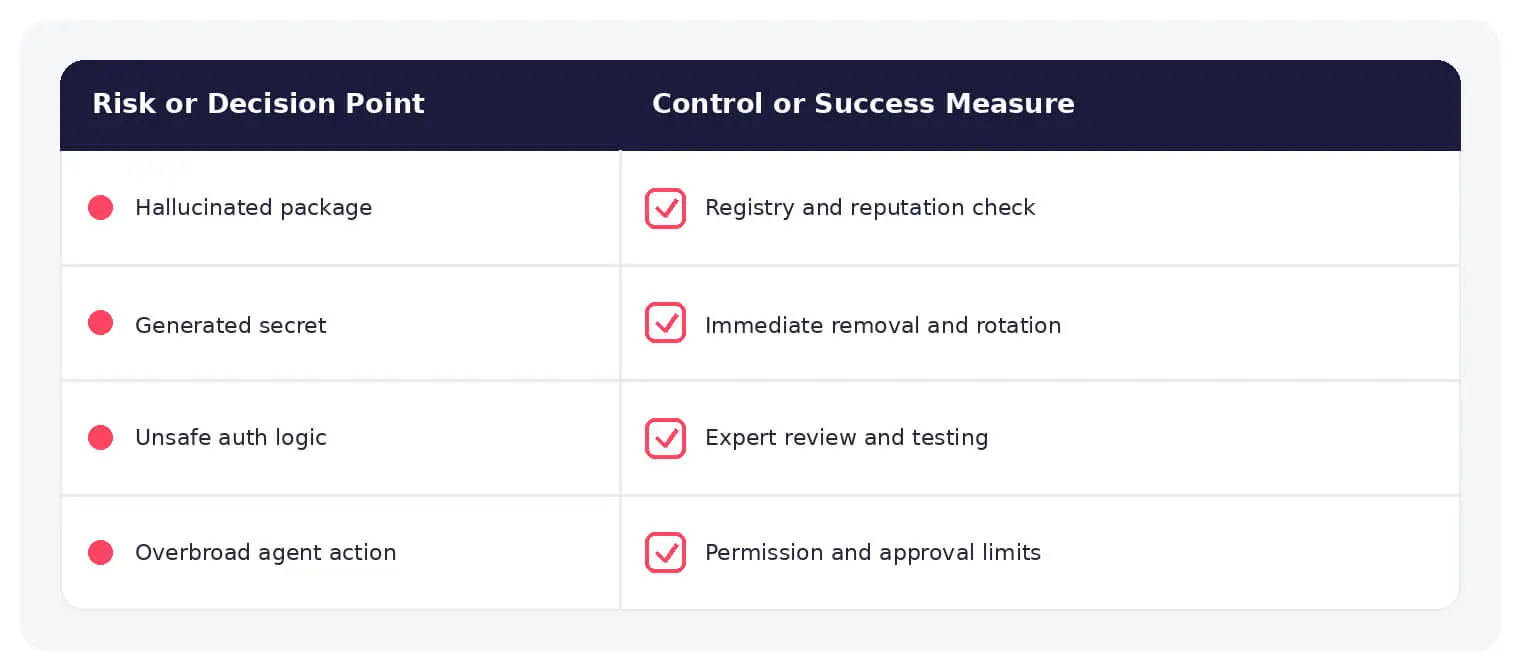
Watch for packages that do not exist or have low reputation, copied secrets, disabled security checks, broad permissions, unreviewed infrastructure code, generated authentication logic, tests that only confirm happy paths, unexplained obfuscation, and changes too large for meaningful review.
Best Practices
Use approved tools, avoid sensitive prompts, isolate execution, require version control and peer review, scan dependencies and secrets, use SAST and tests, constrain agent permissions, verify authentication and data handling, keep changes small, and reject code the team cannot maintain.
How SOCRadar Can Help
SOCRadar adds external visibility, threat intelligence, exposure context, and continuous monitoring to help teams validate and prioritize risks related to vibe coding. This context complements internal engineering, governance, vulnerability, and security operations controls.
Explore SOCRadar Supply Chain Intelligence or request a demo to strengthen threat-informed prevention and response.
Frequently Asked Questions
What Does Vibe Coding Mean in Practice?
In practice, vibe coding means describing a desired outcome in natural language and letting an AI coding assistant produce the implementation. The developer accepts, adjusts, or regenerates the output in successive iterations, often without reading every line. The approach suits prototypes and routine work, but the person and organization deploying the result still own its correctness and security.
Why Is Vibe Coding a Security Concern?
Generated code can appear functional while containing exploitable flaws, because fluent output does not guarantee a secure implementation. Risk increases when developers accept insecure patterns, hallucinated packages, embedded secrets, or broad agent permissions without verification. Responsibility for any resulting incident stays with the organization that shipped the code.
How Does a Typical Vibe Coding Workflow Proceed?
A developer frames the desired behavior, submits it to the assistant, and accepts or refines the generated code over multiple turns. Agentic setups can extend this across multiple files, tests, and infrastructure changes. Each stage still requires accountable ownership, trusted inputs, and evidence that supports review before anything is merged.
What Warning Signs Suggest Vibe-Coded Output Is Unsafe?
Common red flags include:
- Dependencies that do not exist or have a low reputation
- Copied credentials, API keys, or other secrets embedded in the code
- Disabled security checks, broad permissions, or unreviewed infrastructure changes
- Authentication logic generated wholesale and tests that only confirm happy paths
- Unexplained obfuscation or changes too large for meaningful review
How Should Teams Handle Suspicious AI-Generated Code?
Reject changes the team cannot explain or maintain, and treat unverifiable dependencies as untrusted until their provenance is confirmed. Run secret scanning, SAST, and dependency analysis before merging, and require a reviewer who understands the change. If secrets were shared in prompts or generated into code, rotate them promptly.
Which Controls Make Vibe Coding Safer?
Limit work to approved tools, keep sensitive data out of prompts, and isolate execution environments. Require version control, peer review, small change sizes, and constrained agent permissions. Verify authentication, authorization, and data handling explicitly, since generated code frequently falls short in these areas.
Can Vibe Coding Be Used for Production Systems?
It can, provided the organization applies the same review, testing, and security gates expected of any other code. The speed advantage is real for routine work, but production readiness depends on human verification rather than on output quality alone. Teams should document ownership so every generated change has an accountable maintainer.
Who Is Responsible When Vibe-Coded Code Causes an Incident?
The human and organization that deployed the code remain responsible, regardless of how much the AI contributed. An assistant cannot accept liability, so accountability sits with the developers, reviewers, and leadership who approved the release. Clear governance should define who signs off on generated changes and infrastructure modifications.
Is Vibe Coding the Same as Using an AI Coding Assistant?
No. Using an assistant with careful review is standard engineering practice; vibe coding specifically describes accepting output with limited examination of implementation details. The distinction matters because review depth, not tool choice, drives most of the security risk.
What Are Hallucinated Dependencies and Why Do They Matter?
Hallucinated dependencies are packages an AI assistant references that do not exist in a public registry. Attackers sometimes register those names afterward and publish malicious lookalike packages, a tactic known as slopsquatting. Verifying every dependency against a trusted registry before installation reduces this exposure.
Oct 16, 2026
CVE-2026-102764: BeyondTrust Zero-Day Exploited
BeyondTrust has disclosed CVE-2026-102764, a critical Remote Support vulnerability exploited as a zero-day weeks before customers received a patch. The attack began…

Oct 15, 2026
Cisco Secure Email & PAN-OS Zero-Days Exploited
Cisco Secure Email & PAN-OS Zero-Days Exploited Cisco and Palo Alto Networks have patched two actively exploited zero-day vulnerabilities that can lead…
Oct 15, 2026
SOCRadar Splunk Integration: New MSSP and Vulnerability Apps
SOCRadar Splunk Integration: New MSSP and Vulnerability Apps Your analysts live in Splunk. Your external risk does not: SOCRadar alarms for dozens…
Intelligence in your inbox every Thursday.
Join 30,000+ security professionals reading SOCRadar research.
Subscribe