
What Is Vulnerability Prioritization Technology?
Vulnerability Prioritization Technology (VPT) ranks vulnerabilities by the likelihood and potential impact of exploitation in a specific organizational environment.
VPT combines vulnerability severity with signals such as known exploitation, exploit availability, EPSS probability, internet exposure, reachable attack paths, asset criticality, control coverage, threat-actor interest, and remediation status. It helps teams act on risk rather than raw scan volume.
Key Takeaways
- Vulnerability Prioritization Technology (VPT) ranks vulnerabilities by the likelihood and potential impact of exploitation in a specific organizational environment.
- VPT combines vulnerability severity with signals such as known exploitation, exploit availability, EPSS probability, internet exposure, reachable attack paths, asset criticality, control coverage, threat-actor interest, and remediation status. It helps teams act on risk rather than raw scan volume.
- High-severity backlog hiding active risk is a primary concern.
- Effective programs combine clear scope, evidence, accountable ownership, and continuous review.
How It Works
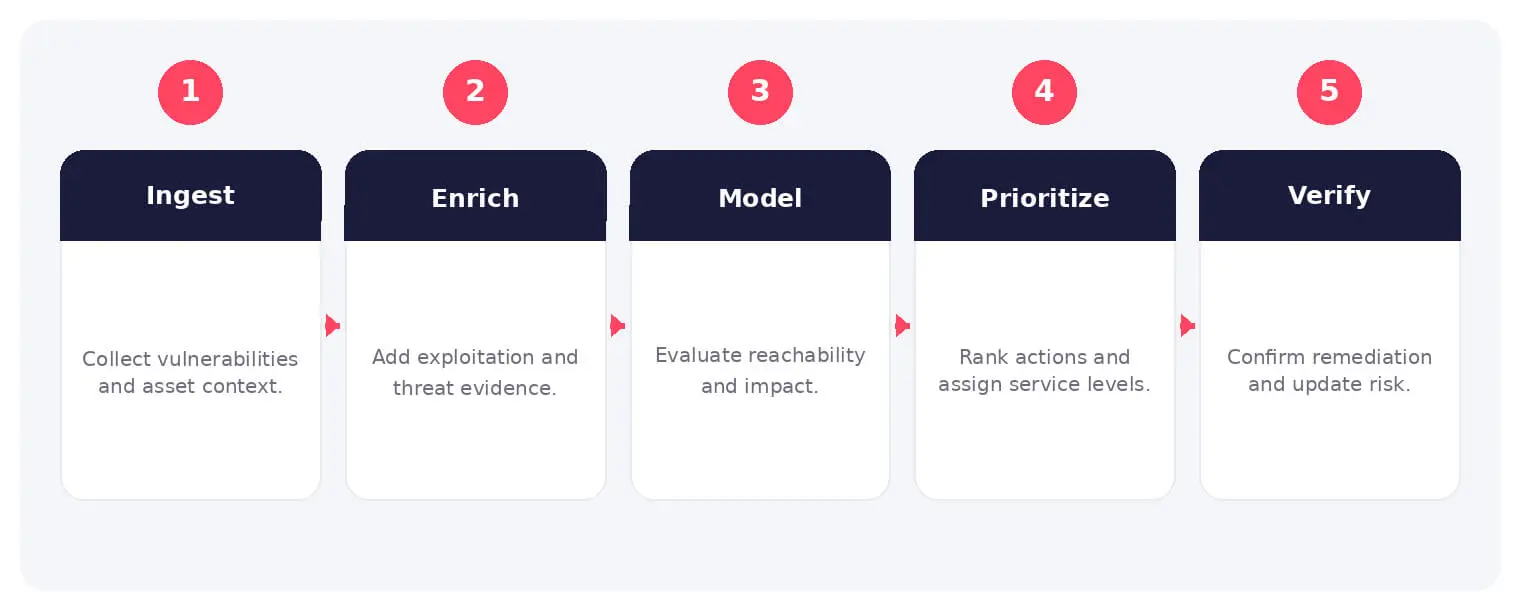
The operating flow above turns the concept into observable steps. Exact implementations vary, but each stage needs accountable ownership, trusted inputs, documented policy, and evidence that practitioners can use during review and decision-making.
VPT combines vulnerability severity with signals such as known exploitation, exploit availability, EPSS probability, internet exposure, reachable attack paths, asset criticality, control coverage, threat-actor interest, and remediation status. It helps teams act on risk rather than raw scan volume.
Common Types and Capabilities
- Exploit and threat-informed prioritization
- Asset and business-context scoring
- Attack-path and exposure analysis
- Remediation workflow and exception tracking
Security and Business Risks
- High-severity backlog hiding active risk
- Opaque scores that teams cannot defend
- Incomplete asset and exposure context
- Priority drift after threat conditions change
Warning Signs and Detection
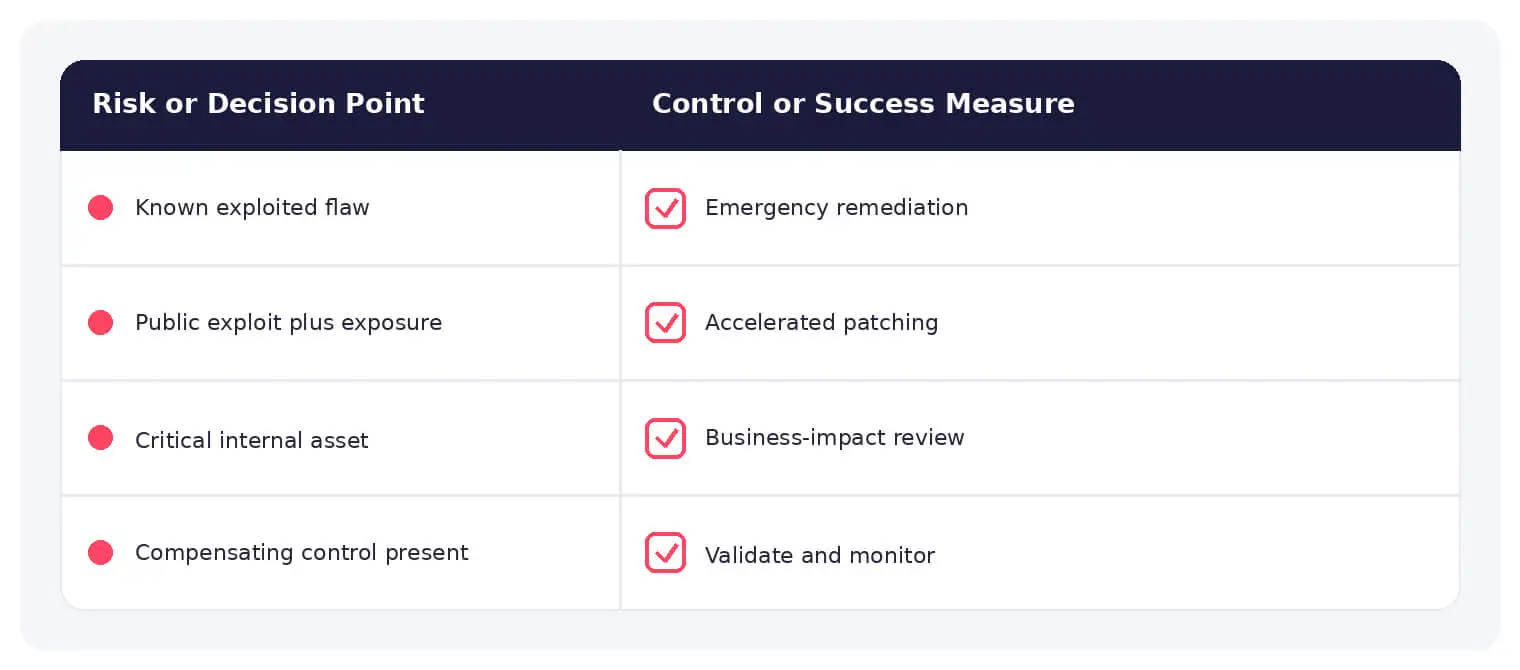
Monitor CISA KEV additions, credible exploitation reports, new public exploits, exposed affected services, vulnerable critical assets, compensating-control failures, patch availability, scan freshness, reopened findings, exception age, and differences between modeled and observed risk.
Best Practices
Use several risk signals, make scoring explainable, prioritize exploited and internet-facing flaws, validate asset ownership, define remediation service levels, support mitigation when patches are unavailable, track exceptions, rescan after fixes, and measure exposure reduction.
How SOCRadar Can Help
SOCRadar adds external visibility, threat intelligence, exposure context, and continuous monitoring to help teams validate and prioritize risks related to vulnerability prioritization technology. This context complements internal engineering, governance, vulnerability, and security operations controls.
Explore SOCRadar Vulnerability Intelligence or request a demo to strengthen threat-informed prevention and response.
Frequently Asked Questions
What Does Vulnerability Prioritization Technology Do?
Vulnerability Prioritization Technology (VPT) ranks vulnerabilities by the likelihood and potential impact of exploitation in a specific organizational environment. Instead of treating every scan finding as equal, it helps teams decide which flaws to remediate first based on real risk rather than raw scan volume.
How Is VPT Different From CVSS Severity Scoring?
CVSS measures the intrinsic severity of a vulnerability on a generic scale, while VPT layers environmental and threat context on top of that score. A critical CVE on an isolated internal system may rank lower than a moderate flaw exposed to the internet with active exploitation.
What Signals Does VPT Use to Rank Vulnerabilities?
Typical inputs include known exploitation status, exploit availability, EPSS probability, internet exposure, reachable attack paths, asset criticality, control coverage, threat-actor interest, and remediation status. Combining these signals separates vulnerabilities that are actively exploited from those that are merely severe on paper.
What Role Does EPSS Play in Prioritization?
EPSS, the Exploit Prediction Scoring System, estimates the probability that a vulnerability will be exploited in the wild within a defined time frame. Feeding that probability into prioritization helps teams surface flaws with rising exploitation risk before they appear in widespread attack activity.
What Is the Main Risk of Relying Only on Severity Scores?
A high-severity backlog can hide vulnerabilities that attackers are actively exploiting while routine findings consume remediation capacity. Teams that fix strictly by severity often spend effort on flaws with little real-world risk and delay action on exploited, internet-facing systems.
How Does CISA KEV Feed Into Prioritization Decisions?
CISA’s Known Exploited Vulnerabilities (KEV) catalog lists flaws with confirmed in-the-wild exploitation, so new KEV additions should trigger immediate review. Many programs treat KEV-listed vulnerabilities as remediation deadlines rather than ranking them alongside routine scan findings.
Why Does Asset Context Matter in Vulnerability Prioritization?
The same CVE carries different risk on an internet-facing production server than on a decommissioned test box. Asset criticality, exposure, ownership, and compensating controls determine whether a vulnerability is reachable and how much damage exploitation would cause.
What Warning Signs Suggest a Prioritization Program Is Failing?
Look for scores that teams cannot explain or defend, priority drift when threat conditions change, stale scan data, long-lived exceptions, reopened findings, and a gap between modeled risk and observed incidents. These indicate that inputs, ownership, or review cycles need attention.
What Steps Improve a Vulnerability Prioritization Program?
Combine multiple risk signals, make scoring explainable, confirm asset ownership, define remediation service levels, and give precedence to exploited and internet-facing flaws. Support mitigations when patches are unavailable, track exceptions with expiry dates, rescan after fixes, and measure exposure reduction over time.
How Often Should Prioritization Decisions Be Reassessed?
Priorities should shift as threat conditions change, so teams should revisit rankings whenever new exploitation evidence, public exploits, or exposure changes appear. A continuous model with scheduled reviews handles this better than a static one-time ranking, since a flaw that was low risk last month can become urgent after a KEV addition or a new exploit release.

Oct 16, 2026
CVE-2026-102764: BeyondTrust Zero-Day Exploited
BeyondTrust has disclosed CVE-2026-102764, a critical Remote Support vulnerability exploited as a zero-day weeks before customers received a patch. The attack began…

Oct 15, 2026
Cisco Secure Email & PAN-OS Zero-Days Exploited
Cisco Secure Email & PAN-OS Zero-Days Exploited Cisco and Palo Alto Networks have patched two actively exploited zero-day vulnerabilities that can lead…
Oct 15, 2026
SOCRadar Splunk Integration: New MSSP and Vulnerability Apps
SOCRadar Splunk Integration: New MSSP and Vulnerability Apps Your analysts live in Splunk. Your external risk does not: SOCRadar alarms for dozens…
Intelligence in your inbox every Thursday.
Join 30,000+ security professionals reading SOCRadar research.
Subscribe