

Mar 10, 2026

Mar 25, 2026
5 Mins Read
Sep 13, 2026
Table Of Content
Related Articles
SMS Bombing
Threat Actors
Jan 08, 2026
Dark Web Monitoring
Feb 19, 2026

Ransomware
Jan 31, 2026
OSINT Framework
Apr 17, 2026

What Is a Zero-Day Exploit?
A zero-day exploit is code or a technique that abuses a vulnerability before defenders have an effective vendor fix or sufficient time to deploy one. The vulnerability is the weakness; the exploit is the method used to trigger it. A zero-day attack is the malicious use of that exploit.
Zero-day does not automatically mean universal or unstoppable. Risk depends on affected versions, exposure, authentication, privileges, reliability, targeting, and compensating controls. Once exploitation becomes public, defenders should prioritize reachable assets and evidence of compromise.
Key Takeaways
- Memory corruption and sandbox escapes is one important form or technique.
- Detection depends on correlated technical and operational context.
- Prevention should reduce both initial access and post-compromise impact.
- Response must preserve evidence and remove every reusable access path.
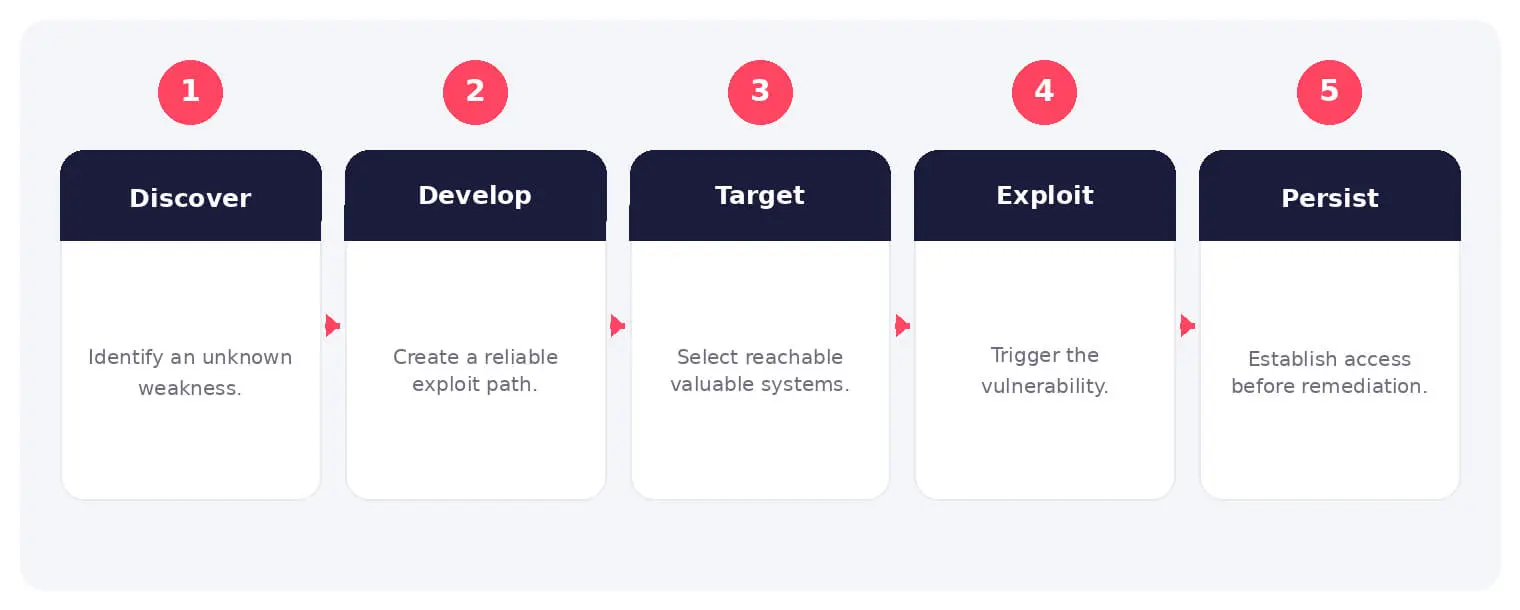
How a Zero-Day Exploit Works
The sequence shown above is not mandatory in every case, but it provides a practical way to connect initial opportunity with the actor’s objective. Individual steps may occur in parallel, repeat, or be completed by different participants.
Zero-day does not automatically mean universal or unstoppable. Risk depends on affected versions, exposure, authentication, privileges, reliability, targeting, and compensating controls. Once exploitation becomes public, defenders should prioritize reachable assets and evidence of compromise.
Common Types and Techniques
- Memory corruption and sandbox escapes
- Authentication bypass and privilege escalation
- Remote code execution in exposed services
- Logic flaws and chained vulnerabilities
Security and Business Risks
- Rapid compromise before signatures or patches mature
- Theft of credentials, data, and intellectual property
- Persistent access that survives later patching
- Operational disruption and widespread campaign risk
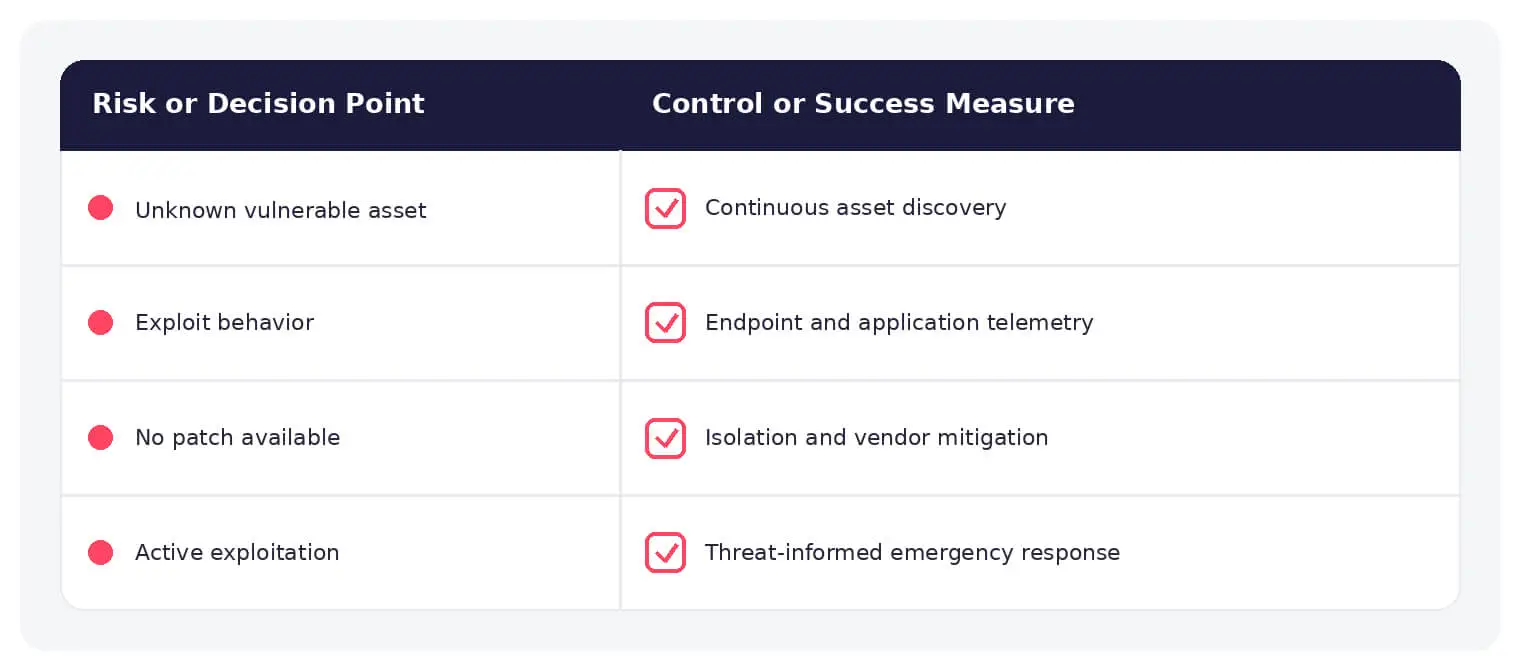
Warning Signs and Detection
Hunt for exploit behavior, crashes, unusual child processes, security-control changes, new accounts, web shells, rare outbound traffic, and threat-intelligence indicators. Focus on post-exploitation evidence, not only exploit signatures.
Prevention and Response
Inventory affected exposure, apply vendor mitigations, isolate or disable risky services, strengthen monitoring, and install tested patches quickly. If exploitation may have occurred, assess compromise after remediation.
How SOCRadar Can Help
SOCRadar combines external asset visibility, threat intelligence, Dark Web monitoring, vulnerability context, and indicator enrichment to help teams identify exposure and investigate activity connected to zero-day exploit.
Explore SOCRadar Vulnerability Intelligence or request a demo to strengthen threat-informed prevention and investigation.
Frequently Asked Questions
What Is the Difference Between a Zero-Day Vulnerability, Exploit, and Attack?
A zero-day vulnerability is the unfixed software flaw. The exploit is the code or technique that triggers the flaw, and the attack is the malicious operation built on that exploit. The terms overlap in casual use, but they call for different actions: the vulnerability drives patching decisions, while the exploit and attack drive detection and incident response.
How Long Does the Zero-Day Window Last?
The window runs from the moment a flaw exists to the moment a tested fix is deployed on every affected system, not merely when the vendor releases one. Public disclosure and active exploitation compress the safe portion of that window, and internal testing or rollout delays often stretch it well past the vendor’s release date.
What Techniques Do Zero-Day Exploits Typically Use?
Memory corruption, sandbox escapes, authentication bypasses, privilege escalation, and remote code execution in exposed services are common building blocks, often combined with logic flaws. Browsers, email clients, office software, and internet-facing applications are frequent targets because one reliable exploit there can reach many victims.
Why Do Attackers Chain Zero-Day Exploits With Other Vulnerabilities?
A single zero-day rarely grants full control, so operators chain it with a second flaw to escape a sandbox, escalate privileges, or move laterally. The chain may mix one zero-day with known but unpatched issues, which still produces an outcome defenders did not anticipate. Partial patching therefore leaves real gaps even after the headline flaw is fixed.
Can Zero-Day Exploits Be Detected Before a Patch Exists?
Signature-based tools struggle with them by design, but behavioral signals can still surface exploitation: exploit-triggered crashes, unusual child processes such as a web server spawning a shell, disabled security controls, and rare outbound connections. Correlating these signals with reporting on active campaigns raises confidence and helps separate genuine exploitation from noise.
What Indicators Suggest a Zero-Day Was Used in an Intrusion?
Hunt for post-exploitation evidence rather than the exploit itself: web shells in application directories, new or elevated accounts, altered logging, security tools switched off, and unusual external traffic. Crashes or restarts in the affected service shortly before those artifacts appear strengthen the case, and campaign reporting helps scope which systems to review.
What Should Incident Response Include After a Zero-Day Is Patched?
A patch removes the flaw, not the foothold. Assume the attacker gained persistence while the vulnerability was open: hunt for web shells, attacker-created accounts, modified scheduled tasks, and stolen credentials. Revoke active sessions and rotate keys where the platform supports it, since password resets alone may not terminate an already stolen session.
How Can Organizations Reduce Zero-Day Risk Before a Fix Exists?
Shrink the target first: limit internet exposure of the affected service, enforce least privilege, and segment networks so a successful exploit cannot spread freely. Vendor workarounds, virtual patching on WAF or IPS devices, and application allowlisting can hold the line until a tested update ships. Behavior-based monitoring on endpoints and identities shortens the time an attempted exploitation can go unnoticed.
How Should Teams Decide Patching Priorities for a New Zero-Day?
Map which systems actually run the affected software and which of those are reachable from the internet or by untrusted users, then weigh active exploitation, required privileges, and data sensitivity. Exposed services that need no authentication usually demand emergency change, while well-isolated systems with strong compensating controls can often wait for a standard change window.
What Is the Difference Between a Zero-Day and an N-Day?
A zero-day has no widely deployed fix; an n-day is a vulnerability that has been public for some time, typically with a patch available. N-days drive a large share of real breaches precisely because organizations lag behind patch releases. Treating a flaw as low risk simply because it is no longer a zero-day is a common and costly mistake.