14 Real-World Threat Intelligence Use Cases for the Aviation Industry
The aviation industry operates at the intersection of critical infrastructure, global commerce, and national security – making it an irresistible target for cyber adversaries. From grounded fleets due to ransomware attacks to compromised passenger reservation systems affecting millions of travelers, the industry has witnessed a dramatic escalation in both the frequency and impact of cyber incidents.
Aviation organizations face unique challenges that distinguish them from other industries: 24/7 operational requirements where downtime can cost millions per hour, complex international regulatory environments, aging legacy systems integrated with modern digital platforms, and the critical safety implications of any security compromise. Industry analysis shows ransomware incidents in the aviation supply chain have surged by 600% in recent years, reflecting the sector’s growing appeal to cyber adversaries.
Why Threat Intelligence is Critical for Aviation
The threat landscape for aviation organizations has become more dynamic and targeted than ever. In recent years cybersecurity researchers reported:
- A sharp rise in ransomware attacks targeting aviation infrastructure, with groups specifically focusing on airports and airlines to maximize operational disruption.
- A surge in credential theft operations targeting aviation workforces, with stolen employee and passenger login details sold on underground markets.
- Supply chain attacks cascading across airlines, where single vendor compromises expose millions of passenger records across multiple carriers.
- Coordinated hacktivist campaigns targeting airport services, with groups successfully disrupting major airports during peak travel periods.
- A surge in Business Email Compromise (BEC) and brand impersonation attacks, often enhanced by AI-generated content.
These developments show that aviation cyber threats are no longer isolated incidents. They are coordinated campaigns designed to exploit the industry’s unique vulnerabilities, from safety-critical systems to the complexity of international operations.
To stay ahead, aviation organizations need to embed threat intelligence into every layer: operational technology security, passenger data protection, supply chain risk management, and executive protection. The 14 use cases below highlight how this can be achieved, based on real-world incidents and adversary tactics observed against airlines, airports, and aerospace manufacturers.
Wondering if your aviation organization’s data has already surfaced on dark web forums, ransomware leak sites, or Telegram channels? With SOCRadar Labs’ free Dark Web Report, you can find out. This comprehensive scan monitors underground sources targeting the aviation sector and identifies mentions of your organization, employees, or flight-critical assets—giving you early warning before threats disrupt operations.

1. Advanced Persistent Threat Monitoring for Aerospace Supply Chains
Chinese APT groups, particularly APT41, systematically target aerospace manufacturers and suppliers to steal intellectual property and advance military capabilities. The longest-running insider attack in aerospace history occurred at Boeing (1979-2006), where an employee worked for Chinese intelligence for 27 years, demonstrating the persistent nature of state-sponsored espionage in this sector.
Recent APT campaigns have shown remarkable sophistication in targeting aerospace supply chains. Security researchers have identified APT30’s use of specialized malware families like SHIPSHAPE, SPACESHIP, and FLASHFLOOD specifically designed for aerospace targeting. These groups often maintain access for extended periods, with some intrusions going undetected for over a year while systematically exfiltrating technical documentation and design specifications.
The scope of aerospace espionage extends beyond traditional aircraft manufacturers to include engine suppliers, avionics providers, and even specialized materials companies. APT groups have demonstrated the ability to move laterally through supply chain partnerships, using compromised suppliers as stepping stones to reach primary aerospace targets.
Threat Intelligence Application:
- APT Group Behavioral Analysis: Deploy continuous monitoring of network traffic patterns characteristic of APT operations, including Command & Control (C2) communications during Moscow business hours (APT28) or shift-based collaborative operations (APT30)
- Malware Family Tracking: Monitor for specific malware families used in aerospace targeting, including spear-phishing emails with recruitment themes targeting engineering personnel and malicious HTML applications (.hta files) containing aerospace job descriptions
- Supply Chain Reconnaissance: Implement behavioral analytics to identify employees accessing unusual volumes of technical documentation and establish honeypots mimicking aerospace design repositories
- Threat Hunting Integration: Develop threat hunting rules for APT-specific tactics, techniques, and procedures (TTPs), including lateral movement patterns consistent with intellectual property theft and network communications to known APT infrastructure during specific time windows
To defend against these campaigns, organizations should apply advanced threat intelligence practices such as monitoring APT behavioral patterns, tracking aerospace-specific malware families, and implementing proactive hunting rules.
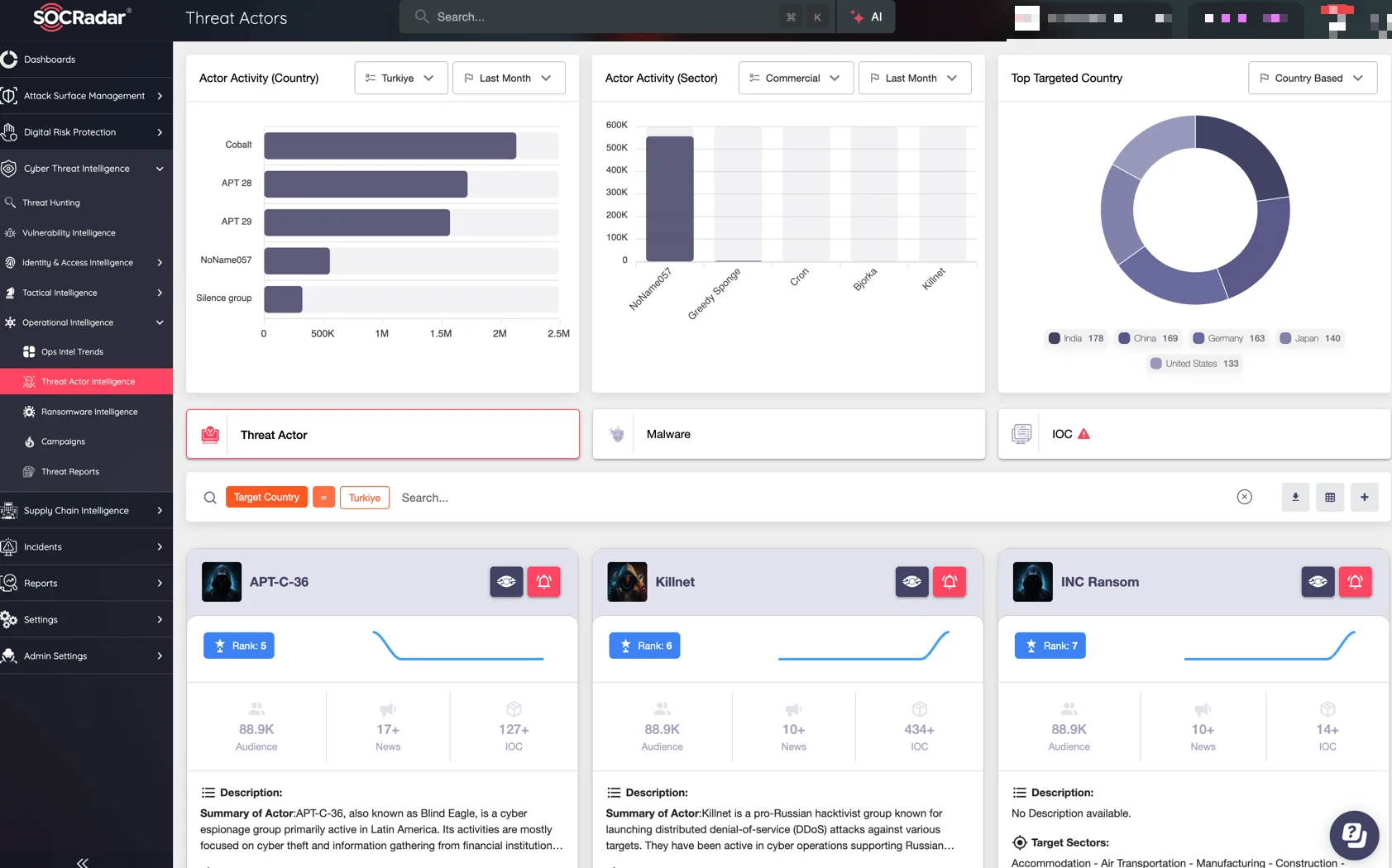
SOCRadar Threat Actor Intelligence
Here, SOCRadar’s Threat Actor Intelligence module provides a clear advantage by offering real-time tracking of adversary footprints, detailed actor profiles, MITRE ATT&CK–based visualizations, and actionable IoCs. Aviation organizations can follow ransomware and APT dynamics, understand regional targeting patterns, and detect emerging campaigns before they escalate—gaining an intelligence edge tailored to the industry’s unique risks.
2. Ransomware Threat Intelligence for Aviation Infrastructure
LockBit emerged as the most active ransomware group targeting aviation, with notable victims including Boeing, Kuwait Airlines, and Bangkok Airways. The group demanded $200 million from Boeing in November 2023, representing one of the highest ransom demands on record. This attack highlighted how ransomware operators view aviation as a high-pressure, high-value target where operational downtime translates directly to massive financial losses.
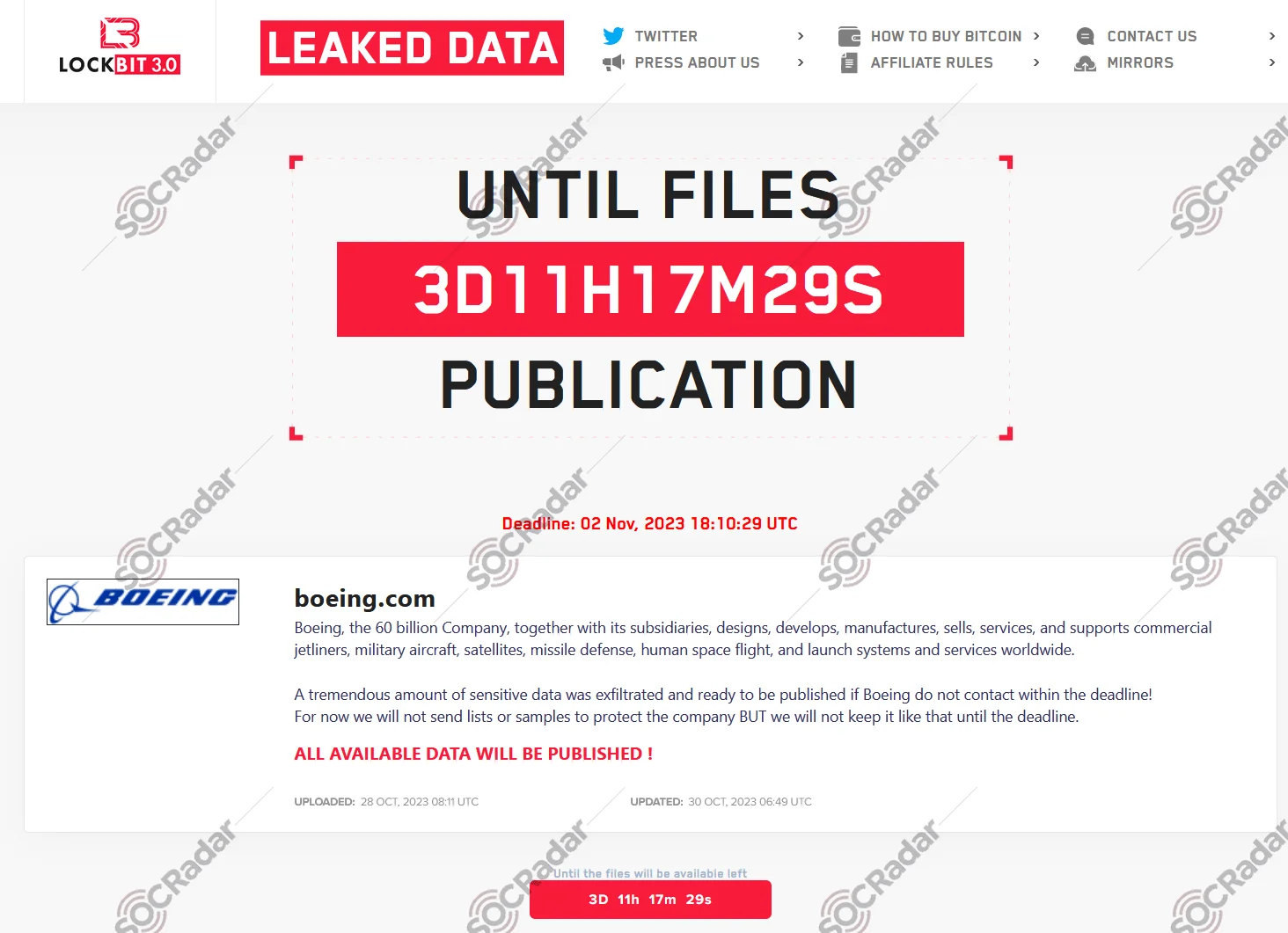
LockBit countdown notice for alleged Boeing leak (Source: SOCRadar Dark Web News)
The aviation sector has witnessed a disturbing trend in ransomware specialization. Different groups have developed expertise in targeting specific aviation subsectors: 8BASE targeted Saudia Technic’s maintenance operations, exploiting vulnerabilities in aircraft maintenance management systems, while Rhysida specialized in infrastructure attacks at Seattle-Tacoma Airport, demonstrating sophisticated understanding of airport operational technology networks.
Ransomware actors often gain initial access through phishing campaigns targeting aviation employees or by exploiting exposed VPN and RDP servers common in the industry’s 24/7 operational environment. Once inside, they specifically seek out flight operations databases, passenger reservation systems, and aircraft maintenance records – understanding that encrypting these systems will cause maximum operational disruption and pressure organizations to pay quickly.
Threat Intelligence Application:
- Ransomware Group Profiling: Monitor dark web marketplaces for aviation-specific ransomware listings, track payment patterns to identify emerging groups, and analyze encryption algorithms used by different ransomware families targeting transportation infrastructure
- Attack Vector Intelligence: Track unusual file access patterns in maintenance databases and operational systems, monitor network reconnaissance activities targeting backup systems and domain controllers, and identify PowerShell execution patterns consistent with Rhysida and LockBit deployment techniques
- Infrastructure Mapping: Detect communication attempts to known ransomware infrastructure and monitor for indicators of compromise specific to aviation-focused ransomware campaigns
- Proactive Defense Integration: Deploy decoy files in critical directories to trigger early warning systems, implement network segmentation to isolate maintenance systems from corporate networks, and establish automated backup verification processes that detect encryption attempts before they spread
3. Supply Chain Compromise Detection for Aviation Vendors
The aviation industry operates within one of the most complex supply chain ecosystems globally, with 98% of organizations having vendor relationships with third parties that experienced cyber events in the past two years. Aviation-specific software and IT vendors scored lowest (mean score 83) in cybersecurity assessments compared to other industries, creating substantial third-party risks that threat actors actively exploit as pathways into primary targets.
The cascading impact of supply chain attacks in aviation became starkly apparent with the SITA supply chain attack, which affected over 2.1 million passengers across multiple airlines through a single vendor compromise. This incident demonstrated how threat actors strategically target aviation service providers – including global distribution systems, maintenance software vendors, and passenger service system providers – knowing that a single successful breach can provide access to dozens of airlines simultaneously.
Threat actors have developed sophisticated techniques for exploiting aviation supply chains. They scan for the “weakest link” among vendors, often finding regional ground services companies or specialized software providers running outdated systems. Dark web forums frequently feature advertisements for VPN access to airline contractors, with cybercriminals specifically seeking credentials that can be used to pivot into major aviation targets.
Threat Intelligence Application:
- Vendor Risk Monitoring: Establish continuous security scoring for all aviation vendors using external threat intelligence feeds, tracking dark web mentions of supplier organizations and monitoring for breach notifications affecting the aviation ecosystem
- Supply Chain Intelligence: Monitor for unusual authentication patterns from vendor systems, software updates containing suspicious code signatures or unsigned binaries, and network traffic to known malicious infrastructure from vendor-managed systems
- Cascading Impact Analysis: Track deviations from normal data flow patterns between organizational and supplier networks, implement enhanced monitoring of vendor-managed systems, and develop threat hunting rules specific to supply chain attack methodologies
- Proactive Vendor Intelligence: Implement threat intelligence sharing with key vendors through Aviation Information Sharing and Analysis Centers (ISACs), establish incident response procedures specifically for supply chain compromises, and maintain real-time awareness of vulnerabilities affecting aviation-specific software platforms
4. Brand Impersonation & Phishing Protection for Airlines
Airlines operate globally recognized brands that make them prime targets for impersonation scams. Cybercriminals systematically create fake airline websites, mobile applications, and social media profiles to deceive passengers and steal personal information. In 2023, investigators in the UK discovered that every major UK airline had bogus accounts impersonating them on X (formerly Twitter), reaching out to unsuspecting travelers with sophisticated phishing operations.
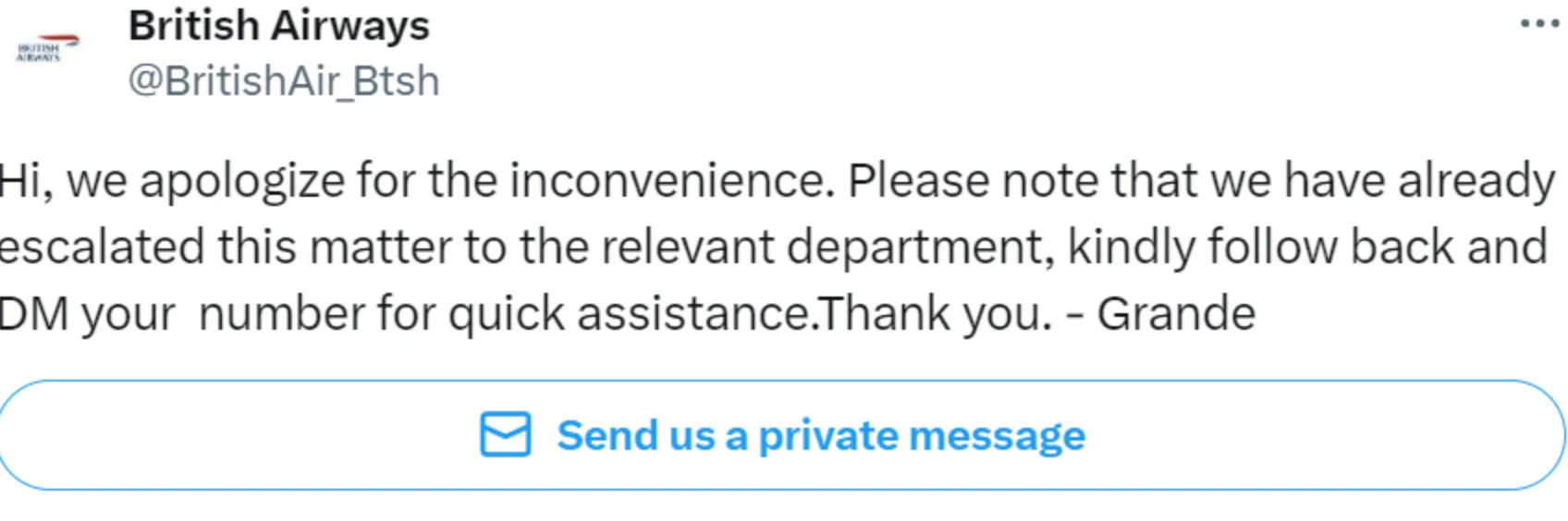
A fake British Airways support tweet from an impersonation account on X, asking a customer to follow back and send their phone number via direct message.
These fraudulent support accounts specifically target passengers who tweet about flight issues, attempting to divert them to malicious links or premium-rate phone numbers. The scammers demonstrate remarkable sophistication in their operations, referencing actual flight numbers and recent news events to increase credibility. During periods of travel disruption, such as the COVID-19 pandemic or severe weather events, these scams experience dramatic spikes as criminals exploit passenger desperation and confusion.
The financial and reputational impact extends beyond individual passenger losses. Airlines face customer service costs from fraud complaints, potential regulatory scrutiny, and long-term brand damage when customers associate negative experiences with the legitimate airline brand. Some victims have paid hundreds of dollars for fake flight changes or provided passport details to fraudulent compensation claim forms, creating identity theft risks that persist long after the initial fraud.
Threat Intelligence Application:
- Digital Risk & Domain Monitoring: Deploy continuous scanning for new domain registrations and websites that mimic airline brands, including typosquatting domains, suspicious app store submissions, and fraudulent SSL certificate registrations using airline trademarks
- Social Media Threat Detection: Implement automated monitoring across social media platforms to detect impersonation accounts, track trending scam campaigns targeting aviation customers, and identify coordinated inauthentic behavior patterns used in airline brand abuse
- Phishing Infrastructure Intelligence: Monitor phishing kit repositories and credential harvesting operations specifically targeting airline customers, track stolen passenger credentials appearing on dark web markets, and analyze phishing campaign patterns to improve email security filters
- Brand Protection: Establish rapid takedown procedures for fraudulent domains and social media accounts, develop customer communication strategies for scam awareness, and coordinate with law enforcement on persistent brand abuse campaigns
5. Attack Surface Monitoring & Digital Exposure Management
Airlines and airports maintain sprawling digital footprints encompassing public websites, booking APIs, employee portals, IoT devices throughout terminals, and cloud infrastructure. This constantly evolving attack surface creates numerous potential entry points for threat actors. In 2022, security researchers discovered an unsecured AWS S3 cloud storage bucket that exposed 3 TB of sensitive airport data including staff ID photos, personal information, and critical details about fuel lines and security procedures – all because of an inadvertent misconfiguration.
The complexity of aviation operations amplifies exposure risks. Legacy systems from airline mergers may remain internet-accessible with default credentials, test environments for mobile applications might stay live without proper security controls, and decommissioned baggage handling servers could maintain network connectivity. Each represents a potential pathway for sophisticated threat actors who systematically reconnaissance aviation organizations’ digital assets.
The threat extends beyond traditional IT infrastructure to encompass operational technology systems increasingly connected to corporate networks. Modern airports deploy thousands of IoT devices across terminals, from passenger information displays to environmental controls, each representing a potential entry point if not properly secured and monitored.
Threat Intelligence Application:
- Continuous Digital Asset Discovery: Deploy automated scanning across organizational IP ranges and domains to identify exposed services, misconfigured cloud storage, expired certificates, and forgotten subdomains that could provide unauthorized access
- Exposure Risk Prioritization: Integrate vulnerability intelligence to assess the criticality of discovered exposures, correlating found systems with known exploits and active threat campaigns targeting similar infrastructure
- Data Leak Detection: Monitor paste sites, code repositories, and dark web forums for inadvertent data exposures that could indicate underlying system compromises or misconfigurations requiring immediate attention
- Industry Benchmarking: Compare organizational attack surface posture against aviation industry peers, participate in threat intelligence sharing to identify common exposure patterns, and implement proactive remediation based on sector-wide vulnerability trends
With these risks in mind, adopting an Attack Surface Management solution like SOCRadar enables airlines and airports to maintain continuous visibility over their sprawling digital ecosystems. By automating discovery of internet-facing assets, detecting shadow IT, and correlating exposures with real-world threat intelligence, SOCRadar helps aviation security teams prioritize the most critical vulnerabilities and respond before adversaries can exploit them. Real-time monitoring, contextual alerts, and industry benchmarking transform fragmented infrastructures into a managed and resilient attack surface—empowering organizations to proactively reduce risk and safeguard both operational continuity and passenger trust.
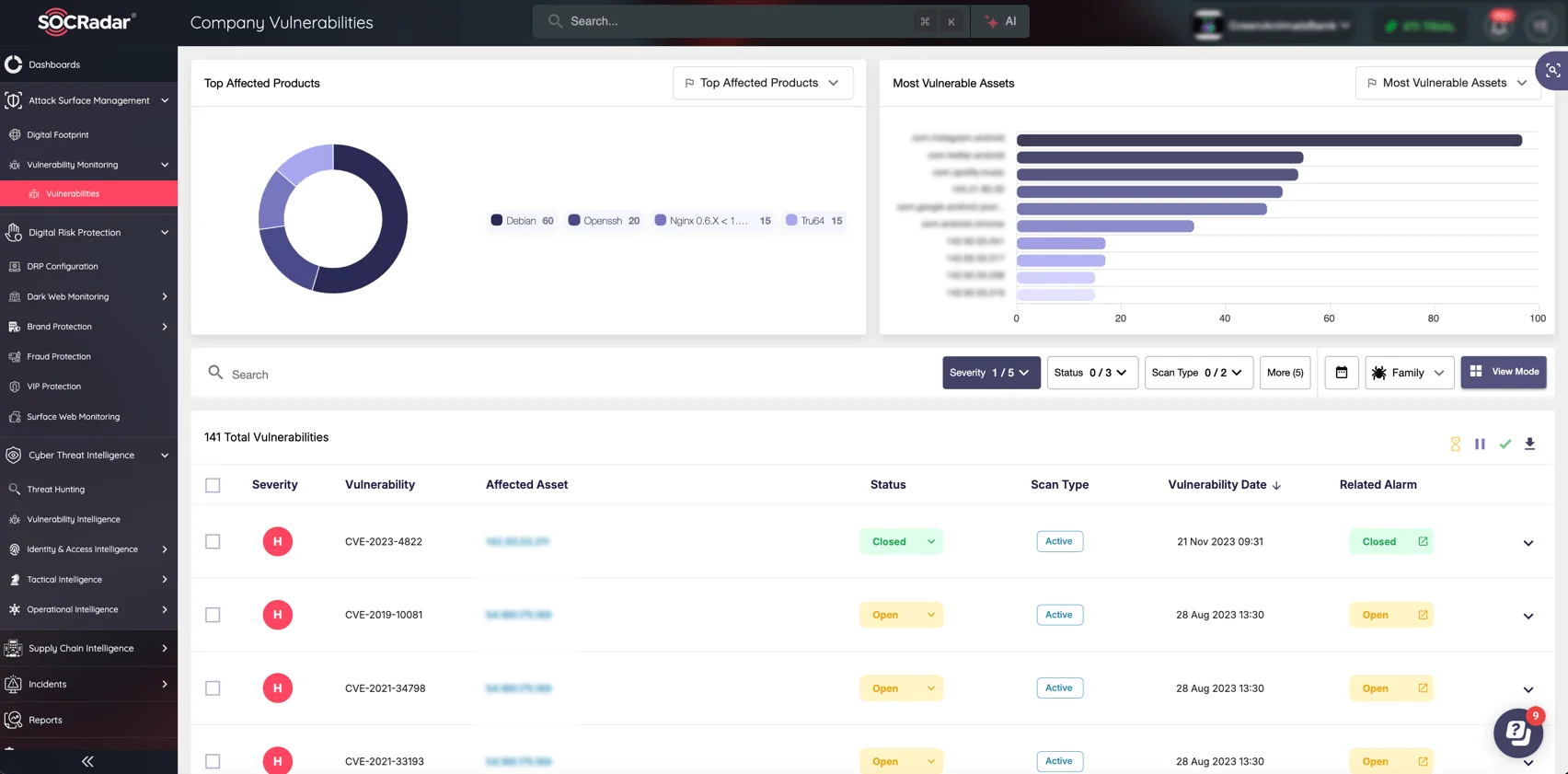
SOCRadar Attack Surface Management
6. Stolen Credentials & Stealer Malware Monitoring
User credentials represent the primary attack vector in aviation cybersecurity, with 71% of aviation attacks involving stolen login details or unauthorized access. The aviation industry’s mobile workforce – including pilots, flight crews, ground staff, and contractors – creates extensive credential exposure across personal and corporate devices that are frequently targeted by infostealer malware campaigns.
Infostealer malware such as RedLine and Vidar systematically harvest saved passwords, session tokens, and authentication cookies from infected devices, compiling them into massive “stealer logs” sold on dark web marketplaces. These logs often contain credentials for airline VPN systems, airport security networks, and critical aviation software platforms. A pilot’s personal computer infected with malware could expose corporate email and VPN passwords that end up in underground markets for as little as $10 per thousand credentials.
The challenge is amplified by the aviation industry’s reliance on legacy systems that may lack modern authentication controls. When legitimate credentials are compromised, attackers can bypass sophisticated security measures by simply logging in through authorized channels. This credential abuse has become so prevalent that many ransomware incidents in aviation now begin with purchased access rather than sophisticated exploits.
Threat Intelligence Application:
- Credential Leak Monitoring: Deploy continuous monitoring of breach databases, paste sites, and dark web markets for aviation-specific domains, employee email addresses, and industry-related keywords such as airline reservation systems and airport management platforms
- Stealer Log Analysis: Implement systematic analysis of infostealer malware logs to identify compromised aviation industry credentials, prioritizing high-privilege accounts and access to critical systems like flight operations and maintenance networks
- Authentication Intelligence Integration: Correlate threat intelligence about compromised credentials with identity management systems to trigger additional verification steps, password resets, or temporary account restrictions for at-risk users
- Vendor Credential Protection: Extend monitoring to include third-party vendors and contractors with access to aviation systems, establishing rapid response procedures for credential compromise incidents affecting supply chain partners

7. Insider Threat Detection & Monitoring
Aviation organizations face unique insider threat challenges due to the industry’s distributed workforce, high-security clearance requirements, and access to safety-critical systems. Insider threats in aviation can range from disgruntled employees seeking financial gain to foreign intelligence operatives conducting long-term espionage operations. The potential consequences extend beyond data theft to include operational sabotage that could compromise flight safety.
A concerning example emerged when a flight school employee, terminated from her position, used retained system access to alter aircraft maintenance records, essentially clearing aircraft for flight despite outstanding safety issues. This incident highlighted how insider access to aviation systems can create direct safety hazards beyond traditional cybersecurity concerns.
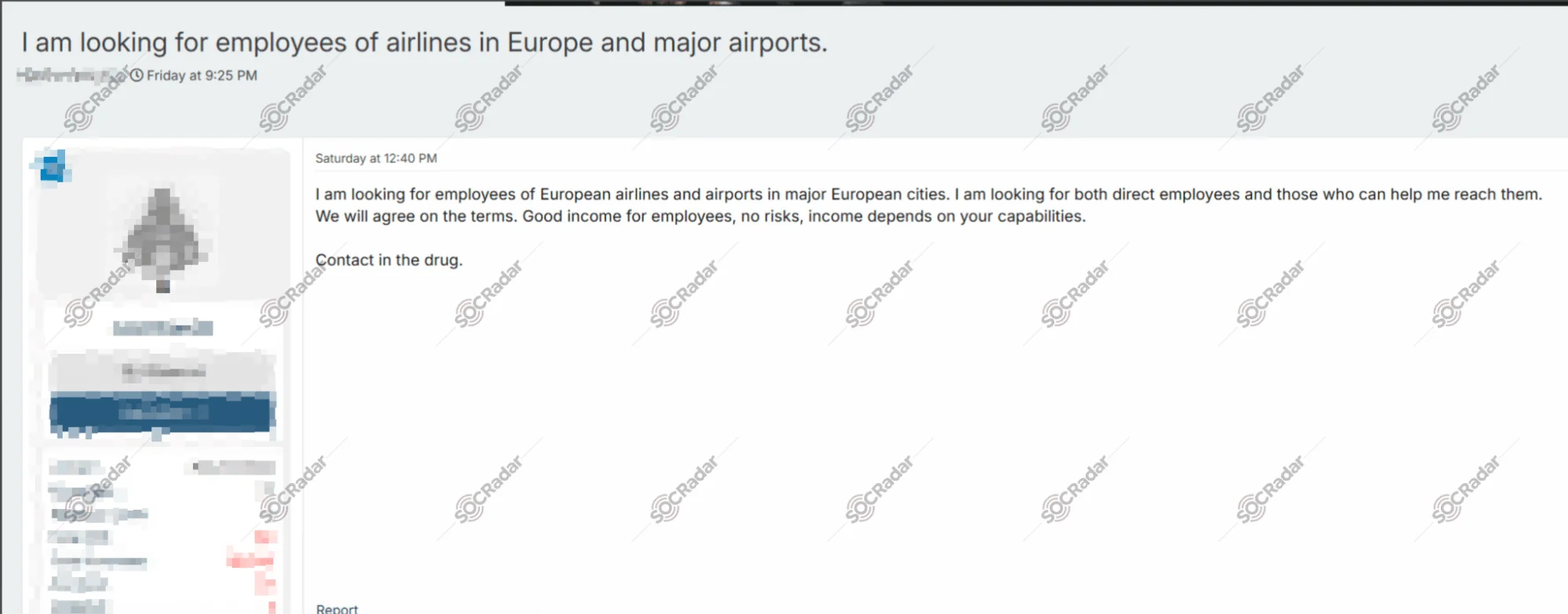
This screenshot highlights a malicious recruitment attempt targeting employees of European airlines and airports. (Source: SOCRadar Dark Web News)
Dark web forums actively feature recruitment posts seeking aviation industry insiders, with threat actors specifically advertising for airline employees, airport security personnel, and maintenance technicians. These recruitment efforts often target individuals with financial difficulties or grievances against their employers, offering substantial compensation for internal access or sensitive information.
Threat Intelligence Application:
- Insider Recruitment Monitoring: Track dark web forums and encrypted messaging platforms for recruitment advertisements targeting aviation personnel, monitoring for specific job roles, security clearance levels, and offered compensation packages
- Behavioral Analytics Intelligence: Integrate threat intelligence about insider threat indicators with user behavior analytics systems to identify unusual access patterns, data exfiltration attempts, or privilege escalation activities
- Background Intelligence Correlation: Cross-reference employee information with threat intelligence databases to identify potential security risks, including financial stress indicators, foreign travel patterns, or social media connections to hostile entities
- Operational Security Integration: Implement enhanced monitoring for personnel with access to safety-critical systems, establish insider threat response procedures specific to aviation operational environments, and develop intelligence-driven security clearance review processes
8. DDoS Attack & Hacktivist Threat Intelligence
Distributed Denial-of-Service (DDoS) attacks represent a significant operational threat to aviation infrastructure, capable of disrupting passenger services, flight information systems, and online booking platforms. In October 2023, a pro-Russian hacktivist group coordinated DDoS attacks that temporarily knocked offline the websites of multiple major U.S. airports including Los Angeles (LAX), Chicago O’Hare, and Denver, preventing travelers from accessing flight information and online check-in services.
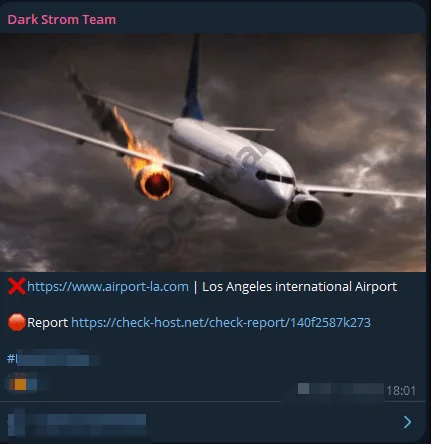
Alleged DDoS attack targeting Los Angeles International Airport
The motivation behind aviation-targeted DDoS attacks ranges from political hacktivist statements to financial extortion schemes. Some threat actors use DDoS as a smokescreen for more sophisticated intrusions, while others simply seek to cause maximum disruption during peak travel periods. In February 2024, LAX was again targeted by a DDoS attack that crippled public-facing services and flight information displays, demonstrating the persistent nature of these threats.
Aviation organizations face particular vulnerability to DDoS attacks due to their high-visibility public profiles and the critical nature of their online services. A successful attack during holiday travel seasons or major events can result in significant revenue losses and customer dissatisfaction, making airlines and airports attractive targets for both profit-motivated cybercriminals and ideologically driven hacktivists.
Threat Intelligence Application:
- Hacktivist Monitoring: Track open-source channels including Telegram groups, forums, and social media where hacktivist collectives plan operations, providing early warning when groups announce targeting of aviation infrastructure or transportation systems
- Botnet Intelligence Integration: Monitor active botnets and their command servers to enable preemptive blocking of known malicious IP ranges, correlating intelligence about botnet activation patterns with potential aviation sector targeting
- Extortion Campaign Analysis: Maintain databases of DDoS extortion email templates and threat actor profiles to distinguish between credible threats and opportunistic bluffers, enabling appropriate response strategies and law enforcement coordination
- Geopolitical Correlation: Analyze the relationship between international events and hacktivist targeting patterns, providing predictive intelligence about potential DDoS campaigns during periods of heightened geopolitical tension
9. Business Email Compromise (BEC) in Aviation Operations
Business Email Compromise represents one of the most financially damaging cyber threats facing aviation organizations, with attacks specifically targeting the industry’s complex vendor relationships, international operations, and high-value transactions. Aviation BEC attacks often exploit the industry’s 24/7 operational environment and multi-jurisdictional nature to create urgency and confusion that facilitates successful fraud.
BEC attacks in aviation frequently target financial transactions related to aircraft leasing, fuel purchases, maintenance contracts, and international route operations. Threat actors conduct extensive reconnaissance of aviation organizational structures, studying executive hierarchies and operational procedures to craft convincing impersonation emails. They often exploit the time-sensitive nature of aviation operations, creating scenarios where immediate action is required to avoid flight delays or operational disruptions.
The aviation industry’s reliance on email communication for critical operational coordination makes it particularly vulnerable to BEC attacks. Threat actors may impersonate airline executives requesting urgent fund transfers, maintenance vendors seeking payment for aircraft services, or regulatory authorities demanding immediate compliance actions. The international nature of aviation operations also creates opportunities for attackers to exploit timezone differences and jurisdictional confusion.
Threat Intelligence Application:
- Executive Impersonation Monitoring: Track dark web forums and breach datasets for aviation executive credentials and personal information, monitor for domain registrations that mimic aviation company domains, and analyze spoofing patterns targeting aviation leadership
- Vendor Fraud Intelligence: Monitor intelligence about compromised aviation vendor email accounts, track BEC campaigns specifically targeting aviation supply chain relationships, and maintain awareness of fraud schemes exploiting aircraft leasing and maintenance contracts
- Operational Fraud Detection: Implement threat intelligence feeds that identify BEC tactics exploiting aviation operational procedures, monitor for fraudulent communications related to fuel purchases, route operations, and regulatory compliance requirements
- International Fraud Correlation: Track BEC campaigns targeting international aviation operations, analyze timezone-based attack patterns, and maintain intelligence about regulatory impersonation schemes affecting aviation organizations
10. Airport Operational Technology (OT) Systems Protection
Airports function as complex technological mini-cities, relying on specialized Operational Technology (OT) and Industrial Control Systems (ICS) to manage critical physical processes including baggage handling conveyors, runway lighting systems, HVAC controls, fuel pumps, and passenger boarding bridges. These systems, historically isolated for safety and reliability, are increasingly connected to corporate networks for operational efficiency and remote management, creating new attack vectors that sophisticated threat actors systematically exploit.
In September 2024, the Rhysida ransomware group demonstrated the devastating potential of OT attacks by hitting Seattle-Tacoma International Airport’s critical systems. The attack knocked out operational communications and left terminal message boards offline for over a week, while highlighting significant security gaps that drew FAA attention to systemic vulnerabilities in airport infrastructure.
The threat scenarios extend far beyond operational inconvenience to genuine safety hazards. Attackers could compromise fuel supply control systems to halt aircraft refueling operations, manipulate SCADA controls for baggage sorting to cause thousands of bags to be misrouted, or interfere with runway lighting systems during critical landing operations. Many airport OT systems operate on legacy software with default credentials, making them particularly vulnerable when discovered through reconnaissance tools like Shodan that can identify publicly accessible industrial devices.
Threat actors employ multiple attack vectors to compromise airport OT networks. They may pivot from IT networks through phishing victims’ computers when network segmentation is inadequate, directly target exposed OT devices discovered through internet scanning, or compromise airport contractors who manage operational technology systems. Nation-state actors with industrial control system expertise pose additional risks by potentially planting malware designed specifically for sabotaging critical airport infrastructure.
Threat Intelligence Application:
- ICS/OT Vulnerability Intelligence: Monitor threat intelligence providers tracking vulnerabilities in airport operational technology, including critical flaws in programmable logic controllers (PLCs) used in fuel systems, runway lighting control software, and baggage handling automation systems
- Dark Web OT Targeting Analysis: Track cybercriminal forums discussing techniques for attacking industrial control systems, monitor sales of VPN credentials for airport building management systems, and analyze discussions about specific airport operational technology targets
- Network Anomaly Detection Integration: Integrate threat intelligence feeds containing known malicious IP addresses, command-and-control servers, and OT-specific malware signatures with airport network monitoring systems to enable immediate isolation of compromised operational technology segments
- Industrial Attack Pattern Recognition: Analyze tactics, techniques, and procedures (TTPs) used against other industrial facilities, monitor for Modbus scanning tools and similar industrial reconnaissance methods, and maintain intelligence on nation-state capabilities targeting transportation infrastructure
11. Executive Protection & High-Value Target Monitoring
Aviation executives and high-profile passengers represent attractive targets for both cybercriminals and nation-state actors seeking strategic intelligence or operational disruption. CEOs, senior executives, and board members of airlines, aerospace manufacturers, and airport authorities face sophisticated targeting through doxxing campaigns, spear-phishing operations, and social engineering attacks designed to exploit their access to sensitive information and decision-making authority.
The aviation industry’s global nature means executives frequently travel internationally, creating additional exposure to foreign intelligence services and criminal organizations. Threat actors systematically compile executive personal information including home addresses, family details, travel patterns, and social media activity to support targeted attacks. This information often surfaces on dark web forums, paste sites, and doxxing marketplaces where it can be weaponized for extortion, impersonation, or physical security threats.
High-value passengers including government officials, diplomats, business leaders, and celebrities also create attractive intelligence targets when traveling on commercial aviation. Nation-state actors and criminal organizations may attempt to compromise airline reservation systems specifically to track the movements of persons of interest, gather strategic intelligence, or plan targeting operations.
Threat Intelligence Application:
- Executive Digital Footprint Monitoring: Continuously scan dark web forums, doxxing sites, and paste repositories for aviation executive personal information, monitoring social media impersonation attempts and tracking mentions in threat actor communications
- Travel Intelligence Protection: Monitor for indicators of surveillance or targeting related to executive travel patterns, coordinate with security teams to assess risks associated with specific destinations or travel routes, and maintain awareness of geopolitical events that may increase targeting risks
- VIP Passenger Security: Implement threat intelligence monitoring for high-value passengers in reservation systems, track nation-state interest in specific individuals or organizations, and maintain protocols for enhanced security measures based on threat levels
- Physical-Digital Threat Correlation: Integrate cyber threat intelligence with physical security assessments, monitor for coordinated campaigns combining digital surveillance with physical targeting, and establish response procedures for credible threats against aviation executives or facilities

12. Cyber Fraud in Ticketing and Loyalty Systems
Airlines face extensive targeting by cyber fraud operations that exploit online booking systems, ticketing platforms, and frequent-flyer programs. Studies reveal that 46% of fraudulent online transactions globally are related to airline purchases, making aviation one of the most heavily targeted sectors for financial cybercrime. These sophisticated fraud schemes cause substantial revenue losses, erode customer trust, and can facilitate broader criminal activities including human trafficking and smuggling operations using fraudulently obtained tickets.
The scope of airline fraud extends beyond simple credit card abuse to complex loyalty program exploitation and system breaches. Criminal forums actively advertise discounted airline tickets purchased with stolen credit cards, alongside bulk sales of compromised frequent-flyer accounts containing millions of accumulated miles. In one documented case, hackers advertised access to an airline’s booking portal that could issue tickets under any name – effectively a ticketing console breach enabling unlimited free flights.
The interconnected nature of airline loyalty partnerships creates additional vulnerability vectors. The 2020 Marriott/United partner breach demonstrated how attackers can exploit relationships between airlines and hotel chains to steal millions of miles across multiple loyalty programs simultaneously. These breaches often remain undetected for extended periods, allowing criminals to systematically drain loyalty accounts and convert miles to cash through underground marketplaces.
Threat Intelligence Application:
- Dark Web Marketplace Monitoring: Track underground forums advertising stolen airline credentials, discounted fraudulent tickets, and compromised frequent-flyer accounts to identify active fraud campaigns and compromised customer data
- Fraud Pattern Intelligence: Analyze booking patterns, payment behaviors, and loyalty program abuse tactics observed across the aviation industry to enhance AI-powered fraud detection systems and identify emerging fraud methodologies
- Credential Compromise Detection: Monitor for leaked airline customer credentials, payment card data, and loyalty program access tokens on paste sites and breach databases to enable proactive customer protection and account security measures
- Partnership Risk Assessment: Track fraud activities affecting airline alliance partners, hotel loyalty programs, and payment processors to identify cascading fraud risks and implement enhanced security measures across integrated loyalty ecosystems
13. Flight Management System Vulnerability Monitoring
Flight Management Systems (FMS) represent critical aviation infrastructure that faces significant cybersecurity vulnerabilities through unencrypted communications, Electronic Flight Bag (EFB) integration risks, and physical access vectors. The 2017 DHS demonstration successfully compromised a Boeing 757 through radio frequency communications, proving that theoretical attacks against aircraft systems are both practical and concerning for aviation security.
Research has revealed that 99% of ACARS traffic transmits in plaintext, creating extensive opportunities for eavesdropping on air-ground communications including flight plans, weather updates, and operational messages. Security researchers have demonstrated ACARS-based FMS exploitation using readily available second-hand hardware, highlighting how accessible these attack methods have become to potential threat actors.
The integration of modern Electronic Flight Bags with legacy FMS creates additional attack vectors. While EFBs provide enhanced functionality and operational efficiency, they also introduce consumer-grade computing devices into the aircraft’s operational environment, potentially creating bridges between critical flight systems and less secure networks.
Threat Intelligence Application:
- Aviation Research Monitoring: Track aviation security research publications for newly discovered FMS vulnerabilities, monitor proof-of-concept exploits targeting avionics systems, and maintain intelligence on radio frequency-based attack methodologies
- Communication Security Intelligence: Monitor the 99% of ACARS traffic that transmits in plaintext for potential exploitation techniques, track developments in air-ground communication interception capabilities, and analyze threats to satellite communication systems used in modern aircraft
- Physical Security Correlation: Detect unusual RF emissions or interference patterns near aircraft, monitor for abnormal flight plan modifications or navigation system behavior, and track unauthorized access attempts to EFB systems or avionics networks
- Operational Protection: Implement network segmentation between critical flight systems and passenger networks, deploy RF monitoring systems at airports and maintenance facilities, and establish procedures for validating flight plan modifications through multiple independent sources
14. Geopolitical and Conflict Zone Risk Intelligence
Geopolitical tensions and armed conflicts introduce critical intelligence challenges for aviation operations, where airlines operating in or near conflict zones risk being caught in military engagements through missile strikes, anti-aircraft fire, or deliberate targeting by hostile actors. Sanctions and diplomatic disputes frequently spillover into cyberspace through state-sponsored attacks on aviation infrastructure of rival nations. Rapid deterioration of regional stability can transform safe airspace into hazardous zones with minimal warning, requiring sophisticated threat intelligence to prevent catastrophic incidents.
The tragic downing of Malaysia Airlines Flight MH17 over eastern Ukraine in 2014, shot down by a surface-to-air missile amid the Russia-Ukraine conflict, starkly illustrated these risks. Intelligence investigations later revealed that multiple nations’ agencies possessed knowledge of ground-based air defense activity in the area, but airlines were not effectively warned in time to avoid the danger zone.
The 2022 Russia-Ukraine war further demonstrated aviation’s vulnerability to geopolitical conflicts. Airlines were forced to implement extensive rerouting to avoid active combat zones, while facing reports of GPS jamming and state-linked cyberattacks against aviation agencies. Iran’s accidental shoot-down of Ukrainian International Airlines Flight 752 in 2020 amid heightened military tensions with the United States underscored the perils of operating in contested airspace where military forces may mistake civilian aircraft for threats.
Threat Intelligence Application:
- Conflict Zone Monitoring: Integrate military intelligence, diplomatic reporting, and open-source intelligence to identify emerging conflict zones and assess aviation risks in real-time, enabling rapid airspace avoidance decisions
- State-Sponsored Cyber Threat Correlation: Monitor state-sponsored cyber activities targeting aviation infrastructure during geopolitical crises, correlating diplomatic tensions with increased cyber attack patterns against airlines and airports
- Military Activity Intelligence: Track surface-to-air missile deployments, military exercises, and air defense system activities near commercial flight corridors to provide early warning of potential aviation hazards
- Diplomatic Intelligence Integration: Analyze diplomatic communications, sanctions regimes, and international relations developments to predict potential targeting of specific airlines or routes based on national affiliations or political considerations
Conclusion
The aviation industry has become one of the most attractive and vulnerable targets for cyber adversaries due to its global reach, operational complexity, and critical safety implications. From ransomware groups exploiting operational downtime to APT campaigns stealing aerospace intellectual property, threat actors continue to refine tactics that disrupt airlines, airports, and supply chain partners. The rise in credential theft, insider recruitment, and hacktivist-driven disruptions shows that cyber threats are no longer isolated but part of coordinated, persistent campaigns.
Effective defense requires aviation organizations to embed threat intelligence into every layer of their operations. Real-time monitoring of ransomware groups, continuous assessment of supply chain exposures, detection of credential leaks, and proactive monitoring of dark web activity are no longer optional—they are essential. Threat intelligence enables early detection of emerging threats, provides actionable insights for incident response, and helps organizations adapt to an evolving risk environment shaped by both cybercriminals and nation-state actors.
SOCRadar empowers aviation organizations to achieve this intelligence-driven security posture. With capabilities such as Threat Actor Intelligence, Attack Surface Monitoring, and Dark Web Intelligence, SOCRadar delivers actionable insights to detect emerging campaigns, safeguard critical systems, and protect both passengers and corporate assets. By leveraging these capabilities, aviation stakeholders can move from reactive defense to proactive threat anticipation—ensuring resilience against one of the world’s most aggressive and high-stakes cyber threat landscapes.