What Is a Backdoor Attack?
A backdoor attack creates or abuses a hidden method of accessing a system while bypassing normal authentication or security controls. Backdoors may be installed after an intrusion, embedded in malware, introduced through a compromised update, or created through unauthorized accounts, keys, services, and configurations.
The defining risk is durable access. An attacker can return after the original vulnerability is patched or visible malware is removed. Response must identify the initial entry point and every identity, service, token, file, or trust relationship that can restore access.
Key Takeaways
- Backdoors may exist in code, accounts, keys, services, firmware, cloud identities, or configuration.
- Attackers use backdoors to preserve access, execute commands, steal data, and deliver payloads.
- Detection requires baseline comparison across identity, endpoint, network, cloud, and software integrity.
- Recovery must remove persistence and rotate credentials, tokens, certificates, and trust paths.
How a Backdoor Attack Works
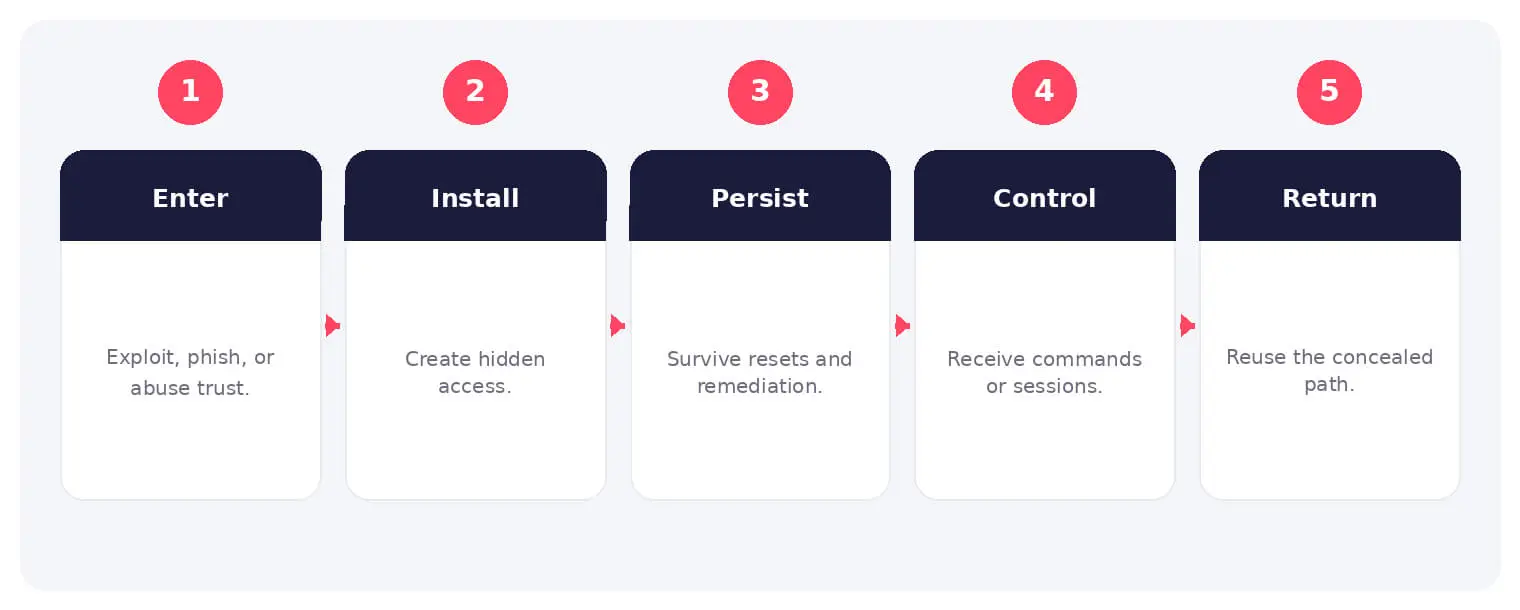
Attackers may add a user, authorized key, web shell, scheduled task, startup item, service, cloud application, or access token. Malware backdoors commonly connect to command infrastructure or listen for specially crafted traffic.
Supply-chain backdoors enter through trusted software, dependencies, build systems, or updates. Misconfigured vendor support accounts can also function as backdoors when they bypass normal control and monitoring.
Common Types and Techniques
- Web shells and remote access trojans
- Hidden accounts, SSH keys, tokens, and certificates
- Cloud service principals, OAuth grants, and trust changes
- Compromised source code, dependencies, firmware, or updates
Security and Business Risks
- Repeated unauthorized access after partial remediation
- Command execution, data theft, and additional malware delivery
- Compromise of privileged identities and administration paths
- Loss of trust in software, backups, or system integrity
Warning Signs and Detection
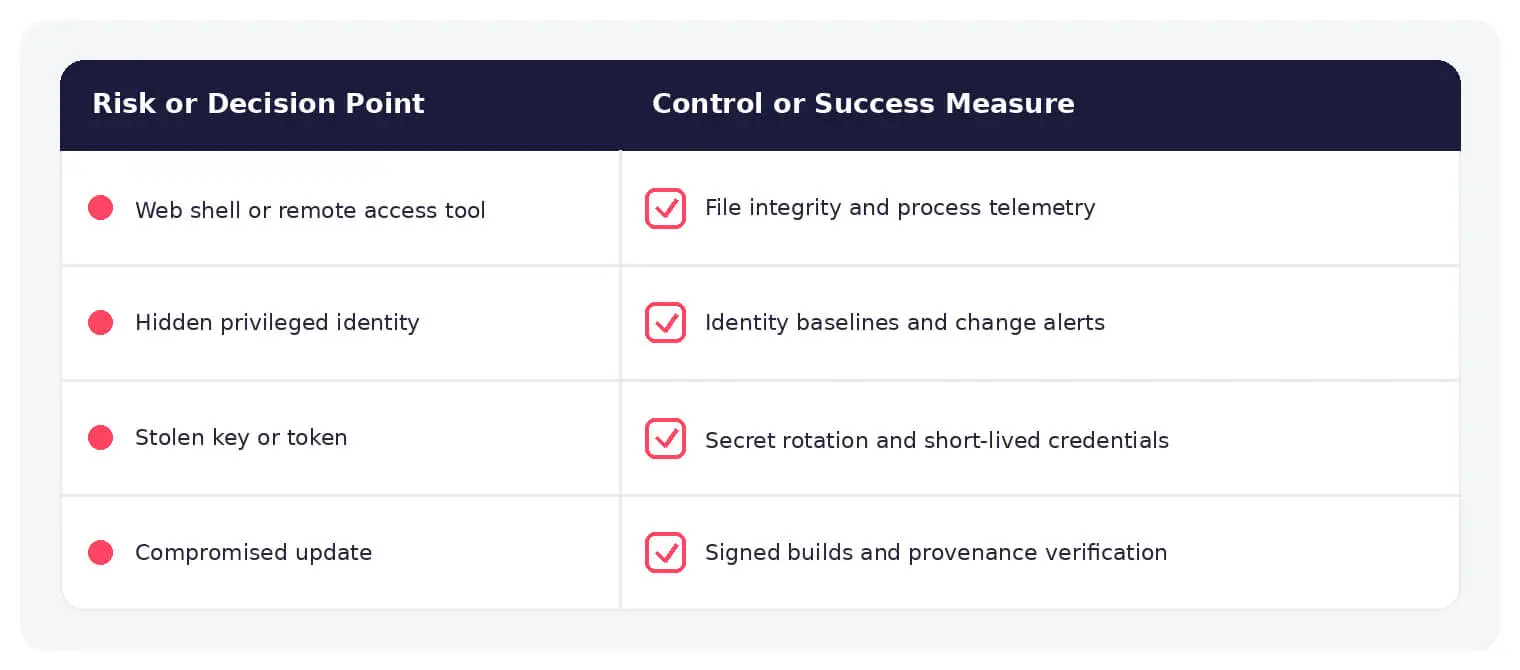
Look for unexpected listening ports, outbound connections, privileged identities, SSH keys, services, scheduled tasks, web files, cloud applications, and authentication from unusual infrastructure. Compare current state with known-good baselines.
Prevention and Response
Harden administration, use phishing-resistant MFA and least privilege, patch exposed systems, secure build pipelines, verify artifacts, segment networks, and monitor privileged changes. Rebuild from verified media when system integrity cannot be established.
How SOCRadar Can Help
SOCRadar combines external asset visibility, threat intelligence, Dark Web monitoring, vulnerability context, and indicator enrichment to help teams identify exposure and investigate activity connected to backdoor attack.
Explore SOCRadar Cyber Threat Intelligence or request a demo to strengthen threat-informed prevention and investigation.
Frequently Asked Questions
What Is a Backdoor Attack?
A backdoor attack uses a hidden access method that bypasses normal authentication and security controls. The backdoor may be installed after an intrusion, embedded in malware, shipped through a compromised update, or created through unauthorized accounts, keys, or services. The defining danger is durable access: attackers can return even after the original vulnerability is patched or visible malware is removed.
Where Can a Backdoor Persist After an Intrusion?
Backdoors can exist in far more places than a single malicious file, including:
- Hidden local accounts, authorized SSH keys, and tokens
- Web shells, scheduled tasks, startup items, and services
- Cloud service principals, OAuth grants, and trust settings
- Firmware, source code, dependencies, and update channels
Attackers often establish several persistence mechanisms so removing one does not cut off their access.
How Do Attackers Install a Backdoor After the Initial Breach?
Once inside, attackers may add a privileged user or authorized key, deploy a web shell on an internet-facing server, register a rogue cloud application or OAuth grant, or alter startup and service configurations. Malware-based backdoors typically connect out to command infrastructure or listen for specially crafted traffic. These changes are designed to resemble routine administration.
What Is a Supply-Chain Backdoor?
A supply-chain backdoor enters through trusted software, dependencies, build systems, or vendor updates instead of a direct attack on the victim. Because the malicious code arrives through a signed or trusted channel, it can reach many organizations at once. Verifying artifacts and monitoring build pipelines helps limit this exposure.
What Warning Signs Suggest a Hidden Backdoor?
Look for unexpected listening ports, outbound connections to unfamiliar infrastructure, unrecognized privileged accounts or SSH keys, new services or scheduled tasks, modified web files, and logins from unusual locations or devices. Comparing current state against known-good baselines across identity, endpoint, network, and cloud makes these deviations easier to identify.
How Do Leaked Credentials Create Backdoor Opportunities?
Credentials exposed in stealer logs, data dumps, or underground marketplaces give attackers a valid way in without exploiting any vulnerability. Once authenticated, they can add authorized keys or accounts that look like ordinary administration. Monitoring underground sources for your organization’s exposed credentials, such as SOCRadar’s Dark Web Monitoring, can surface this risk before it is abused.
Why Is Deleting a Backdoor File Not Enough?
Removing one file leaves stolen credentials, alternate accounts, cloud tokens, scheduled tasks, additional web shells, and the original entry path untouched. If the attacker still controls any valid identity or trust relationship, access can be restored quickly. Effective response requires determining full scope and confirming a known-good state.
Which Credentials and Tokens Should Be Rotated After a Backdoor Incident?
Rotate credentials for privileged and service accounts the attacker could reach, along with API keys, OAuth grants, cloud tokens, SSH keys, and certificates. Assume credentials stored or typed on affected systems were captured. Pair password changes with session revocation where the platform supports it, since resets do not reliably invalidate active sessions on every service.
When Should a Backdoored System Be Rebuilt From Verified Media?
Rebuilding from verified media is often the safer option when privilege or firmware compromise is possible, persistence cannot be fully enumerated, core files were modified, security tools were disabled, or no trustworthy baseline exists. A clean image removes unknown persistence that file-by-file cleanup can miss. Restored data should be checked before returning to production as well.
How Can Organizations Reduce the Risk of Backdoor Attacks?
Harden administrative access with phishing-resistant MFA and least privilege, patch exposed systems promptly, secure build pipelines, verify software artifacts, segment networks, and monitor privileged identity and configuration changes. Watching for new cloud service principals and OAuth grants is just as important, because those are common backdoor locations.
What Business Risks Come From an Undetected Backdoor?
A persistent backdoor enables repeated unauthorized access, command execution, data theft, and delivery of additional malware, including ransomware. It can compromise privileged identities and administration paths, undermining confidence in backups and system integrity. Learning that access survived earlier remediation typically extends both incident scope and cost.
What Is the Difference Between a Backdoor and a Rootkit?
A backdoor is any hidden method of bypassing normal access controls, while a rootkit is software built to conceal malicious activity, including backdoors, from the operating system and security tools. A rootkit often protects a backdoor by hiding its processes, files, and network connections. Detection may require trusted media analysis or integrity baseline comparison.

Oct 16, 2026
CVE-2026-102764: BeyondTrust Zero-Day Exploited
BeyondTrust has disclosed CVE-2026-102764, a critical Remote Support vulnerability exploited as a zero-day weeks before customers received a patch. The attack began…
Oct 15, 2026
Cisco Secure Email & PAN-OS Zero-Days Exploited
Cisco Secure Email & PAN-OS Zero-Days Exploited Cisco and Palo Alto Networks have patched two actively exploited zero-day vulnerabilities that can lead…
Oct 15, 2026
SOCRadar Splunk Integration: New MSSP and Vulnerability Apps
SOCRadar Splunk Integration: New MSSP and Vulnerability Apps Your analysts live in Splunk. Your external risk does not: SOCRadar alarms for dozens…
Intelligence in your inbox every Thursday.
Join 30,000+ security professionals reading SOCRadar research.
Subscribe