

Mar 10, 2026

Mar 30, 2026
5 Mins Read
Sep 25, 2026
Table Of Content
Related Articles

SMS Bombing
Threat Actors
Jan 08, 2026
Dark Web Monitoring
Feb 19, 2026

Ransomware
Jan 31, 2026
OSINT Framework
Apr 17, 2026

What Is Zero Trust Security?
Zero trust is a security strategy that removes implicit trust based on network location and requires explicit, contextual authorization for access to resources.
It is not a single product or a rule that every request must always be challenged. A practical architecture verifies identity and device posture, grants least-privilege access, limits the blast radius through segmentation, and continuously reevaluates risk using current signals.
Key Takeaways
- Zero trust is a security strategy that removes implicit trust based on network location and requires explicit, contextual authorization for access to resources.
- It is not a single product or a rule that every request must always be challenged. A practical architecture verifies identity and device posture, grants least-privilege access, limits the blast radius through segmentation, and continuously reevaluates risk using current signals.
- Stolen sessions after initial authentication is a primary concern.
- Effective security combines prevention, continuous visibility, accountable ownership, and tested response.
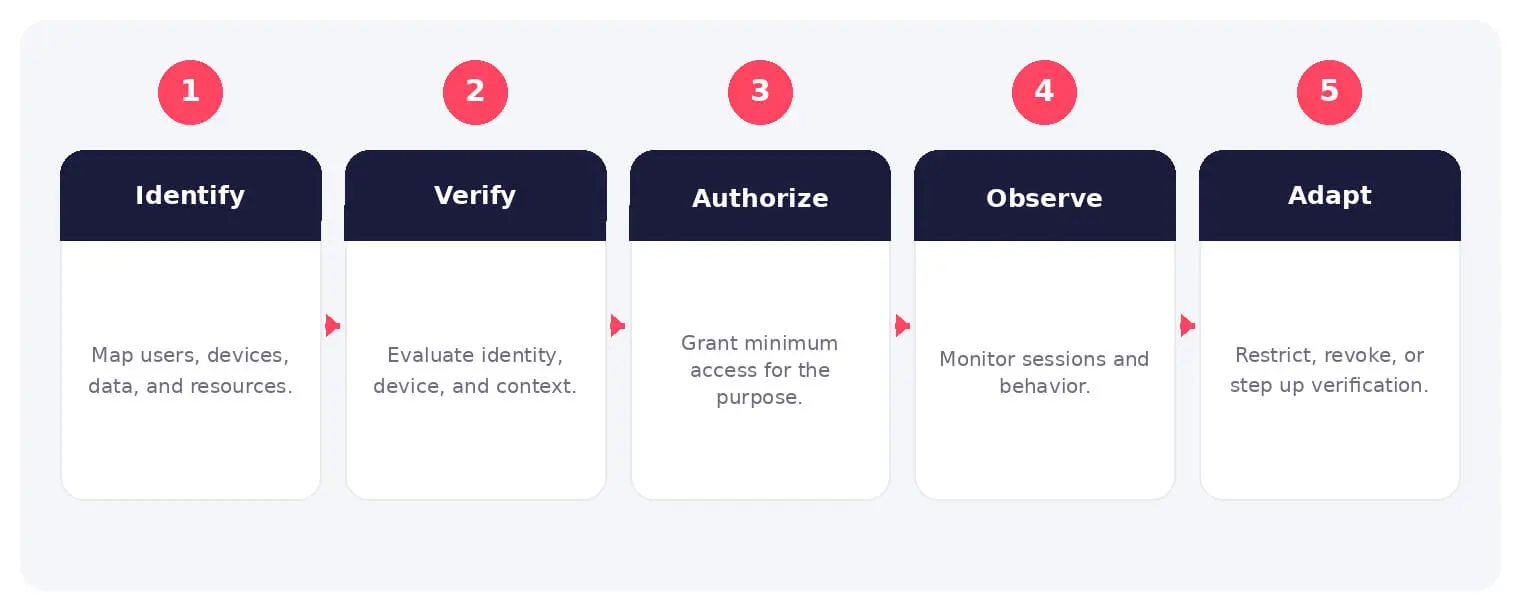
How It Works
The operating flow above turns the concept into observable steps. Exact implementations vary, but each stage needs accountable ownership, trusted inputs, documented policy, and evidence that analysts can use during investigation and review.
It is not a single product or a rule that every request must always be challenged. A practical architecture verifies identity and device posture, grants least-privilege access, limits the blast radius through segmentation, and continuously reevaluates risk using current signals.
Common Types and Capabilities
- Identity-centric access
- Device trust and posture
- Application-level access and segmentation
- Data protection and continuous analytics
Security and Business Risks
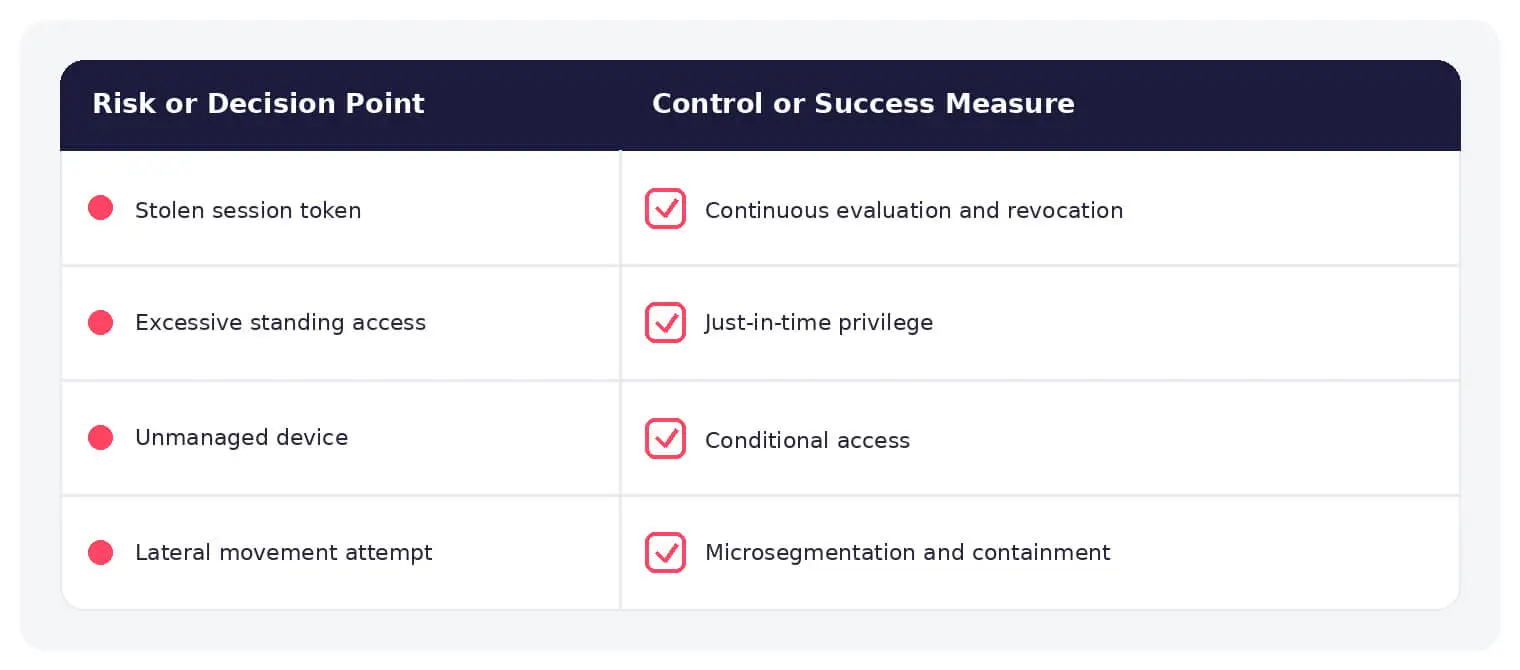
- Stolen sessions after initial authentication
- Excessive permissions and standing privilege
- Unmanaged devices and shadow resources
- Fragmented policy and incomplete telemetry
Warning Signs and Detection
Monitor risky sign-ins, token reuse, new devices, privilege changes, access outside normal roles, unmanaged applications, lateral connection attempts, posture changes, policy exceptions, and sessions that continue after risk increases.
Best Practices
Inventory critical resources, strengthen identity, use phishing-resistant MFA, assess device posture, replace broad network access with application access, apply least privilege, segment workloads, protect telemetry, and revoke sessions quickly.
How SOCRadar Can Help
SOCRadar adds external visibility, threat intelligence, exposure context, and continuous monitoring to help teams validate and prioritize risks related to zero trust security. This context complements internal cloud, network, identity, and application controls.
Explore SOCRadar Identity and Access Intelligence or request a demo to strengthen threat-informed prevention and response.
Frequently Asked Questions
What Is Zero Trust Security?
Zero trust is a security strategy that treats network location as insufficient on its own for granting access. It requires explicit, contextual authorization for each resource, based on identity, device posture, and current risk signals. Zero trust is an architecture and operating model, not a single product or feature.
Is Zero Trust a Single Product You Can Purchase?
No. Zero trust combines identity-centric access, device trust and posture checks, application-level segmentation, data protection, and continuous analytics under a consistent policy model. Vendors sell individual components, but the strategy depends on integration, accountable ownership, and documented policy.
How Is Zero Trust Different From a Traditional VPN Model?
A traditional VPN often grants broad network access once a user connects, which can enable lateral movement if credentials are stolen. Zero trust replaces that broad access with application-level access, so users reach only the resources their role requires, and segmentation limits the blast radius of any compromise.
Does Zero Trust Require Challenging Every Single Request?
No. A practical model makes risk-based decisions: familiar requests from healthy devices may proceed with little friction, while unusual or high-risk contexts trigger stronger verification or denial. The objective is continuous, contextual evaluation rather than constant user interruption.
How Does Zero Trust Evaluate an Access Request?
Each request is checked against identity assurance, such as MFA strength and sign-in risk, and against device posture, including management and patch status. Policy then grants the least privilege needed for that specific application or workload. Risk signals are reevaluated during the session, not only at login.
What Is the Main Risk After Initial Authentication?
Stolen sessions after initial authentication are a primary concern. If an attacker obtains a valid token or cookie, many controls will treat the activity as a legitimate user, so continuous session validation, anomaly monitoring, and rapid revocation become essential parts of the model.
Which Signals Suggest a Session or Policy Has Been Compromised?
Watch for risky sign-ins, token reuse, sign-ins from new or unmanaged devices, unexpected privilege changes, and access outside normal roles. Other indicators include:
- Lateral connection attempts between workloads
- Unmanaged or shadow applications
- Posture changes and policy exceptions
- Sessions that continue after risk conditions increase
What Should You Do If a Session Is Suspected to Be Stolen?
Revoke the session and refresh tokens at the identity provider instead of relying only on a password reset, since resets may not invalidate active sessions on every platform. Force reauthentication, review device posture and recent activity, and determine how the session was obtained so that access path can be closed.
What Are Practical First Steps Toward Zero Trust?
Start by inventorying critical resources and strengthening identity, including phishing-resistant MFA and device posture assessment. Then replace broad network access with application-level access, apply least privilege, segment workloads, protect telemetry, and confirm that sessions can be revoked quickly when risk rises.
How Does Zero Trust Reduce Business Risk?
By limiting standing privilege and enforcing segmentation, zero trust narrows the blast radius of stolen credentials or compromised devices, and continuous reevaluation shortens the time a high-risk session stays active. The main implementation risks are excessive permissions, unmanaged devices, and fragmented policy, so complete telemetry and clear ownership matter as much as the technology itself.