What Is a Cyber Attack?
A cyber attack is a deliberate attempt to gain unauthorized access, steal or alter data, commit fraud, disrupt operations, or damage digital systems. Targets include individuals, businesses, governments, cloud environments, operational technology, suppliers, and shared services.
Attackers may use vulnerabilities, stolen identities, phishing, malware, third parties, physical access, or misuse of legitimate tools. Defense must reduce entry opportunities, limit movement and impact, detect abnormal behavior, and recover without restoring attacker access.
Key Takeaways
- Cyber attacks target confidentiality, integrity, availability, identities, money, and trust.
- Most incidents combine several techniques rather than one vulnerability or malware family.
- Identity protection, visibility, patching, segmentation, monitoring, and response work together.
- External intelligence helps prioritize threats that overlap with assets, suppliers, brands, and people.
How a Cyber Attack Works
Motivations include financial gain, espionage, strategic advantage, disruption, influence, ideology, competition, and grievance. Targets are selected for value, access, exposure, weak controls, or relationships.
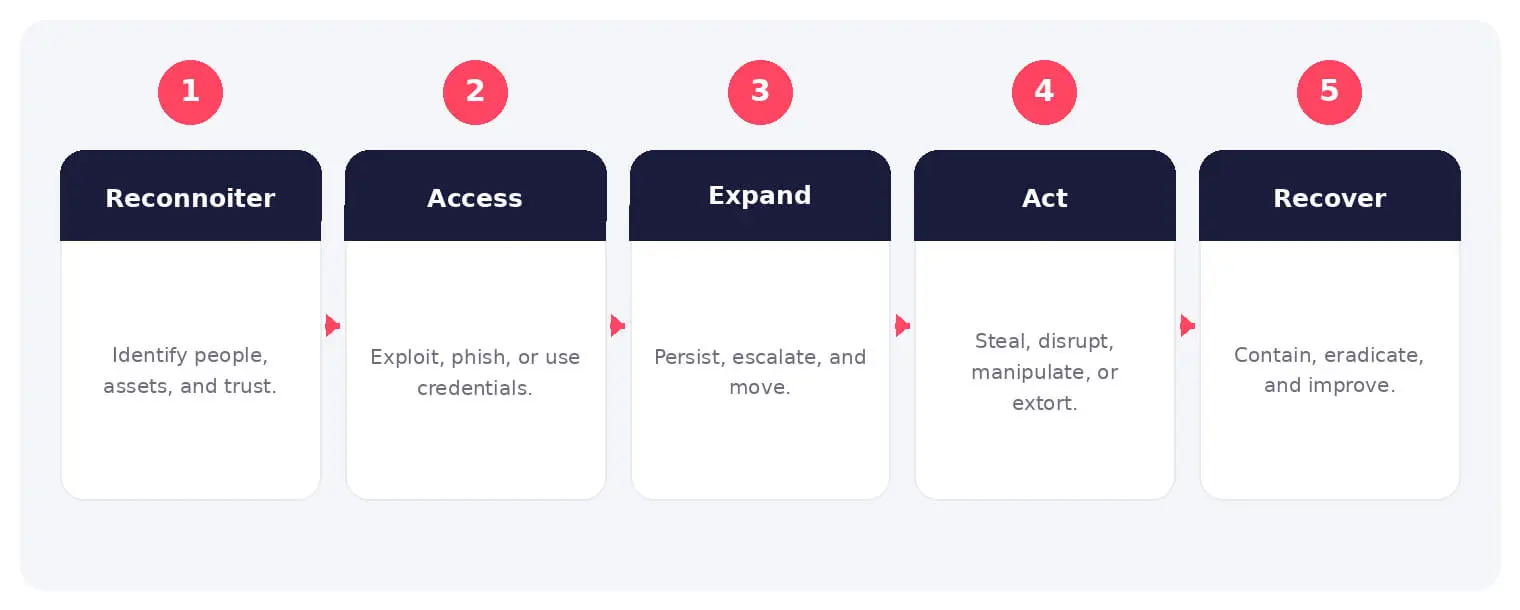
A useful lifecycle includes reconnaissance, preparation, initial access, execution, persistence, privilege escalation, discovery, lateral movement, collection, command and control, exfiltration, and impact. Not every incident uses every stage.
Common Types and Techniques
- Phishing, social engineering, and credential attacks
- Malware, ransomware, backdoors, and worms
- Application, API, cloud, and supply-chain attacks
- DDoS, fraud, data theft, sabotage, and insider misuse
Security and Business Risks
- Operational disruption and recovery cost
- Data exposure, manipulation, or destruction
- Financial fraud, extortion, and legal obligations
- Loss of customer, partner, and public trust
Warning Signs and Detection
Look for unusual logins, unexpected MFA prompts, privileged changes, rare processes, disabled security tools, data staging, unfamiliar outbound traffic, mass file changes, abnormal cloud deployments, and public impersonation.
Prevention and Response
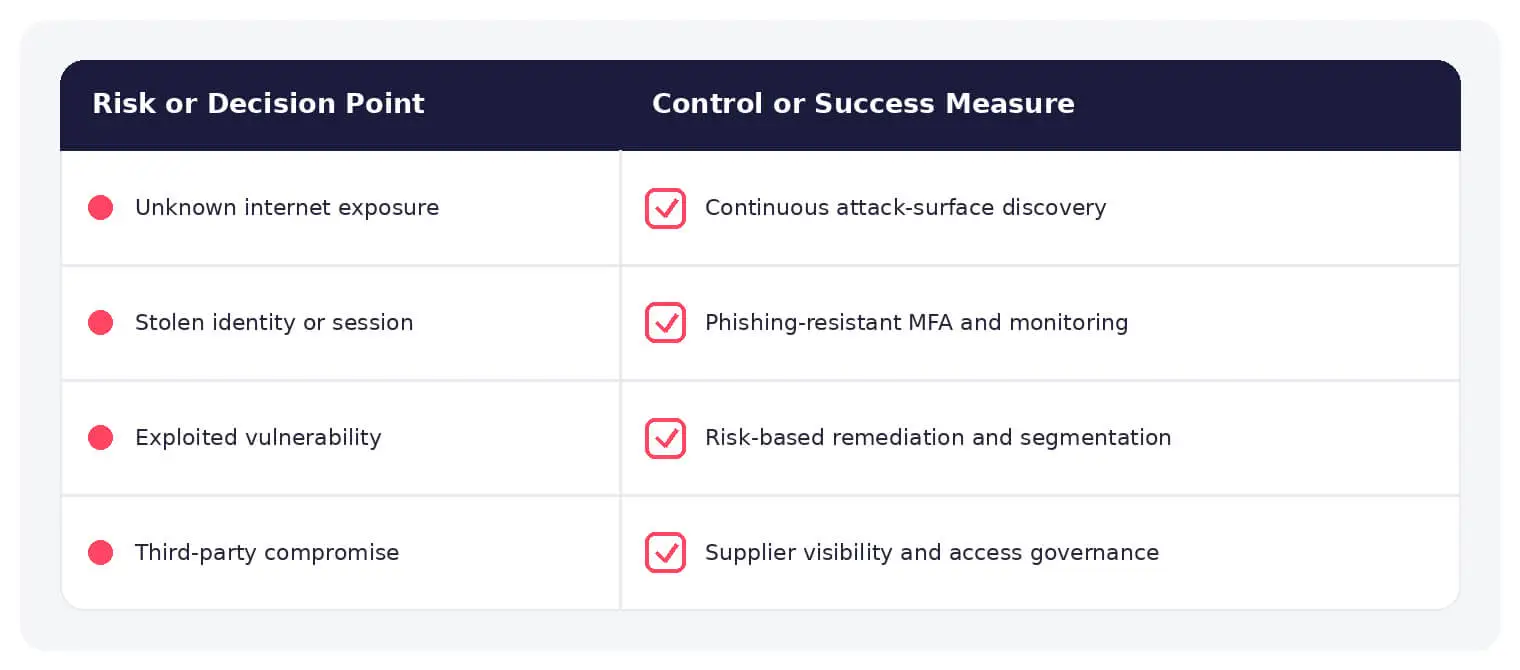
Maintain accurate asset and identity inventories, remove unnecessary exposure, patch based on exploitability, enforce phishing-resistant MFA, apply least privilege and segmentation, secure backups, monitor broadly, and test incident response.
How SOCRadar Can Help
SOCRadar combines external asset visibility, threat intelligence, Dark Web monitoring, vulnerability context, and indicator enrichment to help teams identify exposure and investigate activity connected to cyber attack.
Explore SOCRadar Extended Threat Intelligence or request a demo to strengthen threat-informed prevention and investigation.
Frequently Asked Questions
What Is the Difference Between a Cyber Attack, a Security Incident, and a Data Breach?
A cyber attack is a deliberate attempt by an actor to compromise systems, steal data, or disrupt operations. A security incident is any event that harms or threatens security, whether caused by an attacker or by error. A data breach is confirmed exposure or theft of protected information, so an attack can fail without a breach, while a breach can also result from a misconfiguration with no attacker involved.
What Are the Most Common Types of Cyber Attacks?
Frequently observed categories include:
- Phishing, social engineering, and credential attacks
- Ransomware, malware, and backdoors
- Exploitation of unpatched internet-facing systems
- Business email compromise and payment fraud
- DDoS, data theft, and insider misuse
- Cloud and supply chain compromises
Most real incidents combine several techniques, such as phishing for credentials followed by lateral movement and data theft, rather than relying on a single vulnerability or malware family.
How Do Attackers Gain Initial Access to an Organization?
Stolen or reused credentials, phishing, and exploitation of unpatched internet-facing systems are among the most frequently observed entry points. Exposed remote access services, cloud misconfigurations, and compromised third-party connections also appear repeatedly in incident reports. The dominant path varies by sector and environment, so defenders should weigh their own incident history alongside current threat intelligence.
What Are the Stages of the Cyber Attack Lifecycle?
A practical model runs from reconnaissance and initial access through execution, persistence, privilege escalation, discovery, lateral movement, collection, and command and control, ending with impact such as data theft, extortion, or sabotage. Not every intrusion follows every stage, and attackers often compress steps by abusing valid accounts and legitimate administration tools. Mapping detections to these stages helps reveal gaps in visibility.
What Are the Warning Signs of an Active Cyber Attack?
Look for unusual login patterns, unexpected MFA prompts, new or modified privileged accounts, disabled security tools, mass file modifications, rare process executions, and unfamiliar outbound traffic. Abnormal cloud deployments and data staged in unusual locations also deserve scrutiny. A single event can be benign, but combinations such as MFA prompt floods followed by new inbox rules should trigger immediate investigation.
What Should an Organization Do First After Detecting a Cyber Attack?
Activate the incident response plan, protect people and critical business operations, and contain the affected accounts or systems while preserving logs and forensic evidence. Avoid destructive cleanup actions, such as reimaging, before evidence is captured. Keep in mind that password resets alone may not end an intrusion if stolen session tokens remain valid, so active sessions should also be revoked where the platform supports it.
How Can Organizations Reduce the Risk of a Successful Attack?
Maintain accurate asset and identity inventories, remove unnecessary exposure, enforce phishing-resistant MFA, apply least privilege and segmentation, and patch internet-facing systems based on exploitability. Secure, tested backups and rehearsed incident response shorten recovery when prevention falls short. Attack surface reviews and purple team exercises help surface gaps before attackers find them.
Do Cyber Attacks Only Target Large Enterprises?
No. Automated scanning, credential stuffing, and ransomware campaigns target whatever is reachable, regardless of company size. Smaller organizations also hold payment data, customer records, and trusted connections to larger partners, which makes them useful targets in their own right and stepping stones for supply chain attacks.
Can a Cyber Attack Happen Without Malware?
Yes. Many intrusions rely on stolen credentials, legitimate remote access tools, built-in administrative utilities, or direct social engineering instead of malicious files. This approach blends into normal operations, which is why behavioral monitoring and identity analytics are needed alongside traditional antivirus tools.
How Can You Find Out if Your Credentials or Data Are Already Exposed?
Underground sources such as stealer logs, credential dumps, and ransomware leak sites often reveal exposure before it is used in an attack. SOCRadar’s Dark Web Monitoring tracks these sources to flag exposed credentials and leaked data connected to your domains and brands, giving security teams time to rotate secrets and reset access first.
Oct 23, 2026
CVE-2026-114625: Actively Exploited VeloCloud Orchestrator Flaw Grants Superuser Access
CVE-2026-114625 is an actively exploited SQL injection flaw in VeloCloud Orchestrator that lets authenticated users gain superuser operator privileges…
Oct 22, 2026
PHP2Shell Exploit Tooling Found on Exposed Attacker Server
SOCRadar Threat Intelligence Unit (STRU) researchers found PHP2Shell exploit tooling on an attacker-controlled server whose working directory was exposed…

Oct 22, 2026
New LiteLLM Supply Chain Attack Hits PyPI and Docker
A new LiteLLM supply chain attack has turned version 1.107.0, an official release of the popular open-source LLM gateway, into a credential…
Intelligence in your inbox every Thursday.
Join 30,000+ security professionals reading SOCRadar research.
Subscribe