

Mar 10, 2026

Jun 25, 2026
5 Mins Read
Sep 13, 2026
Table Of Content
Related Articles
SMS Bombing
Threat Actors
Jan 08, 2026
Dark Web Monitoring
Feb 19, 2026

Ransomware
Jan 31, 2026
OSINT Framework
Apr 17, 2026

What Are OTP Bots?
OTP bots are automated services used to obtain one-time passcodes from victims through deceptive calls, text messages, or interactive prompts. The attacker already has or is attempting to use account credentials and needs the victim to disclose the temporary code that completes authentication or a transaction.
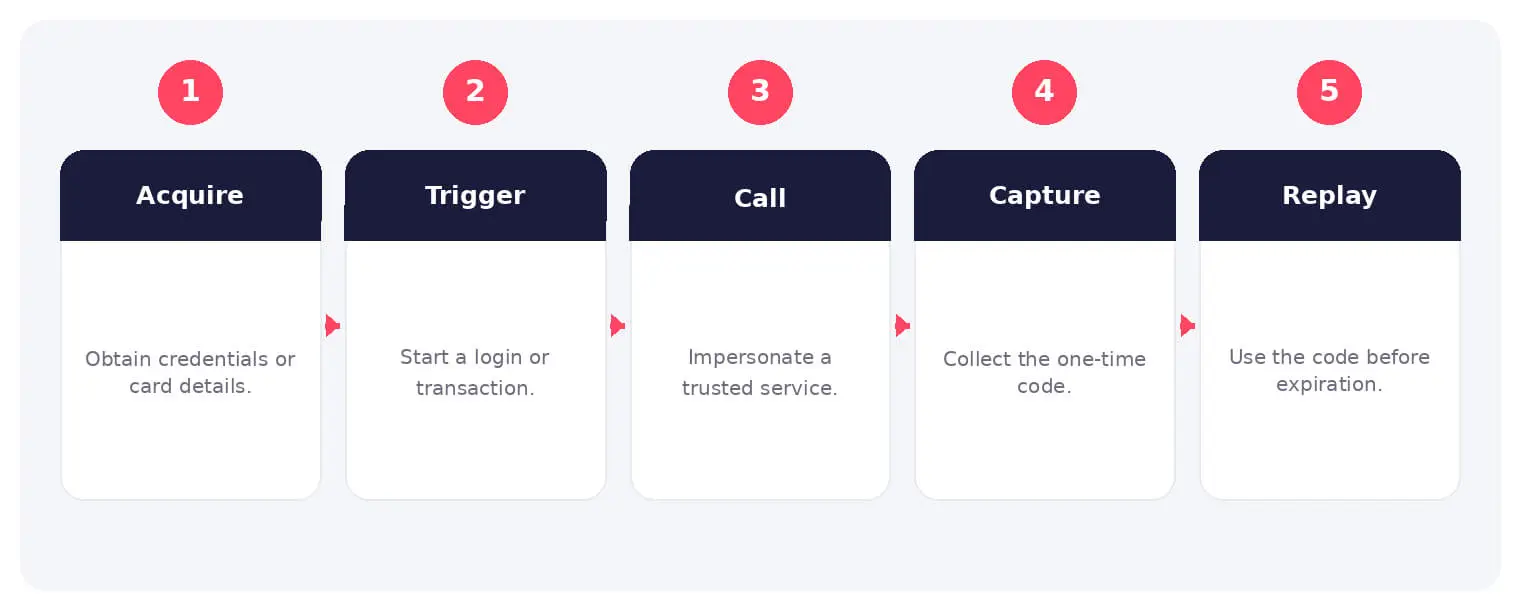
The bot does not break the cryptography behind the code. It combines automation, impersonation, urgency, and real-time coordination so the attacker can enter the passcode before it expires. Criminal services make this capability available to less-skilled operators.
Key Takeaways
- Automated bank and account-security calls is a central category or technique.
- Reliable assessment requires source, ownership, timing, and operational context.
- Detection should connect external evidence with identity, device, network, and business signals.
- Response should protect affected people and remove reusable access paths.
How OTP Bots Works
The sequence above provides a practical operating model. Individual steps can overlap, repeat, or involve different people and services, so each stage should be validated against available evidence.
The bot does not break the cryptography behind the code. It combines automation, impersonation, urgency, and real-time coordination so the attacker can enter the passcode before it expires. Criminal services make this capability available to less-skilled operators.
Common Types and Techniques
- Automated bank and account-security calls
- SMS and interactive voice prompts
- MFA fatigue paired with code capture
- Criminal OTP-bot subscription services
Security, Privacy, and Business Risks
- Account takeover and financial theft
- Bypass of SMS or voice-based MFA
- Customer impersonation and support abuse
- Scaled fraud using purchased credentials
Warning Signs and Validation
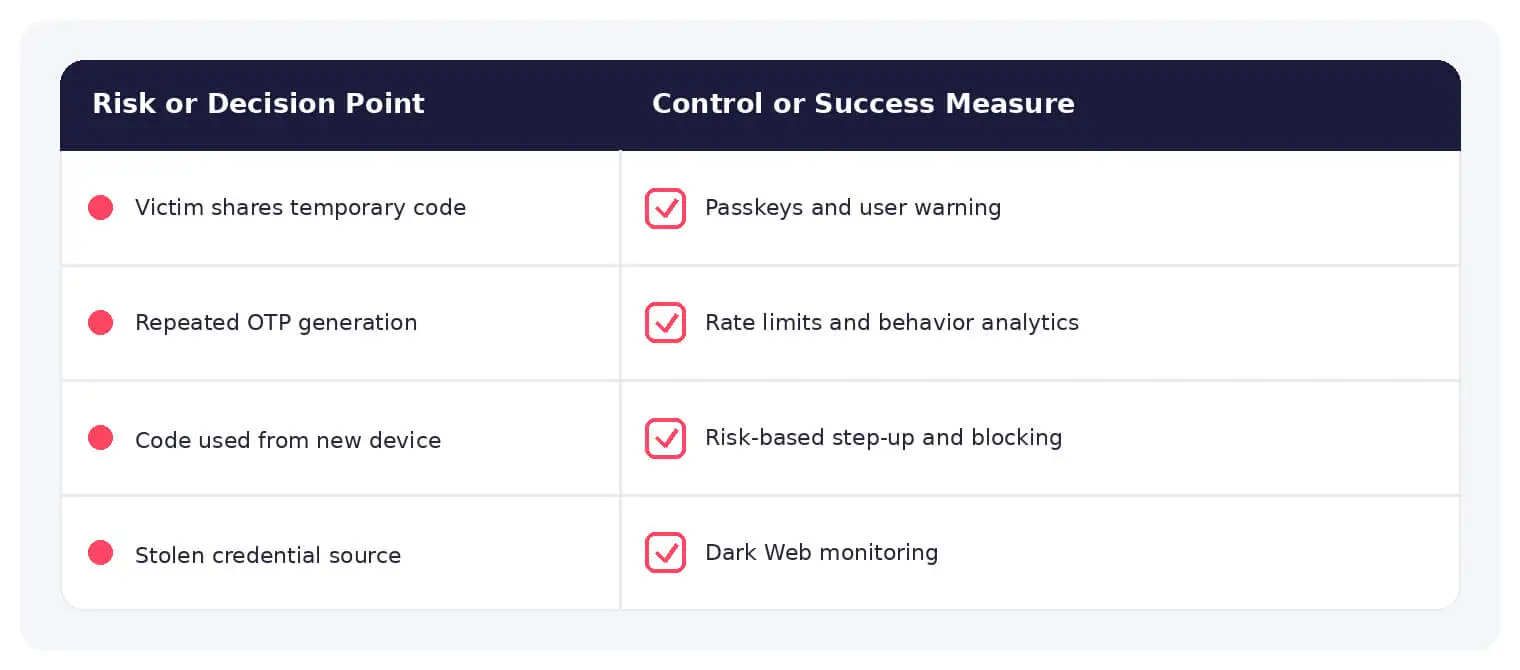
Detect repeated OTP requests, login attempts followed by unusual calls, rapid code use from a different device or location, new payees, device enrollment, and criminal advertising of targeted services.
Prevention and Response
Prefer phishing-resistant MFA such as passkeys or security keys, warn users never to share codes, bind high-risk actions to trusted sessions, rate-limit challenges, monitor new devices and beneficiaries, and protect account recovery.
How SOCRadar Can Help
SOCRadar combines external intelligence, Dark Web visibility, brand monitoring, attack-surface discovery, and contextual enrichment to help teams identify exposure and investigate activity connected to OTP bots.
Explore SOCRadar Dark Web Monitoring or request a demo to strengthen external threat detection and response.
Frequently Asked Questions
What Are OTP Bots and How Do They Work?
OTP bots are automated tools that place calls or send texts impersonating a bank, retailer, or support desk. They pressure the victim into reading back a one-time passcode, which the attacker enters into the real login or payment flow before the code expires.
Do OTP Bots Crack the Passcode Themselves?
No. The bot never defeats the cryptography behind the code. It relies on impersonation, urgency, and real-time coordination so the victim hands over a code the legitimate service issued, and the attacker uses it while it is still valid.
Who Operates OTP Bots?
Most operators are low-skilled criminals who rent OTP-bot subscription services rather than build the tooling themselves. These services bundle spoofed caller ID, scripted voice prompts, and sometimes account details drawn from stolen data, which makes the calls sound like a genuine fraud check.
Which Authentication Methods Are Vulnerable to OTP Bots?
SMS codes, voice-delivered codes, and time-based authenticator app codes can all be phished, because each one can be read aloud or typed into a fraudulent flow. Passkeys and hardware security keys are bound to the legitimate site and cannot be recited over a phone call, which is why they provide stronger phishing resistance.
What Warning Signs Point to an OTP Bot Attack?
- One-time codes arriving when the user did not start a login
- An unexpected call asking the user to verify or read back a code
- A code used within seconds from a new device or location
- New payees, new device enrollments, or repeated failed logins just before the call
Several of these occurring together warrants immediate account review.
What Should a Victim Do After Sharing a Code?
Contact the provider through a known official channel and ask for the account to be locked if fraud is confirmed. Change the password from a trusted device, revoke active sessions and unfamiliar device enrollments, review recent transactions and payees, and report the fraud to the provider and relevant authorities.
How Can Organizations Reduce OTP Bot Risk?
Offer phishing-resistant MFA such as passkeys or FIDO2 security keys for high-risk accounts, and tell customers and staff that no legitimate agent will ask for a full passcode. Bind sensitive actions like adding a payee or enrolling a device to an already trusted session, rate-limit OTP challenges, and alert when a code is requested and consumed from different networks within seconds.
Why Do Attackers Pair OTP Bots With MFA Fatigue?
Repeated push approvals or code requests wear the victim down until they accept one just to stop the prompts. A bot call layered on top adds a convincing security-team persona that turns that fatigue into an actual code disclosure.
What Business Damage Can OTP Bot Attacks Cause?
Direct losses include account takeover, unauthorized transfers, and payment fraud. Impact scales because attackers feed the bots with credentials bought in bulk, and customers impersonated in these calls often blame the brand whose name the bot used, adding support costs and reputational harm.