What Is a Cloud Security Gateway?
A cloud security gateway is a policy-enforcement layer that inspects and controls access between users, devices, applications, cloud services, and the internet.
Depending on the product, it may combine secure web gateway, cloud access security broker, data protection, malware inspection, zero-trust access, and threat-prevention capabilities. A gateway is not a substitute for secure cloud configuration or workload protection.
Key Takeaways
- A cloud security gateway is a policy-enforcement layer that inspects and controls access between users, devices, applications, cloud services, and the internet.
- Depending on the product, it may combine secure web gateway, cloud access security broker, data protection, malware inspection, zero-trust access, and threat-prevention capabilities. A gateway is not a substitute for secure cloud configuration or workload protection.
- Unsanctioned cloud application use is a primary concern.
- Strong programs combine prevention, continuous visibility, ownership, and tested response.
How It Works
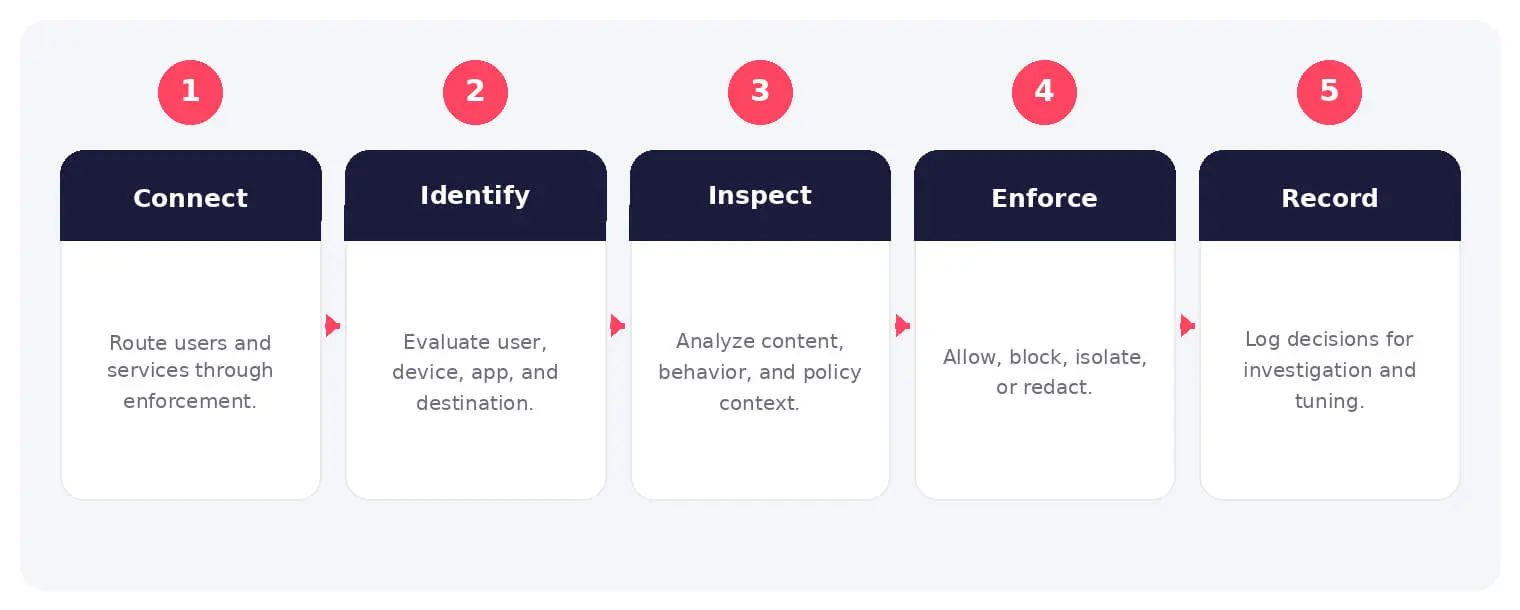
The operating flow above turns a broad security objective into observable steps. Exact implementations vary, but each stage needs an owner, trusted inputs, documented policy, and evidence that analysts can use during investigation and review.
Depending on the product, it may combine secure web gateway, cloud access security broker, data protection, malware inspection, zero-trust access, and threat-prevention capabilities. A gateway is not a substitute for secure cloud configuration or workload protection.
Common Types and Capabilities
- Secure web gateway functions
- Cloud access security broker controls
- Data and malware inspection
- Zero-trust and remote-access enforcement
Security and Business Risks
- Unsanctioned cloud application use
- Sensitive-data leakage
- Malicious downloads and command traffic
- Policy gaps caused by bypass or poor routing
Warning Signs and Detection
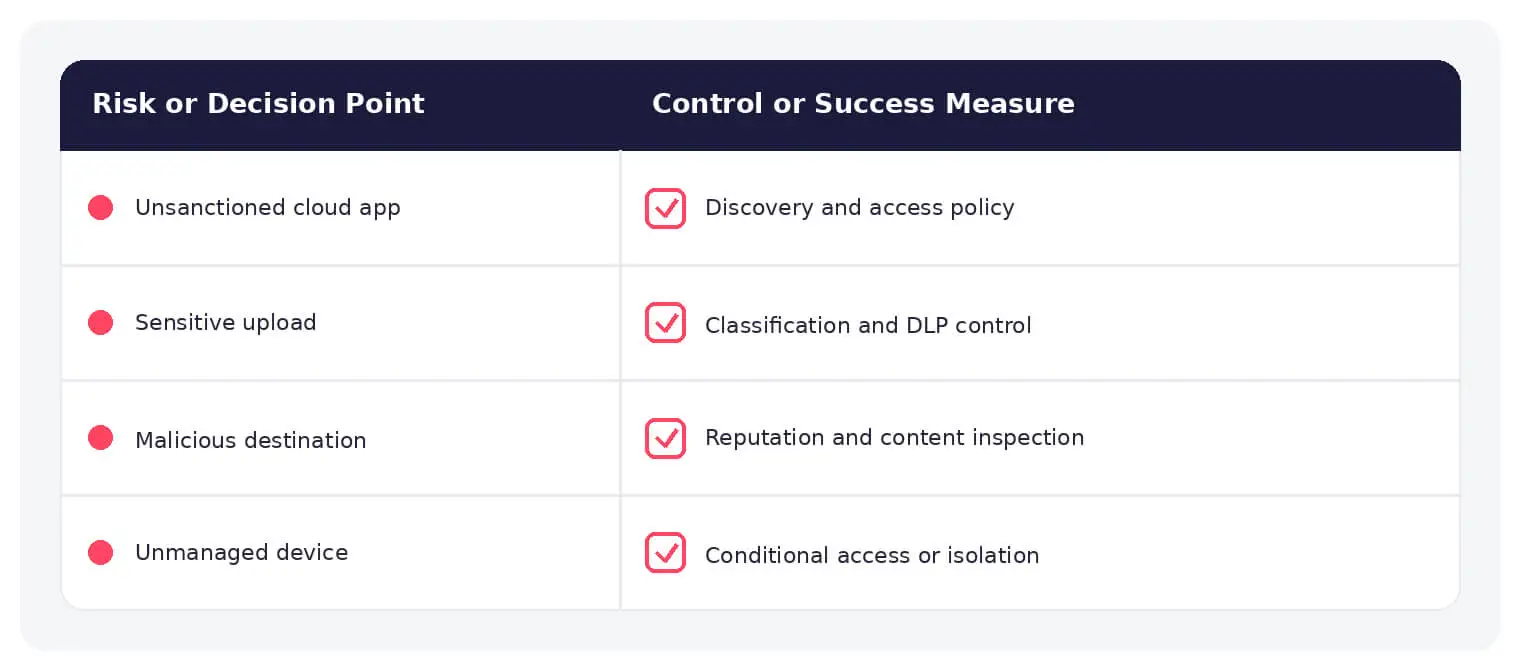
Monitor unapproved applications, unusual uploads, risky OAuth grants, malware callbacks, policy bypass, unmanaged devices, failed inspection, and traffic that does not traverse the expected gateway.
Best Practices
Inventory sanctioned services, integrate identity and device posture, inspect outbound traffic, restrict risky actions, protect sensitive data, test bypass paths, and review exceptions and logs.
How SOCRadar Can Help
SOCRadar adds outside-in asset visibility, threat intelligence, exposure context, and continuous monitoring that help security teams validate and prioritize risks related to cloud security gateway. This context complements internal cloud, data, network, and identity controls.
Explore SOCRadar Attack Surface Management or request a demo to strengthen threat-informed prevention and response.
Frequently Asked Questions
What Is a Cloud Security Gateway?
A cloud security gateway is a policy-enforcement point that sits between users, devices, applications, cloud services, and the internet. It inspects traffic and applies access rules, and many products combine secure web gateway, CASB, data protection, malware inspection, and zero-trust capabilities in one platform. Its scope is traffic and access control, not configuration or workload hardening.
How Is a Cloud Security Gateway Different From a Secure Web Gateway or a CASB?
A secure web gateway focuses on filtering web traffic and blocking malicious destinations, while a CASB focuses on visibility and policy for cloud services. A cloud security gateway is a broader enforcement layer that may combine both functions with data protection, malware inspection, and access enforcement. Capabilities vary by product, so teams should verify which controls a specific gateway actually provides.
Why Is Unsanctioned Cloud Application Use a Primary Concern?
Unsanctioned apps operate outside approved security controls, so sensitive data can move to services no one has reviewed. They also increase exposure to risky OAuth grants, weak provider security practices, and unclear data ownership. Gateways help by identifying this traffic and applying policies that sanction or restrict specific services.
How Does a Cloud Security Gateway Inspect Traffic Between Users and Cloud Services?
Traffic is routed through the gateway, often via proxy, agent, or API connections depending on the product. The gateway then checks destinations, files, and data patterns before enforcing allow, block, or restrict actions. Routing design matters: if traffic can reach the internet without passing through the gateway, inspection does not occur.
What Warning Signs Suggest Policy Gaps Around a Cloud Security Gateway?
Signals include traffic that never traverses the expected gateway, failed inspection events, unusual uploads to unapproved destinations, and risky OAuth grants in cloud tenants. Unmanaged devices reaching sanctioned services and malware callbacks from allowed sessions are also worth investigating. These signs often point to routing gaps, exceptions, or endpoint coverage issues.
How Should Teams Respond When Traffic Does Not Traverse the Expected Gateway?
First identify how the bypass happens, such as local proxy changes, split tunneling, mobile networks, or misconfigured agents. Then close the routing gap, block the alternate path where appropriate, and confirm the fix with tests from representative devices and networks. Finally, review logs to determine what traffic passed through the gap and whether any data left the environment.
Can a Cloud Security Gateway Replace Secure Cloud Configuration or Workload Protection?
No. A gateway governs access and traffic between users, devices, services, and the internet, but it does not fix misconfigured storage, weak identity settings, or vulnerabilities inside workloads. Strong programs pair gateway enforcement with secure configuration, workload protection, and identity controls, since each addresses a different layer.
Which Integrations Make a Cloud Security Gateway More Effective?
Identity provider integration lets the gateway apply context-aware access decisions based on user, role, and session risk. Device posture data helps distinguish managed, compliant endpoints from unmanaged ones. Forwarding gateway logs to SIEM or XDR tooling also improves detection of callbacks and policy bypass attempts.
How Does a Cloud Security Gateway Help Reduce Sensitive Data Leakage?
It inspects outbound traffic for data patterns and can block, warn, or restrict actions such as uploads, downloads, or sharing to unsanctioned destinations. Combined with a maintained inventory of sanctioned services, this limits the paths sensitive data can take. Accuracy still depends on well-tuned policies, so teams should review exceptions and false positives regularly.
What Belongs in an Ongoing Cloud Security Gateway Review?
Review sanctioned and unsanctioned application lists, exception approvals, and ownership for each policy. Test bypass paths periodically, verify inspection coverage for newly adopted apps and services, and confirm that logs are retained and monitored. This keeps enforcement aligned with how users actually access cloud services over time.

Oct 27, 2026
Australia’s Annual Cyber Threat Report 2025-26 Shows Cyber Incidents Up 20%
Australia’s cyber security authority responded to 1,524 cyber security incidents in the 2025-26 financial year, a 20% increase from the previous year…

Oct 27, 2026
PHP2Shell Weaponized After Japanese Real Estate Extortion
An exposed server ties an extortion wave on about 20 Japanese property sites to an operator who later weaponized PHP2Shell (CVE-2026-109618, CVE-2026-109619)…

Oct 27, 2026
Wasmtime Sandbox Escape Flaws Patched in Cranelift
Two critical Wasmtime sandbox escape flaws, CVE-2026-115889 and CVE-2026-115893, let a crafted WebAssembly (Wasm) module push the Cranelift compiler into generating unsafe…
Intelligence in your inbox every Thursday.
Join 30,000+ security professionals reading SOCRadar research.
Subscribe