

Oct 13, 2026
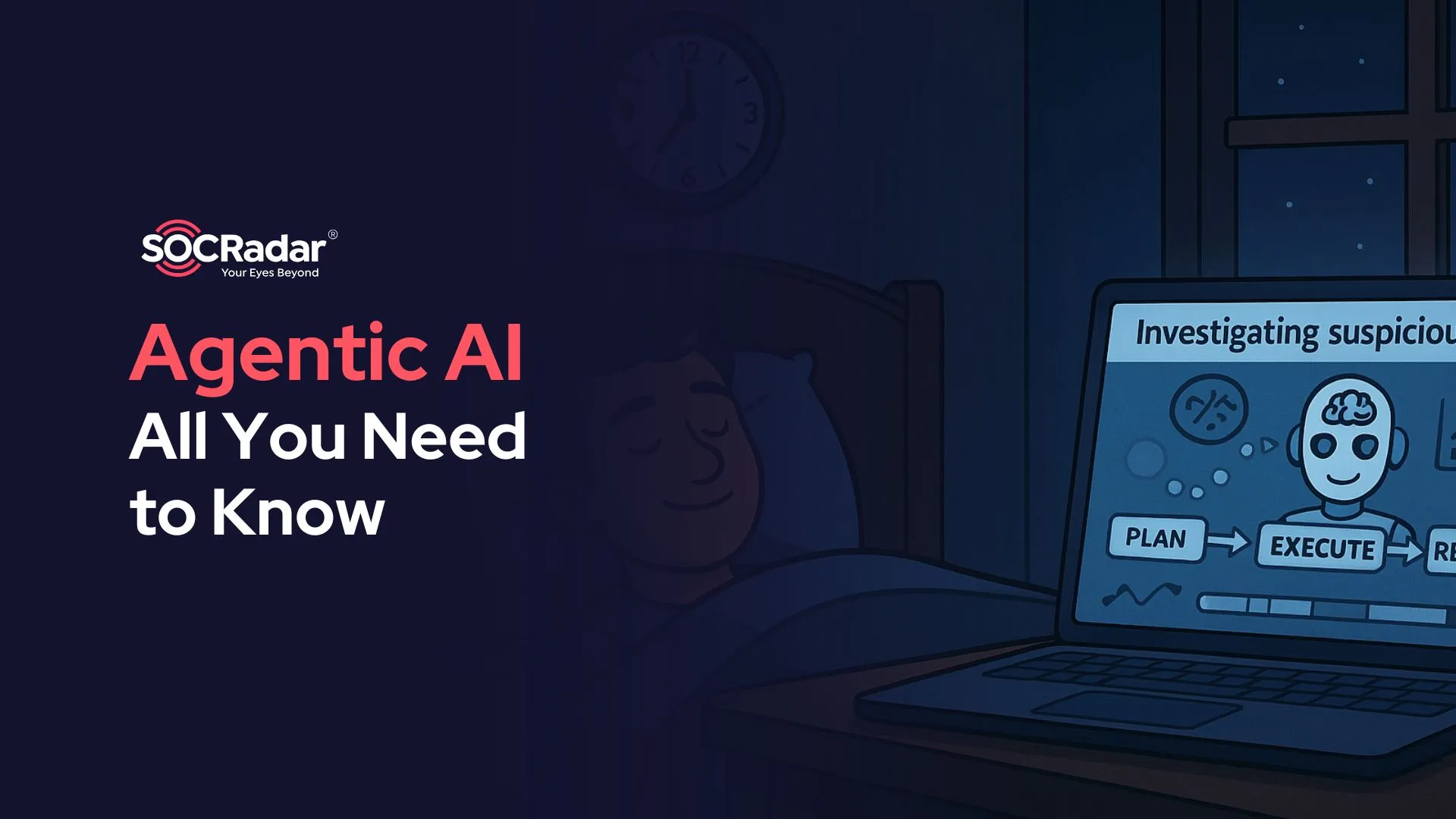
Table Of Content
Agentic AI in Cybersecurity: Everything You Need to Know
Key Takeaways
What Is Agentic AI in Cybersecurity?
The Evolution: From Chatbots to Autonomous Cyber Defense
What Exactly Is Agentic Threat Intelligence?
The Anatomy of Agentic AI in Cybersecurity
Why the Hype? The Business Case for Agentic AI in Cybersecurity
Real-World Applications: Agentic AI in SOC Operations
Agentic Threat Intelligence vs Traditional CTI: The Showdown
The OWASP Reality Check: Security Challenges We Can't Ignore
Best Practices for Agentic AI in Cybersecurity: Getting It Right
Looking Ahead: The Future of Cyber Defense Is Agentic
Frequently Asked Questions
The Bottom Line: Evolution or Revolution?
Related Articles
NetScaler C2: CVE-2026-88771 Exploitation Operation
Oct 07, 2026
Aug 22, 2025
18 Mins Read
Sep 09, 2026

Summarize with:
Agentic AI in Cybersecurity: Everything You Need to Know
Agentic AI in cybersecurity means handing a security workflow to an AI agent that plans its own steps, chooses its own tools, and acts on what it finds. These agents run continuously, and they do not wait for a prompt to start.
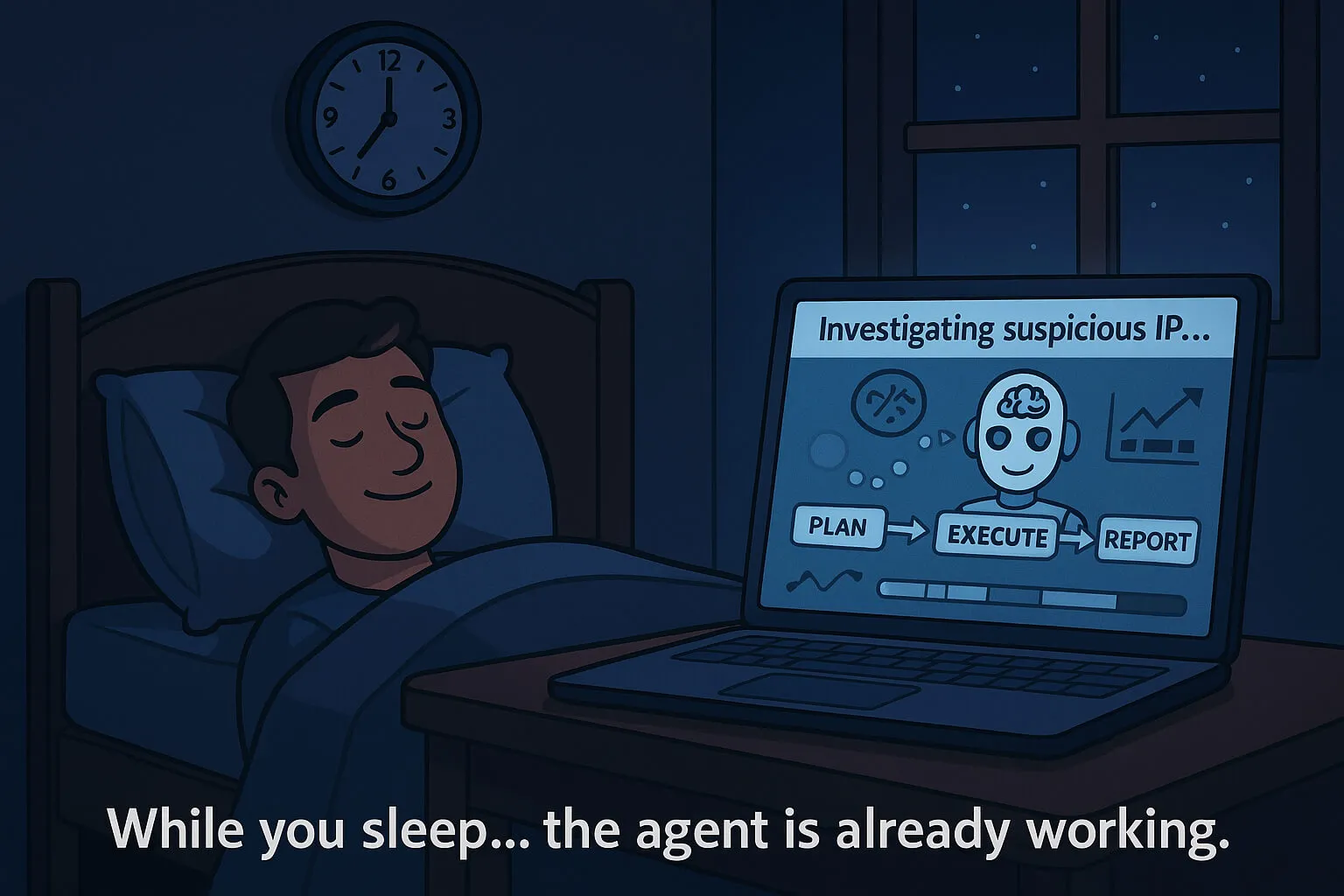
Picture this: it’s 3 AM, and while you’re peacefully sleeping, an AI agent is connecting the dots between a suspicious IP address, a new malware sample, and a threat actor’s latest campaign. By the time you grab your morning coffee, it has neutralized the threat and prepared a detailed report.
Key Takeaways
- Agentic AI in cybersecurity turns passive threat intelligence into active, autonomous cyber defense
- Real-time agentic threat detection enables unprecedented speed and scale in threat response
- Security risks exist and must be actively managed through frameworks like OWASP guidelines
- The technology is mature enough for enterprise deployment with proper safeguards
- Human-centric threat intelligence design remains crucial for success
What Is Agentic AI in Cybersecurity?
Agentic AI refers to a class of systems built to operate independently toward a defined goal, not just following instructions, but making decisions along the way.
These agents don’t wait for constant input. They interpret context, weigh options, and take initiative based on what they observe. This capability makes them fundamentally different from traditional AI systems, which rely on static workflows or human oversight.
In cybersecurity, for example, an agentic AI might receive fragments of suspicious activity from different sources – a domain name, an IP address, and a phishing sample. Rather than treating each in isolation, it can correlate them, recognize a possible campaign pattern, and prioritize the finding for deeper investigation – all without human intervention.
The Evolution: From Chatbots to Autonomous Cyber Defense
Not long ago, AI in the SOC meant a chatbot that could explain a log line if you asked it the right way. That era is over. We have moved from question-and-answer assistants to agentic systems that plan, act, and adapt on their own.
The practical difference is the one between a scanner that reports what it found and a system that decides what to do about it. Traditional tooling waits for a query. An agent takes a goal, picks its own path, and reports back on the outcome.
This transformation isn’t just theoretical. Industry leaders are already recognizing its potential. As Microsoft CEO Satya Nadella puts it: “AI agents will become the primary way we interact with computers in the future. They will be able to understand our needs and preferences, and proactively help us with tasks and decision making.”
And the implications for cybersecurity? They’re profound. Apply this level of autonomous intelligence to threat intelligence, and you get something revolutionary: Agentic Threat Intelligence.
What Exactly Is Agentic Threat Intelligence?
Building on the foundational differences we just explored, Agentic Threat Intelligence represents the next evolution of Cyber Threat Intelligence (CTI), where AI agents autonomously collect, analyze, correlate, and act upon threat data without constant human oversight. Instead of security analysts manually sifting through thousands of Indicators of Compromise (IOCs) or spending hours investigating a single alert, agentic threat intelligence systems handle the heavy lifting.
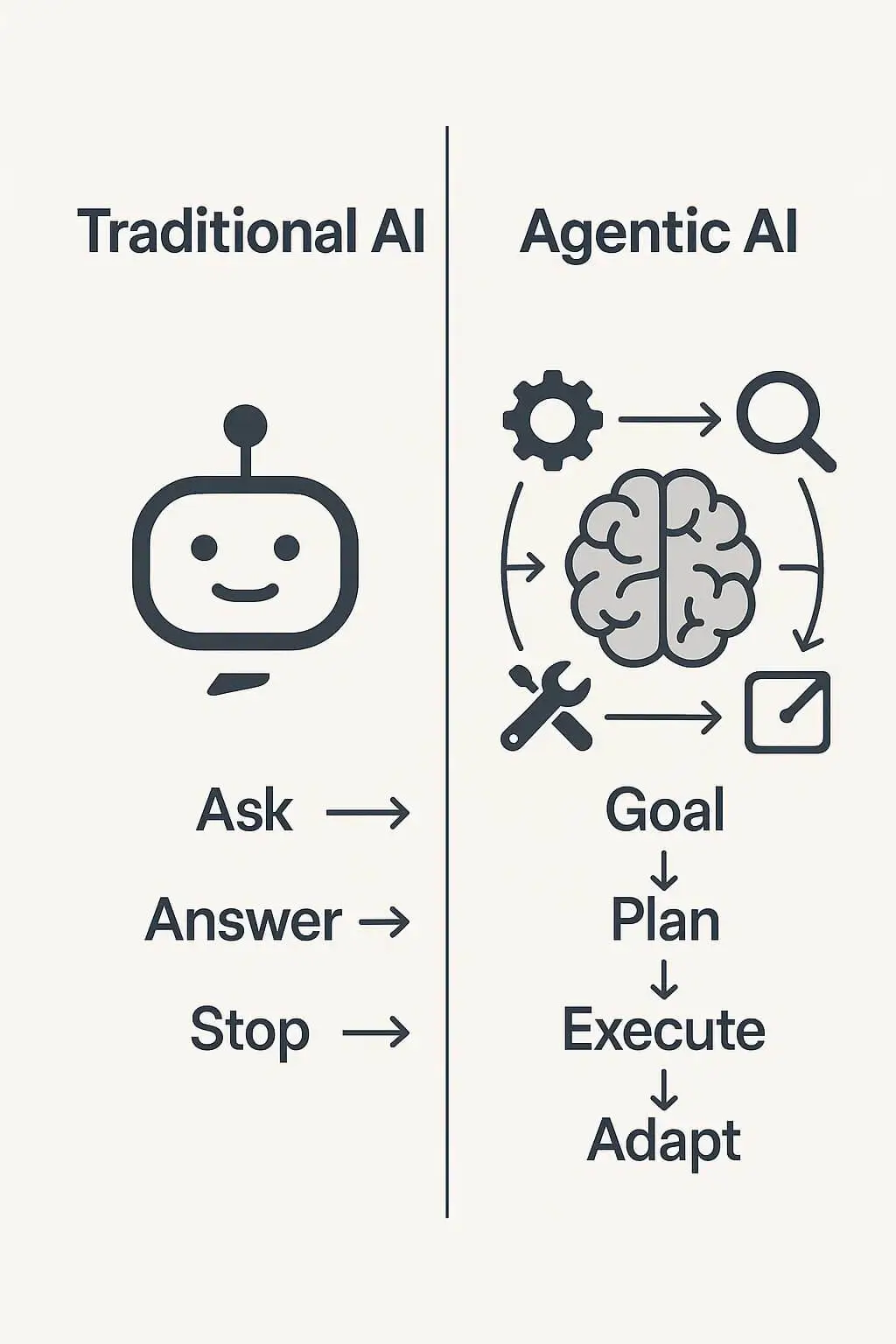
Here’s what makes ATI (Agentic Threat Intelligence) fundamentally different from traditional approaches:
Traditional Threat Intelligence:
- Reactive: “Something happened, let’s investigate”
- Manual: Analysts manually query databases and correlate data
- Limited Scale: Bound by human capacity and working hours
- Time-Consuming: Hours or days to complete investigations
Agentic Threat Intelligence:
- Proactive: “Let me hunt for threats before they become problems.”
- Autonomous: AI agents handle the entire investigation workflow
- Unlimited Scale: Can process thousands of threats simultaneously
- Real-Time: Investigations completed in minutes or seconds
The Anatomy of Agentic AI in Cybersecurity
To see how agentic AI in cybersecurity changes day-to-day security operations, it helps to break down what these agents actually do:
1. Autonomous Threat Hunting
Imagine having a cyber detective that never sleeps, never gets tired, and can simultaneously investigate hundreds of leads. Autonomous AI threat hunting agents continuously scan:
- Dark Web marketplaces for new malware
- Social media for threat actor communications
- Code repositories for leaked credentials
- Network traffic for anomalous patterns
2. Real-Time Correlation and Analysis
When a new threat indicator appears, real-time agentic threat detection systems don’t just flag it, they:
- Cross-reference it against historical attack patterns
- Identify related infrastructure and campaigns
- Predict likely next moves by threat actors
- Automatically enrich the data with contextual information
3. Intelligent Decision Making
This is where Agentic AI SOC operations truly shine. The AI doesn’t just present findings; it makes recommendations and can even take automated actions:
- Blocking malicious IPs across all security tools
- Updating threat feeds in real-time
- Initiating incident response workflows
- Coordinating with other security systems
Why the Hype? The Business Case for Agentic AI in Cybersecurity
With the technical capabilities established, let’s examine why organizations are increasingly exploring this technology. Everyone’s talking about agentic AI these days, and there’s good reason for the excitement:
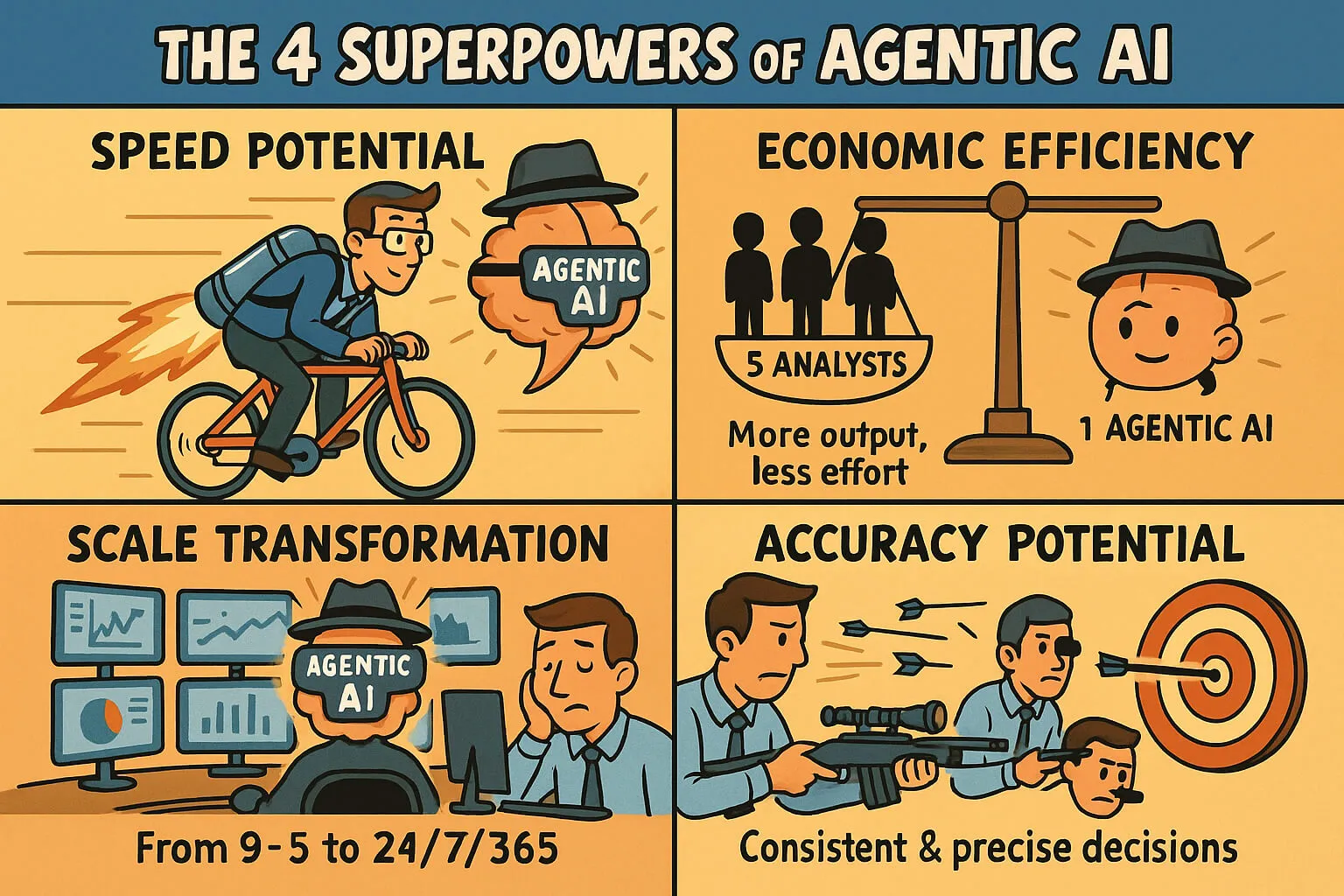
Speed Potential: Traditional threat intelligence workflows often require hours or days for comprehensive analysis due to manual correlation processes. Agentic systems have the theoretical capability to perform these correlations and enrichments in minutes, though real-world performance depends heavily on implementation quality and data sources.
Economic Considerations: Industry analysts, including firms like McKinsey and Gartner, have noted the potential for AI automation to create significant operational efficiencies across industries. In cybersecurity contexts, the primary value proposition centers on reducing manual workload and enabling analysts to focus on higher-value tasks rather than routine data processing.
Scale Transformation: Traditional security operations face inherent limitations in processing capacity and coverage hours due to human resource constraints. Agentic systems offer the potential for continuous operations with expanded investigation capabilities, though successful implementation requires careful planning and realistic expectations about organizational readiness.
Accuracy Potential: The promise of agentic AI includes improved consistency in alert processing and threat attribution, with the potential for reduced false positive rates through better correlation algorithms. However, these benefits are highly dependent on proper configuration, high-quality data inputs, and organizational maturity in AI implementation.
Real-World Applications: Agentic AI in SOC Operations
Having covered the business benefits, let’s see how this translates into practice. Let’s explore how agentic AI in SOC operations transforms daily workflows across different cybersecurity roles:
CISO Perspective: Strategic Threat Intelligence Dashboard
The Challenge: It’s Monday morning, and the CISO needs to brief the board on the organization’s threat landscape and security posture. Traditional approaches require collecting reports from multiple teams, manual data correlation, and hours of preparation.
Agentic Solution in Action:
- 06:00 AM: AI agents scan global threat intelligence feeds
- 06:15 AM: Agents correlate threats relevant to company’s industry/geography
- 06:30 AM: Risk scoring and business impact analysis completed automatically
- 06:45 AM: Executive summary generated with actionable recommendations
- 07:00 AM: CISO receives comprehensive briefing package
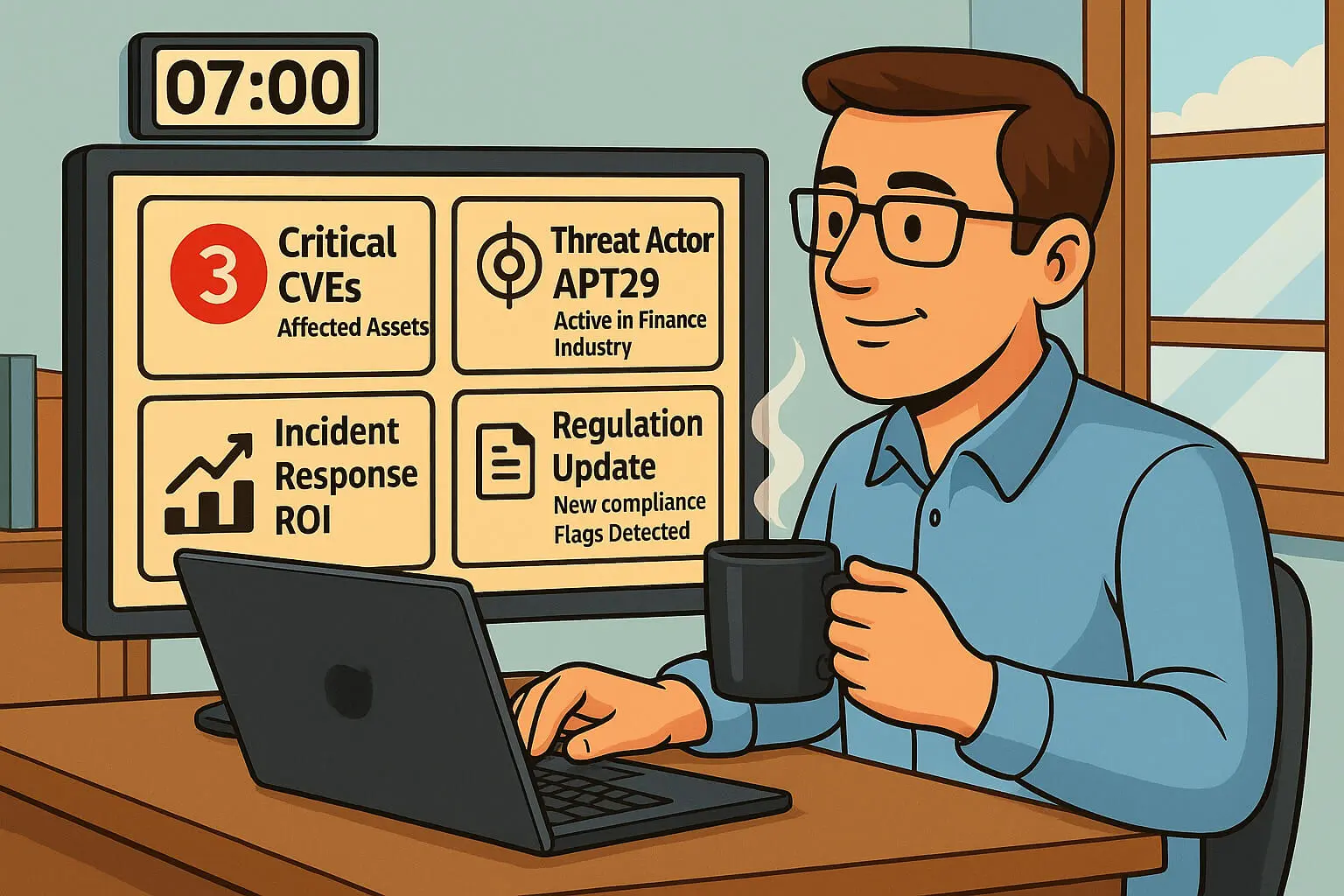
Real Impact: The agentic threat intelligence platform provides:
- Risk-prioritized vulnerability assessment: “3 critical CVEs affect your infrastructure, here’s the business impact”
- Threat actor attribution: “APT29 targeting financial institutions like yours, here’s what we’ve done”
- Budget justification data: “ROI analysis shows 67% reduction in incident response time“
- Regulatory compliance updates: “New regulations in your sector require these security measures”
Result: Board meetings become strategic discussions about security investments rather than reactive damage reports.
SOC Analyst Perspective: Automated Incident Investigation
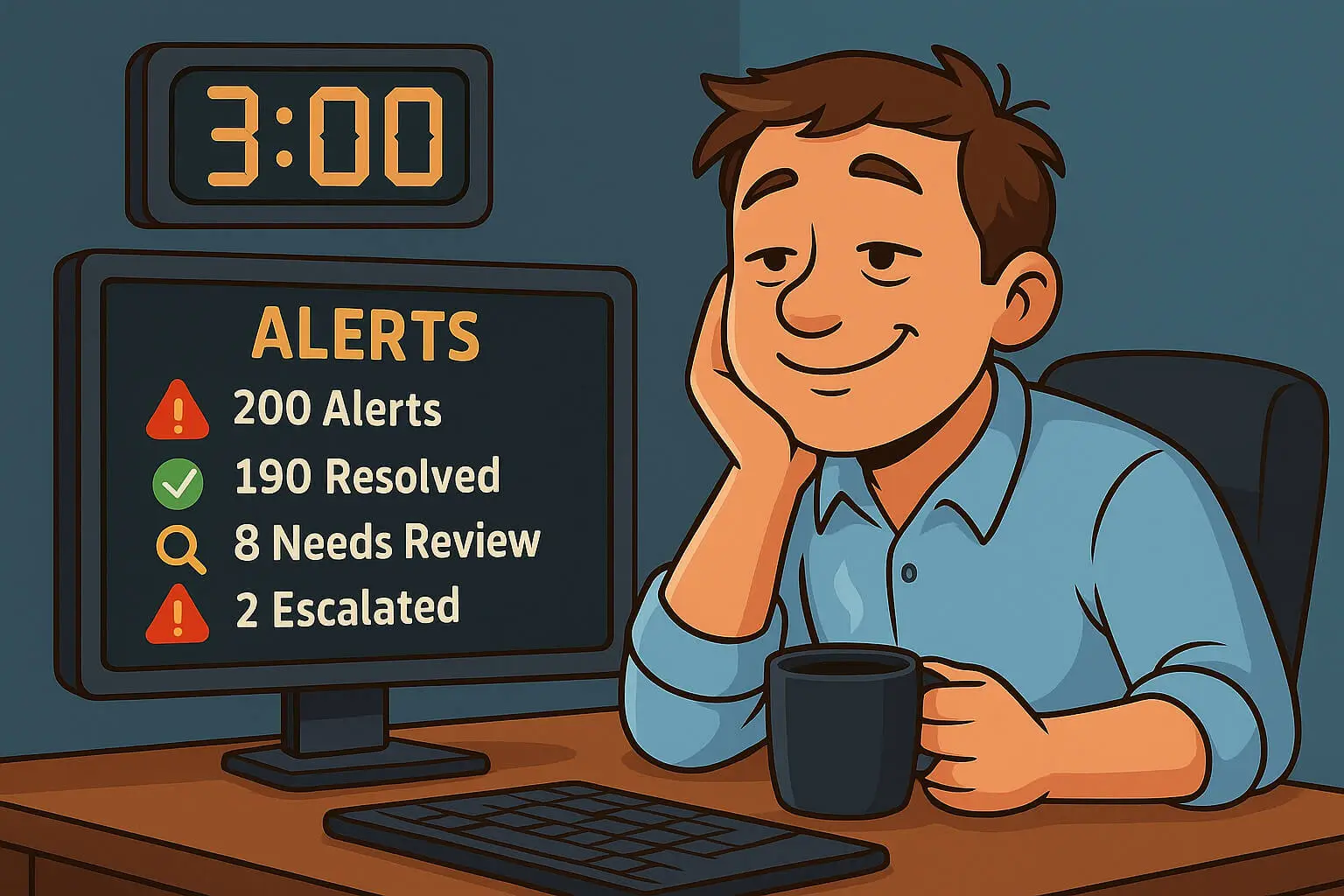
The Challenge: 3:00 AM alert fatigue. A SOC analyst receives 200+ alerts during night shift, 95% are false positives, but the remaining 5% could be critical threats.
Agentic Solution in Action:
- 03:00 AM: 200 alerts generated across SIEM platforms
- 03:02 AM: AI agents automatically triage and investigate each alert
- 03:05 AM: 190 alerts auto-resolved as false positives with detailed reasoning
- 03:07 AM: 8 alerts require human review with pre-built investigation packages
- 03:10 AM: 2 alerts escalated as confirmed threats with response recommendations
Deep Dive Example: Ransomware Detection
Alert: Unusual file encryption activity on employee workstation
Agentic Investigation:
- Correlates with known ransomware signatures (LockBit 3.0 identified)
- Maps lateral movement across network segments
- Identifies patient-zero through email analysis
- Checks backup integrity automatically
- Isolates affected systems
Human Handoff: Analyst receives complete incident package with:
- Attack timeline and TTPs
- Affected systems and data scope
- Recommended remediation steps
- Executive communication template
Result: SOC analysts focus on complex investigations and strategic threat hunting instead of manual alert processing.
Red Team Perspective: Continuous Adversary Simulation with Agentic AI
The Challenge:Traditional penetration testing provides only point-in-time insights and limited attacker emulation. Organizations need continuous, adaptive simulations that reflect real-world threat actor behaviors like those of APT groups.
Agentic Solution in Action – Threat Emulation Workflow:
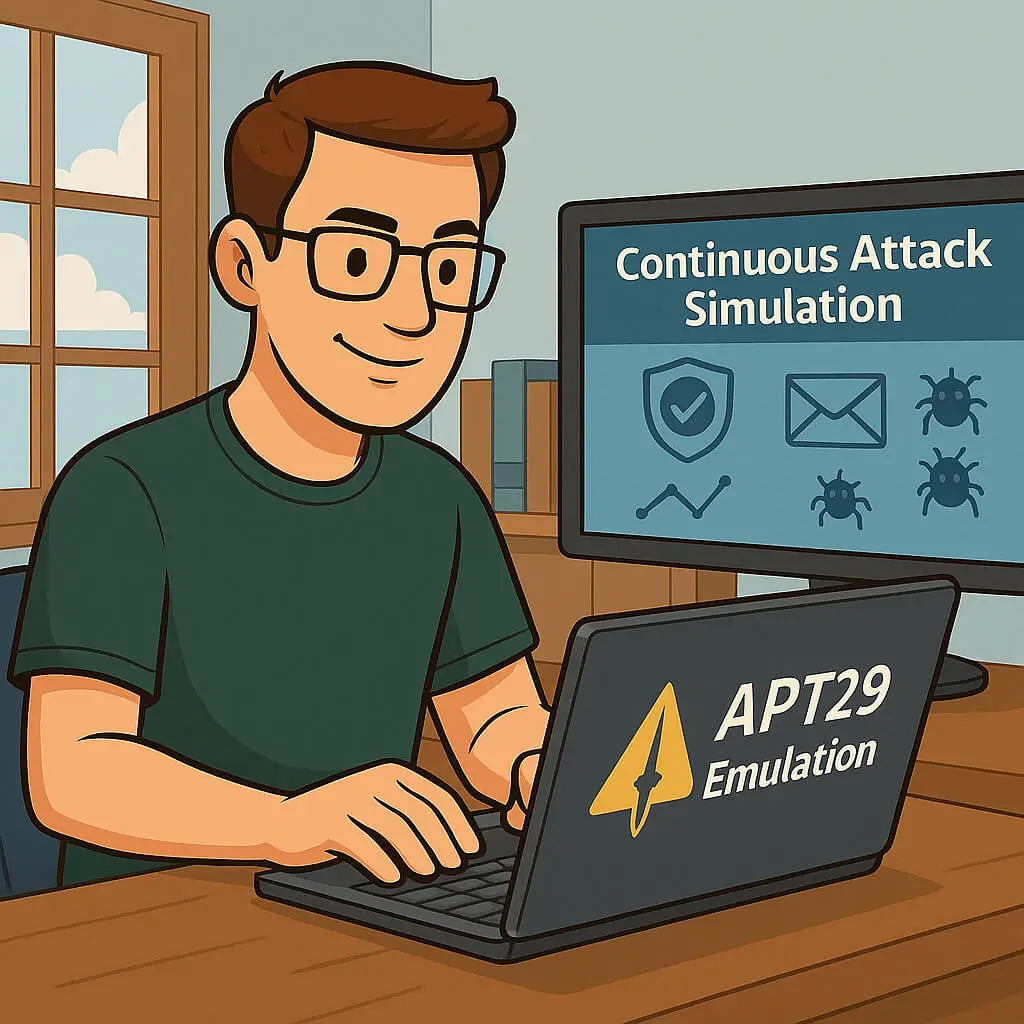
- AI agents continuously track the latest APT campaigns and associated TTPs.
- Automatically generate, execute, and adapt attack scenarios based on environment changes.
- Validate the effectiveness of existing security controls in real time.
Practical Example – APT29 Simulation:
- Day 1: AI agent analyzes the latest APT29 intelligence, identifies new spear-phishing lures, maps malware variants (e.g., Cobalt Strike), and defines targeting criteria.
- Day 2: Automatically generates phishing simulations, deploys benign payloads, tests lateral movement tactics, and observes detection coverage.
- Day 3: Performs gap analysis, updates detection rules and threat hunting playbooks, and schedules retesting.
Advanced Capability – Dynamic Attack Surface Assessment:
- Continuous asset discovery and misconfiguration testing
- Simulation of insider threat behaviors
- Validation of incident response effectiveness
Result:Red team professionals evolve from periodic testing to continuous, intelligence-driven adversary simulation, focusing efforts on strategic recommendations and adaptive threat modeling instead of manual scenario design.
Agentic Threat Intelligence vs Traditional CTI: The Showdown
After seeing these practical applications in action, it’s worth taking a step back to compare the fundamental differences in approach. Let’s be honest about the comparison between agentic threat intelligence vs traditional CTI:
| Aspect | Traditional CTI | Agentic Threat Intelligence |
|---|---|---|
| Speed | Hours to days | Minutes to seconds |
| Scale | Limited by human capacity | Virtually unlimited |
| Consistency | Varies by analyst skill | Consistently high quality |
| Coverage | Business hours only | 24/7/365 |
| Cost | High labor costs | Lower operational costs |
| Accuracy | Human error prone | Consistently accurate (when properly configured) |
But here’s the thing, it’s not really about replacement; it’s about augmentation. The best agentic threat intelligence platform solutions combine the analytical power of AI with the strategic thinking and contextual understanding that only humans provide.
The OWASP Reality Check: Security Challenges We Can’t Ignore
Now, before we get too carried away with the excitement (and yes, agentic threat intelligence is genuinely exciting), it’s crucial to address the elephant in the room: security risks. As with any powerful technology, understanding the potential vulnerabilities is essential for safe implementation.
OWASP‘s Top 10 for Agentic Applications 2026, published in December 2025, is the reference framework for these risks, and it was assembled from documented incidents rather than projections. Here is the condensed rundown, with what each risk means for a team running its own agents:
OWASP Top 10 for Agentic Applications (ASI01 to ASI10)
The Top 10 distills OWASP’s broader Agentic AI Threats and Mitigations taxonomy, updated to version 1.1 in sync with the list, into ten operational risk categories. If you are deploying agents into a security stack, this is the threat model to work against.
| Risk | What It Means in Practice | Priority Mitigations |
|---|---|---|
| ASI01: Agent Goal Hijack | Hidden instructions in content the agent reads redirect its objective while it still appears to be pursuing yours. | Isolate untrusted content from instructions, validate the working goal against the original task, and require approval for scope changes. |
| ASI02: Tool Misuse | The agent is steered into using its authorized tools destructively, without ever exceeding its granted permissions. | Scope every tool to least privilege, log and rate-limit invocations, and gate sensitive actions on human approval. |
| ASI03: Identity and Privilege Abuse | Credentials, tokens, or inherited permissions let an agent act far beyond its intended scope. | Give agents their own short-lived identities, enforce granular RBAC, and block privilege delegation between agents. |
| ASI04: Agentic Supply Chain Vulnerabilities | Third-party tools, plugins, registries, and MCP servers become poisoned runtime components. | Pin and verify tool sources, keep an inventory of agents, tools, and MCP servers, and review external servers before connecting them. |
| ASI05: Unexpected Code Execution | Natural-language input turns into generated code or commands that run with real privileges. | Execute in sandboxes with no production credentials, allowlist commands, and deny network egress by default. |
| ASI06: Memory and Context Poisoning | Poisoned stored or retrieved context reshapes agent behavior long after the original interaction. | Validate and attribute memory writes, isolate sessions, and support rollback of corrupted memory. |
| ASI07: Insecure Inter-Agent Communication | Spoofed or tampered messages between agents misdirect an entire cluster. | Mutually authenticate agents, sign and verify messages, and segment multi-agent workflows. |
| ASI08: Cascading Failures | One bad signal propagates through automated pipelines with escalating impact. | Add circuit breakers and blast-radius limits, require secondary validation on high-impact steps, and monitor cross-agent effects. |
| ASI09: Human-Agent Trust Exploitation | Confident, polished output persuades operators into approving harmful actions. | Surface evidence and confidence with every recommendation, prioritize reviews by risk, and design against approval fatigue. |
| ASI10: Rogue Agents | A compromised, misaligned, or drifting agent keeps operating inside the environment. | Monitor behavior against expected baselines, keep a kill switch, and maintain immutable audit trails. |
Two of these deserve extra attention in a security context. ASI03 is where most SOC deployments go wrong, because an agent wired into SIEM, EDR, and ticketing inherits the union of those permissions. ASI09 is the quiet one: an agent that writes a convincing incident summary will get its recommendation approved, correct or not.
Documented Agentic AI Incidents
This is no longer a theoretical risk surface. The 2026 list was built on incidents that have already happened:
- EchoLeak (CVE-2025-32711): a crafted email planted hidden instructions that Microsoft 365 Copilot later pulled in as context, exfiltrating data from the user’s environment with no clicks and no interaction. OWASP cites it under ASI01.
- Amazon Q extension compromise: an attacker weaponized a widely installed coding assistant, turning legitimate tooling against the developers using it. Cited under ASI02.
- GitHub MCP exploit: a poisoned runtime component showed how quickly an agent’s supply chain can be subverted through the tool layer. Cited under ASI04.
- AutoGPT remote code execution: natural-language input became executable commands. Cited under ASI05.
- Gemini memory attack: poisoned memory reshaped agent behavior long after the original interaction. Cited under ASI06.
- Replit database deletion: an agent deleted a production database during a code freeze. Cited under ASI10.
The lesson for defenders is straightforward. The agents you deploy for defense are themselves an attack surface, and the controls belong in place before the first incident rather than after it.
Integration Considerations
When implementing agentic threat intelligence systems, organizations should consider several key areas:
Legacy System Compatibility:
- Modern agentic platforms typically provide APIs for SIEM integration
- Integration complexity varies significantly based on existing infrastructure age and configuration
- Older systems may require custom development work for proper connectivity
Data Migration Considerations:
- Historical threat data migration timelines depend on data volume and quality
- Standard formats like STIX and TAXII generally have better migration tool support
- Custom rules and playbooks typically require manual review and adaptation
Common Implementation Challenges:
- Data Quality: Ensure robust validation processes before integrating data sources with agentic systems
- Gradual Deployment: Consider phased rollouts starting with specific use cases before full automation
- System Performance: Monitor impact on existing infrastructure during implementation
The OWASP report emphasizes that successful agentic AI implementations require comprehensive security planning from the outset, including threat modeling, access controls, and continuous monitoring.
Comprehensive Mitigation Framework
The key to mitigating AI-agentic risk in threat intelligence lies in implementing OWASP’s structured approach:
- Agentic threat modeling: a layered methodology for identifying vulnerabilities through architectural analysis, following OWASP’s threat modeling guide for agentic systems
- Defense in Depth: Multiple security layers from input validation to recovery mechanisms
- Human-Centric Design: Maintaining appropriate human oversight without creating fatigue vulnerabilities
- Continuous Monitoring: Real-time behavioral analysis and anomaly detection across all agent activities
Best Practices for Agentic AI in Cybersecurity: Getting It Right
Drawing on the capabilities and risks covered above, here are the principles that separate working deployments from stalled pilots:
1. Start Small, Think Big
- Begin with specific use cases (IOC enrichment, basic correlation)
- Gradually expand to more complex scenarios
- Always maintain human oversight during initial deployment
2. Data Quality Is Everything
- Ensure high-quality, clean data feeds
- Implement robust validation mechanisms
- Regularly audit and update training data
3. Security First Approach
- Apply OWASP agentic AI security guidelines
- Implement comprehensive logging and monitoring
- Regular security assessments and penetration testing
4. Human-Centric Design
- Design for human-centric threat intelligence workflows
- Maintain clear escalation paths
- Provide explainable AI outputs
Looking Ahead: The Future of Cyber Defense Is Agentic
The trajectory is clear: agentic AI in cybersecurity is not a passing trend. We are moving toward a world where:
- Predictive Threat Intelligence: AI agents that can predict attacks before they happen
- Autonomous Red Teaming: Continuous, AI-driven security testing
- Cross-Organizational Intelligence Sharing: Federated learning across security communities
- Vertical-Specific Solutions: Specialized agents for healthcare, finance, and other industries
Frequently Asked Questions
Q: What is agentic AI in cybersecurity?
A: Agentic AI in cybersecurity is the use of autonomous AI agents that plan, decide, and act across security workflows instead of waiting for a prompt. Given a goal such as “investigate this alert,” an agent selects which tools and data sources to query, correlates what it finds, and either recommends or executes a response, with human oversight retained for high-impact actions.
Q: Is agentic AI in cybersecurity the same as agentic AI security?
A: No, and the distinction matters when you are evaluating vendors. Agentic AI in cybersecurity means using agents to defend an organization: triage, threat hunting, enrichment, adversary simulation. Agentic AI security means protecting the agents themselves, which is what the OWASP Top 10 for Agentic Applications covers. Most teams end up doing both, and the second becomes urgent the moment the first goes into production.
Q: What are the main use cases for agentic AI in cybersecurity?
A: The most mature ones are alert triage and false-positive reduction, IOC enrichment and correlation, autonomous threat hunting across external sources, executive-level risk reporting, and continuous adversary simulation. Anything with a high volume of repetitive analytical work and a clear escalation path is a good candidate.
Q: How long does it take to implement agentic threat intelligence in an existing SOC?
A: Implementation timelines vary significantly based on your current infrastructure, organizational readiness, and scope of deployment. Initial integration with existing SIEM platforms typically requires several weeks to a few months. Full workflow automation with comprehensive coverage generally takes longer, depending on complexity and testing requirements.
Q: Do we need to replace our existing threat intelligence tools?
A: Not necessarily. Agentic AI systems are designed to integrate with your current stack. They can enhance existing tools like Splunk, QRadar, or CrowdStrike rather than replace them entirely. The goal is augmentation, not replacement.
Q: What’s the ROI timeline for agentic threat intelligence?
A: ROI realization varies considerably across organizations. Some report early benefits through improved alert processing and reduced manual workload. More substantial returns typically develop over time as teams adapt workflows and gain experience with agentic capabilities.
Q: How do we handle compliance and audit requirements with autonomous AI?
A: Modern agentic platforms provide comprehensive audit trails, decision logging, and explainable AI outputs. Many are designed with SOX, GDPR, and industry-specific regulations in mind. Always maintain human oversight for critical decisions and ensure your implementation includes proper governance frameworks.
Q: What happens if the AI makes a wrong decision?
A: Agentic systems include multiple safeguards: confidence scoring, human approval thresholds for high-impact actions, and rollback capabilities. Critical decisions should always include human validation, and the system should be configured with appropriate risk tolerances for your environment.
Q: Can small security teams benefit from agentic AI?
A: Small teams often find significant value in agentic AI as it can help multiply their effectiveness, handling routine tasks while analysts focus on complex investigations. Cloud-based solutions make enterprise-grade capabilities accessible without major infrastructure investments.
Q: How do we prevent the OWASP Top 10 threats in our implementation?
A: Start with a security-first approach: implement proper access controls, comprehensive logging, input validation, and regular security assessments. Use established frameworks, maintain human oversight, and consider working with vendors who have built-in security measures for these specific threats.
Q: What skills do our analysts need to work with agentic AI?
A: Existing cybersecurity skills remain crucial. Analysts should understand basic AI concepts, prompt engineering, and how to interpret AI outputs. Most importantly, they need to know when to trust AI recommendations and when to apply human judgment.
The Bottom Line: Evolution or Revolution?
Agentic Threat Intelligence represents both an evolution and a revolution in cybersecurity. It’s an evolution because it builds upon decades of threat intelligence practices and existing security operations. But it’s also a transformative shift because it fundamentally changes how we think about the speed, scale, and effectiveness of cyber defense.
The organizations that embrace agentic threat intelligence benefits while properly addressing the associated risks will have a significant advantage in the ongoing cyber warfare. Those that don’t… well, let’s just say they might find themselves playing catch-up in a game where the rules are changing faster than ever.
The future of cybersecurity is autonomous, intelligent, and happening right now. The question isn’t whether Agentic Threat Intelligence will become mainstream, it’s whether your organization will be ready when it does.
See SOCRadar Agentic Threat Intelligence in action.